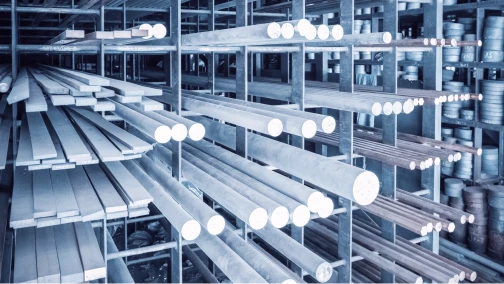
Industrial maintenance, repair, and operations (MRO) distributors, fastener wholesalers, and plant spare-parts cribs manage some of the most demanding inventory profiles in supply chain engineering. A single regional distribution center routinely holds between 50,000 and 500,000 active SKUs spanning 2-gram fluorocarbon O-rings, 50-kilogram steel fastener kegs, precision bearings, pneumatic valves, and 800-kilogram electric motors. Order profiles skew heavily toward urgent, multi-line split-case picks where an incorrect thread pitch or a one-day shipping delay halts a customer's production line.
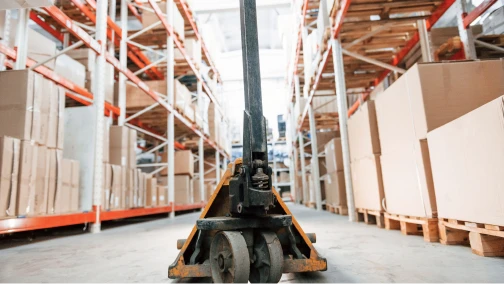
Manual shelving and mezzanine pick modules struggle under this combination of extreme SKU sprawl and high material density. Operators spend the majority of each shift walking long aisles, hand-counting bulk hardware, and lifting heavy metal bins from awkward heights. HOWEPROFIT engineers hybrid automated storage and retrieval systems (AS/RS) tailored for MRO, hardware, and fastener operations. By matching storage hardware to unit weight and velocity, integrating count-by-weight workstations, and linking warehouse software directly to ERP and CMMS platforms, our solutions compress floor footprint, eliminate mispicks, and support same-day dispatch across massive part catalogs.
Load Profile Constraints in Hardware and MRO Warehousing
Automating industrial supply distribution requires designing around three physical realities that standard retail fulfillment systems rarely encounter.
The first constraint is high weight-to-volume density. A standard 600 x 400 mm plastic tote filled only halfway with M12 stainless steel hex bolts, hardened washers, or tapered roller bearings easily exceeds 45 to 60 kilograms. Lightweight e-commerce robotics rated for 25 to 30 kilograms per bin cannot carry full hardware loads without severe cubic underutilization or premature mechanical wear. Load carriers, telescopic extractors, and racking beams must be engineered for concentrated metallic mass.
The second constraint is extreme long-tail SKU velocity. In a typical MRO catalog, 10 to 15 percent of SKUs generate over 80 percent of daily pick lines, while tens of thousands of specialized seals, relays, and replacement shafts move only once or twice per year. Despite low turnover, those slow-moving spares require immediate, 100 percent accessibility when an emergency breakdown order arrives at 4:00 PM for next-morning delivery.
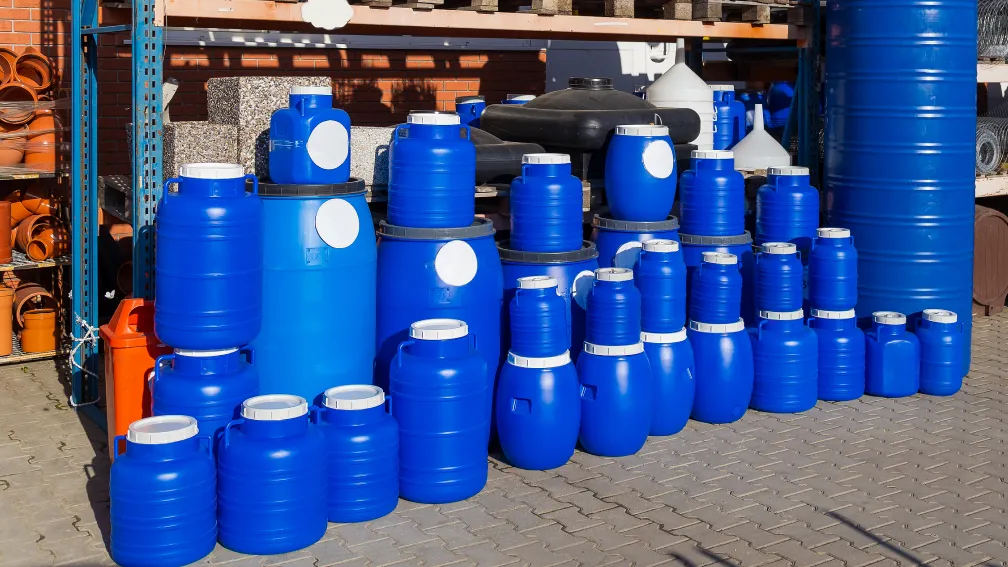
The third constraint is dimensional and packaging variance. Inventory arrives in bulk palletized steel kegs, heavy cardboard master cartons, poly-bagged seals, long drive belts, and loose machined fittings. A single storage technology cannot economically handle every form factor, making hybrid zone architecture essential.
Hybrid Storage Architectures for Mixed Weight and Velocity
HOWEPROFIT configures multi-zone automation frameworks that assign each SKU class to the mechanical architecture best matched to its mass, cube, and turnover frequency.
Heavy-Duty Mini-Load AS/RS for Dense Metal Components
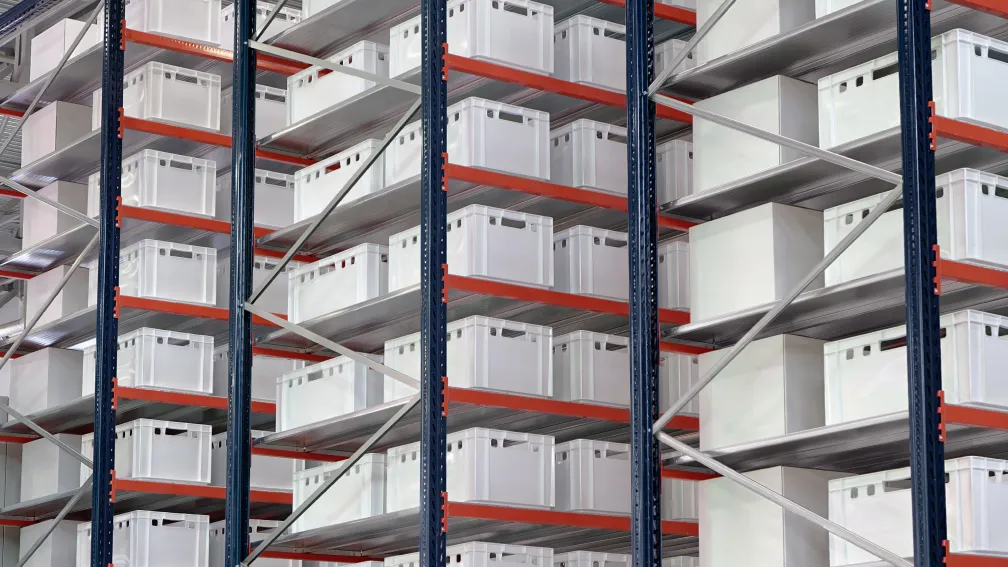
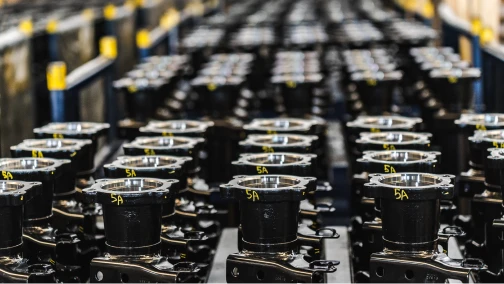
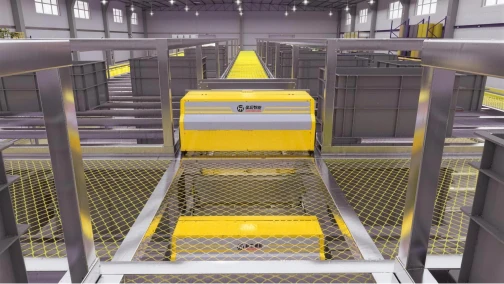
Dense fasteners, bearings, hydraulic fittings, and machined spare parts are best managed inside a reinforced mini-load AS/RS. Engineered with high-rigidity aluminum or steel masts and heavy-duty telescopic load-handling devices, these stacker cranes handle reinforced totes or steel trays rated from 50 to 100 kilograms per load unit. Each tote is subdivided into 4, 8, or 16 compartments using rigid dividers, allowing a single high-bay aisle to house tens of thousands of distinct part numbers with 100 percent selectivity and millimeter positioning accuracy.
High-Speed Bin Robots and Four-Way Shuttles for Long-Tail MRO
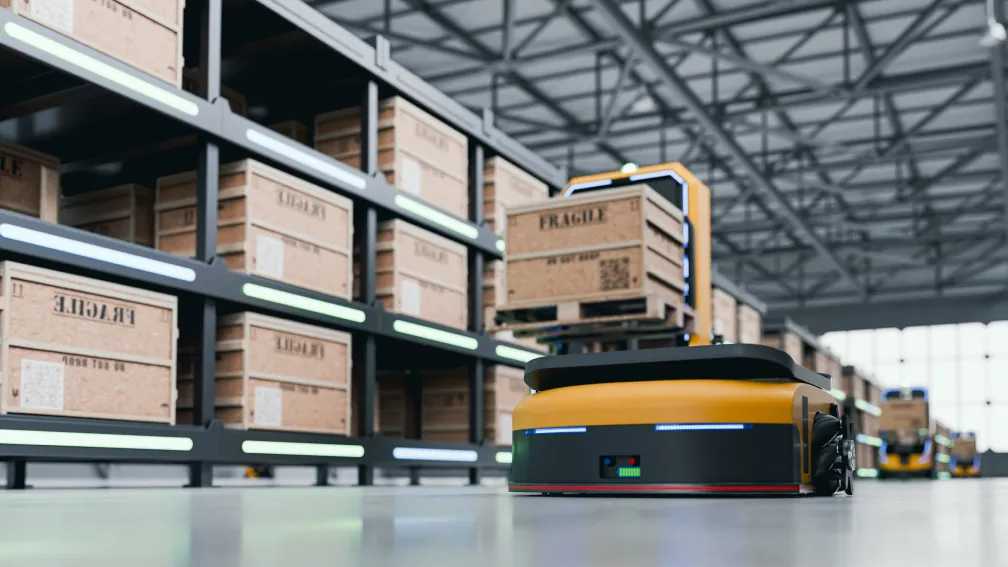
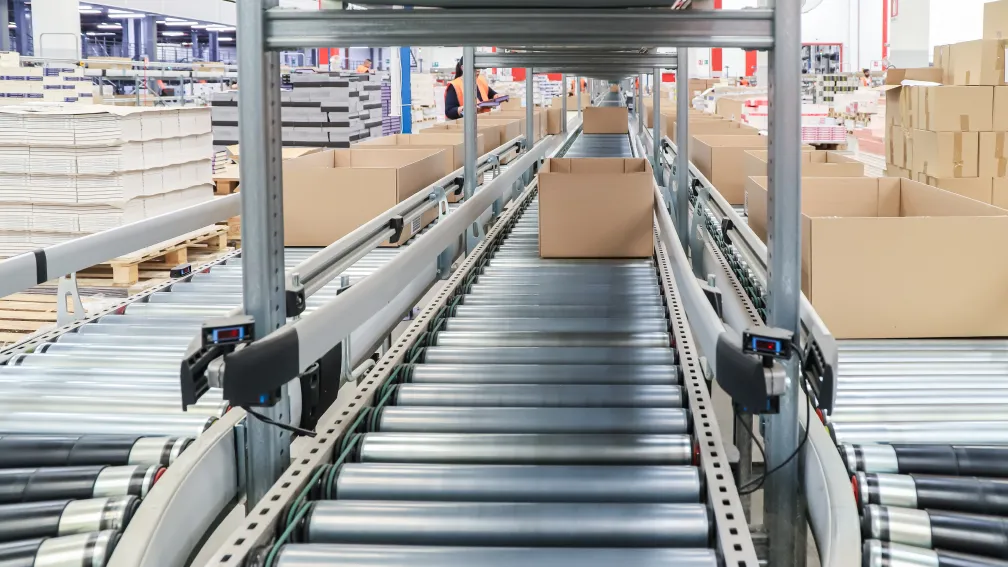
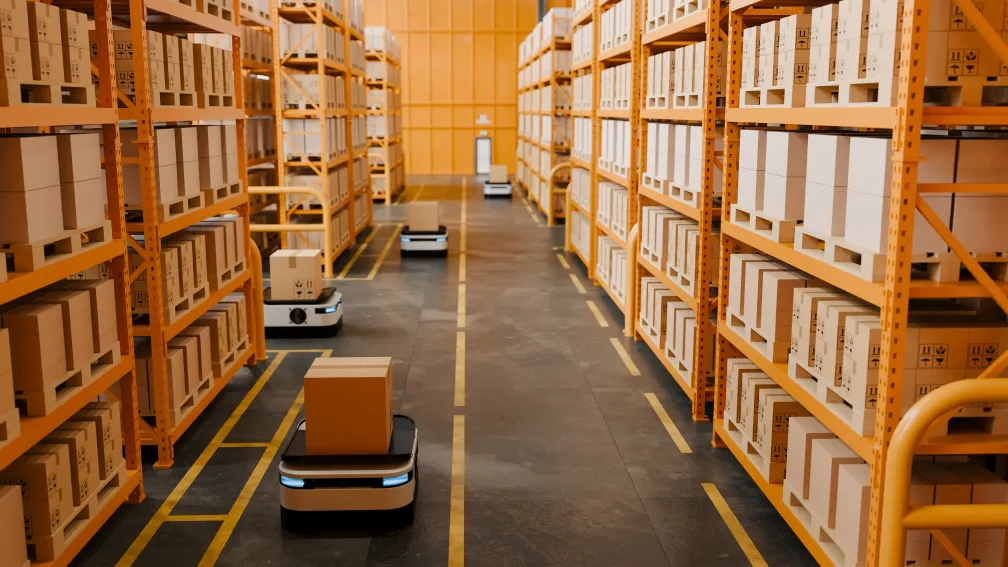
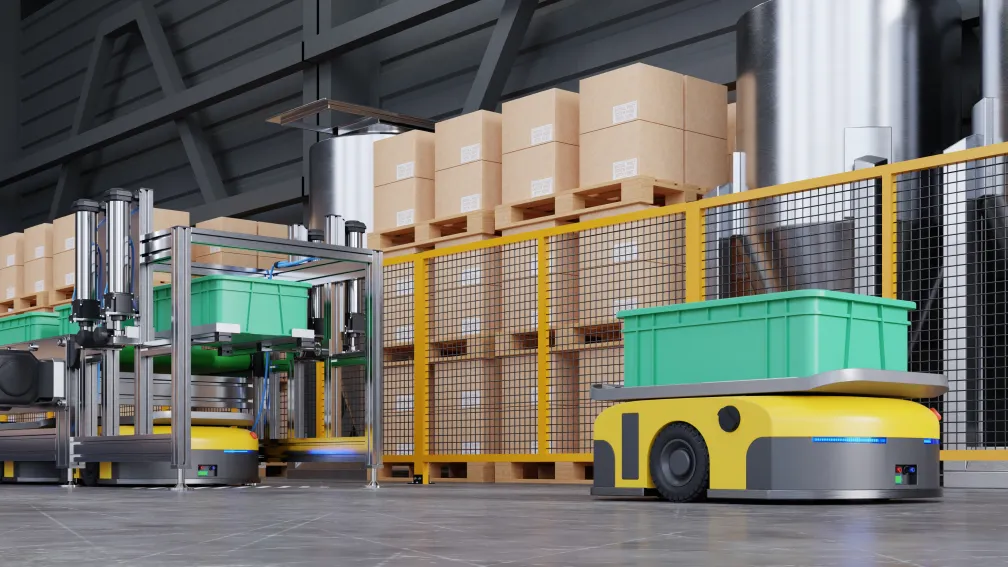
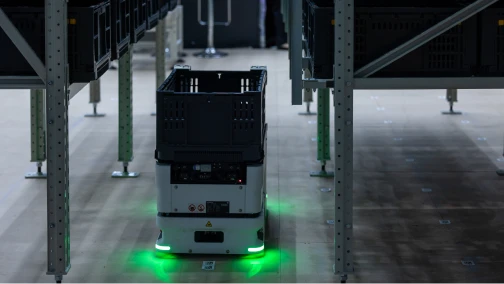
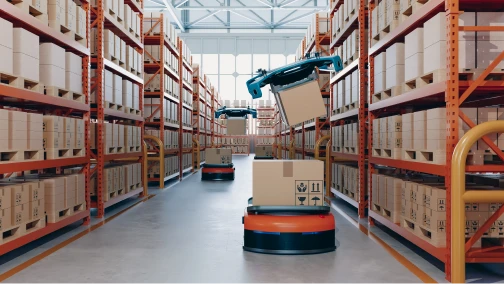
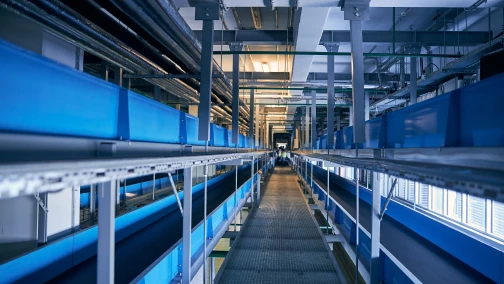
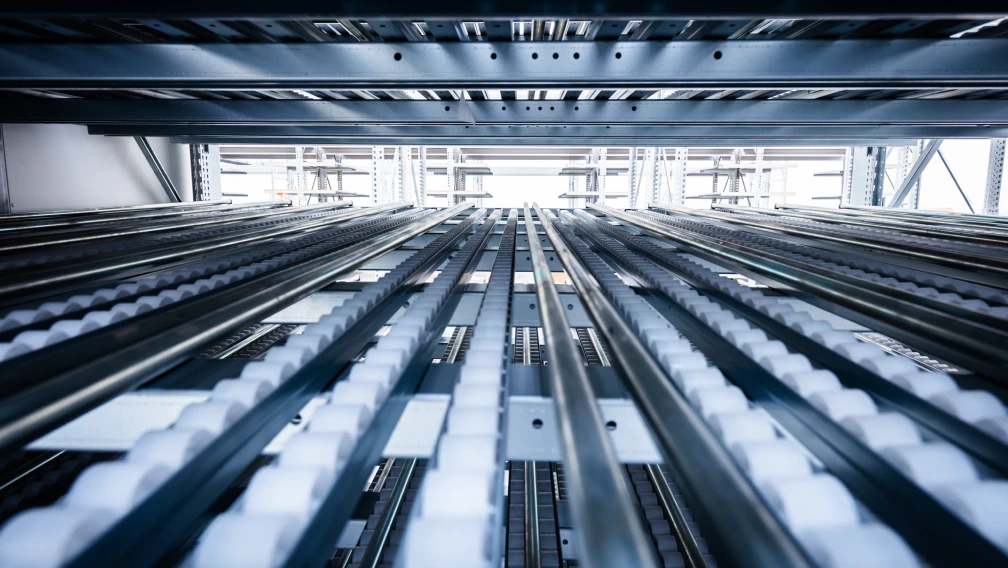
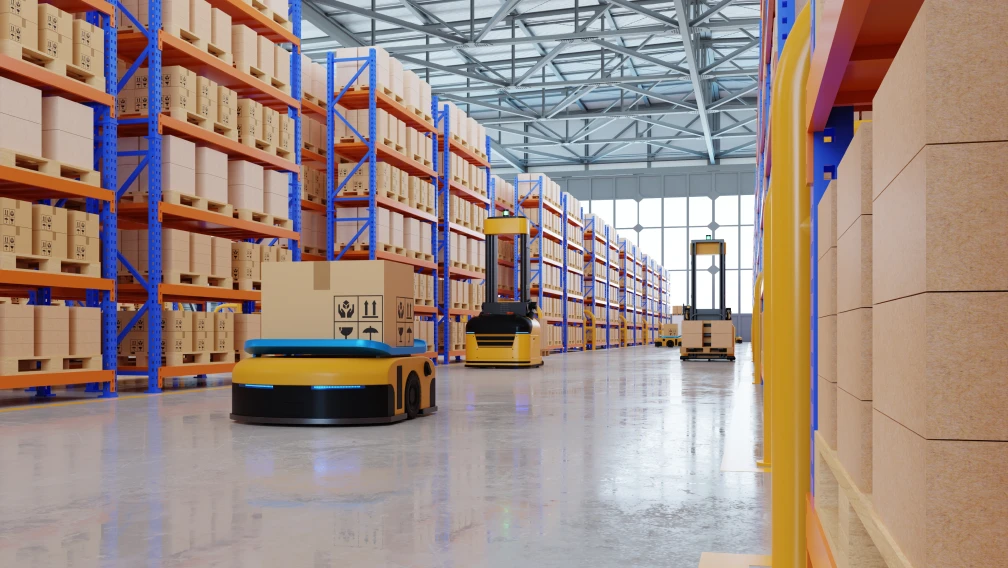
For lightweight industrial supplies—electrical terminals, sensors, fasteners in retail boxes, abrasives, PPE, and hand tools—modular robotic grids deliver maximum storage density inside existing buildings. A high-speed bin robot system stacks standardized totes multi-deep across a compact horizontal footprint, reclaiming up to 75 percent of the floor area previously occupied by static shelving mezzanines. Where facilities require higher parallel throughput across multi-tier aisles, a four-way shuttle system separates horizontal tote transport from vertical lift movement. Throughput scales cleanly by adding shuttles to the grid as daily order lines grow, preventing bottlenecks during late-afternoon carrier cutoffs.
Unit-Load AS/RS and Mobile Racking for Bulk Kegs and Overweight Equipment
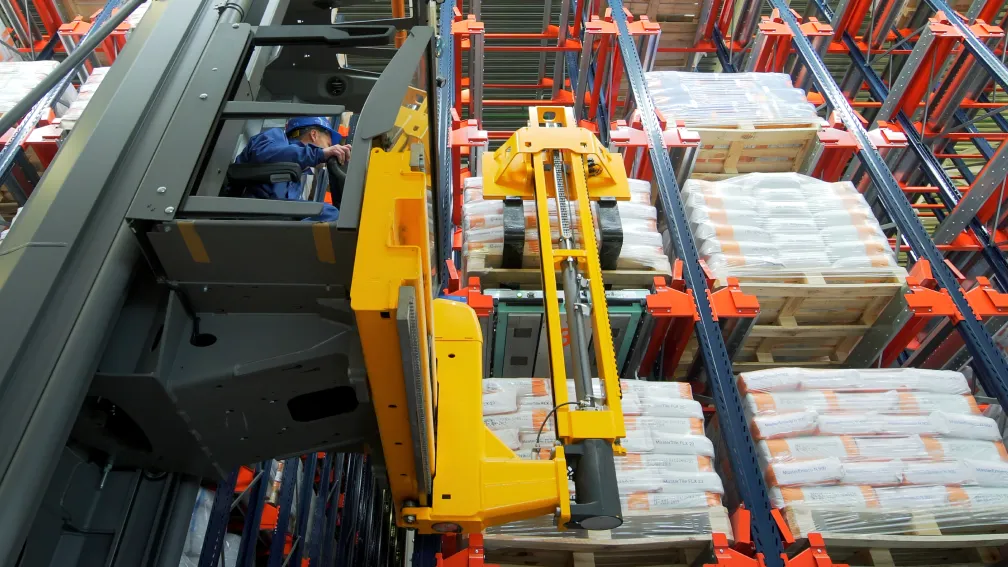
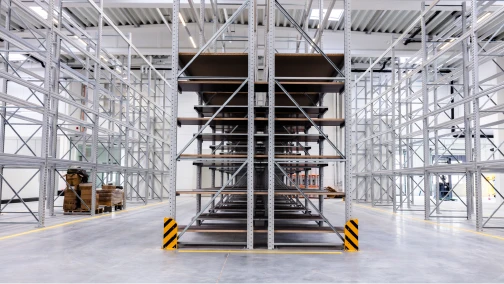
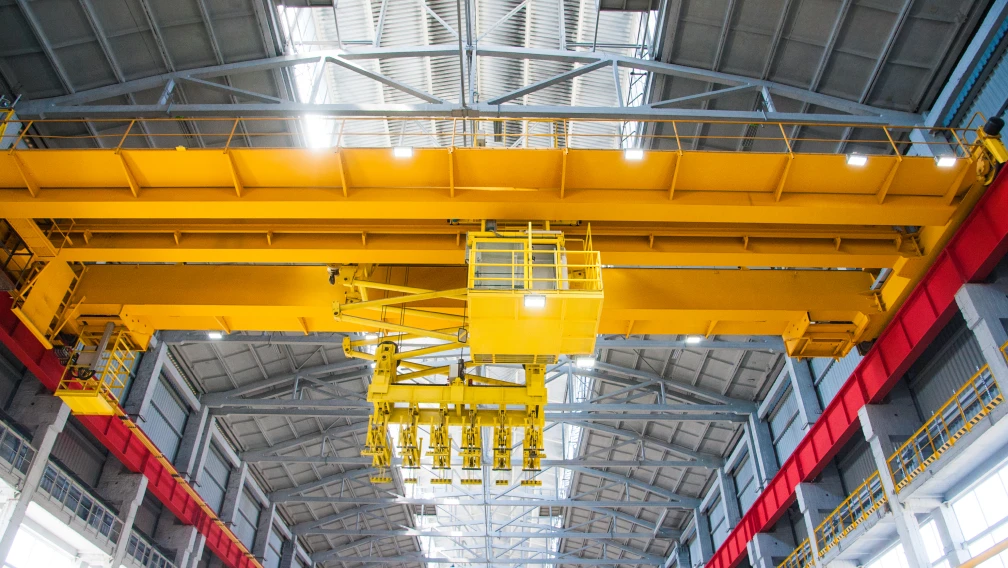
Bulk palletized fastener kegs, drummed lubricants, industrial gearboxes, pumps, and electric motors require pallet-level infrastructure. High-throughput distributors deploy a unit-load AS/RS to serve as both a dense reserve buffer for downstream decanting and a direct outbound shipping lane for full-pallet wholesale orders. For brownfield plant MRO stockrooms or regional branches with lower ceiling heights and moderate pallet turnover, mobile pallet racking compresses static rows onto floor-mounted motorized bases. Opening a single dynamic access aisle on demand nearly doubles pallet capacity within the existing concrete footprint while preserving direct forklift access to every overweight asset.
| Automation Architecture | Rated Load per Unit | Primary MRO & Hardware Fit | Core Operational Advantage |
|---|---|---|---|
| Heavy-Duty Mini-Load AS/RS | 50 – 100 kg per tote/tray | Bulk steel fasteners, bearings, brass/hydraulic fittings | High payload capacity with 100% SKU selectivity |
| High-Speed Bin Robot | Up to 35 kg per tote | Electrical parts, seals, PPE, long-tail MRO catalog | Maximum volumetric density in brownfield spaces |
| Four-Way Shuttle System | 30 – 50 kg per tote/carton | High-velocity hardware, multi-line daily branch orders | Decoupled horizontal/vertical scaling for peak cutoffs |
| Unit-Load AS/RS / Mobile Racking | 1,000 – 3,000 kg per pallet | Fastener kegs, motors, pumps, bulk reserve pallets | High-density heavy-load storage and decanting reserve |
Goods-to-Person Workstations and Count-by-Weight Verification
In hardware and fastener distribution, picking accuracy fails most frequently during manual quantity counting. Counting 150 M6 locknuts or 300 copper crush washers by hand is slow, fatiguing, and error-prone. Automated Goods-to-Person (G2P) workstations resolve this bottleneck by combining guided compartment selection with integrated precision metrology.
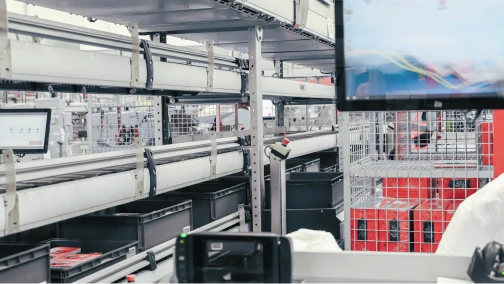
When the storage system delivers a subdivided tote to the operator, an overhead pick-to-light laser or LED bar illuminates the exact compartment required, while the HMI displays the part photograph, thread specification, and target quantity. The outbound order carton sits directly on a calibrated industrial load-cell scale built into the workstation frame. Because the software stores the exact verified unit weight of each fastener or component, the operator scoops parts into the order container until the scale registers the target count within a strict tolerance band. If the operator over-picks by two bolts or drops a wrong-sized part into the carton, the system flags the weight discrepancy immediately and blocks order confirmation until corrected.
For heavier MRO items weighing between 15 and 35 kilograms—such as cast-iron valve bodies, roller chains, or pillow-block bearings—workstations incorporate zero-gravity lift tables, ball-transfer decks, and overhead vacuum or jib assists. Presenting heavy trays at waist height eliminates repetitive stooping and overhead reaching, reducing musculoskeletal injury rates and maintaining steady pick rates across full shifts.
Software Orchestration: CMMS Integration, Kitting, and Traceability
Physical storage hardware establishes capacity, while the warehouse control system (WCS) and robot fleet management software (RCS) convert that capacity into traceable industrial fulfillment.
Maintenance Work-Order Kitting and CMMS Integration
Inside large manufacturing plants, utilities, and mining operations, the MRO warehouse operates as a direct extension of the maintenance department. HOWEPROFIT software integrates via standard REST APIs or EDI interfaces with enterprise ERP and Computerized Maintenance Management Systems (CMMS) such as SAP PM and IBM Maximo. During off-peak overnight hours, the WCS automatically pulls scheduled preventive maintenance work orders, retrieves all required bearings, seals, filters, and fasteners, and sequences them to a kitting station. Maintenance technicians arrive at the start of the morning shift to collect pre-verified, sealed work-order kits, eliminating unplanned downtime spent searching stockroom aisles.
Lot Traceability and Elastomer Shelf-Life Control
Aerospace-adjacent, automotive, oil-and-gas, and structural construction buyers mandate strict lot traceability for critical fasteners and industrial consumables. At inbound receiving, operators scan supplier lot codes and bind ASTM, DIN, or ISO chemical and mechanical test certificates directly to the assigned tote coordinate. When parts are picked for a customer shipment, the WCS transfers the exact lot genealogy to the packing slip and ERP invoice automatically.
The same database enforces First-Expired-First-Out (FEFO) rotation on shelf-life-sensitive MRO items. Industrial adhesives, threadlockers, specialty greases, and elastomeric O-rings governed by SAE AS5316 cure-date standards degrade in storage. The WCS tracks cure and expiration dates at the compartment level, automatically dispatching older compliant batches first and placing expired lots into logical quarantine so degraded seals never reach critical machinery.
Dynamic Velocity Slotting and VMI Segregation
Industrial demand shifts with plant turnaround schedules and seasonal construction cycles. The WCS continuously evaluates SKU pick frequency and automatically migrates high-velocity items to the front storage zones closest to G2P workstations during idle night windows. For distributors operating Vendor-Managed Inventory (VMI) programs or storing customer-owned critical insurance spares, the software maintains strict logical inventory segregation within the same physical grid, tracking ownership, minimum safety stock thresholds, and automated replenishment triggers per account.
Phased Deployment in Active Brownfield Facilities
Most industrial MRO distributors and factory parts cribs operate inside existing buildings with 6- to 12-meter clear heights and cannot halt daily parts dispatch during an automation upgrade. HOWEPROFIT structures implementations in phased modules to protect ongoing operations.
Phase 1 typically installs a compact high-density tote block—such as a heavy-duty mini-load or bin robot module—inside a cleared bay occupying 15 to 20 percent of the existing warehouse floor. Once commissioned and linked to the host ERP, the facility migrates the highest-velocity small-part SKUs into the automated block. As legacy shelving bays empty, those newly freed floor zones accommodate Phase 2 expansion, bulk mobile racking installation, or expanded packing and kitting stations without disrupting daily customer shipments.
Engineering Your MRO and Hardware Automation Architecture
Automating an industrial MRO, hardware, or fastener warehouse eliminates the operational friction caused by massive SKU catalogs, dense metallic loads, and manual piece counting. Combining heavy-duty mini-load cranes, modular bin-robot or shuttle grids, count-by-weight workstations, and CMMS-integrated WCS control delivers measurable gains in floor-space utilization, inventory accuracy, and same-day order fulfillment.
→ Contact HOWEPROFIT’s systems engineering team with your SKU count, tote weight profile, and daily order-line data to model a hybrid warehouse automation solution tailored to your MRO or hardware distribution operation.
-

HOWEPROFIT Team
Warehouse Automation Specialists, HOWEPROFIT
The HOWEPROFIT Team consists of senior intralogistics engineers and supply chain experts specializing in advanced AS/RS and robotic fulfillment solutions. Backed by years of field experience across e-commerce, 3PL, and manufacturing sectors, we provide data-driven automation strategies, rigorous throughput simulations, and objective ROI modeling. Our mission is to help facilities seamlessly transition to high-efficiency, reliable, and scalable automated operations.