How High-Speed Bin Robots Work in Automated Warehouse Systems
System Architecture and Core Components
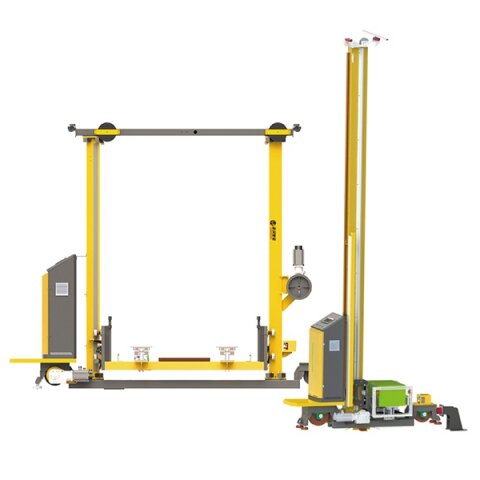
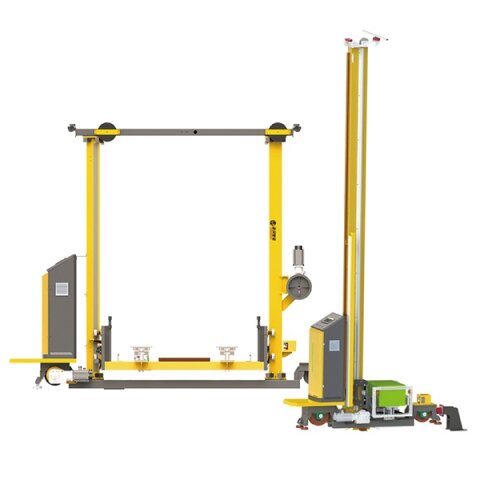
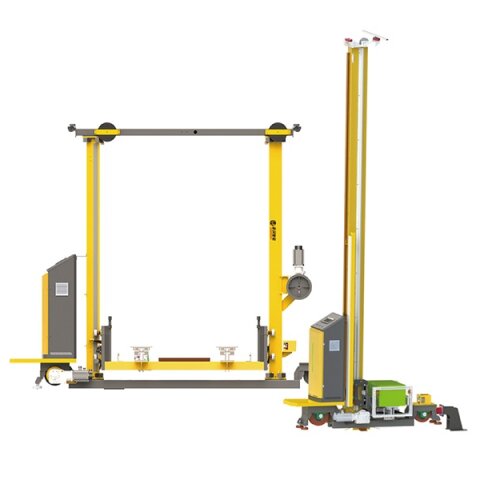
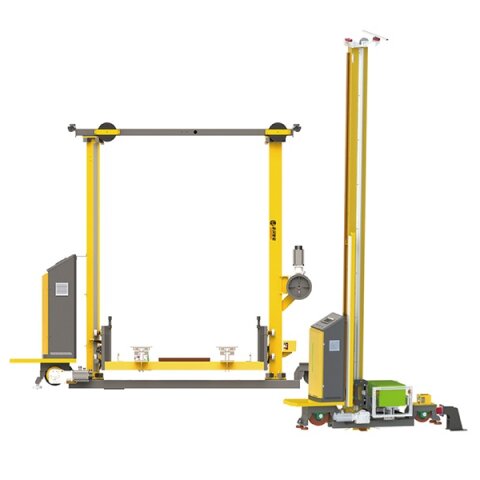
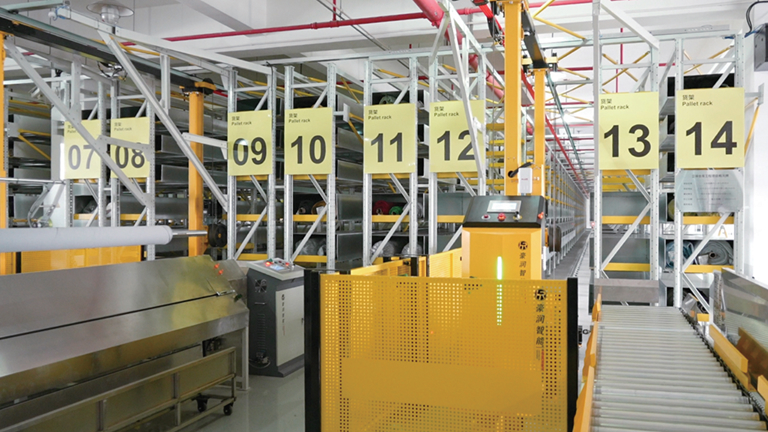
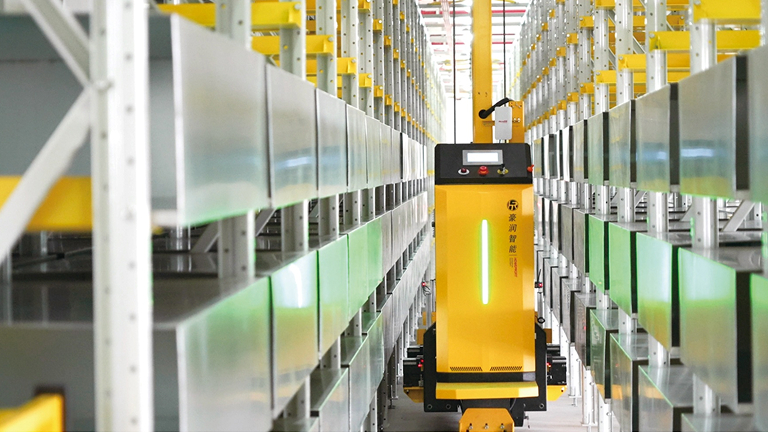
A high-speed bin robot system has three main parts: the robot hardware with its racking, the RCS that coordinates robot movement, and the WMS that handles inventory decisions. The robot runs on vertical rails inside narrow aisles, usually 8-30 meters tall. Each unit includes a drive chassis for horizontal movement, a lift mechanism for vertical travel, and telescopic forks that grab bins.
Here's what makes the speed possible. The robot moves horizontally and lifts vertically at the same time. So while it's traveling at 200m/min to reach a bin location, the lift is already moving to the right height. When the robot arrives, it grabs the bin immediately. That's how we get 15-second retrieval times in busy warehouses.
Positioning Technology and Accuracy Control
Getting to ±3mm accuracy takes several sensors working together. For horizontal positioning, we use encoder feedback from the drive motors plus laser sensors that read reference points on the racks. Vertical positioning uses absolute encoders on the lift, with limit switches at each level as backup. The fork extension has linear encoders that measure distance down to the millimeter.
Why all these sensors? In a 30-meter tall structure, mechanical tolerances and temperature changes can add up to 10-15mm of error. The system fixes this by checking position at every level against fixed markers on the racks. When the robot gets to the target level, it adjusts based on what the optical sensors read before extending the forks. This keeps the bin engagement clean with no collisions or misalignment.
Storage Density Calculation and Space Planning
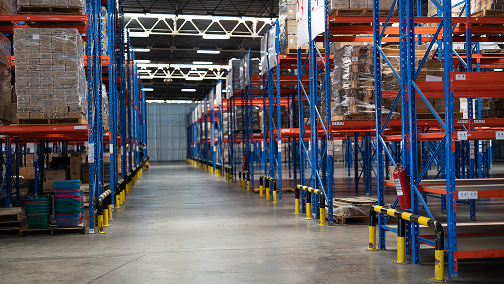
The density improvement comes from three things: using vertical space, narrow aisles, and bin stacking height. A typical warehouse with 6-meter ceilings and 3.5-meter aisles gets about 35-40% space utilization. With a bin robot system at 12 meters high and 1.8-meter aisles, you're looking at 65-70% utilization.
Let's run the numbers for a 1,000㎡ warehouse:
Conventional racking:
- Storage area: 400㎡ (you lose 60% to aisles)
- Height: 5 meters
- Storage volume: 2,000 cubic meters
High-speed bin robot:
- Storage area: 700㎡ (30% for aisles)
- Height: 12 meters
- Storage volume: 8,400 cubic meters
- Density gain: 4.2x
This is where the "5-10x density" claim comes from. The actual number depends on your current setup and ceiling height. If you're running a very inefficient manual system or have tall ceilings, you'll hit the upper end. Already-optimized operations see lower gains.
Throughput Calculation for Peak Season Planning
Throughput comes down to cycle time (grab, deliver, return) and how many robots you run. One robot does this:
- Cycle time: 45-60 seconds (varies by distance and bin location)
- Bins per hour: 60-80
- Daily output (20-hour shift): 1,200-1,600 bins
For order picking, convert bins to order lines based on your pick density. Say each bin has 8 order lines and your picker handles 4 bins at once. That's 480-640 lines per hour per robot. Add more robots and the math scales directly. Four robots handle 1,920-2,560 lines per hour.
This helps you size for peak season. If Black Friday brings 15,000 order lines over 16 hours, you need roughly 940 lines per hour. Two robots plus some buffer gets you there.
Integration Requirements with Existing Warehouse Systems
You need three connection points: WMS communication for orders, physical conveyor connections for bin transfer, and power supply for continuous operation. The RCS talks to your WMS through TCP/IP Ethernet, passing data about inventory locations, pick orders, and replenishment in real-time or batches.
Here's something that gets missed in planning. Your WMS needs to release pick orders in batches, not one at a time like traditional picking. Instead of sending orders as they come in, the WMS should collect 10-15 minutes worth and release them together. This lets the RCS plan efficient robot paths and cut down empty travel. You'll need WMS configuration changes or middleware. Most teams underestimate this step.
On the physical side, you need to match transfer heights and speeds with existing conveyors. Standard bin transfer is 800-1,200mm high, which might not line up with conveyors built for pallets or cartons. Plan for interface conveyors or adjustable transfer stations. Software integration typically takes 2-4 weeks, physical interfaces another 1-2 weeks if protocols are validated upfront.