The Kinematic Limit of Manual Order Picking
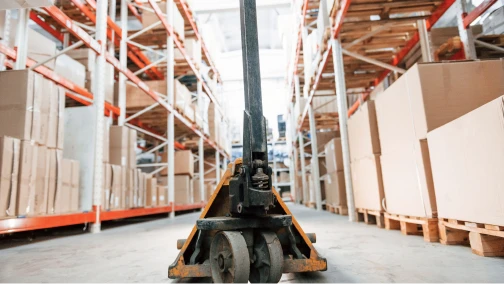
In Fast-Moving Consumer Goods (FMCG), e-commerce fulfillment, and pharmaceutical distribution, warehouse efficiency is defined by the pick rate. Traditional Person-to-Goods (P2G) architectures require human operators to walk aisles pushing carts, visually locate specific SKUs on static shelving, and manually confirm picks. Time-motion studies consistently show that in a P2G model, travel time accounts for 60% to 70% of a picker's total shift. The actual value-added task—transferring an item from a storage location into an order container—occupies less than a third of their labor hours.
This kinematic bottleneck becomes a critical failure point when a facility experiences rapid volume scaling. Consider a confectionery manufacturer with 15+ years of gummy production experience. When facility output scales to a 1,500 tons monthly capacity—equating to 50M+ gummies per month—the internal logistics of moving vast varieties of flavor profiles, packaging types, and mixed-SKU wholesale orders cannot rely on manual routing. Throwing more human labor at the problem yields diminishing returns, as operators begin to crowd aisles, causing traffic deadlocks and increasing pick-error rates under peak-season pressure.
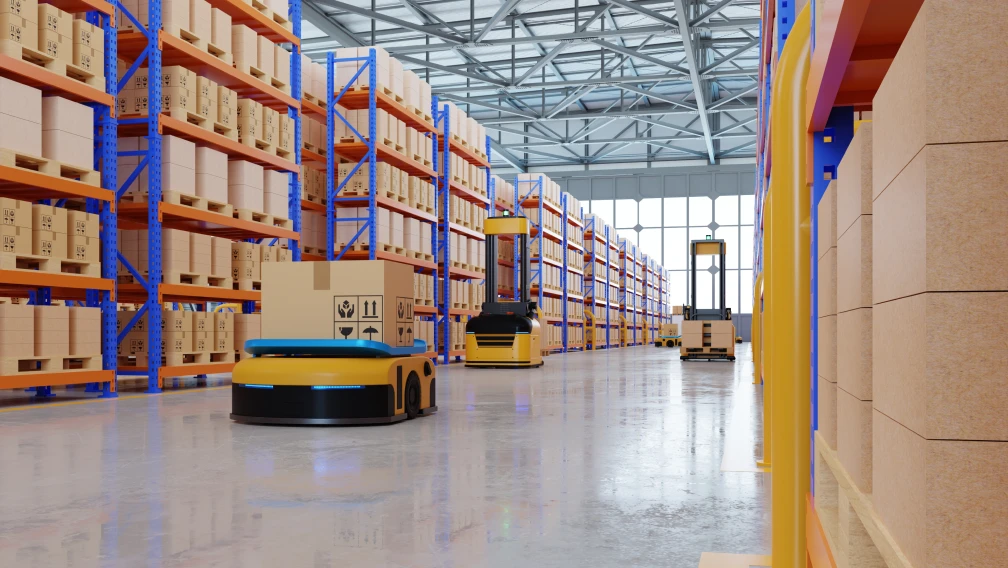
The engineering solution to this physical limitation is reversing the flow of material. Instead of deploying personnel into the storage grid, the storage grid dynamically delivers materials to stationary personnel. This framework is known as Goods-to-Person (G2P) automation, and its most efficient hardware execution for light-load operations is the High-Speed Bin Robot system.
Architectural Principles of High-Speed Bin Robots
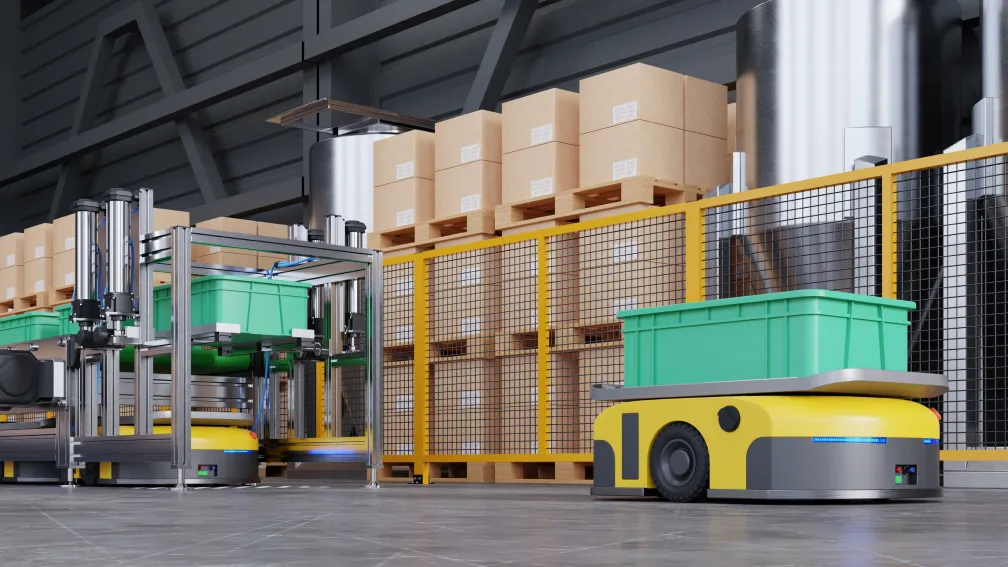
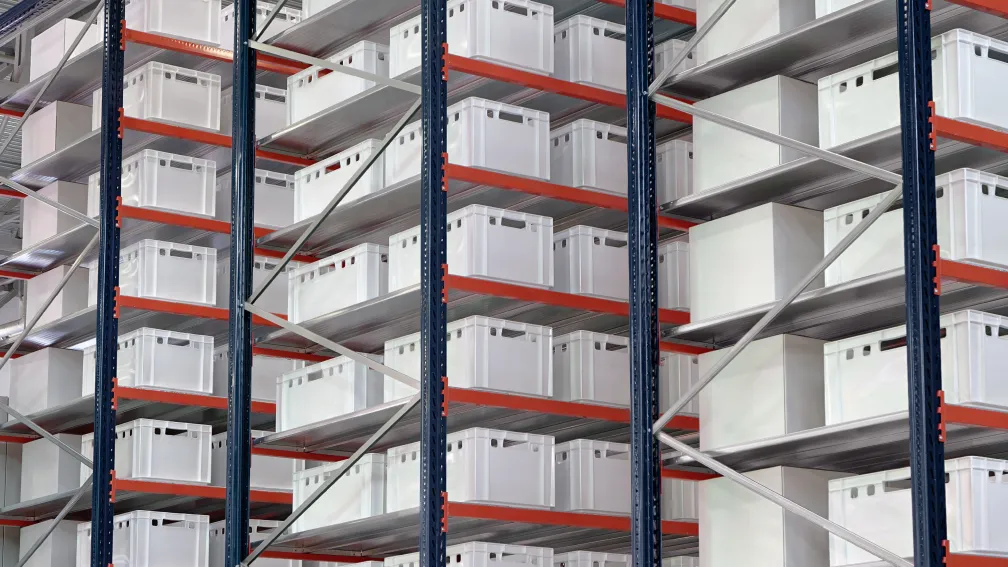
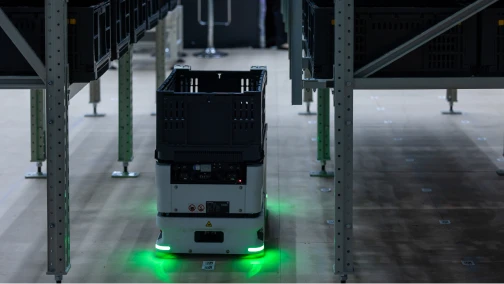
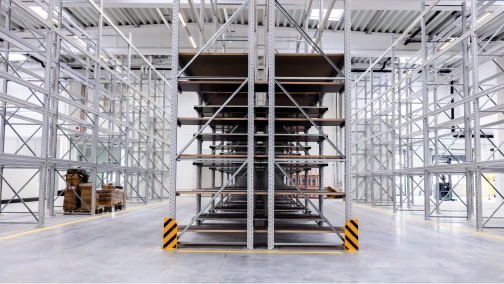
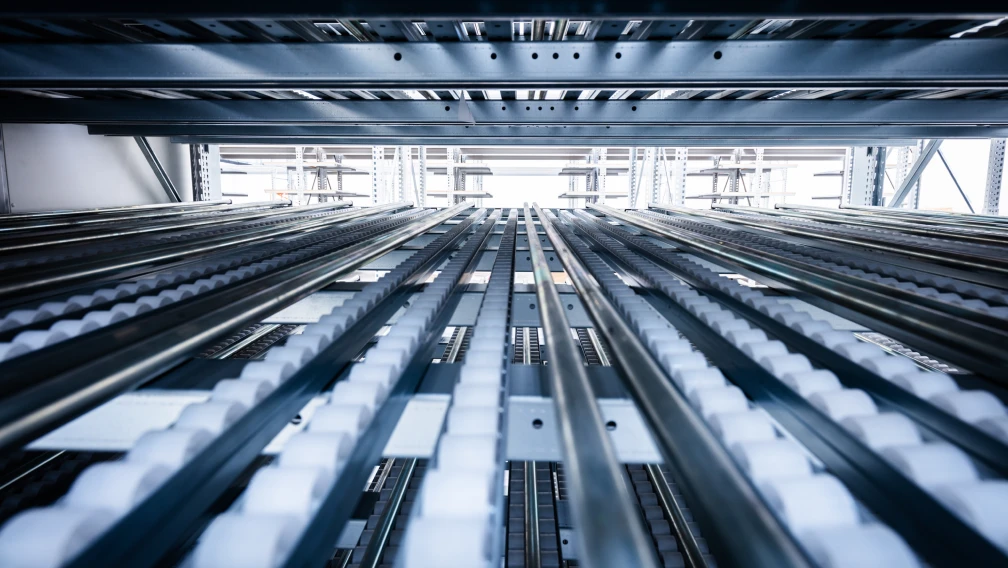
A High-Speed Bin Robot system is an autonomous, decentralized storage and retrieval network designed specifically for handling standardized plastic totes or cartons (typically weighing up to 35 kilograms). Unlike aisle-captive stacker cranes, these robotic units operate on an unconstrained horizontal grid.
Chassis Design and Extraction Mechanics
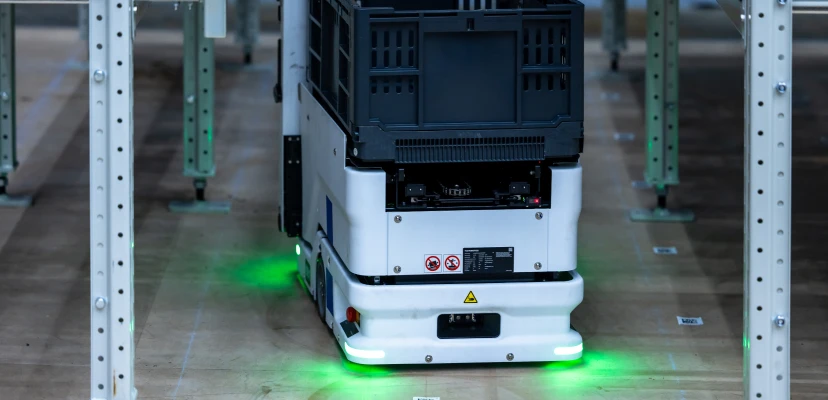
The robotic units are engineered for maximum acceleration. By utilizing lightweight aluminum or composite chassis and powering the drive train with advanced supercapacitors or high-discharge lithium-ion batteries, the robots minimize their own moving mass. This allows them to execute rapid acceleration and deceleration profiles without subjecting the racking structure to extreme dynamic loads.
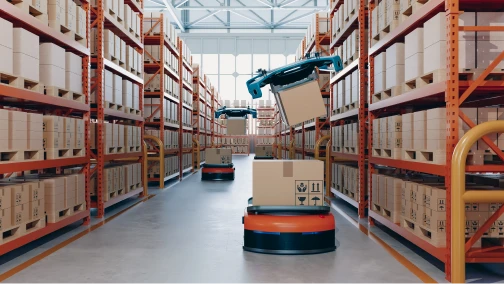
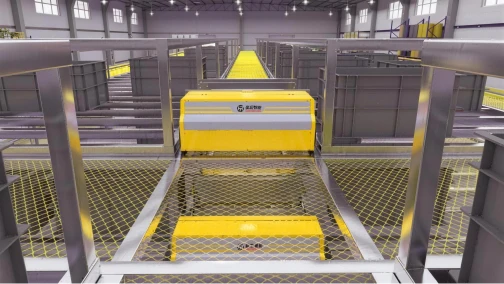
When a robot arrives at the target storage coordinate, its load handling device (LHD)—typically utilizing high-friction telescopic belts or mechanical clamping arms—engages the tote and pulls it onto the robot's carriage. The vehicle then navigates the grid, delivering the payload either directly to an ergonomic picking workstation or to a vertical lift (elevator) that transports the tote to the ground-level conveyor network.
Decentralized Grid Navigation
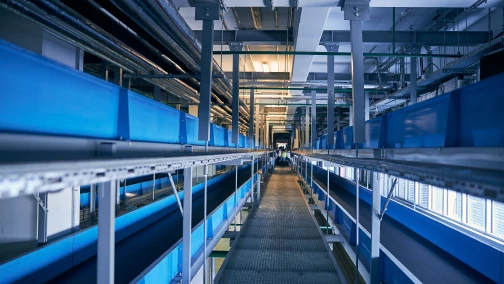
The defining operational advantage of this architecture is its decentralized routing. Because the robots travel on continuous horizontal rails integrated into the racking, they can cross aisles and bypass localized traffic. If an aisle experiences heavy retrieval demand, the fleet control software routes idle robots into that zone to provide parallel processing power. This multi-directional capability entirely eliminates the single-point-of-failure risk inherent in legacy crane systems.
Engineering the Goods-to-Person Workstation
Delivering totes to the edge of the storage grid is only half the equation; the system must optimize the human-machine interface at the picking station. G2P workstations are ergonomically engineered to maximize operator throughput while minimizing physical fatigue.
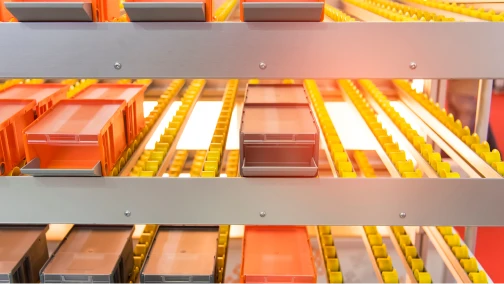
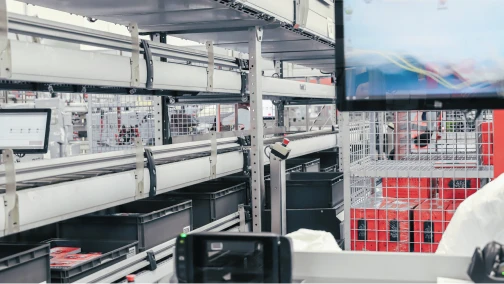
When a tote arrives at the station, the operator does not need to search for the required SKU. The workstation utilizes Pick-to-Light technology or a mounted display that visually indicates exactly which compartment within the divided tote holds the required item, and exactly how many units to extract. The operator performs a short, ergonomic arm movement to transfer the goods into the awaiting outbound order carton.
Because the operator remains stationary and follows strict visual prompts, the cognitive load and physical strain are drastically reduced. Facilities transitioning from manual cart picking to optimized G2P workstations routinely observe pick rates increasing from 80-120 lines per hour to 400-600 lines per hour, alongside a near-total elimination of mispick errors.
Software Orchestration: WMS and RCS Synchronization
The mechanical speed of the robots is useless without intelligent order sequencing. The efficiency of a G2P system relies entirely on the continuous data handshake between the Warehouse Management System (WMS) and the Robot Control System (RCS).
Dynamic Order Batching
When an e-commerce platform transmits a wave of 1,000 orders to the WMS, the software does not process them chronologically. Instead, it analyzes the entire order pool and batches them based on inventory intersection. If thirty different orders require the exact same SKU, the WMS sequences those orders to arrive at the picking station simultaneously. The RCS dispatches a robot to retrieve the source tote holding that SKU, and the operator picks from that single tote into thirty different outbound cartons in one fluid sequence. This "one-to-many" picking logic drastically reduces the total number of robotic retrieval cycles required.
FEFO Compliance and Lot Traceability
For FMCG, pharmaceuticals, and food production, inventory expiration is a critical liability. The WMS enforces strict First-Expired-First-Out (FEFO) logic. Because every tote in the automated grid is digitally indexed with its exact batch number and expiration date, the WMS guarantees that the oldest viable product is retrieved first. If a specific production lot is recalled, the WMS executes a logical quarantine, instantly blocking the RCS from dispatching robots to retrieve any totes associated with that batch. This provides absolute compliance and traceability without requiring manual inventory sweeps.
Comparative System Analysis
When engineering an automated tote buffer, facilities generally evaluate Bin Robots against traditional Miniload cranes. While both offer high vertical density, their throughput capabilities differ.
| Specification Parameter | High-Speed Bin Robots | Miniload AS/RS |
| Throughput Scalability | Highly scalable. Throughput increases linearly by introducing more robots to the grid. | Fixed. Throughput is strictly capped by the travel speed of the single aisle-captive crane. |
| System Redundancy | Distributed. A failed robot is bypassed by the fleet; system continues operating at near-full capacity. | Single point of failure. A crane fault traps all inventory in that aisle until manual repairs are completed. |
| Energy Consumption | Low. Robots move minimal dead weight and utilize regenerative braking. | High. Large motors must move a massive vertical steel mast for every single pick cycle. |
| Building Adaptability | Flexible. Grid can navigate around pillars and operate in irregular floor plans. | Rigid. Requires long, perfectly straight, unobstructed aisles to function. |
Deployment in Brownfield Facilities
Constructing a new automated facility (greenfield) is ideal, but the majority of FMCG distributors must upgrade existing operational warehouses (brownfield). High-Speed Bin Robot grids are structurally modular, meaning they do not necessarily require the perfectly flat, heavily reinforced concrete slabs demanded by multi-ton crane systems.
Furthermore, grid implementation can be phased. A facility can install a core racking block and a base fleet of robots to handle the top 20% of fastest-moving SKUs. As capital becomes available or order volume increases, the racking grid can be expanded down the aisle, and additional robots can be introduced to the network without halting ongoing operations. This modularity derisks the automation investment, allowing the physical infrastructure to scale in exact synchronization with business growth.
Validating the G2P Investment
Transitioning to a robotic Goods-to-Person architecture transforms the warehouse from a labor-dependent bottleneck into a highly predictable, deterministic machine. By eliminating walking time, enforcing absolute inventory accuracy through WMS integration, and scaling throughput independently of storage volume, operations can consistently meet strict shipping cut-offs regardless of labor availability.
Engineering the correct system requires deep analysis of historical order profiles, SKU dimensions, and peak-season throughput requirements.
→ Contact the HOWEPROFIT engineering team to request a material flow simulation and throughput analysis for your fulfillment center.
-

HOWEPROFIT Team
Warehouse Automation Specialists, HOWEPROFIT
The HOWEPROFIT Team consists of senior intralogistics engineers and supply chain experts specializing in advanced AS/RS and robotic fulfillment solutions. Backed by years of field experience across e-commerce, 3PL, and manufacturing sectors, we provide data-driven automation strategies, rigorous throughput simulations, and objective ROI modeling. Our mission is to help facilities seamlessly transition to high-efficiency, reliable, and scalable automated operations.