The Spatial Paradox in Bulk Pallet Storage
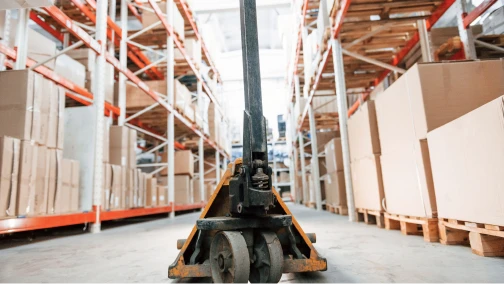
Industrial warehousing is fundamentally governed by the cost per pallet position. For decades, facilities handling bulk palletized goods—such as food and beverage manufacturers, cold chain operators, and heavy industrial suppliers—relied on standard selective racking or Very Narrow Aisle (VNA) systems. These manual architectures face strict physical limits. VNA forklifts hit a practical kinematic ceiling at roughly 15 meters, and selective racking requires that 40% to 50% of the building’s total square footage remain completely empty simply to serve as driving aisles.
To compress the footprint and increase vertical density, facilities historically deployed drive-in racking. However, drive-in systems are notoriously susceptible to forklift impact damage, enforce rigid Last-In-First-Out (LIFO) inventory logic, and suffer from poor space utilization (honeycombing) when lanes cannot be fully loaded. Automated Storage and Retrieval Systems (AS/RS) replace these compromised manual frameworks with deterministic, high-density engineering.
For bulk pallet storage, the engineering decision centers on balancing volumetric efficiency against individual pallet selectivity. The two dominant architectures solving this are the crane-based Unit-Load AS/RS and the robotic Deep-Lane Pallet Shuttle system. This analysis details the mechanical mechanics, throughput limits, and software orchestration required to deploy these heavy-duty networks.
Unit-Load AS/RS: Stacker Cranes and High Selectivity
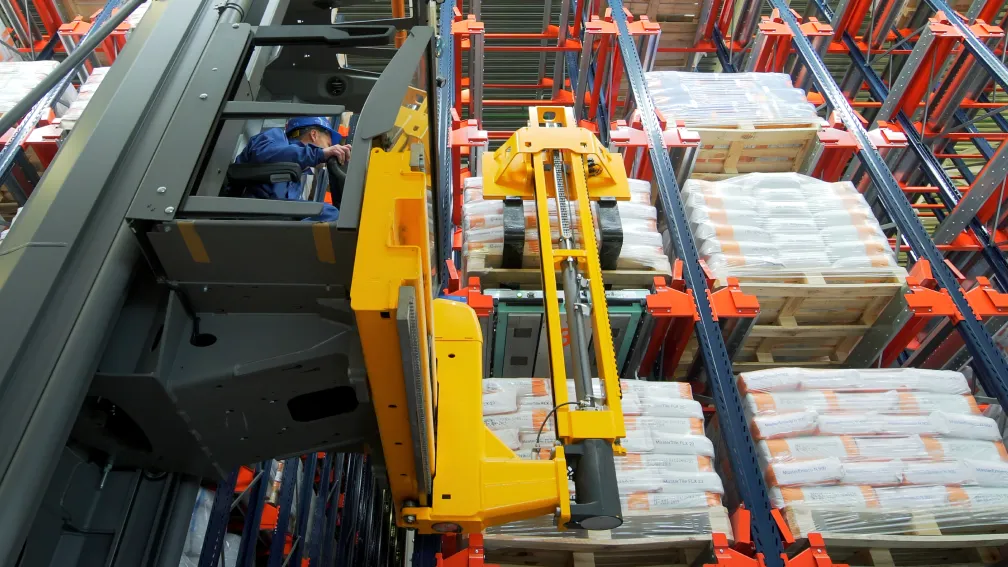
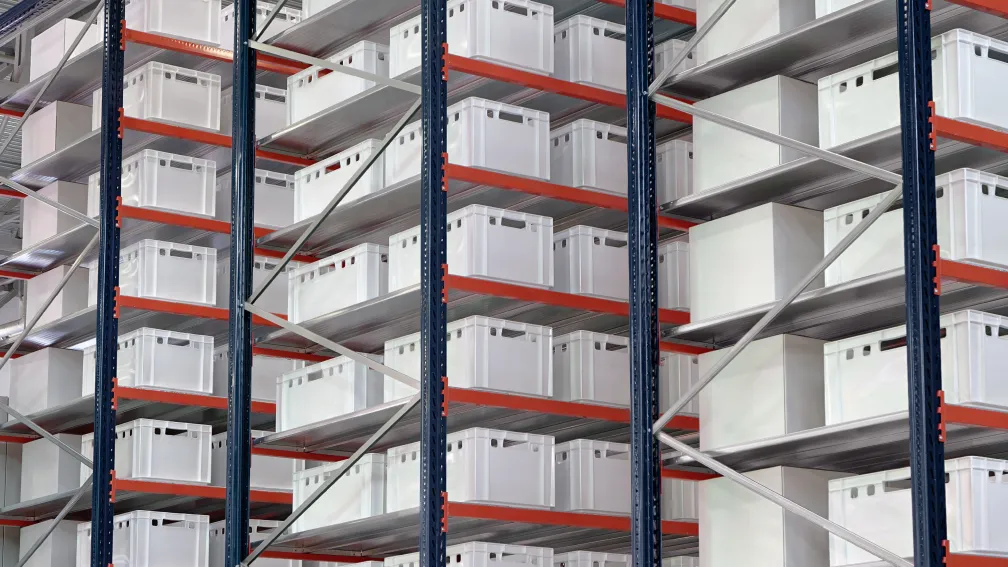
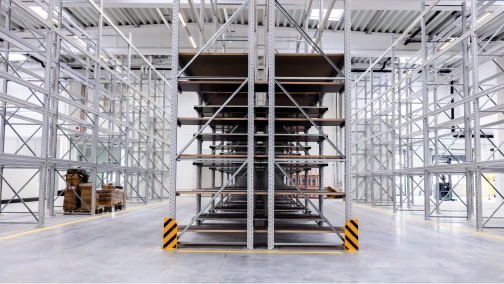
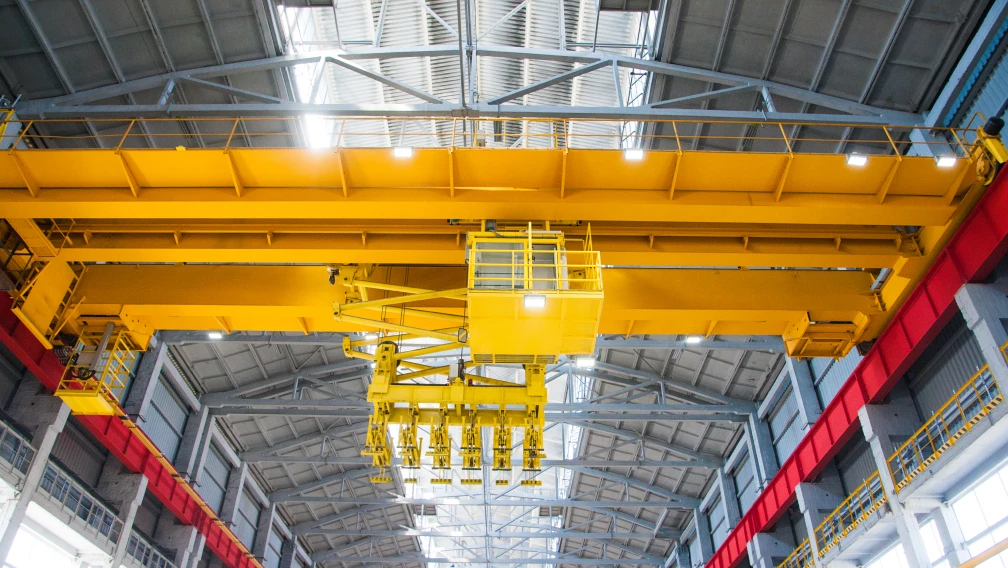
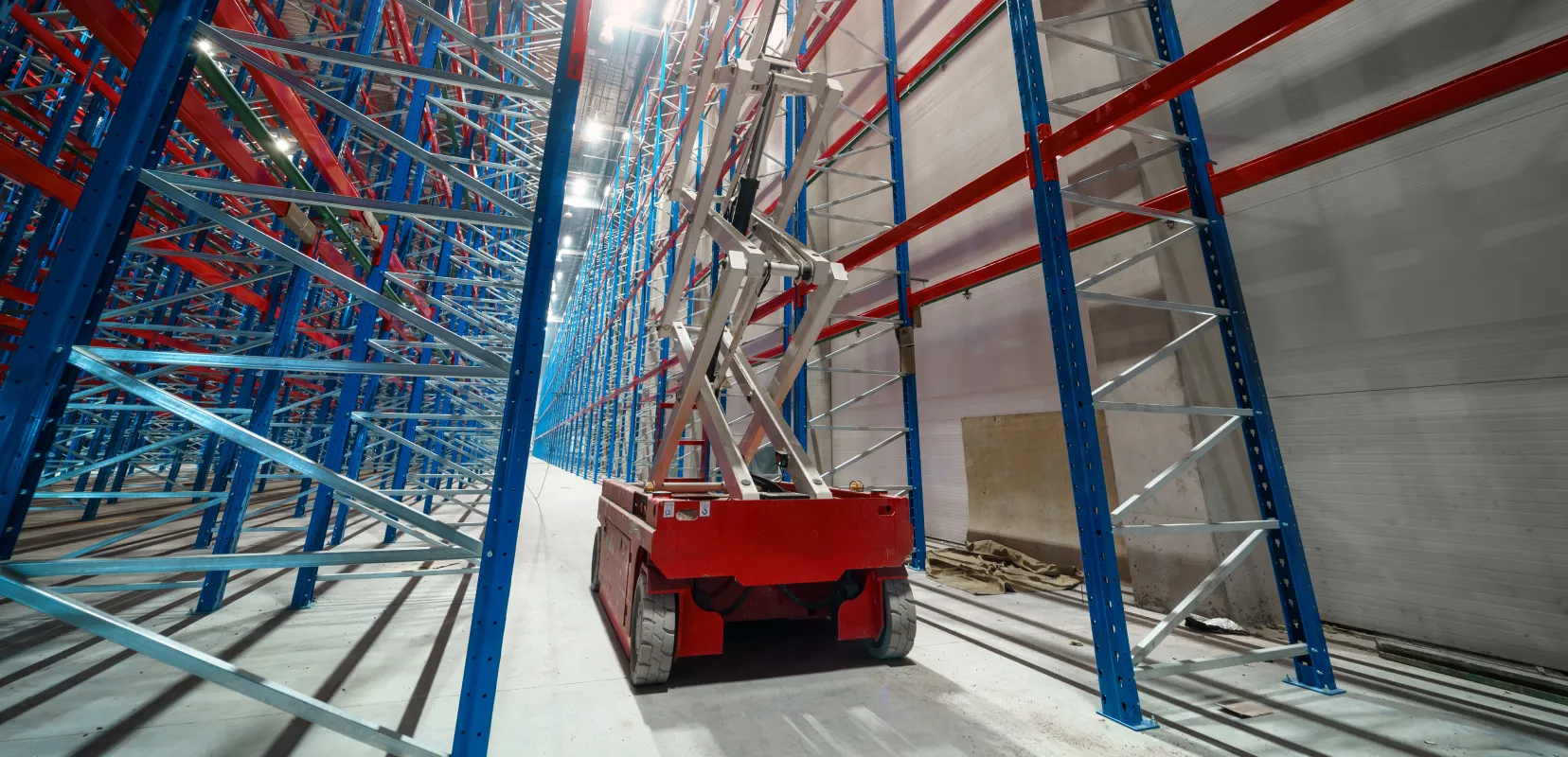
The Unit-Load AS/RS represents the baseline standard for automated pallet handling. It operates on an aisle-captive model, deploying a heavy-duty stacker crane running on a floor-mounted rail between two towering faces of high-bay racking.
Kinematics and Structural Load
An industrial stacker crane handles standard wooden or plastic pallets weighing between 500 kg and 1,500 kg. To achieve high-bay storage (often exceeding 30 meters in height), the crane utilizes single or double-mast steel configurations. The engineering constraint here is mast deflection. When accelerating a 1,500 kg payload horizontally at 3 meters per second, the kinetic energy transferred through the mast is immense. The control software must calculate precise acceleration and deceleration S-curves to prevent the mast from oscillating. If structural sway exceeds millimeter tolerances, the telescopic forks on the Load Handling Device (LHD) will fail to align with the pallet coordinates in the rack.
Selectivity vs. Density
Unit-Load cranes typically operate in single-deep or double-deep configurations. In a single-deep layout, the crane has 100% direct access to every single pallet in the aisle. In a double-deep layout, the LHD utilizes extended telescopic forks to store two pallets sequentially in the same slot, sacrificing a minor degree of selectivity for a roughly 25% increase in storage density. This architecture is mandatory for distribution centers with high SKU proliferation where access to specific, distinct pallets is required instantly, without digging through blocking inventory.
Deep-Lane Pallet Shuttles: Maximizing Volumetric Efficiency
When a facility produces massive volumes of a limited number of SKUs—such as a bottled water plant or a paper mill—100% individual pallet selectivity is unnecessary. If a manufacturer stores 5,000 pallets of the exact same product, retrieving the specific pallet at coordinate X-Y-Z is irrelevant; any pallet of that batch will suffice. In this scenario, aisle space is wasted space.
Eliminating Aisles with Robotic Shuttles
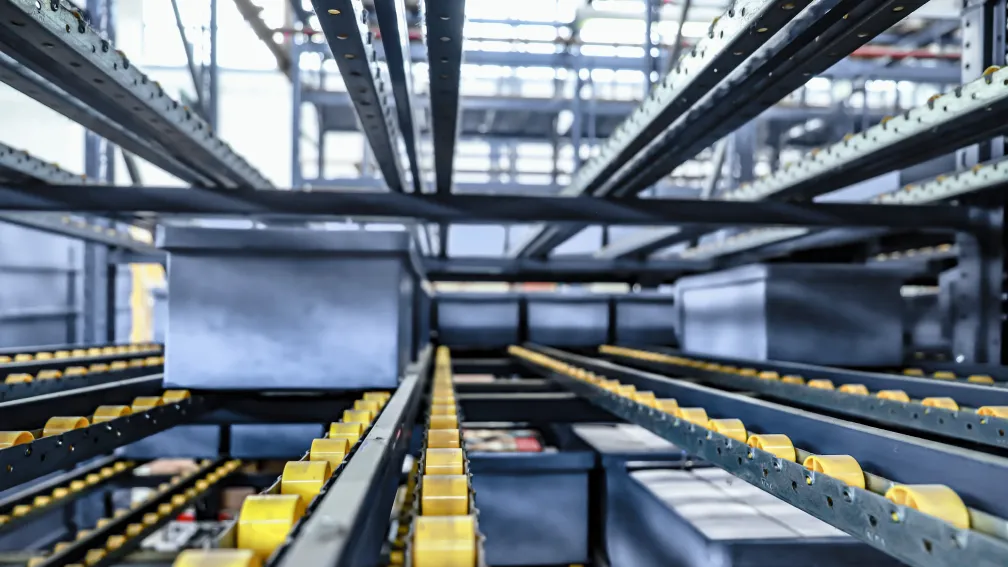
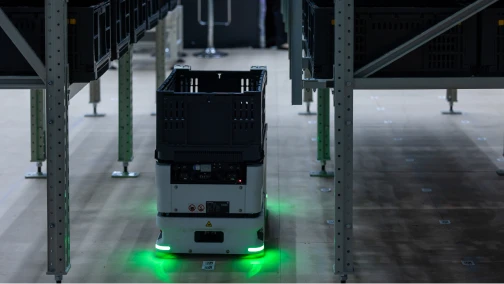
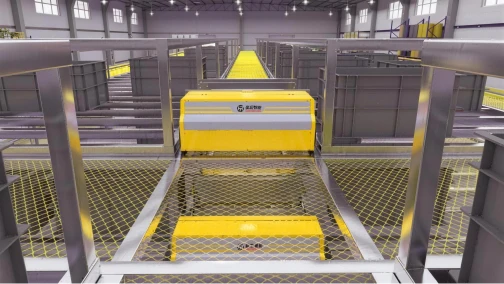
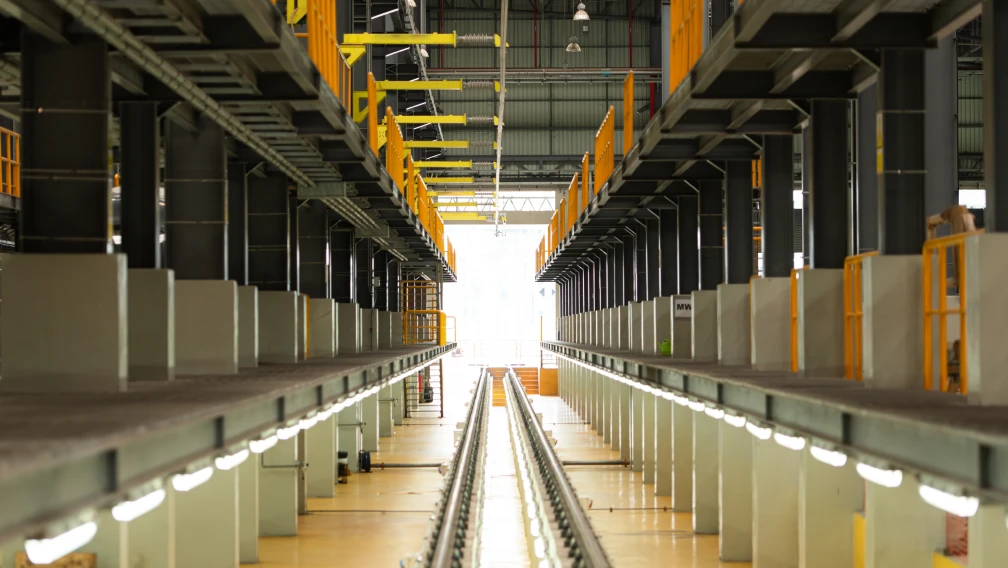
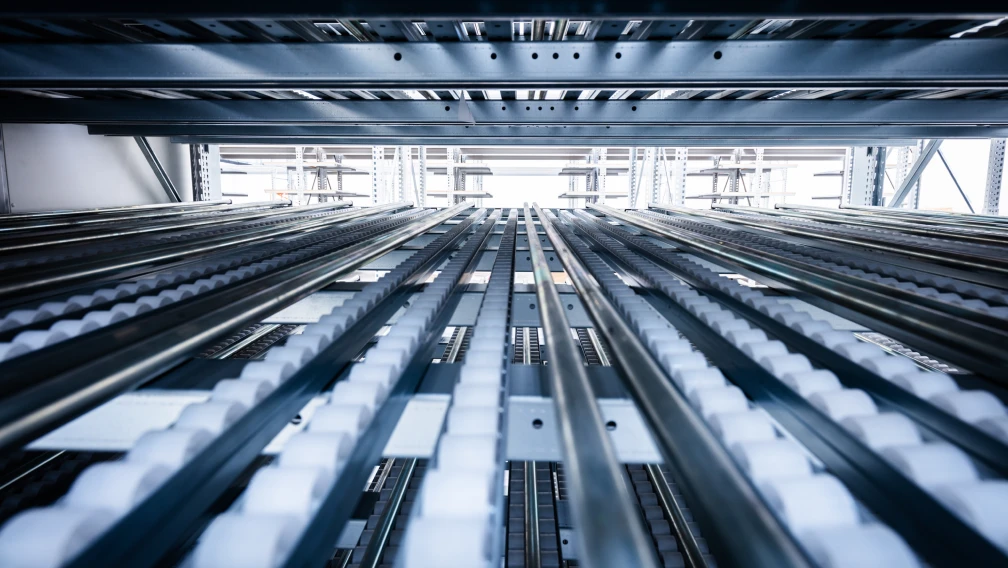
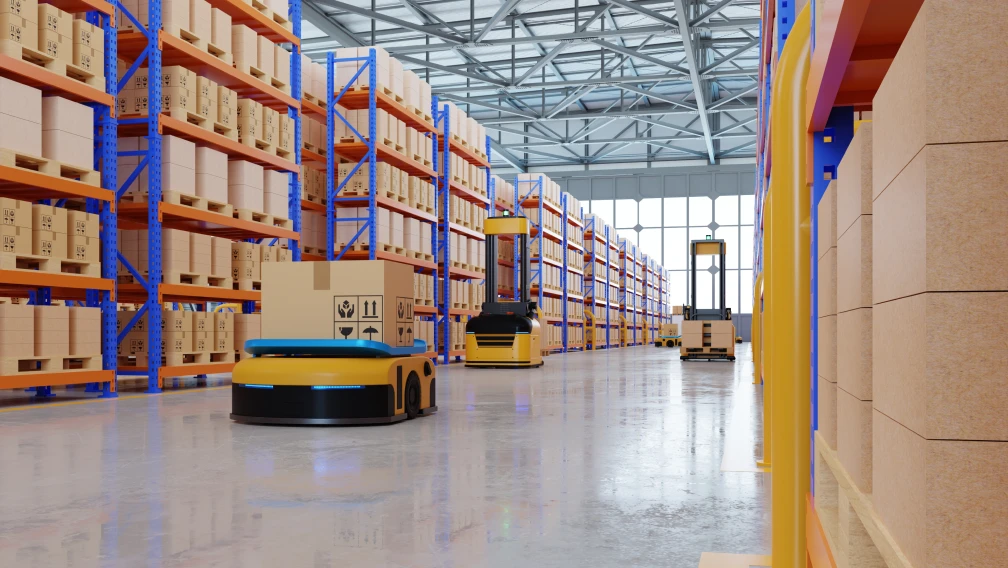
The Deep-Lane Pallet Shuttle architecture eliminates crane aisles entirely. Pallets are stored in deep, continuous rack channels holding 10, 20, or even 30 pallets per lane. Instead of a crane driving down an aisle, a low-profile, battery-powered autonomous shuttle drives directly underneath the pallets on integrated channel rails.
The operation is highly modular. A forklift or a designated aisle-roaming stacker crane places the pallet at the input buffer of the channel. The pallet shuttle drives under the pallet, elevates its chassis slightly via hydraulic or electromechanical lifts to disengage the pallet from the rack rails, and transports it deep into the channel. The shuttle automatically indexes the pallet centimeters away from the adjacent load to maximize density. Because the entire building block is packed solidly with inventory, deep-lane shuttle systems achieve the highest volumetric efficiency physically possible in warehousing.
Multi-Directional Shuttle Evolution
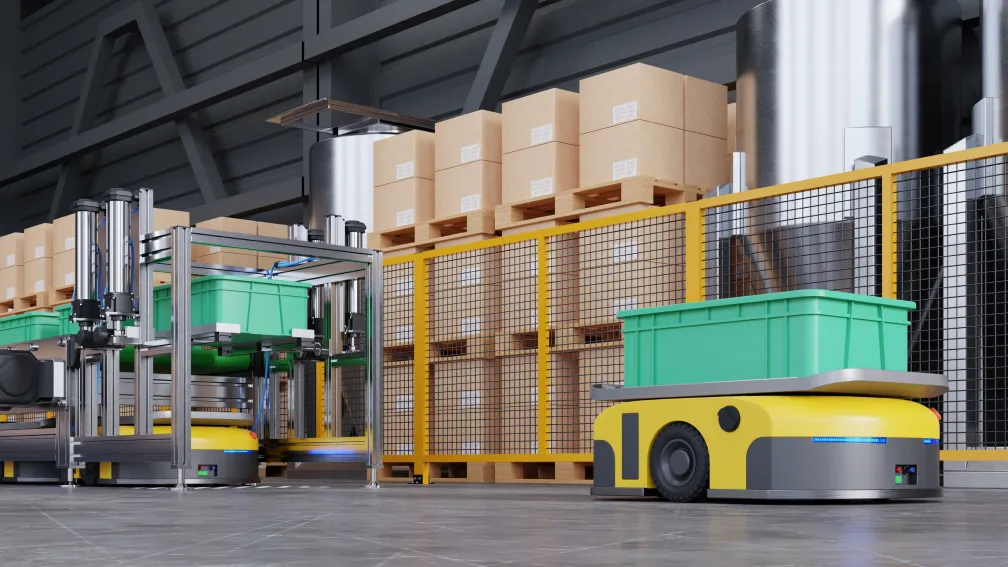
Modern iterations have evolved into complex 2D and 3D automated grid systems. Rather than relying on forklifts to move shuttles between lanes, advanced four-way heavy-duty shuttles utilize secondary wheel mechanisms to execute 90-degree turns. These vehicles autonomously navigate horizontal rails across the face of the racking, enter the required deep lane, and deposit the pallet, providing highly parallel, multi-vehicle throughput without requiring heavy crane infrastructure.
| Specification Parameter | Unit-Load AS/RS (Stacker Cranes) | Deep-Lane Pallet Shuttles |
| Selectivity | 100% immediate access to any pallet (single-deep). | Low. Front pallets block access to rear pallets in the same channel. |
| Volumetric Density | High vertical density, but requires aisles for crane travel. | Maximum possible density. Eliminates nearly all horizontal aisle space. |
| Optimal SKU Profile | High SKU count, low volume per SKU (e.g., retail distribution). | Low SKU count, high volume per SKU (e.g., food & beverage manufacturing). |
| Throughput Mechanism | Fast vertical/horizontal travel, but limited to one crane per aisle. | Highly parallel. Multiple shuttles operate simultaneously across various lanes. |
Software Orchestration: WMS Lane Management and Defragmentation
Managing a block of 10,000 pallets stored 15-deep requires highly specialized algorithms. If software logic fails in a deep-lane system, pallets become physically buried and inaccessible.
FIFO and LIFO Configuration
The Warehouse Management System governs the loading logic. In a Last-In-First-Out (LIFO) configuration, pallets are loaded and retrieved from the same face of the rack. In a First-In-First-Out (FIFO) setup—critical for perishable goods—pallets are loaded on one side of the block and retrieved by shuttles from the opposite face. The WMS strictly enforces SKU purity per lane; it physically blocks the system from storing a pallet of Product A in a channel already containing Product B to prevent retrieval deadlocks.
Automated Defragmentation Algorithms
The most sophisticated function of a deep-lane WMS is autonomous defragmentation (or honeycombing resolution). Over a working week, as partial orders are fulfilled, storage lanes become fragmented (e.g., a 20-deep lane only holds 4 pallets). This wastes capacity. During off-peak hours (such as 2:00 AM), the WMS automatically dispatches the pallet shuttles to execute background consolidation tasks. The shuttles independently move the remaining pallets from multiple partially empty lanes, consolidating them into a single full lane. By the time the morning production shift begins, the system has autonomously freed up entirely empty lanes ready for massive inbound bulk receiving.
Structural Safety and Fire Suppression Compliance
Constructing high-density pallet storage alters building safety profiles. Storing flammable goods in deep-lane blocks creates dense fire loads that traditional ceiling-mounted ESFR sprinklers cannot penetrate.
Deploying these systems frequently requires in-rack fire suppression networks. Pressurized water pipes must be engineered directly into the racking uprights and flue spaces. The civil engineering challenge is routing this piping grid so that it never encroaches upon the kinematic envelope of the stacker cranes or the autonomous shuttles. Furthermore, the racking structures themselves—often rack-clad buildings where the rack directly supports the roof and external walls—require precise seismic engineering to ensure wind and earthquake loads do not compromise the millimeter tolerances required by the robotic LHDs.
Executing the System Design
Selecting between stacker cranes and deep-lane shuttles is an exercise in data physics, not preference. If a 3PL handles diverse client goods requiring immediate access, a single-deep Unit-Load crane is the mandatory architecture. If a dairy plant is buffering thousands of pallets of milk for a 48-hour curing process, a deep-lane shuttle system provides unmatched density and operational savings.
The engineering analysis relies on profiling your facility's SKU count, pallets per SKU ratio, required hourly throughput, and batch rotation rules (FIFO/LIFO).
→ Contact HOWEPROFIT’s structural engineering team to model the kinematic layout and volumetric capacity for your bulk pallet operation.
-

HOWEPROFIT Team
Warehouse Automation Specialists, HOWEPROFIT
The HOWEPROFIT Team consists of senior intralogistics engineers and supply chain experts specializing in advanced AS/RS and robotic fulfillment solutions. Backed by years of field experience across e-commerce, 3PL, and manufacturing sectors, we provide data-driven automation strategies, rigorous throughput simulations, and objective ROI modeling. Our mission is to help facilities seamlessly transition to high-efficiency, reliable, and scalable automated operations.