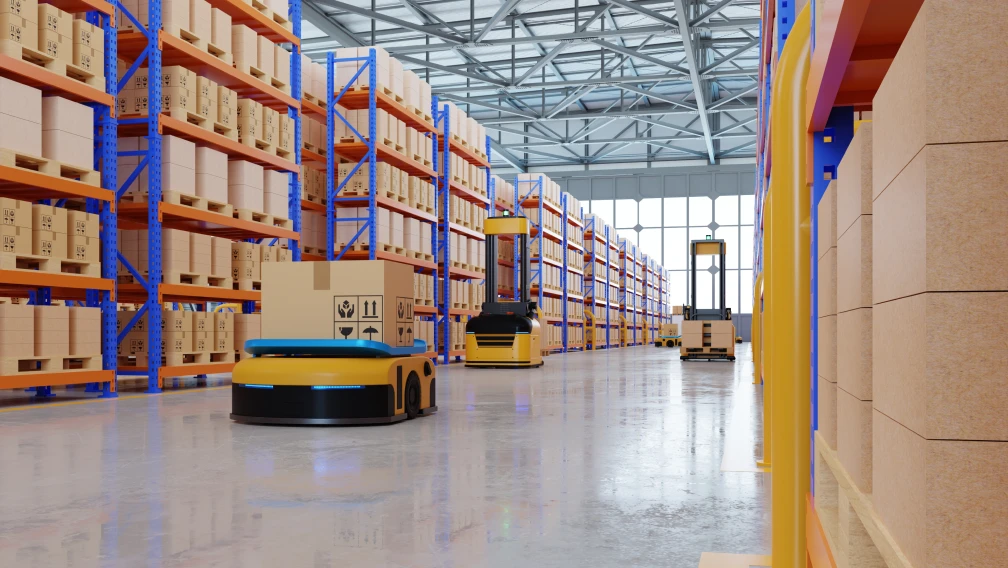
The Catastrophic Risk Profile of Chemical Intralogistics
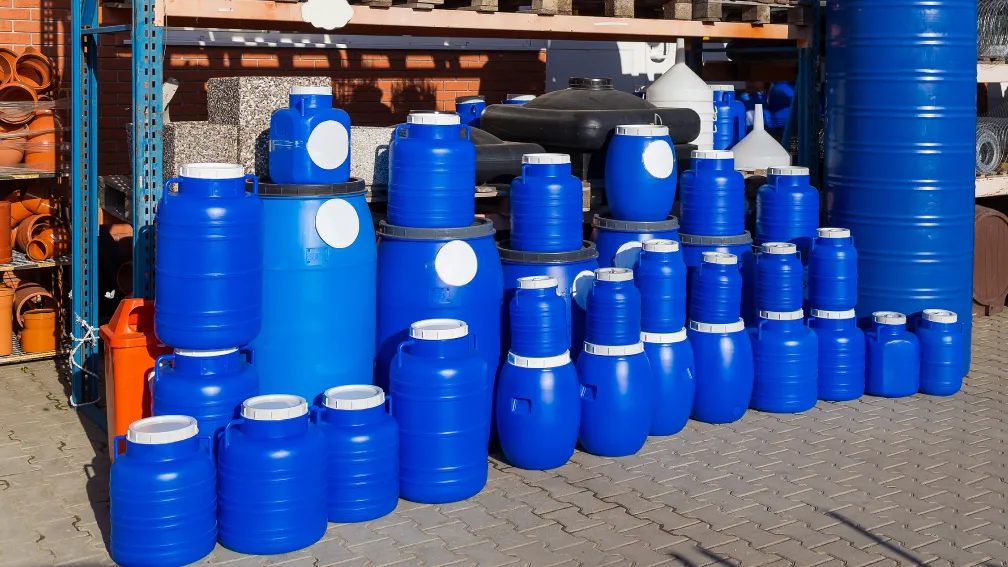
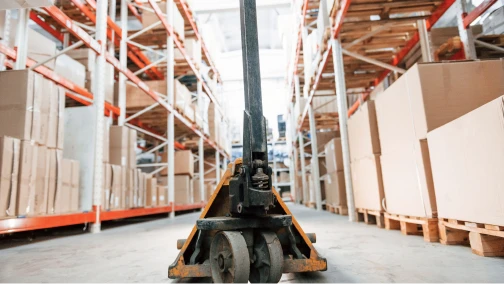
Warehousing hazardous materials (Hazmat)—including volatile organic compounds (VOCs), concentrated acids, highly flammable solvents, and reactive industrial chemicals—requires mitigating catastrophic risk at every operational node. In conventional manual facilities handling 55-gallon drums or 1,000-liter Intermediate Bulk Containers (IBCs), the primary vector for disaster is human-operated forklift traffic. A misjudged approach angle by a forklift tine can puncture an IBC, releasing hundreds of liters of flammable liquid. Furthermore, manual chemical facilities rely on vast, horizontal footprints to maintain regulatory segregation distances, which drastically increases land costs and complicates vapor extraction.
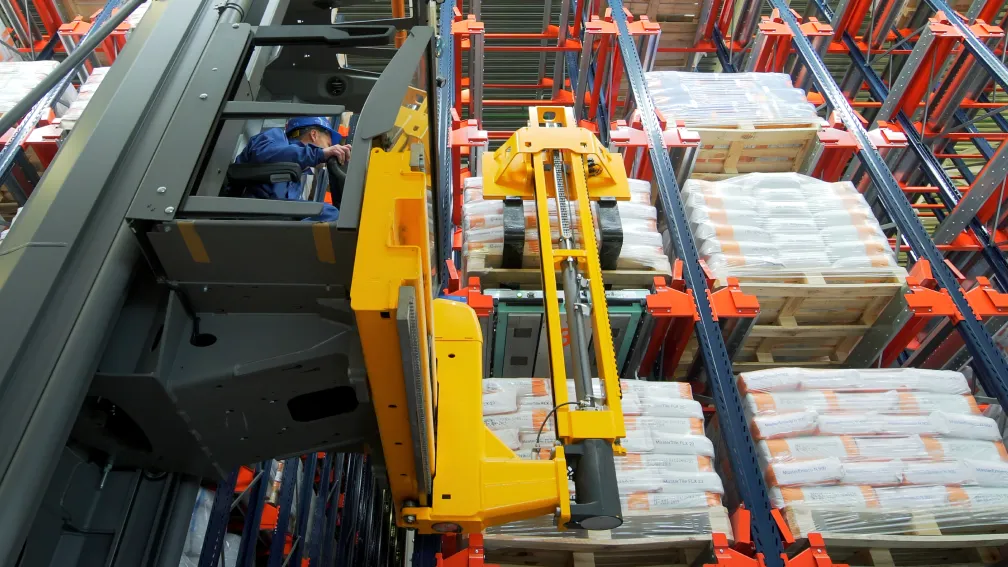
Implementing an Automated Storage and Retrieval System (AS/RS) neutralizes the human-error element in physical handling and compresses the storage footprint vertically. However, deploying multi-ton electromechanical automation inside a highly combustible atmosphere presents an immense engineering contradiction. Standard electrical motors spark; standard steel forks generate friction sparks upon impact; and standard control cabinets allow the ingress of explosive vapors. Operating automation safely in chemical plants and specialized 3PL hazmat facilities requires stringent explosion-proof engineering, strict adherence to ATEX (Europe) or NFPA (North America) directives, and sophisticated algorithmic segregation managed by the software layer.
Explosion-Proof Engineering: ATEX and NFPA Compliance
A chemical warehouse is typically classified into hazardous zones based on the probability and duration of an explosive atmosphere occurring. Equipment deployed in these zones (e.g., ATEX Zone 1/Zone 2 or NFPA Class I, Division 1/Division 2) must be engineered so that it cannot act as an ignition source under normal operations or projected fault conditions.
Intrinsically Safe and Purged Electrical Enclosures
Standard automated guided vehicles or stacker cranes utilize vented control cabinets to cool internal PLCs and drive inverters. In a hazmat AS/RS, these cabinets are replaced with Ex-d (flameproof) or Ex-p (pressurized) enclosures. A pressurized cabinet maintains a constant flow of inert gas (like nitrogen) or clean instrument air at a higher pressure than the ambient warehouse atmosphere. This positive pressure physically prevents volatile chemical vapors from entering the enclosure and reaching the electrical contacts. If the internal pressure drops, fail-safe sensors immediately cut all electrical power to the crane before ambient vapors can ingress.
Mechanical Spark Mitigation
Electricity is not the only ignition source; kinetic friction is equally dangerous. A heavy-duty Unit-Load AS/RS designed for chemical handling must feature specific metallurgical adaptations. The load handling devices (LHDs), specifically the telescopic extraction forks, are clad in non-sparking alloys, typically brass or specialized stainless steel. The travel wheels on the base carriage are manufactured from anti-static Vulkollan or specialized conductive polyurethanes that constantly bleed static electricity into a grounded floor rail, preventing static charge accumulation during high-speed horizontal travel.
Fluid Dynamics and Kinematic Control
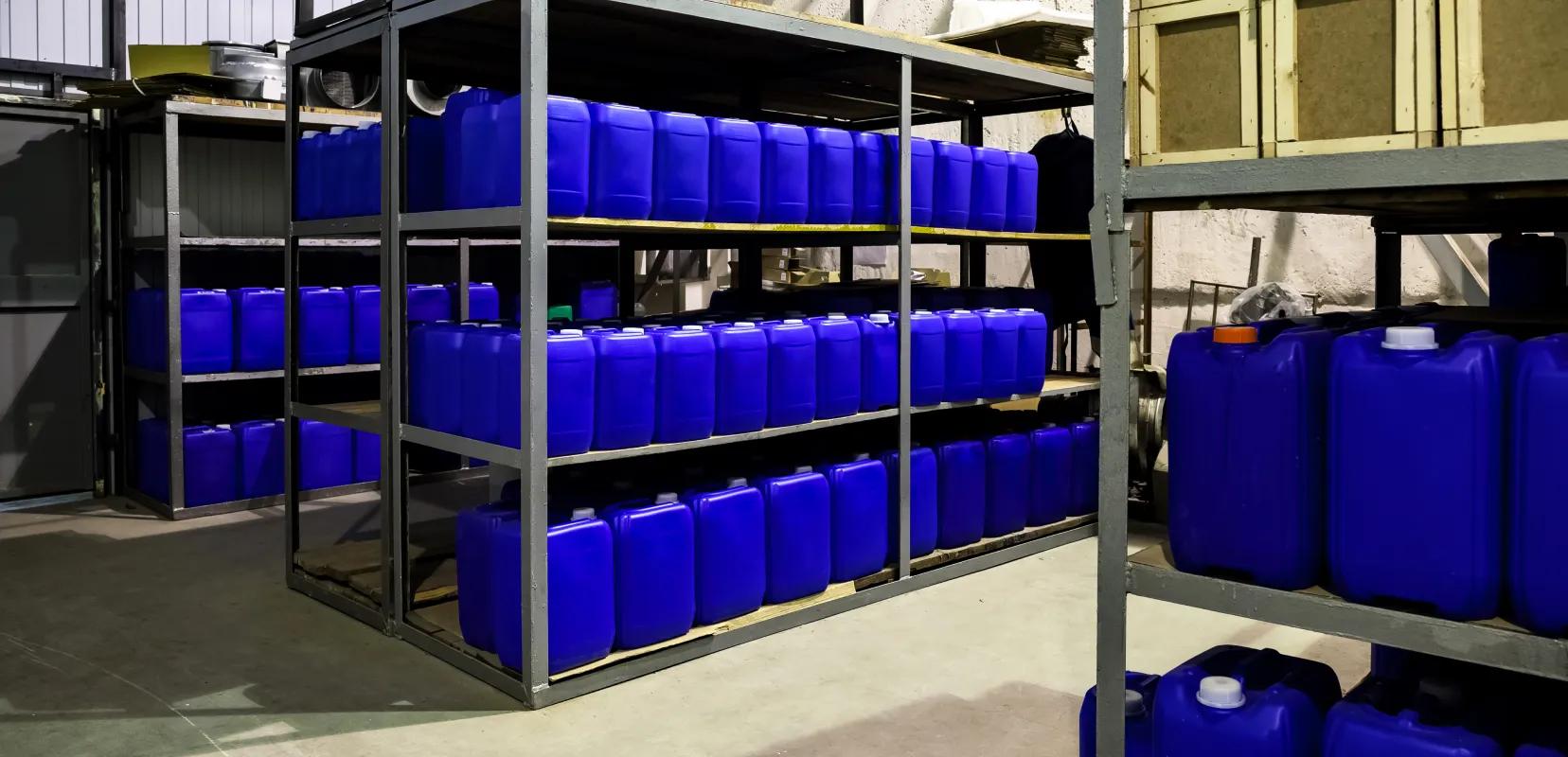
Handling solid goods (like boxes of consumer electronics) involves fixed centers of gravity. Handling 1,000 liters of liquid solvent inside an IBC involves dynamic fluid mechanics. When a stacker crane accelerates rapidly, the liquid inside the container sloshes, creating massive shifts in the payload's center of gravity. If the acceleration is too violent, this fluid wave can exert enough lateral force to destabilize the load on the forks or stress the IBC containment bladder.
The Warehouse Control System (WCS) driving a chemical AS/RS utilizes customized kinematic profiles. The drive inverters are programmed with elongated, highly controlled S-curve acceleration and deceleration ramps. This software-governed motion profile ensures that the crane achieves maximum permissible transit speed without inducing dangerous fluid sloshing, ensuring the IBC or drum pallet remains completely static on the extraction forks.
Architectural Integrations: Spill Containment and Ventilation
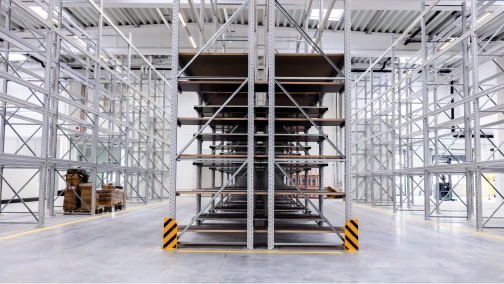
The physical racking structure in a hazmat facility differs significantly from standard high-bay warehouses. It must actively interface with the building's environmental safety systems.
Sump Integration and Sloped Racking
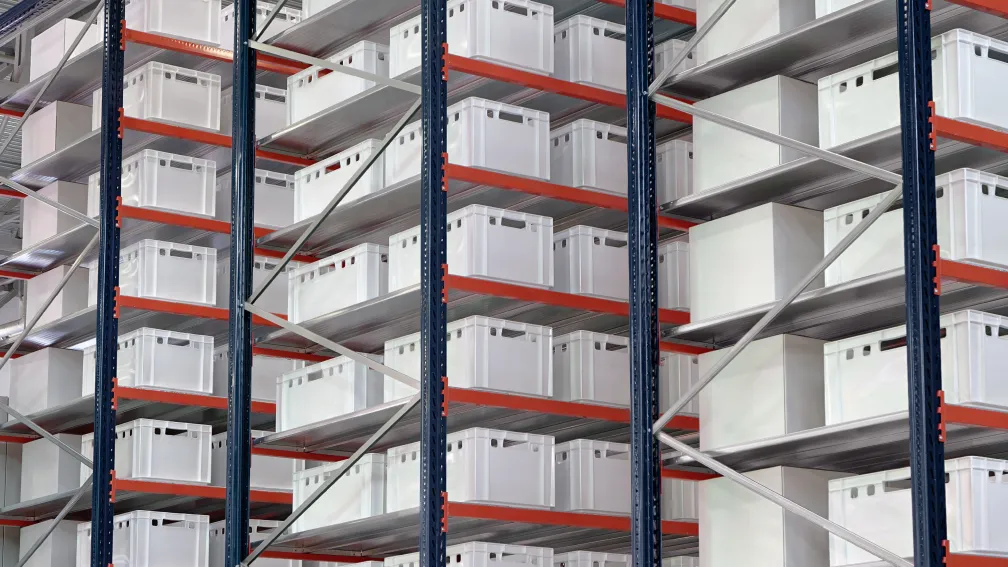
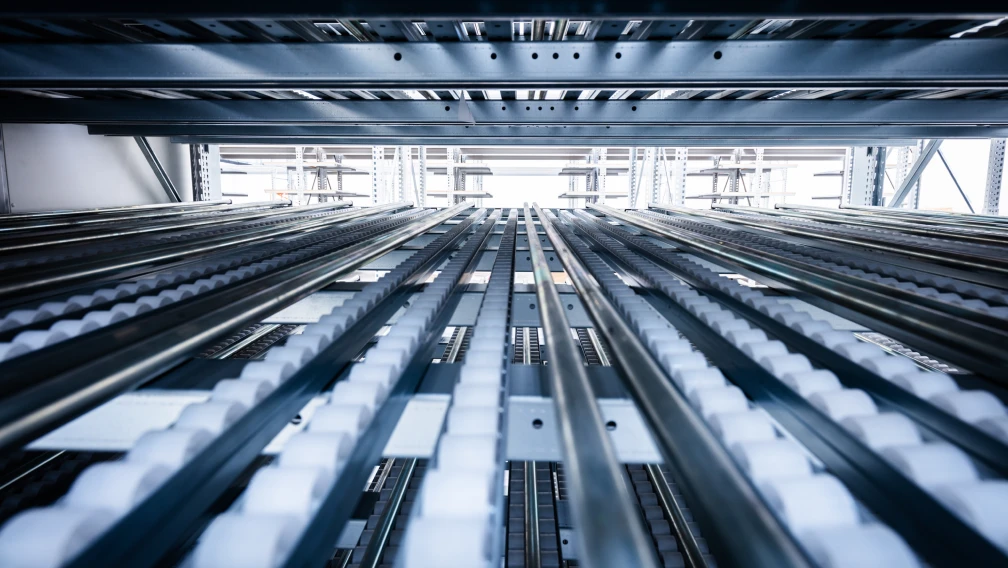
Despite the elimination of forklift punctures, systems must still account for spontaneous container failure (e.g., a defective drum seal). The racking structure is integrated with a grated floor system suspended above chemical sumps. The horizontal beams supporting the pallets are often slightly sloped, directing any leaking fluid backward toward centralized drainage channels built directly into the rack uprights. This prevents a leak on the 10th tier from cascading down and contaminating the pallets stored on the nine tiers below it.
Gas Detection and Automated Evacuation
The racking matrix is laced with localized VOC sniffers and LEL (Lower Explosive Limit) sensors. These sensors are integrated directly into the safety PLC network of the AS/RS. If a chemical vapor concentration spikes in a specific aisle, the system executes an automated containment protocol. The stacker cranes in that aisle immediately execute a controlled halt, locking their brakes and shutting down all non-essential power to remove any theoretical ignition sources. Simultaneously, the system commands the facility's HVAC network to trigger localized high-velocity vapor extraction in that specific storage zone.
Software Orchestration: Algorithmic Segregation
Mechanical safety mechanisms are the last line of defense; the primary defense is software-enforced segregation. Regulatory codes dictate that reactive chemicals must be separated by physical distance or fire-rated walls. For example, storing a strong oxidizer next to a flammable solvent creates an unacceptable risk of a highly exothermic reaction in the event of a dual leak.
The WMS Segregation Matrix
Our Warehouse Management System manages chemical storage through a rigid, multi-dimensional segregation matrix. Every SKU is indexed with its UN number, hazard class, and specific reactive incompatibilities. When a pallet of oxidizers is received, the WMS evaluates the entire storage grid. It dynamically calculates exclusion zones, ensuring the crane cannot physically slot the oxidizer within a legally restricted radius of any incompatible flammable liquids. If an operator attempts to manually override the slotting coordinate to a non-compliant location, the WMS physically blocks the stacker crane from executing the put-away command.
Fire-Load Density Tracking
Fire codes often restrict the total volume of flammable liquids that can be stored within a specific fire zone (e.g., maximum allowable quantities per control area). The WMS tracks the volumetric capacity of every stored drum and IBC in real time. It calculates the cumulative fire load of specific aisles or zones. Once a zone reaches its legal volumetric limit for highly flammable liquids, the WMS routes all subsequent inbound flammable pallets to an alternate, compliant fire zone within the facility, ensuring the warehouse never violates its fire marshal permit parameters.
Validating the Hazmat Automation Investment
Building a greenfield chemical AS/RS, or retrofitting a legacy hazmat facility, requires an immense front-end engineering effort. The control cabinets, specialized motors, and heavy-duty racking command a premium over standard logistics equipment. However, the operational economics overwhelmingly favor automation.
By utilizing vertical storage, chemical distributors drastically reduce the massive land footprint typically required to satisfy horizontal segregation distances. The total elimination of human forklift operators within the hazardous zone reduces insurance premiums, eliminates handling-induced spills, and ensures absolute, software-enforced compliance with environmental and fire regulations. In chemical logistics, predictability is safety, and an engineered AS/RS provides the highest level of deterministic control available.
→ Contact HOWEPROFIT’s industrial engineering division to discuss the kinematic and regulatory requirements for your hazardous material storage facility.
-

HOWEPROFIT Team
Warehouse Automation Specialists, HOWEPROFIT
The HOWEPROFIT Team consists of senior intralogistics engineers and supply chain experts specializing in advanced AS/RS and robotic fulfillment solutions. Backed by years of field experience across e-commerce, 3PL, and manufacturing sectors, we provide data-driven automation strategies, rigorous throughput simulations, and objective ROI modeling. Our mission is to help facilities seamlessly transition to high-efficiency, reliable, and scalable automated operations.