Returns have grown from a logistics afterthought into one of the largest controllable cost centers in commerce. E-commerce return rates commonly run between 15 and 30 percent depending on category, with fashion at the top of that range, and every returned unit travels backward through a supply chain that was engineered for one-way flow. A returned item passes through receiving, inspection, grading, repackaging, and restocking or disposition, and each manual touch erodes the margin the item can recover. Industry analyses consistently put the handling cost of a return between 20 and 65 percent of the item's original sale value, before any markdown is taken.
Reverse logistics automation applies the same engineering discipline used in forward fulfillment to this backward flow: mechanized induction, software-driven grading and disposition, automated buffering, and system-directed restocking. This article examines how returns processing is designed as an engineered flow, which automation architectures fit its unusual inventory profile, and how disposition software determines the margin an operator actually recovers.
Why Returns Break Conventional Warehouse Design
Reverse flow differs from forward flow in ways that invalidate standard warehouse assumptions. Inbound arrives as single units in heterogeneous packaging, not as pallets of uniform cartons, so receiving is piece-level and unpredictable in volume, spiking after promotions and seasonal peaks with ratios that can exceed three times the daily average. Every unit requires an individual disposition decision, because the same SKU can arrive new-in-box, lightly used, damaged, or fraudulent, and each condition routes to a different destination. Inventory identity is unstable: a returned item may lack its original barcode, carry a customer-applied label, or arrive in a third-party shipping bag, so the system must establish identity at induction rather than assume it.
These characteristics explain why manual returns processing is slow and expensive. An operator walking a static sortation wall achieves limited decisions per hour, decisions vary in quality between workers, and graded inventory accumulates in staging areas awaiting transport to its next step. Each day of delay costs recovery value, because returned goods depreciate on a curve: current-season fashion loses a significant share of its resale value within weeks, and consumer electronics depreciate continuously against new-model releases.
Engineering the Returns Flow
Mechanized Induction and Singulation
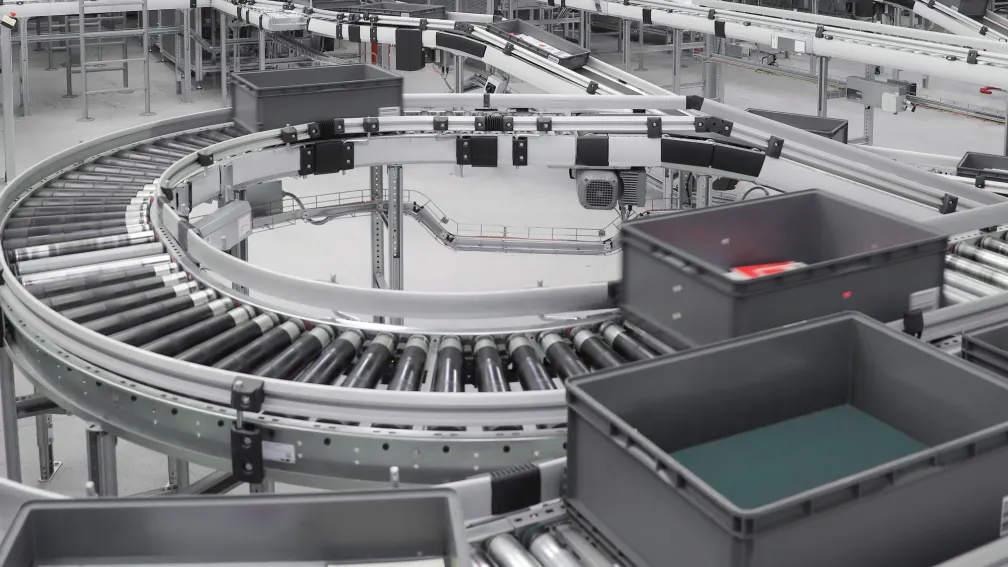
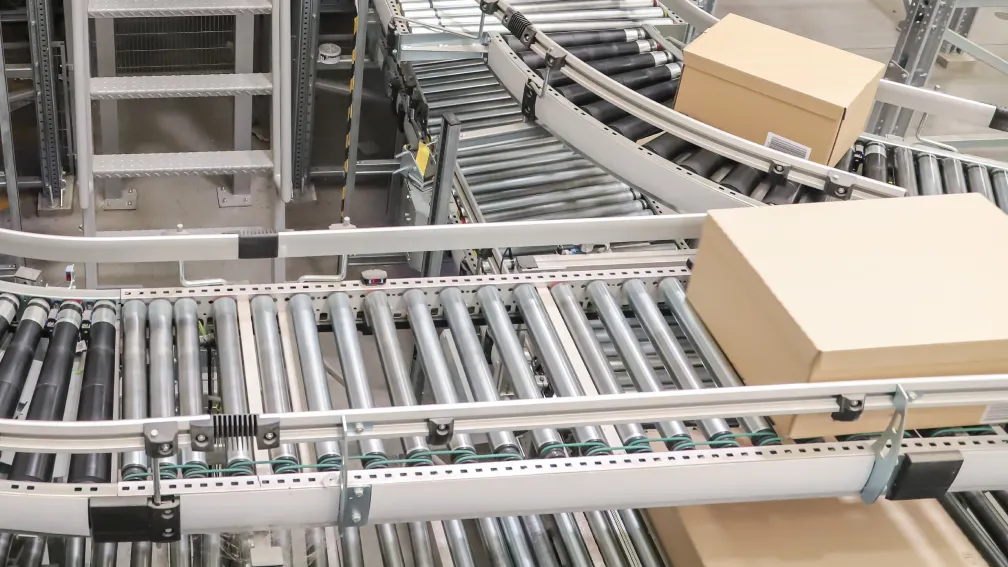
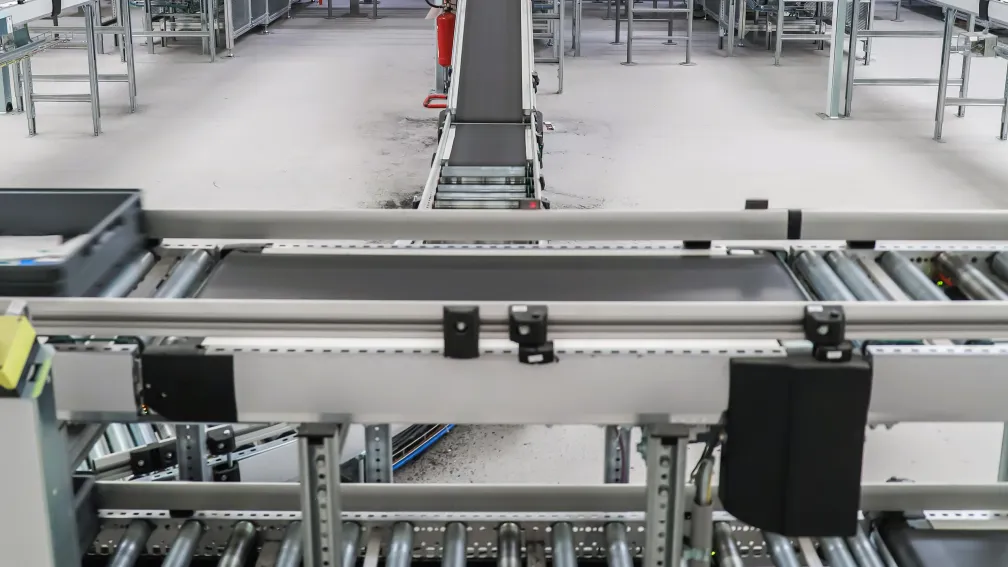
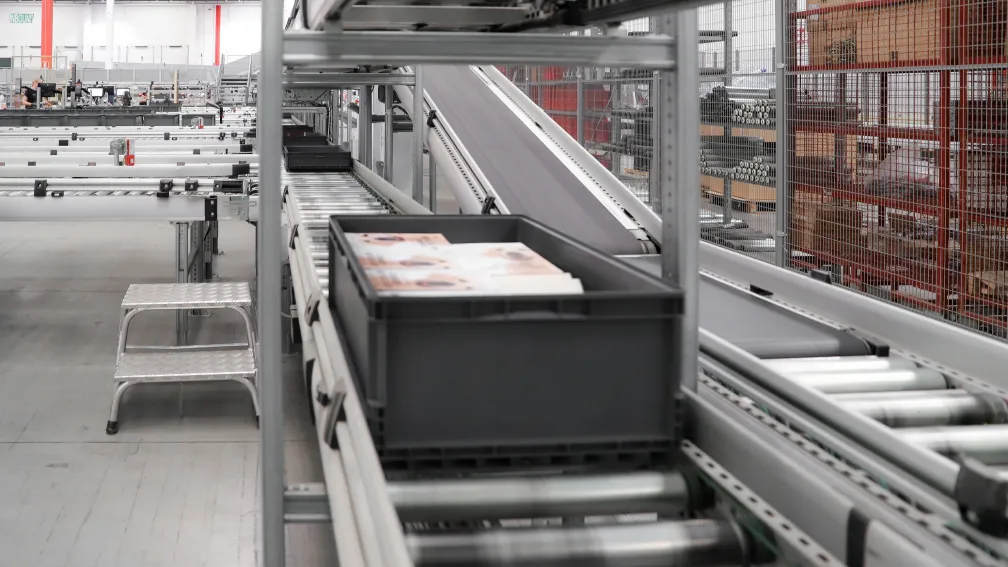
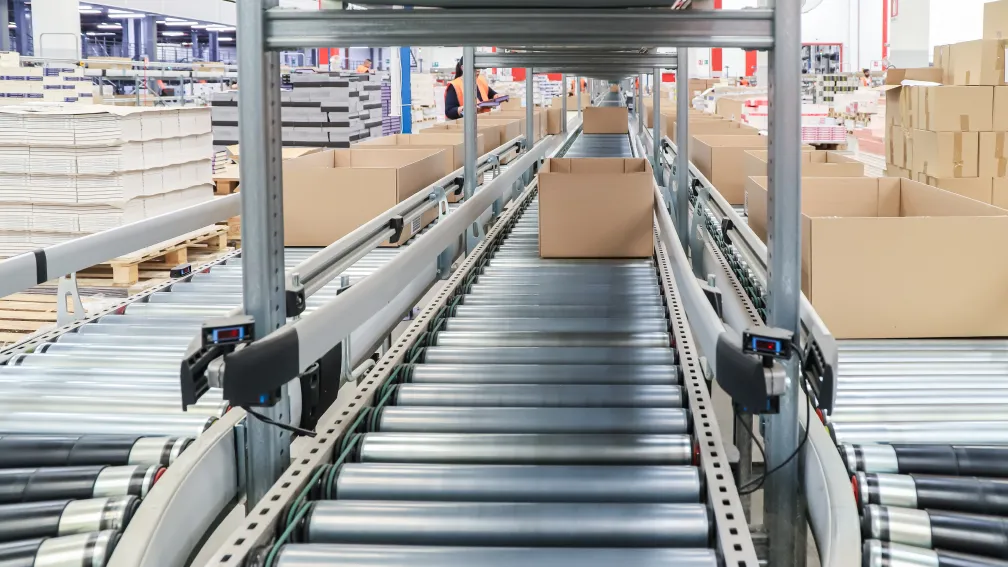
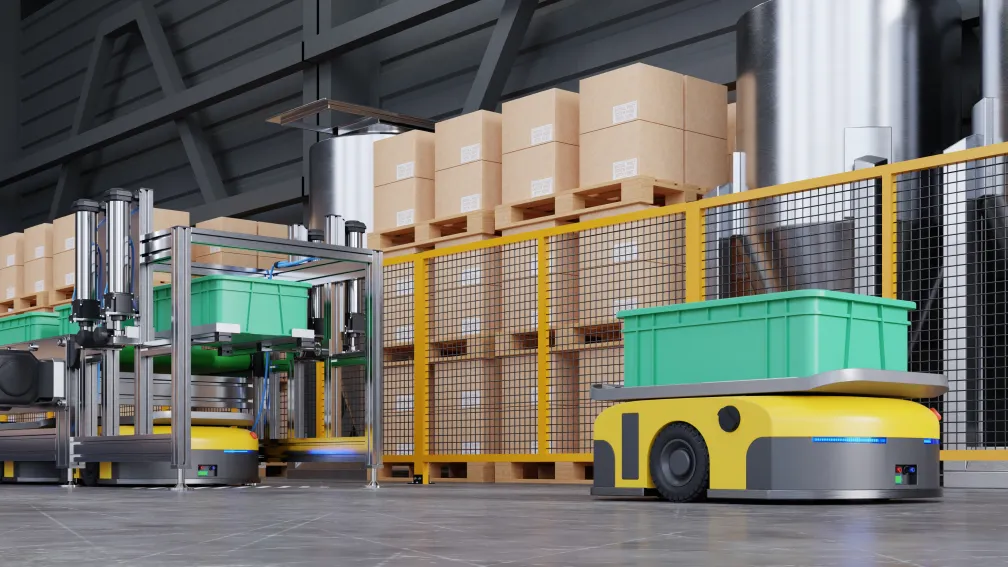
The engineered flow begins at induction. Returned parcels and polybags are tipped onto singulation conveyors that separate the bulk stream into spaced individual items, where scanner tunnels read carrier labels, RMA barcodes, and any surviving product codes. Items that scan cleanly are inducted with identity already established; items that fail scanning divert to a manual identity station where an operator keys or photographs the item into the system. High-performance induction lines process several thousand units per hour, which converts the post-peak returns surge from a weeks-long backlog into a days-long one.
Grading Stations and Disposition Logic
After identification, each unit reaches a grading workstation where an operator inspects condition against category-specific criteria. The critical element is that the software, not the operator's judgment alone, drives the disposition. The system presents the grading checklist for that product type, captures the operator's inputs, and then applies disposition rules: restock as new if unopened, route to refurbishment if repairable within a defined cost ceiling, send to liquidation channels if recovery value falls below the refurbishment threshold, or scrap if safety or compliance rules prohibit resale. Rule-based disposition removes the inconsistency of individual judgment and guarantees that every unit follows the margin-optimal path defined by category management.
Fraud Detection at the Grading Station
Returns fraud, including wardrobing, switched items, and empty-box claims, accounts for a measurable share of return volume in apparel and electronics. The grading station is the effective control point. Weight verification compares each returned parcel against the shipped weight recorded at outbound; photographic capture at grading creates an evidence record linked to the order and the customer account; and the system flags accounts whose return patterns cross statistical thresholds for review before refund release. Automation contributes the consistency that manual inspection cannot: every unit is weighed, photographed, and graded against the same checklist, so anomalous returns surface as data exceptions rather than depending on an operator noticing something unusual at the end of a long shift.
Automated Buffering and Sortation
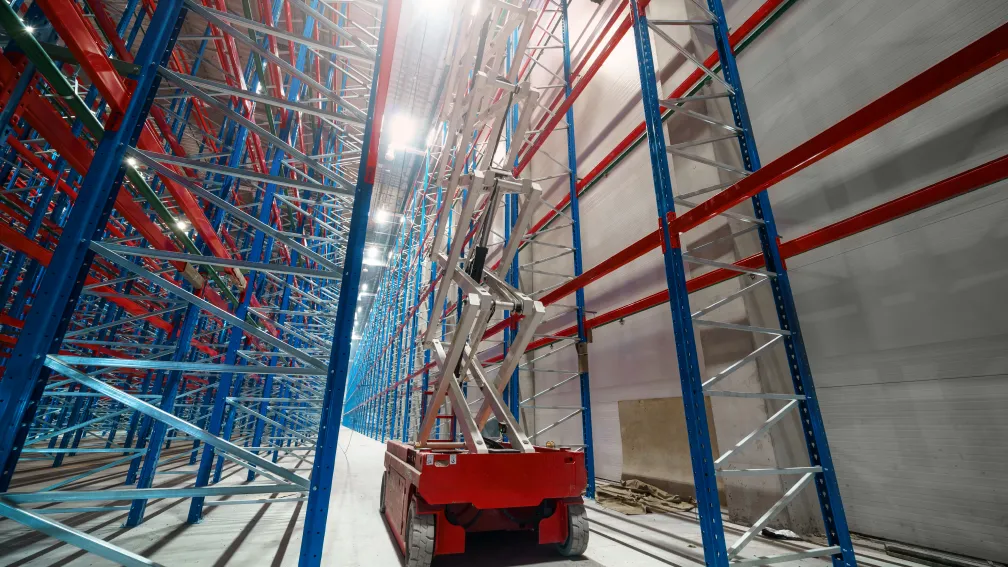
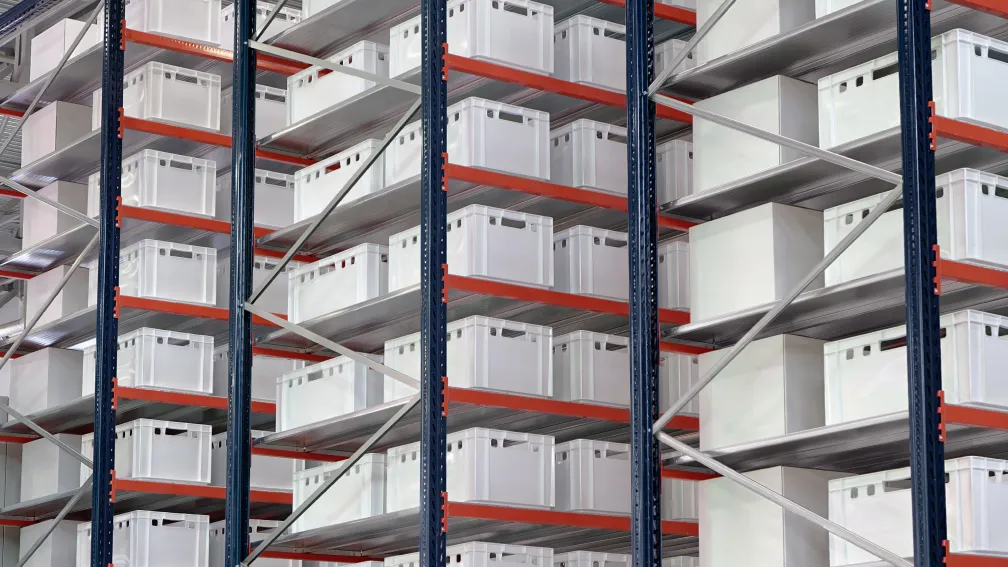
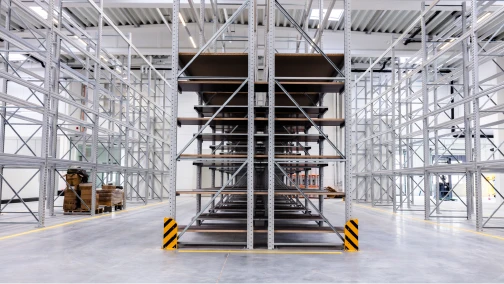
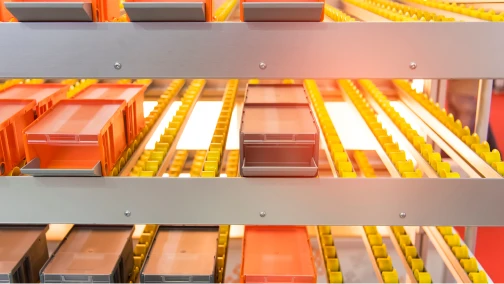
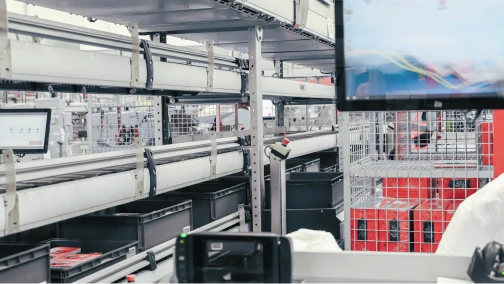
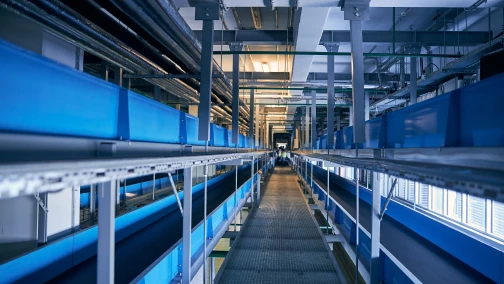
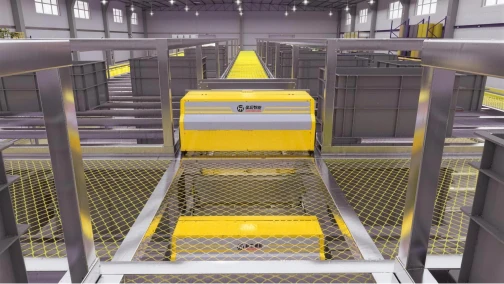
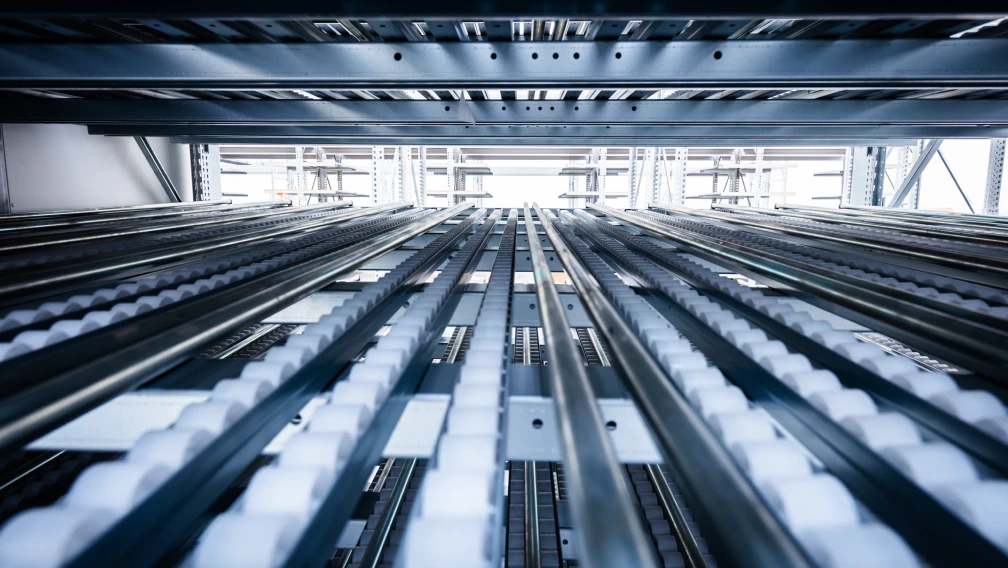
Graded units are conveyed to sortation equipment, typically a cross-belt or tilt-tray sorter, which routes each item to the destination lane for its disposition: restock, refurbish, liquidate, return-to-vendor, or recycle. Between grading and final disposition, an automated buffer absorbs the volume. This is where storage hardware earns its place in reverse logistics: a mini-load AS/RS holds graded totes by disposition class and releases them in batch-optimized sequence, so restock-bound items consolidate into full totes for a single trip back into forward inventory rather than dribbling back one unit at a time.
Reintegrating Returned Inventory into Forward Fulfillment
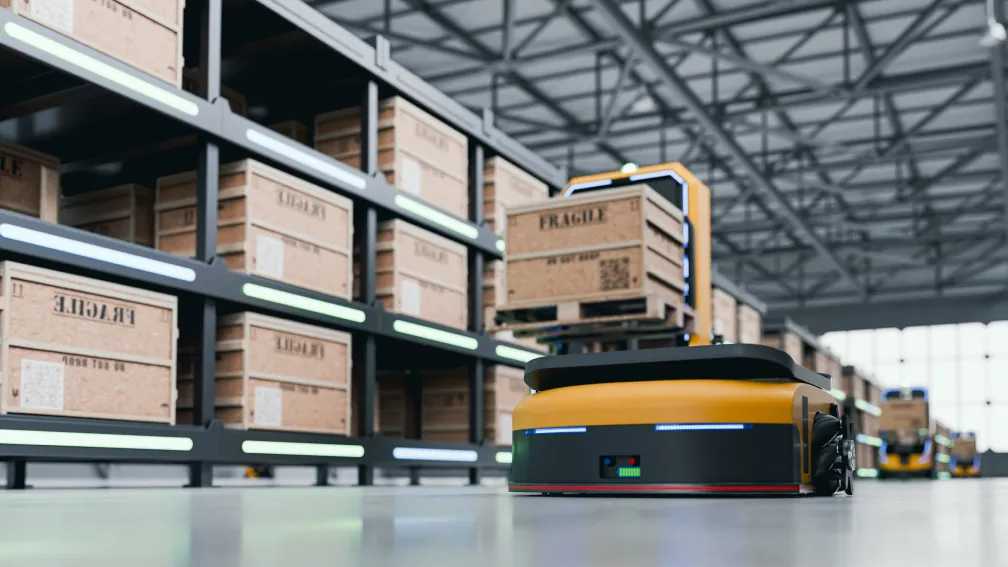
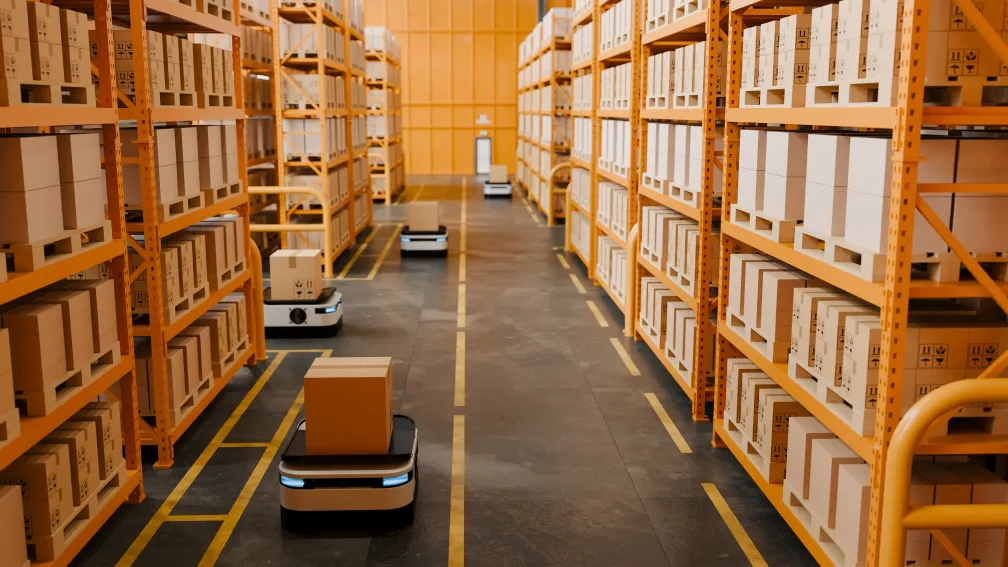
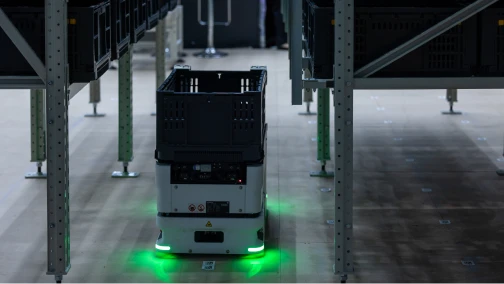
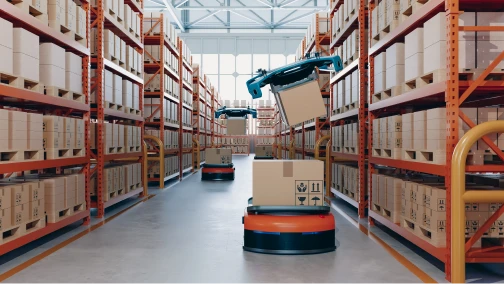
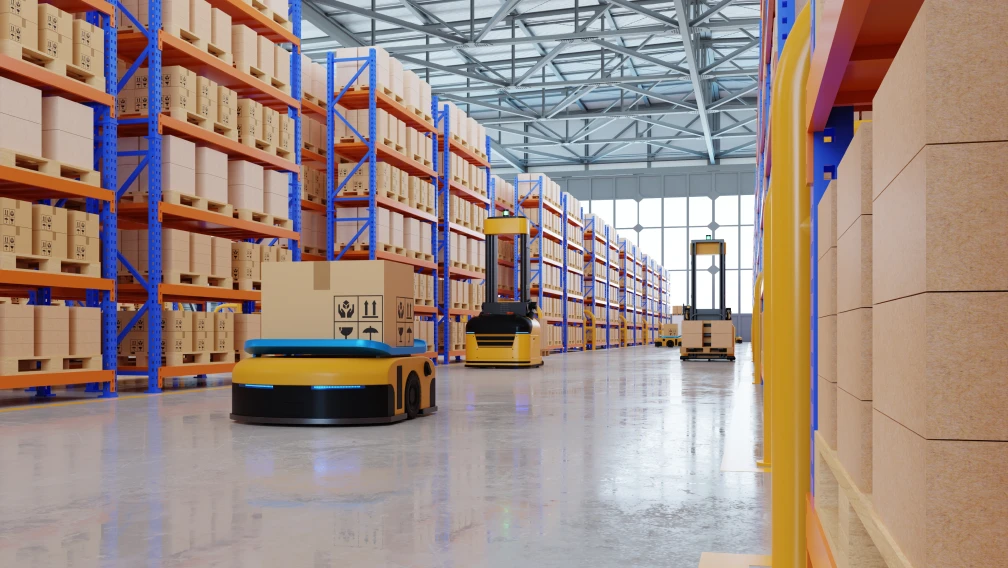
The fastest recovery of value comes from getting sellable returns back into available stock quickly, which makes the interface between the returns system and forward storage a design priority. In automated facilities, restocked totes re-enter the same storage infrastructure that serves outbound orders. A tote of graded, like-new returns can be inducted directly into a high-speed bin robot block or shuttle system, where the WMS immediately exposes the units to available-to-promise inventory. Facilities that achieve same-day reintegration recover the full current-season price; facilities where returns sit in a staging area for a week sell the same unit at a markdown. The speed difference is a direct function of whether the returns flow is engineered or improvised.
The warehouse control system coordinates this reintegration, sequencing buffer releases against workstation capacity in both the returns area and the forward picking operation, so the returns surge never starves outbound fulfillment of machine capacity during the shared peak weeks of January and post-promotion periods.
Disposition Channels and Recovery Analytics
Beyond restocking, professional returns operations manage a portfolio of disposition channels: refurbishment lines that restore items to certified pre-owned condition, B2B liquidation marketplaces that sell graded lots, return-to-vendor programs that recover credit from suppliers for defective goods, and certified recycling for items that cannot be resold. The automation serves these channels by consolidating volume efficiently; the analytics decide which channel each unit enters. Recovery tracking by SKU, return reason, and channel reveals patterns that forward-looking operators act on: a SKU with a high return rate for sizing reasons triggers a product page correction, a return cluster with transit damage triggers a packaging redesign, and a defect cluster feeds a supplier quality claim with photographic evidence captured at grading.
Realistic Performance Benchmarks
Engineered returns operations characteristically achieve induction rates of several thousand units per hour per line, grading decisions in under a minute per unit for standard categories, and reintegration of like-new inventory within twenty-four to forty-eight hours of arrival. The cumulative effect on recovery margin is substantial: operators moving from manual returns handling to an engineered automated flow commonly report recovery-rate improvements measured in tens of percentage points on resaleable categories, alongside labor reductions of half or more per unit processed. For businesses also evaluating the forward-side investment case, our analysis of AS/RS and robotics payback calculation covers the modeling approach, which applies to reverse flows with recovery-margin improvement substituted for labor savings as the dominant variable.
Conclusion
Returns processing rewards engineering exactly as forward fulfillment does, but with different design drivers: piece-level induction of unstable-identity items, software-enforced grading and disposition, automated buffering that consolidates disposition classes, and rapid reintegration into sellable stock before depreciation consumes the recovery value. Operators who treat reverse logistics as a designed flow recover margin that improvised processing surrenders, and they generate return-reason analytics that reduce future return rates at the source.
If you are evaluating automation for a returns operation or a recommerce facility, contact our engineering team with your daily return volumes, category mix, and disposition channel structure. We will return a flow design with induction, grading, and buffer sizing matched to your recovery targets.
Frequently Asked Questions
-

HOWEPROFIT Team
Warehouse Automation Specialists, HOWEPROFIT
The HOWEPROFIT Team consists of senior intralogistics engineers and supply chain experts specializing in advanced AS/RS and robotic fulfillment solutions. Backed by years of field experience across e-commerce, 3PL, and manufacturing sectors, we provide data-driven automation strategies, rigorous throughput simulations, and objective ROI modeling. Our mission is to help facilities seamlessly transition to high-efficiency, reliable, and scalable automated operations.