Search

Enter keywords to search for products, blog posts, and more.

High-Speed Bin Robot for Automated Warehouse Storage

Mini Load ASRS System for High-Speed Order Fulfillment


Multi-Tote Parallel Handling

Carry up to 8 totes in a single cycle for 1,000-1,500 totes per hour. Multi-tote parallel handling lifts a single machine past the throughput ceiling of conventional single-tote mini load cranes, so it keeps pace with peak e-commerce and fulfillment demand.


Goods-to-Person Order Picking

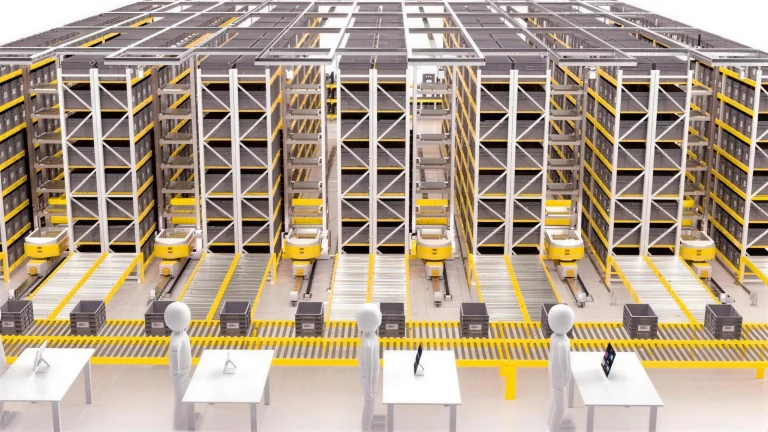
Bring totes straight to the pick station with goods-to-person flow. Operators stop walking the aisles and pick from one fixed ergonomic point, which raises picking rates while the crane stores each tote back on its own.


±1mm High-Precision Positioning

±1mm lifting accuracy with dual barcode and RFID verification holds picking accuracy at 99.99%. Every tote lands in its exact slot and the right tote reaches the operator, so there are no mispicks and no manual recounts.


Flexible Fork & Tote Compatibility

Choose telescopic, plate, or hook forks for single- or double-deep racking, handling totes from 600×400 to 800×600mm. One platform adapts to mixed SKU sizes that rigid shuttle systems struggle with.


Flexible Fork & Tote Compatibility

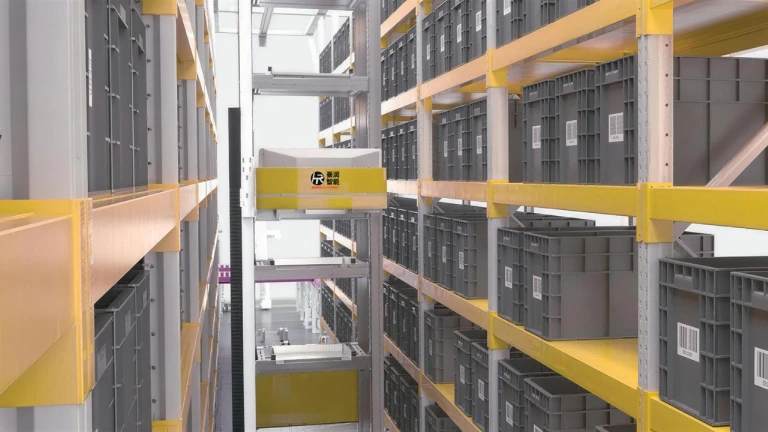
High-Performance Mini Load ASRS System for Intelligent Tote Handling

Multi-Tote Handling 1000-1500 Totes/Hour ±1mm Precision 99.99% Accuracy Goods-to-Person 6-24m Height

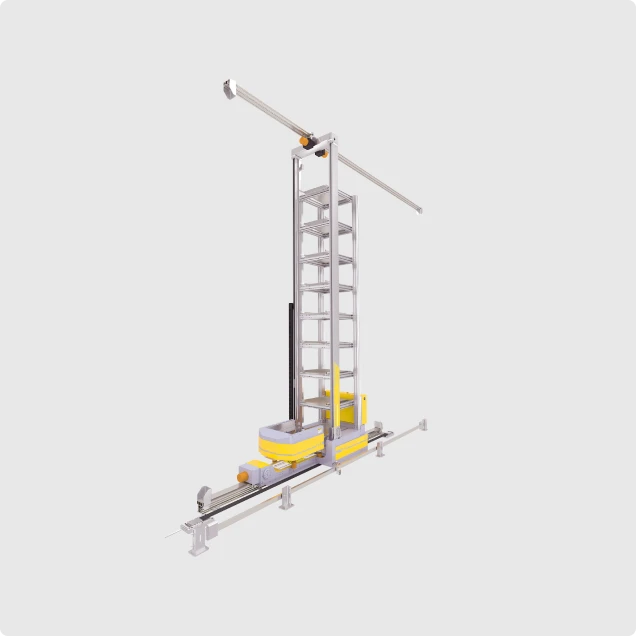
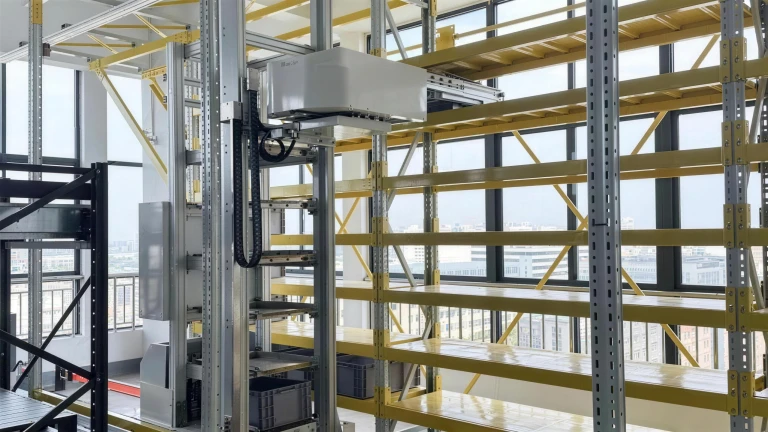
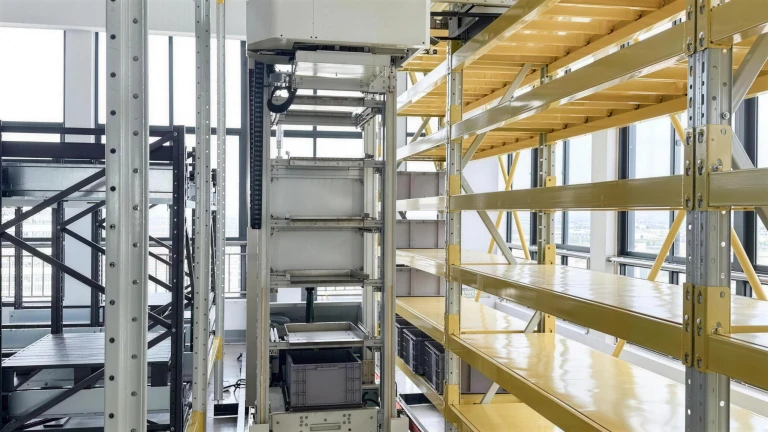
HOWEPROFIT mini load ASRS is a high-speed, crane-based system for automated storage, retrieval, and goods-to-person picking of totes, bins, and cartons. Built around a high-bay rack, a servo-driven stacker crane, and WMS/WCS software, it carries up to 8 totes per cycle for 1,000-1,500 totes per hour with ±1mm positioning and 99.99% picking accuracy. With telescopic, plate, and hook fork options for single- and double-deep storage from 6 to 24 meters, it fits e-commerce fulfillment, electronics, pharmaceuticals, spare parts, and retail distribution — clearing slow manual picking, mispicks, and wasted floor space.


· Multi-tote handling: 1-8 totes per cycle, 1,000-1,500 totes/hour
· High-speed servo crane with ±1mm lifting accuracy
· 99.99% picking accuracy via dual barcode/RFID check
· Storage height 6-24m, customized to your building
· Footprint from 0.9 × 0.8m, up to 30% more tote locations per aisle
· Tote sizes 600×400 to 800×600mm, 40kg rated / 50kg max per tote
· Telescopic, plate, and hook forks for single- or double-deep racking
· Servo drives: around 25% lower energy use, running noise ≤65dB
· Goods-to-person picking, fully integrated with WMS/WCS
· Enclosed automated aisles for secure, organized stock

Engineering & Support


Project Design: aisle layout, tote sizing, throughput modeling, and WMS/ERP interface mapping
Build & Delivery: about 90-120 days from confirmed drawings to on-site installation
Commissioning: full installation, run-in testing, and operator training on site
Warranty: 12-month cover on parts and labor, with lifetime engineering support
Service Response: 24/7 remote diagnostics; field engineers dispatched within 48 hours
Parts Supply: key wear components held in stock for fast dispatch

Specifications

ModelGroup 602_1x.webp
Telescopic Fork
Single / Double Depth
ZQ1101-D/S
Group 602_1x.webp
Plate Fork
Single / Double Depth
ZQ1103-D/S
Group 601_1x.webp
Hook Fork
Single Depth
ZQ1105-D
Group 601_1x.webp
Telescopic Fork
Large Tote
ZQ1102-D
Pickup MethodSingle/double-deep telescopic forkSingle/double-deep plate forkSingle-deep hook forkSingle-deep telescopic fork
Tote Size (L×W×H mm)600×400×120-450600×400×120-450600×400×120-450800×600×120-450
Rated Load per Tote40kg40kg40kg40kg
Max Load per Tote50kg50kg50kg50kg
Max Travel Speed3 m/s3 m/s3 m/s3 m/s
Travel Acceleration1 m/s²1 m/s²1 m/s²1 m/s²
Max Lifting Speed2 m/s2 m/s2 m/s2 m/s
Lifting Acceleration1 m/s²1 m/s²1 m/s²1 m/s²
Single-Tote Pick Time6-7 s6 s6 s6 s
Travel Stop Accuracy±2mm±2mm±2mm±2mm
Lifting Stop Accuracy±1mm±1mm±1mm±1mm
Min Aisle Width1100mm1100mm1100mm1300mm
Operating Weight800-900kg850-1000kg800-900kg850-1000kg
Storage Height6-24m (customizable)6-24m (customizable)6-24m (customizable)6-24m (customizable)
External Dimensions (L×W×H)2635×1035×H mm (project-specific)2635×1035×H mm (project-specific)2635×1035×H mm (project-specific)2635×1035×H mm (project-specific)
Drive ModeMotor direct driveMotor direct driveMotor direct driveMotor direct drive
Positioning MethodLaser rangingLaser rangingLaser rangingLaser ranging
Operating Temperature-10–45°C-10–45°C-10–45°C-10–45°C
CommunicationEthernet / Optical / CarrierEthernet / Optical / CarrierEthernet / Optical / CarrierEthernet / Optical / Carrier
Control SystemWMS/WCSWMS/WCSWMS/WCSWMS/WCS


Application Scenarios

E-commerce Order Fulfillment

Electronics & Manufacturing Buffers

Pharma & Retail Distribution


Multi-Tote Cycles for Peak Throughput

A conventional mini load crane handles one tote per trip and tops out near 100-120 cycles per hour. This crane carries up to 8 totes in a single cycle, so combined throughput reaches 1,000-1,500 totes per hour. Servo drives and 2 m/s lifting keep cycle times short, letting one machine absorb peak order waves before you add aisles.

· Up to 8 totes per cycle
· 1,000-1,500 totes per hour
· Short servo-driven cycle times
· Scales by adding cranes or aisles


Goods-to-Person Picking Accuracy

Operators stop walking kilometers of aisle each shift. The crane delivers each required tote to a fixed pick station, the operator takes what the order needs, and the system stores the tote back on its own. Dual barcode and RFID checks confirm the right tote every time, holding picking accuracy at 99.99%.

· Goods-to-person pick stations
· ±1mm tote positioning
· 99.99% picking accuracy
· Dual barcode/RFID verification


Space-Smart High-Bay Storage

A footprint from 0.9 × 0.8m and narrow 1,100mm aisles push more storage into the same building. Vertical racking from 6 to 24m with single- or double-deep forks adds up to 30% more tote locations per aisle. Telescopic, plate, and hook forks handle mixed tote sizes from 600×400 to 800×600mm on one platform.

· 6-24m vertical storage
· 30% more locations per aisle
· Single- and double-deep racking
· Mixed tote sizes, one platform


Servo-Driven Energy Efficiency

Servo drives recover energy on braking and cut power draw by around 25% against older mini load cranes. Running noise stays at or below 65dB, so the system fits buildings shared with staff. Direct motor drive and laser positioning keep maintenance low, and the modular design lets capacity grow aisle by aisle.

· Around 25% lower energy use
· ≤65dB running noise
· Low-maintenance direct drive
· Modular aisle-by-aisle growth

More About HOWEPROFIT

HOWEPROFIT is a warehouse automation system integrator with 15+ years of experience serving manufacturers and logistics operations. Our integrated solutions combine WMS/RCS software, warehouse robots, and automation equipment to maximize space efficiency and operational productivity. With 60%+ R&D personnel, we've delivered 600+ projects across 100+ industries, specializing in electronics, pharmaceuticals, e-commerce, textiles, and manufacturing sectors.

About Us Certifications Solutions

FAQs

How does a mini load ASRS differ from a shuttle system?

A mini load ASRS uses one crane that travels a fixed aisle and brings totes to a pick station, while a shuttle system uses separate robots on each rack level. Crane-based mini load is more flexible with mixed tote sizes and usually lower in upfront cost; shuttle systems reach higher raw throughput but need consistent tote sizes. Our multi-tote crane narrows that gap by handling up to 8 totes per cycle, so many operations get shuttle-class output from a simpler, more adaptable system. For very high, single-size throughput we can also advise on shuttle options.

What throughput and tote sizes can a mini load system handle?

Each tote carries up to 40kg rated and 50kg maximum, in sizes from 600×400 to 800×600mm with adjustable height. Combined throughput runs 1,000-1,500 totes per hour depending on aisle length, rack height, and order profile. Because the crane handles one to eight totes per cycle, throughput stays high even as storage grows, which is a common limit on single-tote mini load cranes.

How high can a mini load ASRS be built?

Standard builds run from 6 to 24 meters and are tailored to your building height and column grid. Taller racking raises storage density per square meter but calls for tighter tolerances and positioning control, which the ±1mm lifting accuracy and laser ranging are built to hold. During design we model height against throughput and floor area to find the right balance for your site.

Can the system integrate with our existing WMS or ERP?

Yes. The crane and racking run under an integrated WMS/WCS layer that exchanges data with your existing WMS or ERP over Ethernet, optical, or carrier communication, covering inbound, putaway, retrieval, and replenishment in real time. During the project we map your order and inventory flow so tasks release in efficient batches and the crane plans the shortest travel path.

What is the typical ROI and lead time for a mini load ASRS?

Mini load ASRS projects in high-throughput fulfillment usually reach payback within two to four years through faster picking, lower labor, and denser storage. Standard delivery runs about 90-120 days from confirmed drawings to installation, quicker than many traditional ASRS timelines. We prepare a throughput and ROI model during consultation using your real order and labor data, so the business case is clear before you commit.

Mini Load ASRS: How It Works and How to Choose the Right System

A mini load ASRS automates the storage, retrieval, and picking of small loads — totes, bins, trays, and cartons — that are too small to move efficiently on pallets. Instead of staff walking racks to find stock, a crane brings the right tote to a fixed station and stores it back when picking is done. The result is faster fulfillment, fewer mispicks, and far better use of vertical space. Here is how the system is built, how it compares to other automation, and how to size one for your operation.

What Is a Mini Load ASRS?

A mini load automated storage and retrieval system is a computer-controlled, crane-based system for containers up to about 50kg. It runs on the goods-to-person principle: the operator stays at an ergonomic pick station and the machine does the travel. Mini load systems suit operations with a wide SKU mix, steady or peak order volume, and limited floor space — common in e-commerce, electronics, pharmaceuticals, and spare parts.

The Four Core Components

Every mini load ASRS is built from four parts working together:

  • Rack structure — high-bay racking, usually 6 to 24m tall, with narrow aisles to maximize density.
  • Stacker crane — a servo-driven mast that travels the aisle and lifts to any level, fitted with telescopic, plate, or hook forks to grab totes.
  • Control software (WMS/WCS) — the brain that decides where stock goes, which tote to retrieve, and how to sequence tasks.
  • Pick station — the goods-to-person point where operators or downstream conveyors receive and return totes.

How the Goods-to-Person Workflow Runs

Inbound totes are scanned and the WMS assigns each a slot based on size, weight, and pick frequency. The crane stores the tote, then retrieves it on demand and delivers it to the pick station. The operator takes only what the order needs; the system returns the remaining stock automatically and updates inventory in real time. Fast-moving SKUs are slotted near the station to cut cycle time. Dual barcode and RFID checks confirm the right tote at every step, which is how the system holds 99.99% picking accuracy.

Mini Load Crane vs Shuttle and Other ASRS

Crane-based mini load, the shuttle system, and cube or AMR systems each suit different priorities. The table below summarizes the trade-offs buyers weigh most.

SystemBest FitSKU Size FlexibilityThroughputRelative Cost
Mini load crane (multi-tote)Mixed SKUs, peak picking, limited floorHigh — handles varied tote sizesHigh with multi-tote cycles (1,000-1,500/hr)Moderate
Shuttle ASRSHigh, steady throughput, uniform totesLower — needs consistent sizesVery high per aisleHigher
Cube / tote AMRDense small-parts storage, flexible scalingMediumScales with robot countVaries


Single-Deep vs Double-Deep Storage

Single-deep racking stores one tote per position, giving the fastest, most direct access — best when throughput leads. Double-deep racking stores two totes front-to-back, raising density by removing aisles, with a small trade in retrieval speed when the front tote blocks the rear one. The telescopic and plate forks support both, so the choice comes down to your density-versus-speed balance.

Choosing the Right Fork Type

The fork is what actually handles the tote, and the right one depends on your container:

  • Telescopic fork — versatile for standard plastic totes and single- or double-deep racking.
  • Plate fork — supports the full base of the tote, good for heavier or less rigid containers.
  • Hook fork — grips a lip or handle, useful for trays and specific carton types.

How to Size a Mini Load System

Getting the configuration right starts with your numbers. Work through these before design:

  • Peak order lines per hour and the daily profile behind them
  • SKU count, tote sizes, and weight range
  • Building height, column grid, and usable floor area
  • Inventory turn and the share of fast versus slow movers
  • Growth plan over the next three to five years

From these, throughput per crane, number of aisles, rack height, and tote mix can be modeled. For very heavy or oversized loads beyond tote scale, a heavy-duty container system is the better fit; for the highest storage density on small parts, a high-density storage layout may suit better.

Integration with WMS and Upstream Systems

The crane runs under a WMS/WCS layer that connects to your existing WMS or ERP over Ethernet, optical, or carrier communication. The key planning point is order release: instead of sending picks one by one, the host should release them in batches so the control system can sequence efficient crane paths and cut empty travel. Conveyor or AMR interfaces at the pick station have to match tote height and speed. With protocols validated early, software integration usually takes a few weeks, and physical interfaces a little longer.