The Kinematic and Spatial Demands of Parts Manufacturing
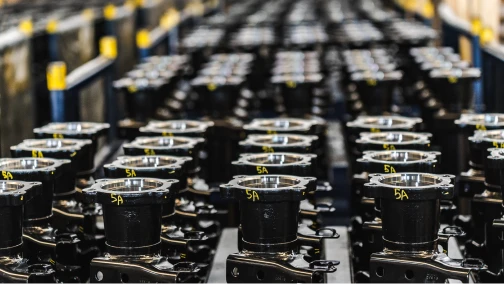
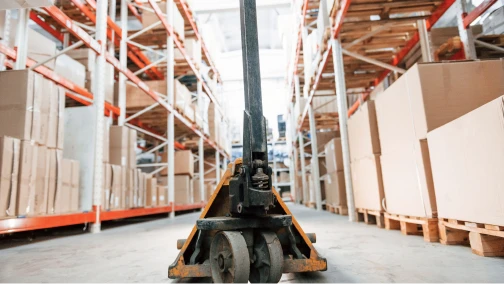
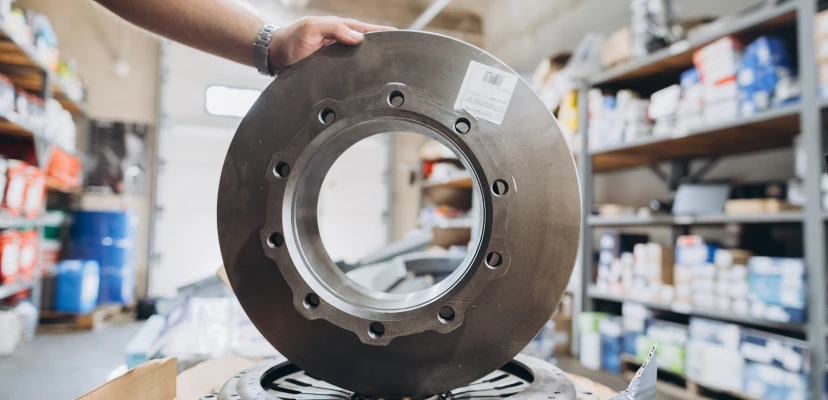
Intralogistics in the automotive and motorcycle manufacturing sectors operate under a unique set of physical constraints. Unlike consumer goods packaging, which is lightweight and dimensionally standardized, mechanical components possess extreme density and high vulnerability. A facility handling raw castings, forged gears, or precision-machined motorcycle cylinder heads—such as the WY180 series—must manage dense, asymmetrical payloads that are highly susceptible to surface damage. When a precision-milled aluminum cylinder head is scratched by metal-on-metal contact during manual forklift transport, the component is instantly rendered as scrap, resulting in significant material and machining time losses.
Furthermore, standard tier-one suppliers and OEM assembly plants must adhere to strict Just-In-Time (JIT) and Just-In-Sequence (JIS) production models. The manual buffering of Work-In-Progress (WIP) components on the shop floor consumes premium square footage and breaks the digital chain of custody required for ISO-compliant lot traceability. Automated Storage and Retrieval Systems (AS/RS) engineered specifically for heavy components resolve these constraints by utilizing captive tray architectures, customized dunnage, and deterministic software orchestration to eliminate handling damage and guarantee sequence-accurate line feeding.
Structural Architecture for Heavy Component Buffering
Storing high-density machined parts requires moving away from the standard wooden pallet or corrugated carton. Automotive AS/RS implementations rely on specialized heavy-duty architectures designed to mitigate extreme point loads and dynamic stresses.
Captive Tray Systems and Custom Dunnage
The core mechanical interface in an automotive AS/RS is the captive steel or reinforced composite tray. The automated equipment—whether a stacker crane or a heavy-duty shuttle—never directly touches the machined component. Instead, it interfaces with the standardized outer geometry of the captive tray. Inside the tray, components are secured within custom-engineered thermoformed plastic, polyurethane, or CNC-machined nylon dunnage. This dunnage acts as an isolation matrix. It locks heavy parts in a fixed orientation, preventing them from shifting during the high-speed acceleration and deceleration phases of the crane's kinematic profile. By eliminating part-to-part contact and isolating the components from the extraction forks, the system reduces handling-induced scrap rates to absolute zero.
Heavy-Duty Miniload AS/RS
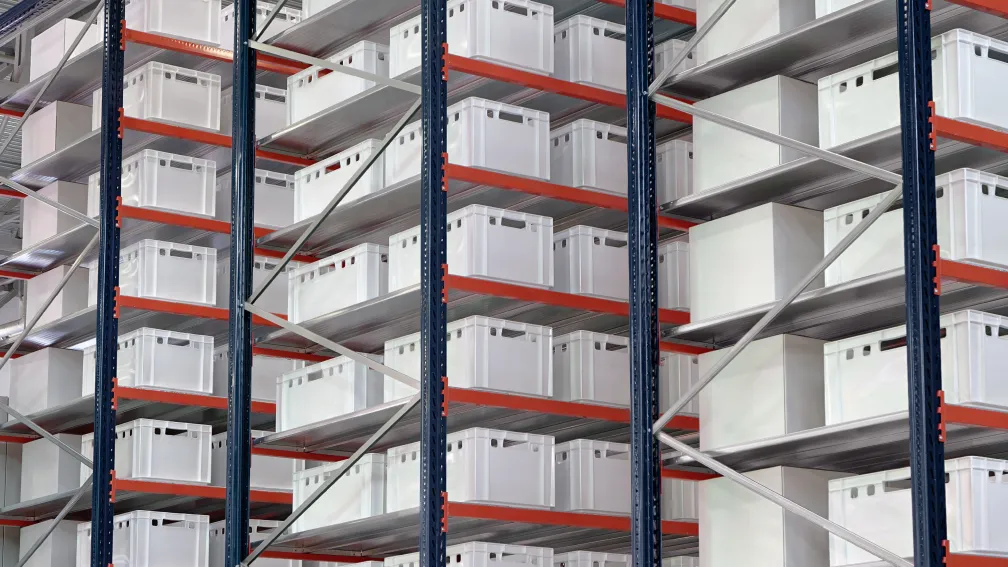
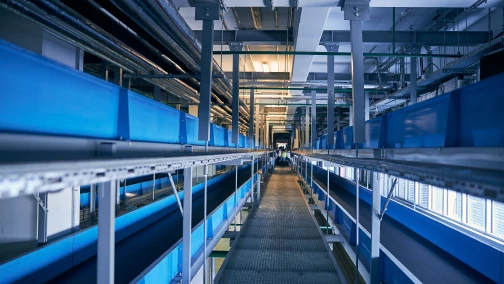
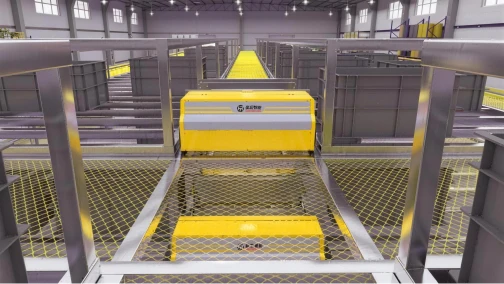
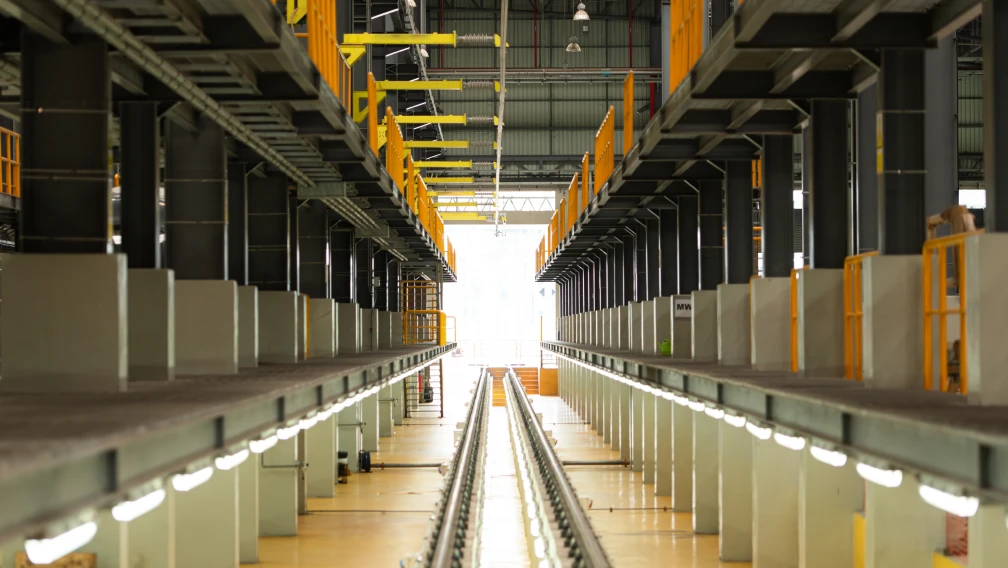
For mid-sized components like transmission housings, engine blocks, or dense groupings of forged shafts, the Miniload AS/RS is the standard deployment. However, the specifications differ vastly from retail e-commerce miniloads. An automotive-grade miniload crane is reinforced to handle tray payloads ranging from 100 kg to 300 kg. The mast utilizes heavy-gauge, low-deflection structural steel to prevent sway when lifting multi-hundred-kilo trays to heights of 15 meters. The load handling devices (LHDs) eschew standard friction belts in favor of positive-engagement mechanical pullers that lock onto the tray lip, ensuring the heavy payload cannot slip during high-velocity mast travel.
Unit-Load AS/RS for Raw Castings and Steel Coil
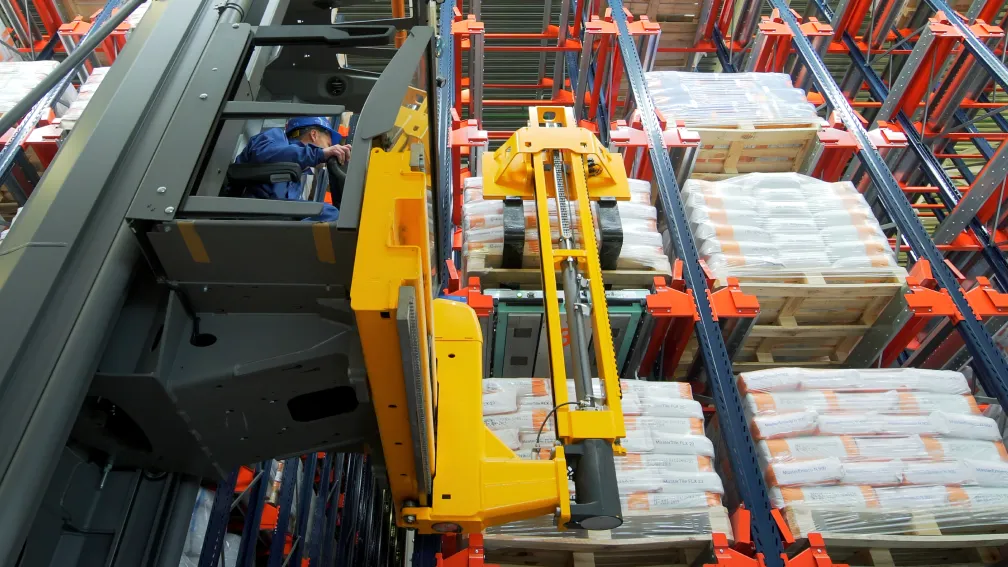
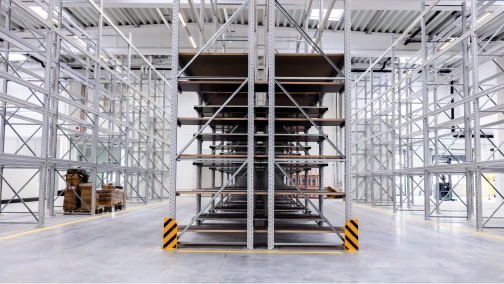
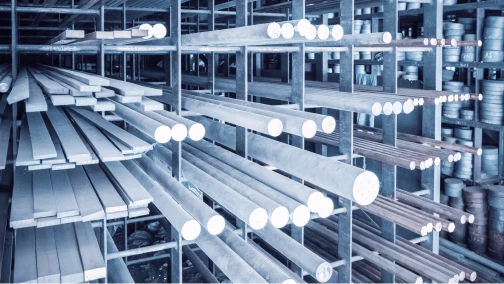
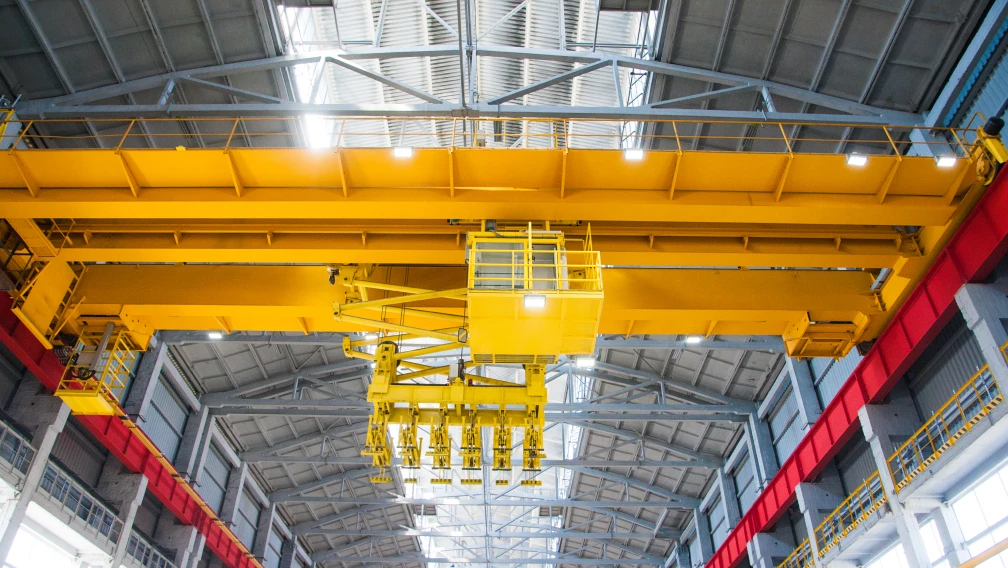
Upstream in the manufacturing process, facilities must buffer massive volumes of raw materials, such as raw aluminum ingots, steel coils, or bulk bins of unmachined castings. These extreme payloads require a Unit-Load AS/RS utilizing double-mast stacker cranes. These systems are engineered to handle pallets or steel tubs weighing between 1,000 kg and 3,000 kg. By consolidating raw material buffering into a high-bay vertical structure, stamping plants and foundries can reclaim thousands of square meters of flat floor space, repurposing it for active CNC machinery or assembly cells.
Managing Small Components and Consumables
While an engine block requires heavy-duty handling, a fully assembled vehicle or motorcycle also requires thousands of distinct small parts: fasteners, gaskets, electrical harnesses, and maintenance consumables. Managing these C-parts efficiently prevents minor stockouts from halting major assembly lines.
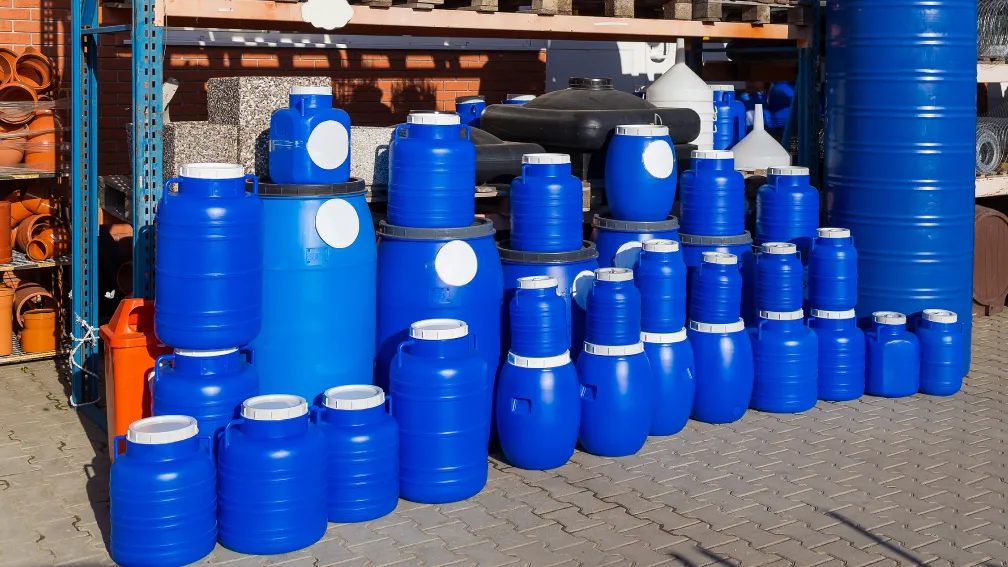
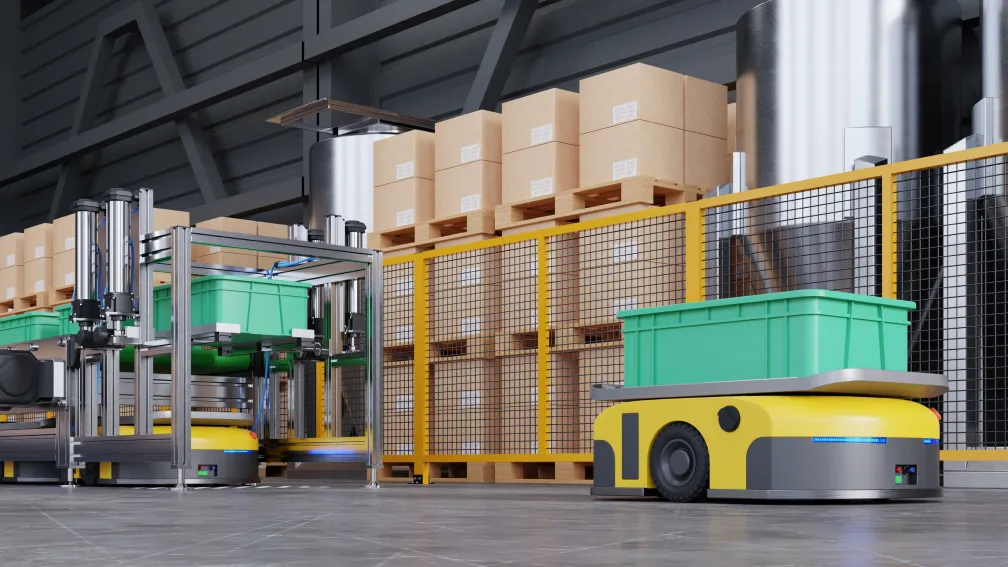
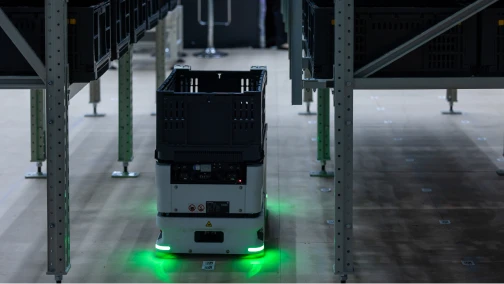
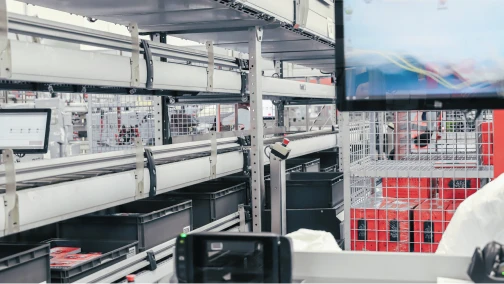
For these applications, operations deploy high-speed bin robots or standard shuttle systems operating on dense horizontal grids. These systems manage partitioned totes. For instance, managing a facility's maintenance inventory—such as WR-series grease bucket liners, specialized hydraulic seals, and pneumatic fittings—requires the exact same rigorous lot tracking as production components. The WMS directs the bin robots to deliver the specific consumable tote to a goods-to-person maintenance staging area, ensuring that technicians spend their time repairing machinery rather than walking aisles searching for specific industrial lubricants or liners.
Software Orchestration: MES and WCS Synchronization
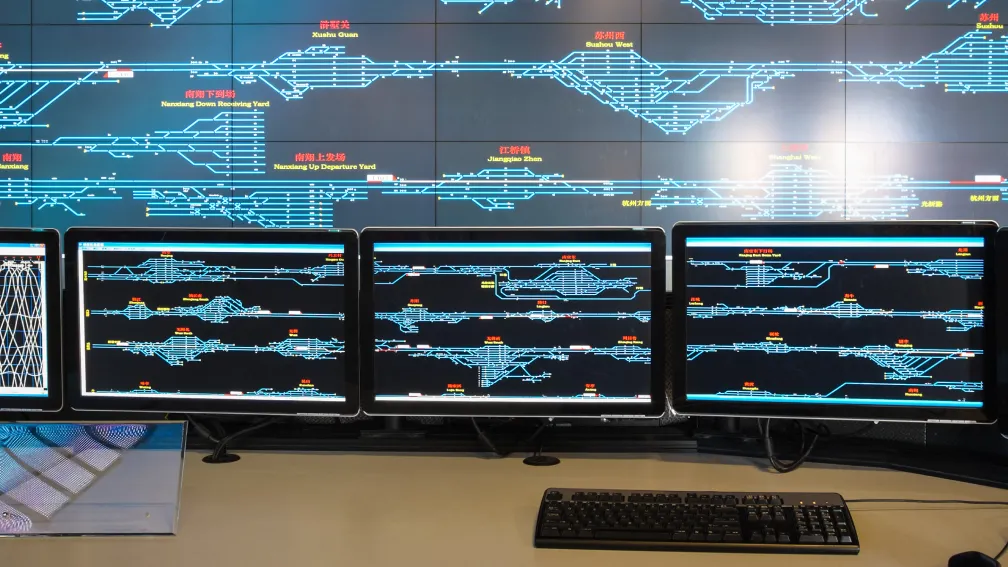
The mechanical hardware provides the physical capacity, but the intelligence of an automotive AS/RS resides in the software layer. The warehouse automation must act as a seamless extension of the plant's Manufacturing Execution System (MES).
Just-In-Sequence (JIS) Delivery Logic
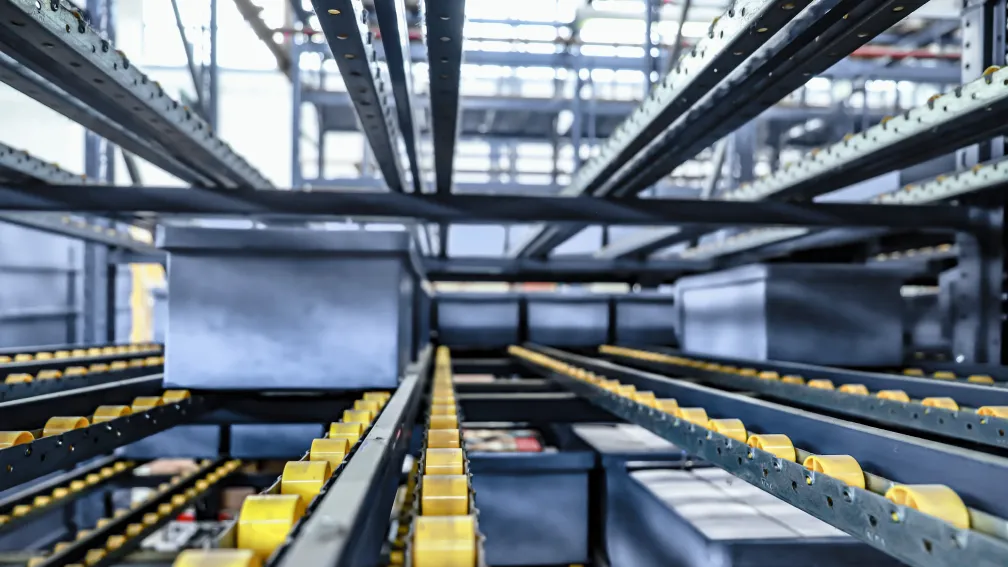
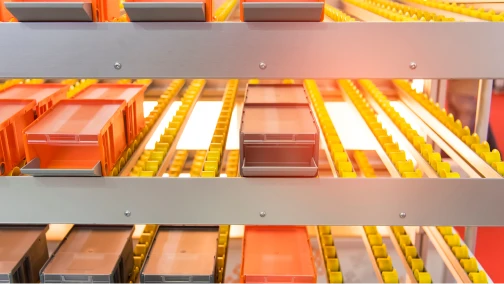
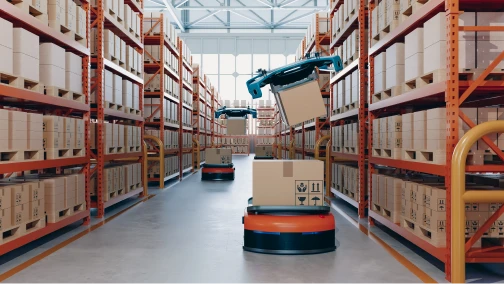
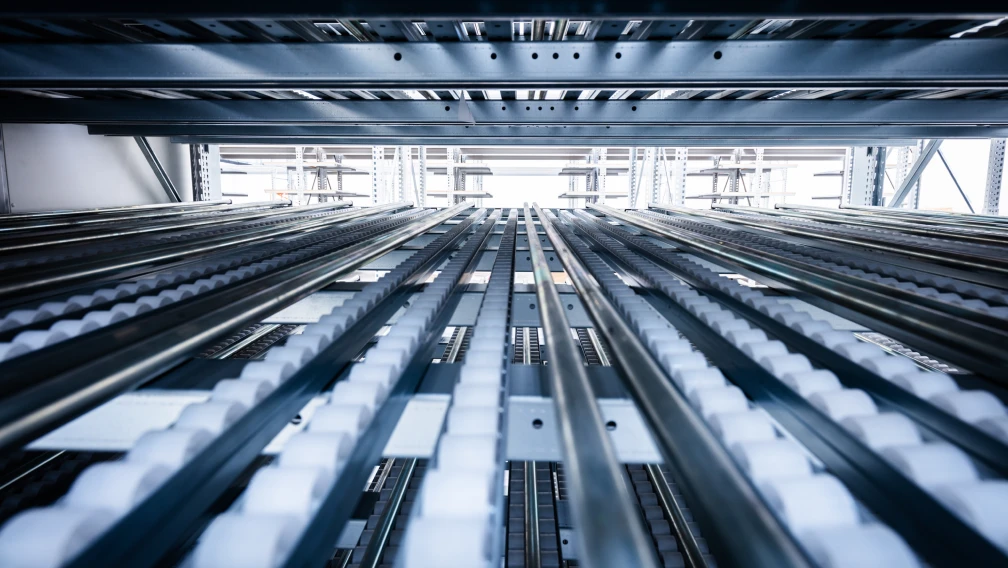
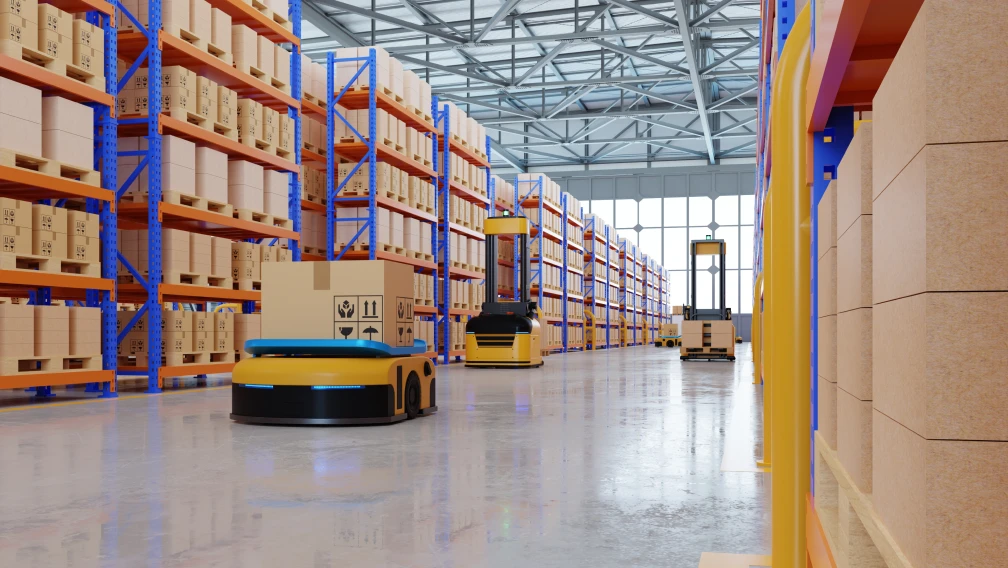
In modern automotive and motorcycle assembly, multiple vehicle variants are built on the same line. A specific chassis coming down the line might require a different cylinder head, wiring harness, or braking caliper than the chassis immediately behind it. The Warehouse Management System (WMS) communicates directly with the MES via continuous API handshakes. When the MES broadcasts the sequence of the upcoming shift, the WMS automatically batches the retrieval tasks. It commands the cranes and conveyor networks to extract the exact variants of parts in the exact order they will be consumed, staging them on line-side gravity flow racks or delivering them via Autonomous Mobile Robots (AMRs) directly to the assembly cell. This removes the need for large, space-consuming buffer stocks at the workstation.
Absolute Lot Traceability and Quarantine Protocols
Automotive supply chains operate under severe liability regarding component failure. Quality control demands complete, unbroken traceability from the raw material batch to the final VIN. Because every captive tray in the AS/RS is digitally indexed with a unique barcode or RFID tag, the WMS maintains a permanent record of which specific batch of cylinder heads is in which exact X-Y-Z coordinate in the rack.
If the quality control department detects a microscopic metallurgical flaw in a specific batch of raw castings after machining has begun, they can issue a command in the MES. The WMS instantly executes a logical quarantine on that specific batch number. The software locks the coordinates in the AS/RS, physically preventing the stacker cranes from retrieving any trays containing the compromised components for line feeding. This automated containment prevents defective parts from ever reaching the assembly line, avoiding catastrophic downstream recalls.
Phased Deployment in Brownfield Facilities
Most automotive and motorcycle parts manufacturers are not building entirely new greenfield plants; they must upgrade existing, operational facilities (brownfield integration). Installing massive automation while maintaining ongoing production requires precise engineering and a phased approach.
Modular AS/RS architectures are designed for phased expansion. A facility can install a single, high-density Miniload aisle to act as an automated WIP buffer between the foundry and the primary CNC machining centers. This initial deployment immediately reduces forklift traffic and reclaims floor space in the most congested zone of the plant. As production scales or capital becomes available, the facility can mirror the structure, adding additional aisles and cranes, and eventually tying the output conveyors directly to the final assembly staging area. The software architecture is inherently scalable, treating the new aisles simply as additional nodes in the existing storage matrix.
Validating the Engineering Investment
Replacing manual forklift routing and floor stacking with an AS/RS fundamentally alters the economics of a parts manufacturing plant. The capital expenditure is justified through three distinct operational metrics: the volumetric recovery of revenue-generating floor space, the total elimination of manual handling scrap on precision-machined mating surfaces, and the guarantee of unbroken lot traceability required for tier-one OEM compliance.
Designing the correct mechanical architecture requires a rigorous analysis of the facility's heaviest payload, the geometric vulnerability of the parts, and the cycle-time requirements of the connected CNC machines or assembly lines. By matching the kinematic profile of the storage equipment to the physical reality of the components, manufacturers can achieve deterministic, zero-defect material flow.
→ Contact HOWEPROFIT’s engineering division to initiate a structural and material flow analysis for your parts manufacturing facility.
-

HOWEPROFIT Team
Warehouse Automation Specialists, HOWEPROFIT
The HOWEPROFIT Team consists of senior intralogistics engineers and supply chain experts specializing in advanced AS/RS and robotic fulfillment solutions. Backed by years of field experience across e-commerce, 3PL, and manufacturing sectors, we provide data-driven automation strategies, rigorous throughput simulations, and objective ROI modeling. Our mission is to help facilities seamlessly transition to high-efficiency, reliable, and scalable automated operations.