Search

Enter keywords to search for products, blog posts, and more.

High-Speed Bin Robot for Automated Warehouse Storage

Unit-Load ASRS for Heavy Container Storage


Heavy Loads to 3,000kg per Container

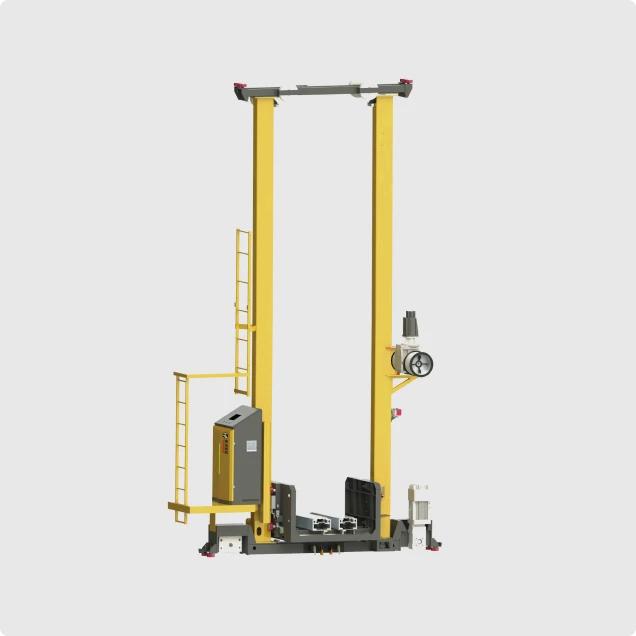
Handles heavy containers and box pallets from 1,000 to 3,000kg each — the unit-load weight class where mini-load and shuttle systems stop. A double-column stacker crane stores and retrieves full loads automatically, replacing forklifts and the wide aisles they need.


High-Bay Density up to 24m

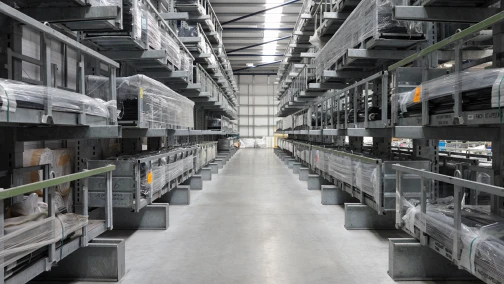
Stores up to 24 meters high in dense, multi-tier racks. Removing forklift aisles lifts storage density by 4-6 times for the same footprint, and one crane runs 24/7 to raise throughput 3-5 times over manual handling.


Double-Column Crane, ≤1mm Deflection

A rigid double-column mast keeps deflection within 1mm even at full load, so heavy containers seat cleanly every cycle at ±3mm positioning. Single-deep and double-deep versions trade direct access for higher density.


Five-Tier Heavy-Load Safety

Five-tier safety covers overload, rope-break, dual limit, laser anti-collision, and fire-link — built for the loads and heights heavy storage runs at. The result is unmanned operation that cuts labor by around 70% and energy by around 30%.


Five-Tier Heavy-Load Safety

Understanding Unit Load ASRS Height Limits and Volumetric Efficiency

Unit-Load ASRS 1000-3000kg per Container Up to 24m 4-6x Density 24/7 Operation Five-Tier Safety

HOWEPROFIT unit-load ASRS is a high-density, fully automated storage system for heavy, large-format containers and box pallets. A double-column heavy-duty stacker crane stores and retrieves loads from 1,000 to 3,000kg on multi-tier racks up to 24 meters high, with deflection held within 1mm at full load and ±3mm positioning. By removing forklift aisles it raises storage density 4-6 times and, running 24/7, lifts throughput 3-5 times over manual handling. Built for automotive, machinery, and logistics operations storing heavy parts, raw material, WIP, and finished goods, it replaces forklift traffic, slow retrieval, and wasted floor space with unmanned, traceable operation under WMS/WCS.


· Heavy loads 1,000-3,000kg per container, deflection ≤1mm full load
· Double-column stacker crane with ±3mm positioning
· High-bay multi-tier storage, custom up to 24m
· 4-6x density by removing forklift aisles
· 3-5x throughput, continuous 24/7 operation
· Single-deep and double-deep storage configurations
· Five-tier safety: overload, rope-break, dual-limit, laser, fire-link
· ~70% lower labor, ~30% lower energy versus manual handling
· Modular: add aisles or tiers without stopping the line
· Built for automotive, machinery, and logistics heavy parts

Engineering & Support


Design Study: load and throughput profiling, rack and crane sizing, building and WMS interface
Lead Time: about 90-120 days from approved layout to commissioning
Install & Commission: rack, rail, crane install with load testing and operator training on site
Warranty: 12 months on parts and labor, with ongoing engineering support
Service: 24/7 remote diagnostics, with engineers on site within 48 hours
Spares: crane and drive wear parts held in stock for fast dispatch

Specifications

ModelGroup 609_1x.webp
Heavy-Duty Single-Deep
HR-1502D
Group 609_1x.webp
Heavy-Duty Double-Deep
HR-1502S
Load TypeHeavy containers / box palletsHeavy containers / box pallets
Rated Load per Container1500kg1500kg
Storage DepthSingle-deepDouble-deep
Max HeightCustom ≤24mCustom ≤24m
Deflection at Full Load≤1mm≤1mm
Running Noise≤75dB≤75dB
Travel Speed160m/min160m/min
Travel Acceleration0.5 m/s²0.5 m/s²
Lifting Speed40m/min40m/min
Lifting Acceleration0.4 m/s²0.4 m/s²
Fork Extension Speed40m/min40m/min
Fork Extension Acceleration0.5 m/s²0.5 m/s²
Horizontal Positioning±3mm±3mm
Vertical Positioning±3mm±3mm
Fork Positioning±3mm±3mm
Safety ProtectionOverload / rope-break / dual-limit / laser / fire-linkOverload / rope-break / dual-limit / laser / fire-link
CommunicationInfrared / carrierInfrared / carrier
Control ModePLCPLC
Operating ModeManual / Semi-auto / Standalone / OnlineManual / Semi-auto / Standalone / Online
Power SupplySafety busbarSafety busbar


Application Scenarios

Automotive Parts & Components

Machinery & Heavy Equipment

Industrial Distribution Buffers


Built for the Unit-Load Weight Class

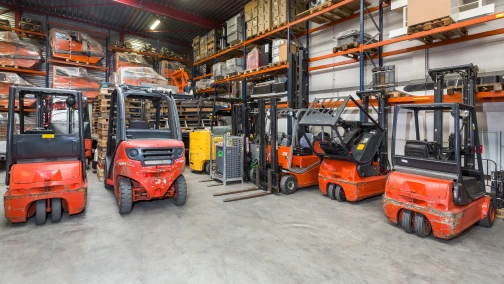
Mini-load and shuttle systems top out around 50kg per tote. This system is built for the unit-load class — heavy containers, box pallets, and bulk totes from 1,000 to 3,000kg. The heavy-duty crane lifts a full load every cycle, so automotive and machinery parts that need forklifts today move automatically.

· 1,000-3,000kg per container
· Heavy containers and box pallets
· Replaces forklift handling
· Automotive and machinery loads


High-Bay Density, No Forklift Aisles

Forklifts need wide aisles, and those aisles waste most of a warehouse. Storing heavy containers in multi-tier racks up to 24 meters and removing the forklift aisles raises density by 4-6 times for the same floor. One crane works around the clock, lifting throughput 3-5 times over manual handling.

· High-bay storage up to 24m
· 4-6x density vs forklift aisles
· 3-5x throughput, 24/7
· Single- and double-deep racks


Rigid Crane for Heavy, Precise Cycles

Heavy loads bend light cranes and miss slots. A double-column mast holds deflection within 1mm at full load, so a 3,000kg container seats cleanly at ±3mm every time. Stable, repeatable handling protects both the load and the racking over millions of cycles.

· Double-column rigid mast
· Deflection within 1mm full load
· ±3mm positioning accuracy
· Stable over millions of cycles


Safety Engineered for Heavy Storage

Heavy storage at height needs more than one safety device. Five-tier protection covers overload, rope-break, dual limit, laser anti-collision, and fire-link, so the system runs unmanned with confidence. Removing forklifts and operators cuts labor by around 70% and energy by around 30%.

· Overload and rope-break protection
· Dual limit and laser anti-collision
· Fire-link integration
· ~70% labor, ~30% energy saved

More About HOWEPROFIT

HOWEPROFIT is a warehouse automation system integrator with 15+ years of experience serving manufacturers and logistics operations. Our integrated solutions combine WMS/RCS software, warehouse robots, and automation equipment to maximize space efficiency and operational productivity. With 60%+ R&D personnel, we've delivered 600+ projects across 100+ industries, specializing in electronics, pharmaceuticals, e-commerce, textiles, and manufacturing sectors.

About Us Certifications Solutions

FAQs

What load weights can a unit-load ASRS handle?

This unit-load ASRS handles heavy containers, box pallets, and bulk totes from 1,000 to 3,000kg each. The standard double-column cranes are rated for 1,500kg, with heavy-duty configurations up to 3,000kg, and the rigid mast holds deflection within 1mm even at full load. It suits automotive, machinery, and logistics operations storing heavy parts, raw material, work-in-progress, and finished goods.

How is unit-load ASRS different from mini-load or shuttle systems?

Mini-load and shuttle systems are built for light totes, usually up to about 50kg, and move cartons or bins fast. A unit-load ASRS is built for heavy loads — containers and box pallets from 1,000 to 3,000kg — using a heavier crane and stronger racking. The trade-off is weight class: choose unit-load for heavy industrial containers, and lighter systems for small fast-moving parts.

How high can the system be built?

Racks are configured to your building, with custom heights up to 24 meters. Going high raises storage density per square meter but calls for a rigid crane and tight tolerances, which the double-column mast, deflection within 1mm, and ±3mm positioning are built to hold. During design we balance height against load, throughput, and floor area for your site.

What safety features does heavy-load storage need?

Heavy loads at height need layered protection. The system carries five-tier safety: overload protection, rope-break protection, dual limit switches, laser anti-collision, and fire-link integration. Together these guard the load, the crane, the racking, and the building, which is what lets it run unmanned around the clock with confidence.

How much space and labor does it save?

Removing forklift aisles and storing vertically raises density 4-6 times for the same footprint, and running unmanned 24/7 cuts labor by around 70% and energy by around 30%. The exact gain depends on your current layout, ceiling height, and load profile, which we model during design so the business case is clear before you commit.

Unit-Load ASRS: High-Density Automated Storage for Heavy Containers

A unit-load ASRS automates the storage and retrieval of heavy, full-size loads — containers, box pallets, and bulk totes — that are too heavy for tote-based systems and too valuable to leave on forklift-served racks. A crane travels a dedicated aisle, lifts a full load, and places it in dense high-bay racking under software control. The result is far higher storage density, around-the-clock throughput, and no forklift traffic. Here is how it works, how it compares to lighter ASRS, and how to size one for heavy parts.

What Is a Unit-Load ASRS?

A unit-load ASRS is a crane-based automated system for large, heavy loads, typically handled one full unit at a time. The defining feature is weight: where mini-load systems move totes up to about 50kg, a unit-load crane handles 1,000 to 3,000kg per load. It uses a rail-guided stacker crane that travels horizontally and lifts vertically along an aisle, with a telescopic fork that deposits or retrieves loads on either side of the racking. A WMS or WCS controls every move and tracks inventory in real time.

Unit-Load vs Mini-Load vs Shuttle ASRS

The three common ASRS types are separated mainly by load weight and format. Picking the right one starts with what you store.

TypeLoad WeightLoad FormatArchitectureBest Fit
Unit-load ASRSUp to 3,000kgHeavy containers, box palletsHeavy-duty stacker craneHeavy industrial parts, automotive, machinery
Mini-load ASRSUp to ~50kgTotes, bins, cartonsLight stacker craneSmall and medium parts, fast picking
Shuttle ASRSUp to ~50kgTotes, casesRoaming shuttle fleetHigh-throughput totes, peak demand


For small and medium parts, a mini load crane or a four-way shuttle fleet is the better fit. Choose unit-load when the load itself is heavy.

How a Heavy-Duty Stacker Crane Works

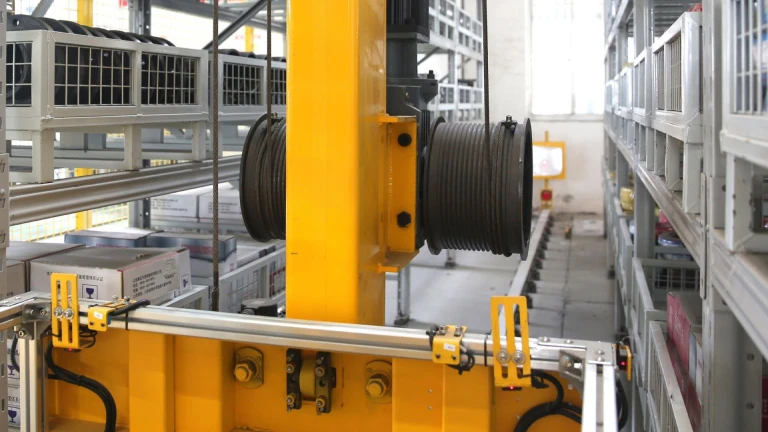
The crane runs on a floor rail and a top guide track, with a rigid mast carrying a lift carriage and telescopic fork. When the WMS calls for a load, the crane travels the aisle while the carriage lifts to the right level, then the fork extends to place or pull the container. Heavy loads make rigidity critical: a double-column mast resists the side forces of acceleration and braking, holding deflection within 1mm even at full weight so every load seats accurately.

Single-Deep vs Double-Deep Storage

Single-deep racking stores one container per position, giving the fastest, most direct access. Double-deep stores two front-to-back, raising density by removing aisles, with a small trade in retrieval speed when the front load blocks the rear. For very high density on slower-moving heavy stock, double-deep is efficient; for fast access to every container, single-deep is simpler. The same crane platform supports both.

Engineering for Heavy Loads and Height

Two things drive a heavy-load design: weight and height. The standard cranes are rated for 1,500kg, with heavy-duty builds to 3,000kg, and racks reach custom heights up to 24 meters to maximize cube. Positioning stays at ±3mm across the full height, and the rigid mast keeps deflection within 1mm at full load. Building higher trades a taller, more rigid structure for far more storage per square meter, which is usually the right trade where land is scarce.

Safety for Heavy, High-Bay Storage

Moving 3,000kg loads at height needs layered safety, not a single device. The system uses five-tier protection: overload protection stops a lift beyond rating; rope-break protection catches a failed hoist; dual limit switches bound travel; laser anti-collision prevents crane and load collisions; and fire-link integration ties the system into the building's fire response. Together they let the crane run unmanned around the clock.

Rack-Supported Building Option

For tall heavy-load systems, the racking can double as the building structure. In a rack-supported design the racks carry the roof and walls, so the storage and the building are one integrated structure rather than a warehouse with racks inside it. This suits very high-bay systems and can lower construction cost while pushing storage density even higher. It is planned during design alongside the crane and rack layout.

How to Tell If You Need One

A unit-load ASRS earns its place when several of these are true:

  • Loads are heavy — containers, box pallets, or bulk totes near or above a tonne
  • Forklift aisles eat floor space that storage or production needs
  • Forklift traffic is a cost, a bottleneck, or a safety concern
  • You store heavy parts, raw material, or WIP that must stay traceable
  • Throughput has to run around the clock to match production or shipping
  • Land is limited and building up is cheaper than building out

For the densest storage of small, light parts in a low building, a high-density storage layout may suit better; this system is built for heavy unit loads.

Integration with WMS and Production

The crane runs under a WMS/WCS layer that connects to your ERP or production system. It tracks every container by part, batch, and location, releases material to production or dispatch on schedule, and buffers raw material, work-in-progress, and finished goods between operations. Because stock data stays live, planning works from real inventory, and the system holds an accurate picture from inbound through production to dispatch.