The Economics That Make Picking the Automation Target
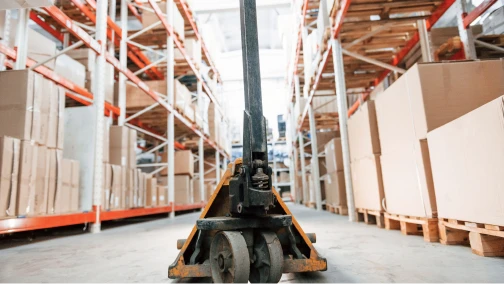
Order picking is the most expensive activity in a warehouse, absorbing 50 to 60 percent of total labor cost in high-volume operations. The deeper problem is what that labor actually does. Time-and-motion research from Georgia Tech's Supply Chain and Logistics Institute found that in a conventional person-to-goods warehouse, only about 10 percent of a picker's shift goes into the physical act of picking. Travel to locations consumes roughly 55 percent, searching another 15 percent, and the rest goes to extraction and paperwork. Automation that makes picking faster while leaving travel in place addresses the smallest part of the problem.
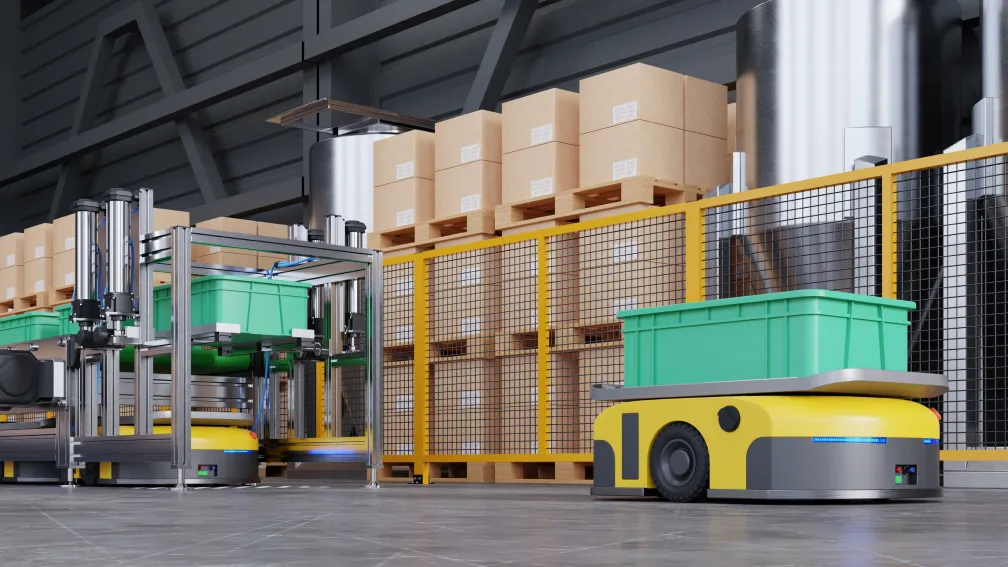
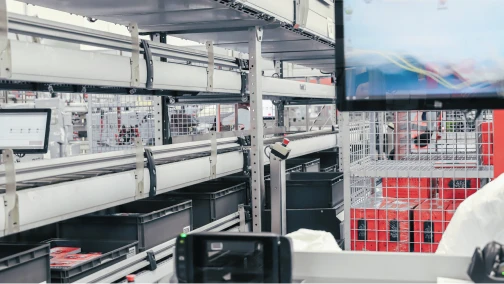
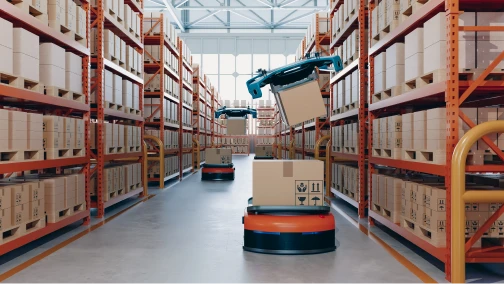
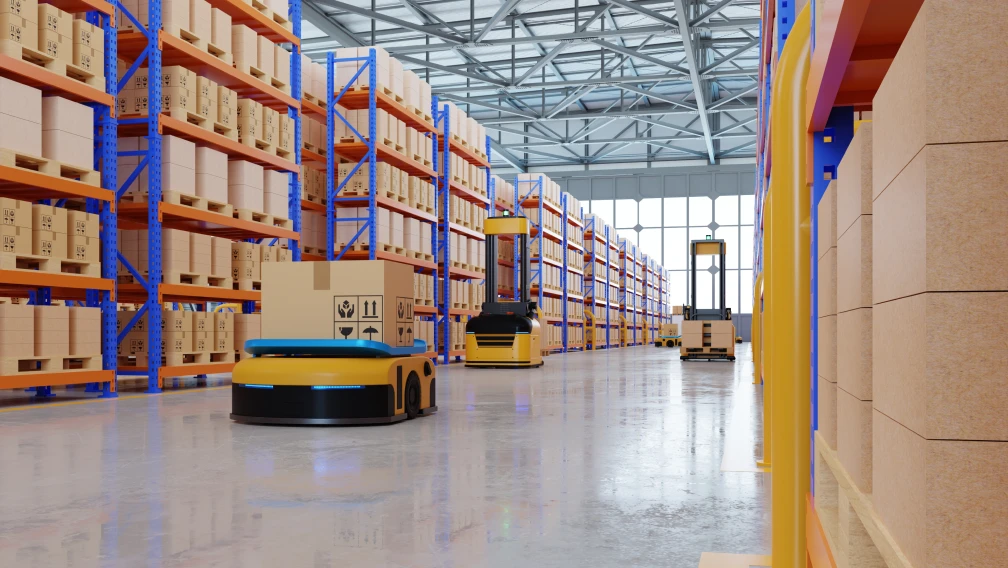
Goods-to-person systems invert the model. Instead of sending the operator to the inventory, automated storage equipment brings the inventory to the operator, who works at a fixed station with the next order container already waiting. Travel drops to zero, the walking-and-searching half of the shift converts into productive picking, and the per-operator output that manual warehouses measure at 60 to 150 lines per hour moves into the 200 to 600 line range. This article explains how the architecture works, compares the main system types, and sets out where goods-to-person pays back and where it does not.
How a Goods-to-Person System Works
The operating cycle is consistent across all goods-to-person architectures. When an order wave releases, the warehouse management system allocates order lines to inventory and passes retrieval tasks to the storage equipment. Machines extract the required totes or bins and deliver them to pick stations in work sequence, where the operator picks the requested quantity into order containers under light or screen direction and confirms each pick. The source bin returns to storage, and the next one is already arriving. Done this way, the operator never walks, never searches, and never waits, and every pick writes a confirmation record that drives accuracy toward 99.9 percent and above.
Two design details decide whether that cycle holds under load. First, station batching: one source bin usually serves several open orders at the station, so put walls or multi-position order containers let a single bin visit complete eight to twelve order lines instead of one. Second, presentation discipline: the storage system must keep bins queued ahead of the operator, because a station that runs dry turns machine idle time into labor idle time. Well-configured systems hold a stable cycle across the full shift rather than a high peak rate that collapses when replenishment or exceptions intervene.
The Main Goods-to-Person Architectures
Bin Robot Systems
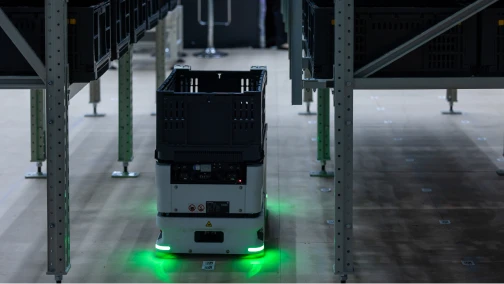
Climbing bin robots travel vertically and horizontally along the rack face, extract bins from high-density storage, and deliver them to stations at the rack perimeter. The architecture combines cube-like density with direct bin access, and capacity scales by adding robots to the same rack. A high-speed bin robot configuration suits high-SKU piece picking in e-commerce, spare parts, and pharmaceutical distribution, and installs in buildings of conventional height where crane-based systems cannot justify their structure.
Miniload AS/RS Goods-to-Person
The miniload AS/RS is the established high-throughput option: aisle-captive cranes extract totes or cartons and feed stations through conveyor loops. Per-aisle rates are fixed by the crane, so throughput scales by adding aisles, which suits operations with stable, predictable high volume. Miniload systems handle the widest load range of the goods-to-person family, from small totes to full cartons.
Shuttle-Based Goods-to-Person
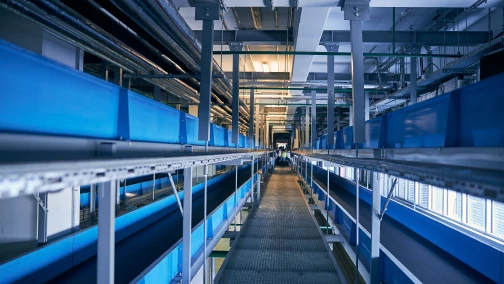
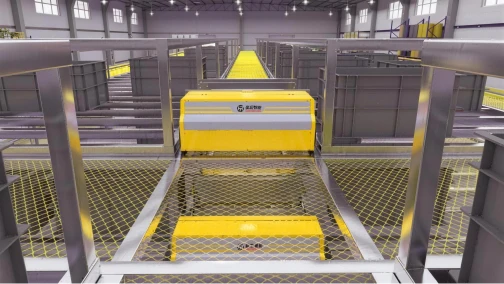
Shuttle architectures store totes in multi-deep lanes and deliver them through lifts and conveyors to the station ring. A four-way shuttle system adds fleet flexibility on top: retrieval capacity scales with vehicle count, so peak seasons are absorbed by adding shuttles rather than building new aisles. This fits operations with pronounced demand swings or phased growth plans.
| Architecture | Typical Station Rate | Storage Density | Scaling Path | Best Fit |
|---|---|---|---|---|
| Bin robot | 300–500 picks/hr | Very high | Add robots to existing rack | High-SKU piece picking, standard building heights |
| Miniload AS/RS | 250–500 picks/hr | High | Add aisles | Stable high volume, widest load range |
| Four-way shuttle | 250–500 picks/hr | Very high | Add vehicles seasonally | Volatile demand, phased growth |
| Cube storage / pod AMR | 200–650 picks/hr | High to very high | Add robots, grid-limited | Small items, retrofit-friendly formats |
| Carousel / VLM | 150–250 picks/hr | Medium | Add units | Small parts, tool cribs, moderate volume |
The Numbers Against Person-to-Goods
Put side by side, the operational gap is consistent across published benchmarks. Manual person-to-goods picking sustains 60 to 150 lines per operator hour with accuracy around 97 to 99 percent; goods-to-person stations sustain 200 to 600 lines with accuracy at or above 99.9 percent. Space utilization follows the same pattern: pick faces that people must walk through hold storage density near 40 to 55 percent of the building volume, while machine-served storage reaches 75 to 90 percent. Labor cost per pick typically falls by half or more, which is why payback periods of 12 to 24 months are common in facilities clearing 500 or more picks per day. For a structured approach to the investment math, see our guide on calculating AS/RS payback.
The Station Decides the Real Throughput
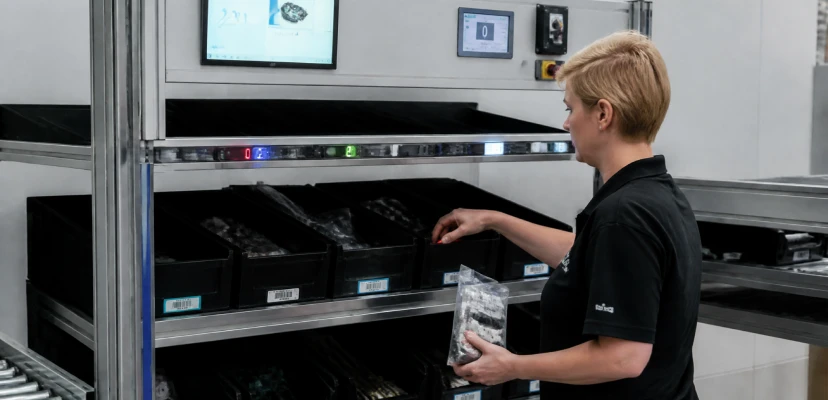
Storage machines rarely set the ceiling on a goods-to-person installation; the station does. A station is a labor productivity instrument, and its design determines how much of the machine's retrieval capacity converts into shipped order lines. Ergonomic presentation, with bins arriving at a consistent height and tilt, keeps the pick cycle at six to seven seconds per line instead of twelve. Confirmation method matters at the same scale: a scan-plus-button requirement adds a second to every line, which across thousands of daily lines outweighs most machine speed differences. Exception handling, short picks, and damaged-item diversion need defined paths at the station, because exceptions routed back into the main flow are what destabilize an otherwise sound cycle. The practical test at acceptance is not peak rate but sustained rate: a station holding 320 to 350 lines per hour across a full shift outperforms one that spikes to 450 and fades.
What Changes for the Workforce
The labor impact extends past headcount arithmetic. A goods-to-person station operator becomes productive within about an hour of training, because the system carries the facility knowledge that a manual picker needs weeks to absorb. That short training curve converts seasonal hiring from a productivity crisis into a staffing exercise. Physical strain drops in parallel: walking ten or more kilometers per shift disappears, high-level and floor-level reaches vanish, and bins arrive at a fixed ergonomic height, which measurably reduces the musculoskeletal injuries that drive warehouse workers' compensation costs. Retention improves when the hardest parts of the job leave it, and in tight labor markets that effect alone has justified projects whose pick-rate math was only marginal.
Where Goods-to-Person Fits, and Where It Does Not
The strong-fit profile is well documented: high daily pick volume, each-level or small-unit picking, high SKU counts, tight accuracy requirements, and item dimensions that fit totes or bins. E-commerce, spare parts, pharmaceutical, and electronics distribution dominate installations for exactly these reasons. The weak-fit cases are equally clear: full-case or pallet-level picking gains little from bin presentation, oversized or irregular items exceed tote dimensions, and low daily volumes cannot amortize the capital. Most real facilities end up hybrid. Velocity analysis segments the inventory, the fast-moving A items go into goods-to-person automation, medium movers stay in optimized person-to-goods zones, and slow movers remain in conventional racking. That segmentation routinely captures 80 to 90 percent of the labor saving at roughly half the capital of a full-facility conversion.
Planning a Goods-to-Person Project
Five inputs drive both the architecture choice and the payback model:
1. Order profile. Lines per order, orders per day, and peak-to-average ratio. This sets station count and the batching logic at each station.
2. SKU and velocity structure. Active SKU count, item dimensions and weights, and the ABC velocity distribution. This determines what share of inventory belongs in automation at all.
3. Throughput target. Sustained lines per hour at peak, not average. Architecture selection follows from whether scaling means adding robots, vehicles, or aisles.
4. Building envelope. Clear height and floor loading decide whether bin robots, miniload cranes, or shuttle grids are structurally viable.
5. Growth path. Expected volume growth over the system life fixes whether the design buys capacity now or builds an expandable skeleton.
We run these inputs through a layout and cycle-time study and return a configuration with projected station rates and payback, so the decision rests on your order data. To review your picking operation with our engineering team, contact us.
-

HOWEPROFIT Team
Warehouse Automation Specialists, HOWEPROFIT
The HOWEPROFIT Team consists of senior intralogistics engineers and supply chain experts specializing in advanced AS/RS and robotic fulfillment solutions. Backed by years of field experience across e-commerce, 3PL, and manufacturing sectors, we provide data-driven automation strategies, rigorous throughput simulations, and objective ROI modeling. Our mission is to help facilities seamlessly transition to high-efficiency, reliable, and scalable automated operations.