The Mechanical Realities of High-Volume Food & Beverage Supply Chains
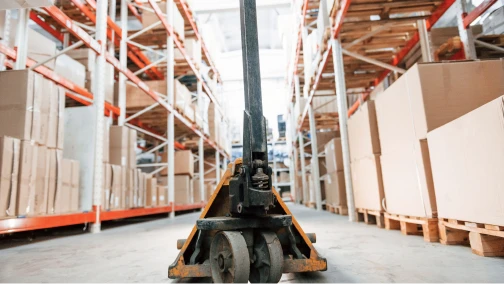
The food and beverage (F&B) manufacturing sector operates under relentless pressure characterized by macroscopic production volumes, microscopic profit margins, and the uncompromising physical deterioration of perishable inventory. In this environment, intralogistics is not a peripheral support function; it is the central nervous system that dictates facility throughput and financial viability. Conventional warehouse operations, reliant upon manual counterbalanced forklifts and static racking architectures, impose severe kinematic limitations on production outfeed. When end-of-line palletizers operate continuously, any delay in manual pallet removal immediately cascades into production bottlenecks, forcing manufacturing lines to slow down or halt entirely.
Furthermore, human-directed inventory routing relies on probabilistic decision-making. Forklift operators frequently bypass strict stock rotation protocols in favor of physical convenience, leading to catastrophic inventory spoilage and margin degradation. Engineering an automated storage and retrieval system (AS/RS) for F&B operations eliminates these vulnerabilities. Transitioning to deterministic, machine-driven execution ensures that high-velocity throughput is maintained continuously, inventory is managed via strict algorithmic parameters, and the structural density of the facility is maximized to offset rising industrial real estate costs. This document analyzes the structural frameworks, hardware kinematics, and software orchestration required to automate high-throughput food and beverage distribution centers.
Handling Mass and Fluid Dynamics: Bulk Storage Architectures
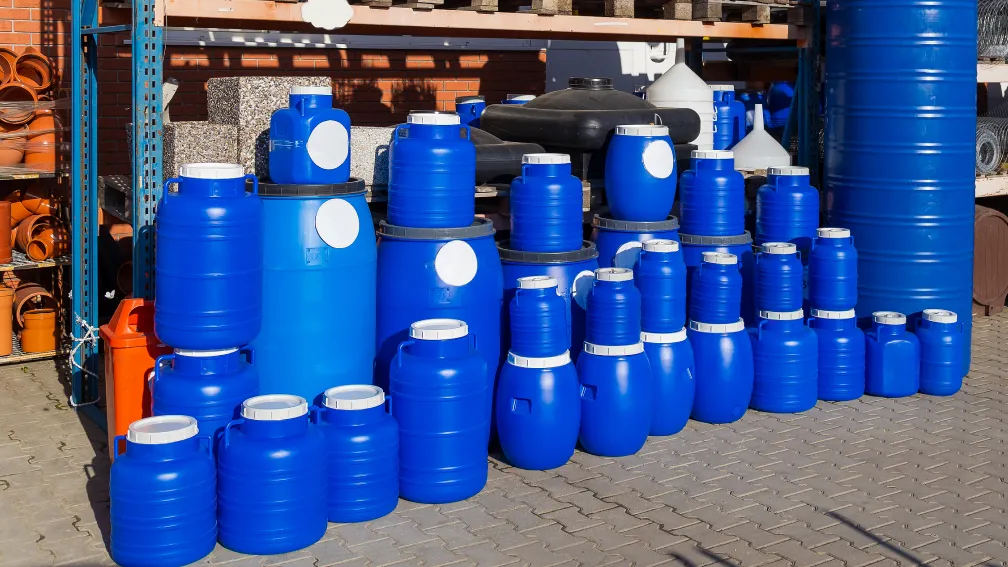
The handling of finished beverage products—bottled water, carbonated soft drinks, and alcoholic beverages—presents distinct mechanical challenges. Beverage pallets are exceptionally dense, often exceeding 1,000 kilograms per unit. More critically, they are structurally unstable due to the fluid dynamics of their contents. When a manual forklift accelerates or corners rapidly, the internal liquid sloshes, shifting the center of gravity and frequently causing the stretch-wrapped load to collapse.
Unit-Load AS/RS for High-Density Reserve
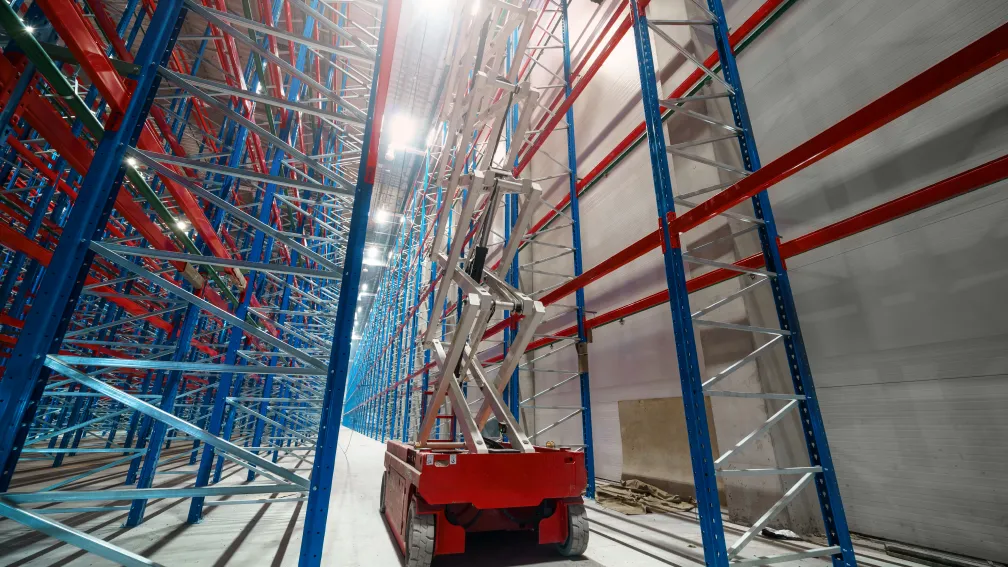
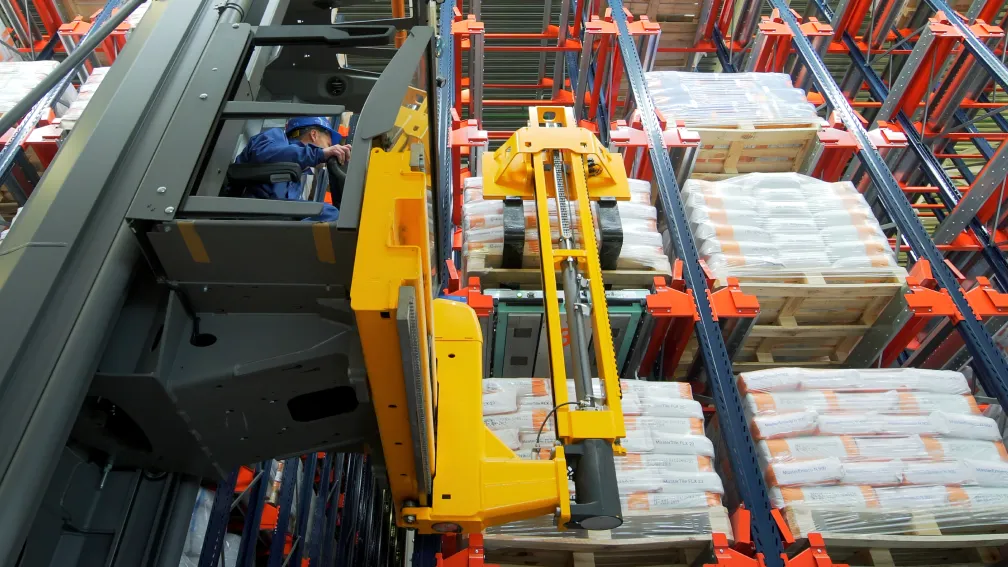
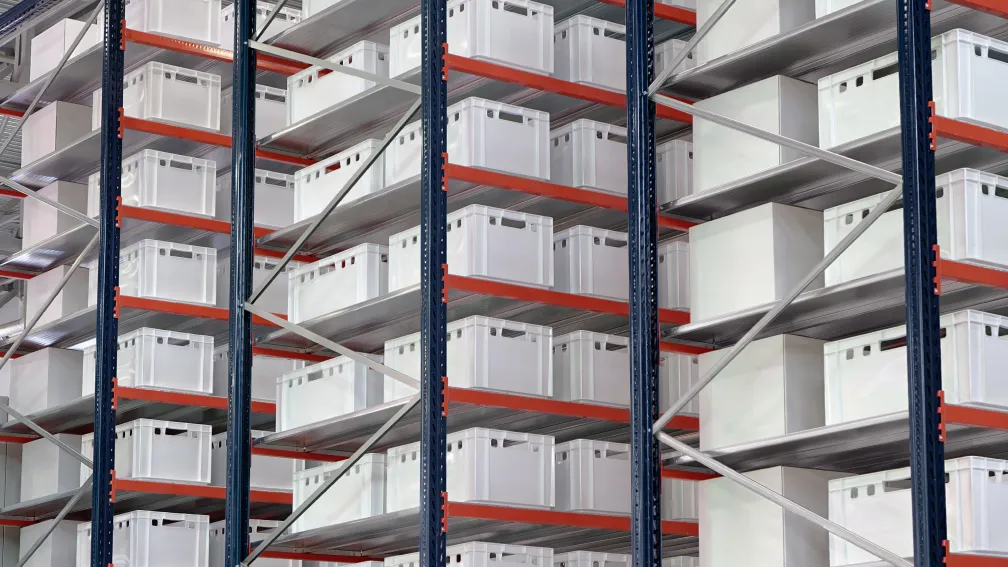
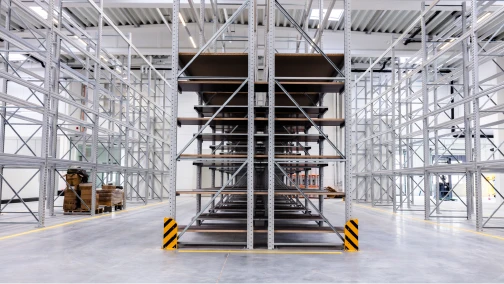
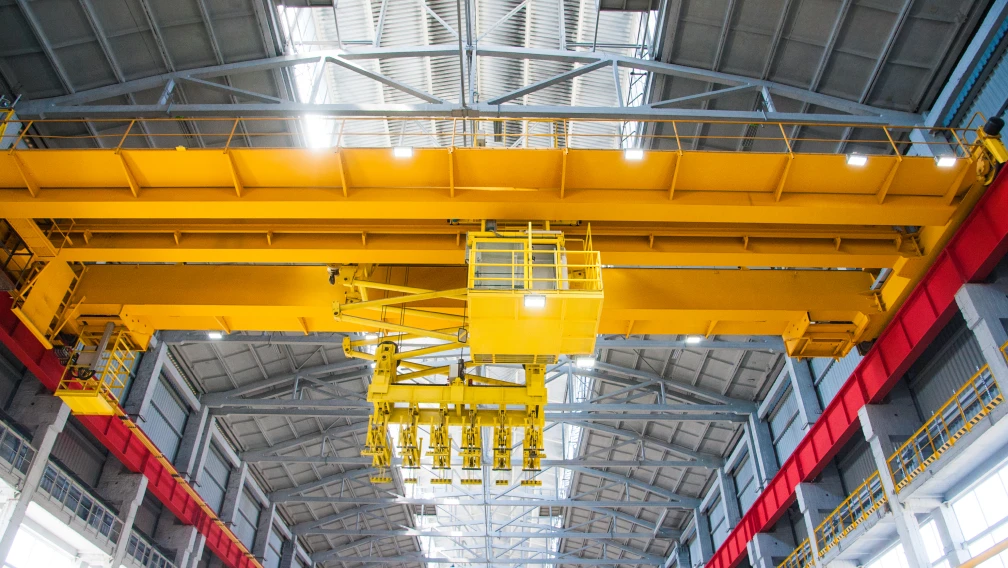
To safely manage these volatile, high-mass loads, F&B facilities deploy a heavy-duty Unit-Load AS/RS. Operating in high-bay structures that often reach 30 to 40 meters in vertical height, these systems compress the storage footprint while maximizing volumetric density. The critical advantage lies in the deterministic kinematics of the automated stacker cranes. The mechanical drive systems and Programmable Logic Controllers (PLCs) are engineered with customized acceleration and deceleration profiles. The crane smoothly ramps up to maximum transit velocity and decelerates with absolute precision, mitigating the liquid slosh effect entirely. This ensures that heavy beverage pallets are transported from the receiving conveyor to their deep-lane storage coordinates at maximum speed without compromising load integrity.
End-of-Line Integration and Continuous Outfeed
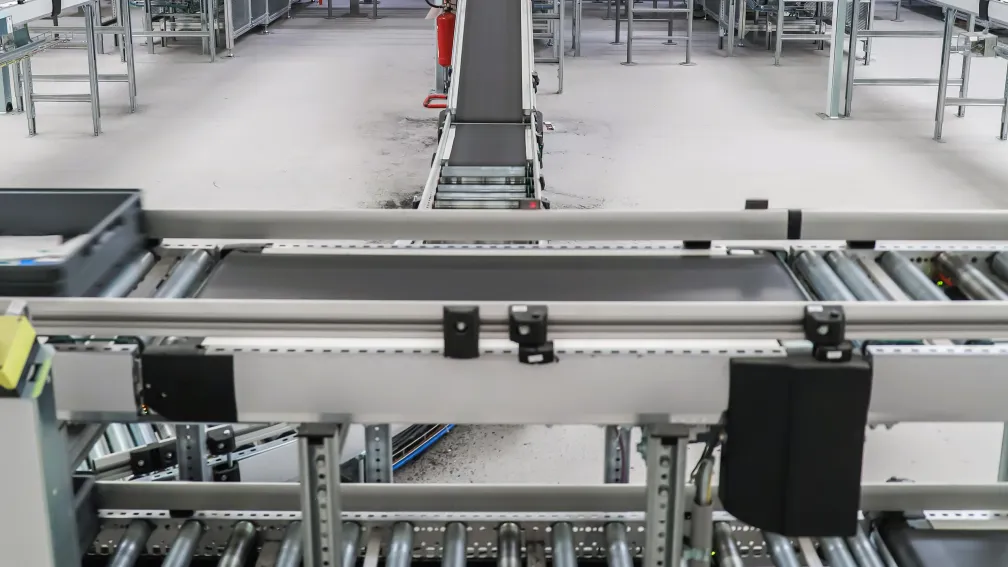
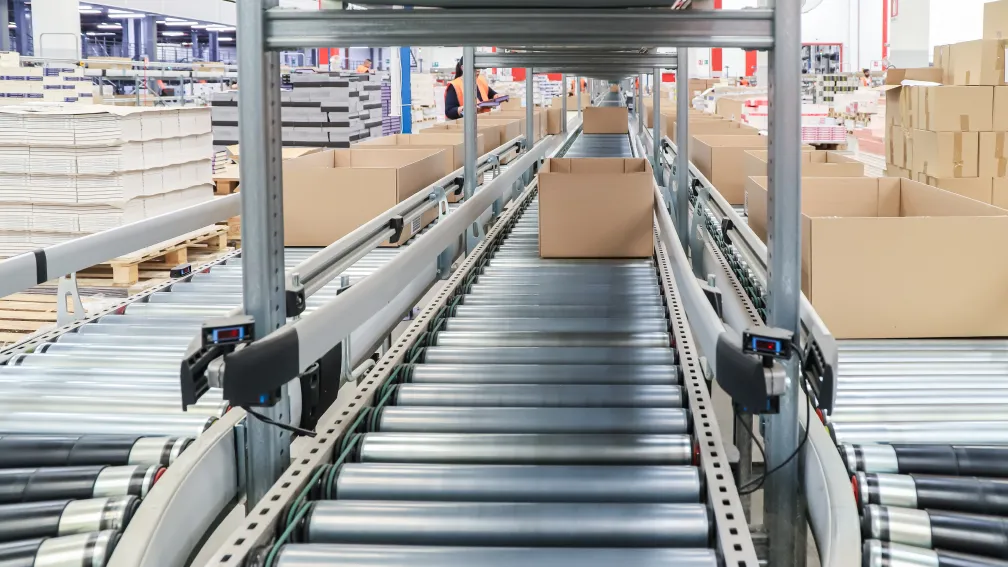
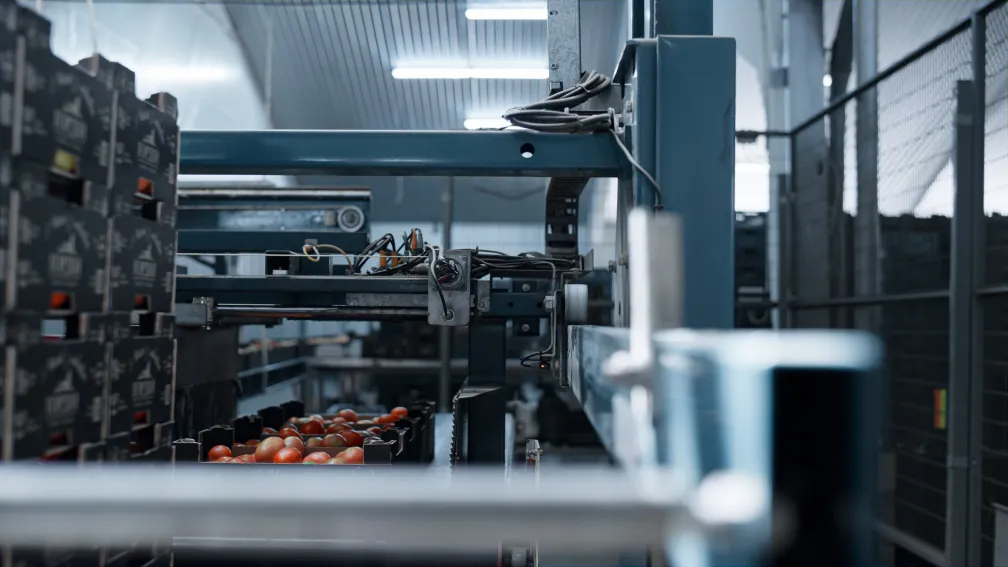
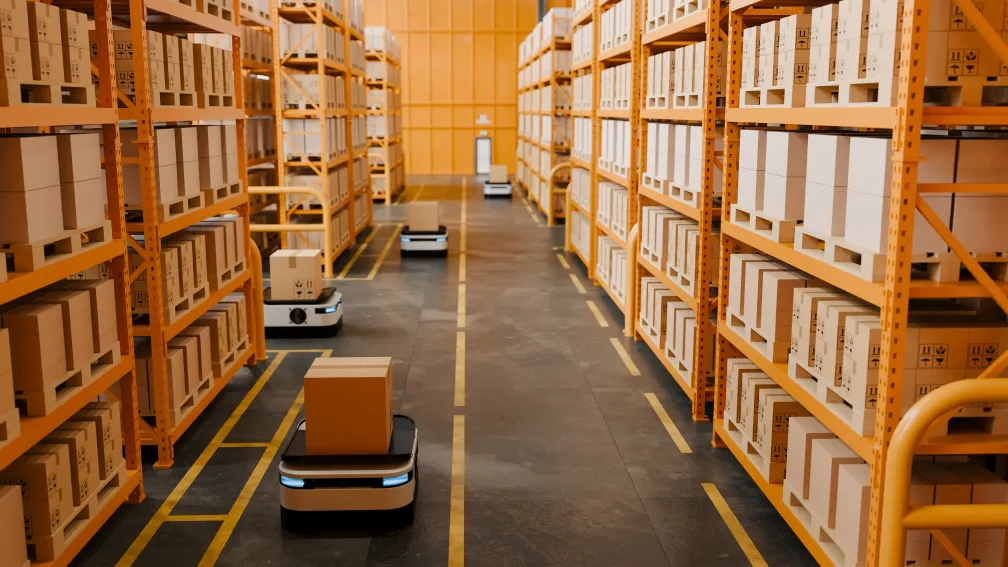
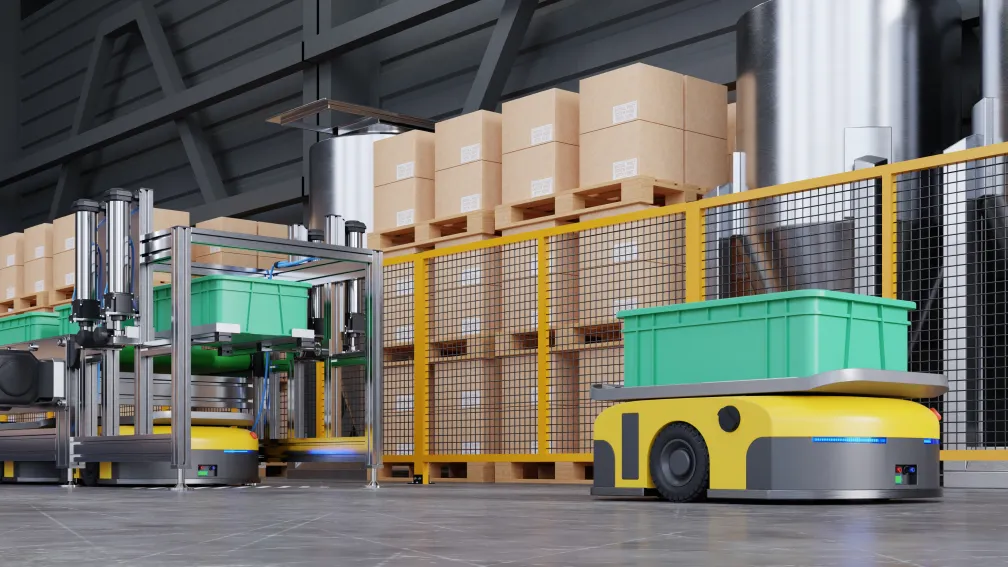
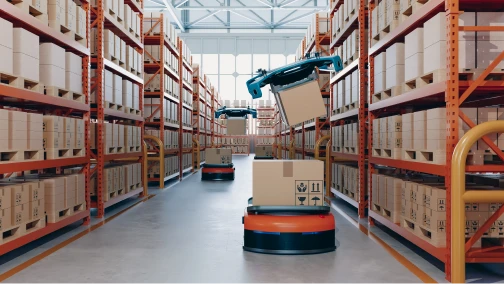
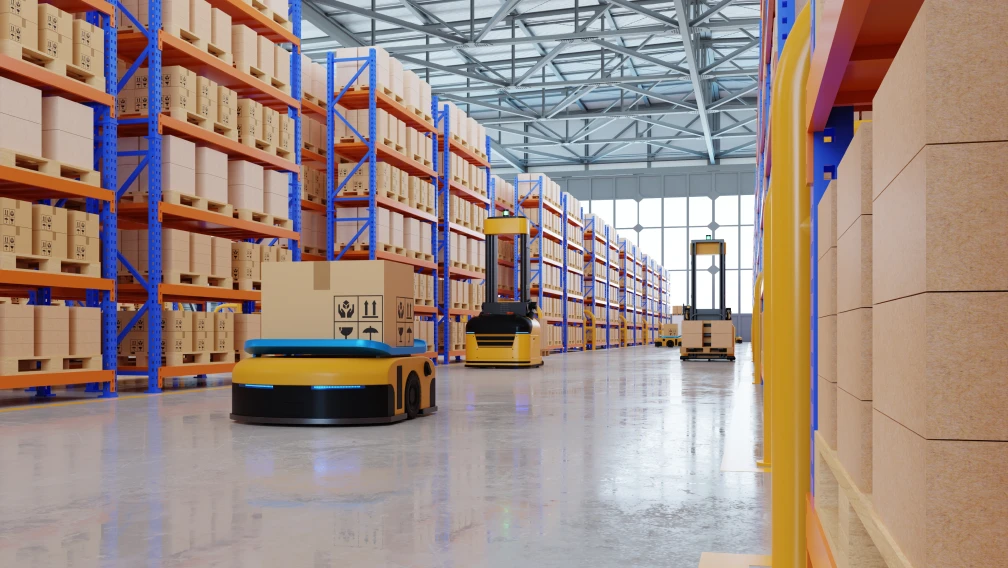
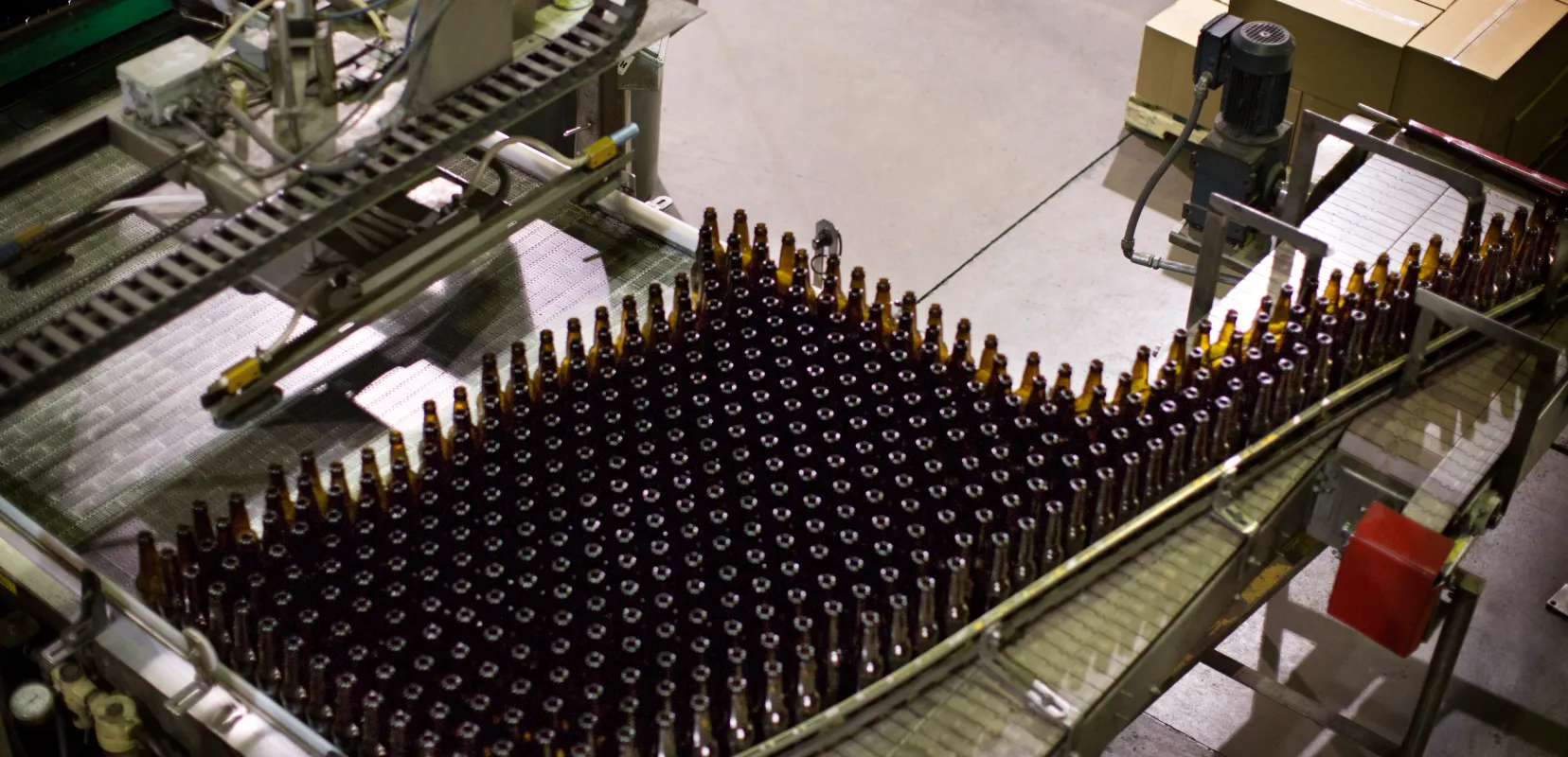
The efficiency of an F&B AS/RS relies on seamless integration with the manufacturing environment. Automated conveyor networks or Automated Guided Vehicles (AGVs) form a continuous mechanical bridge between the end-of-line robotic palletizers and the inbound induction stations of the AS/RS. As soon as a pallet is wrapped and labeled, it is automatically transported and ingested into the storage grid. This continuous, mechanized extraction prevents outfeed accumulation, allowing production lines to operate continuously at maximum theoretical capacity without waiting for manual material handling intervention.
Algorithmic Orchestration: Expiration Management and Traceability
In food and beverage logistics, physical hardware is entirely subservient to the control software. The management of perishable goods requires execution logic that extends far beyond standard retail First-In-First-Out (FIFO) principles. Maintaining regulatory compliance and minimizing waste requires complex, real-time database management.
Enforcing FEFO Logic via the Control System
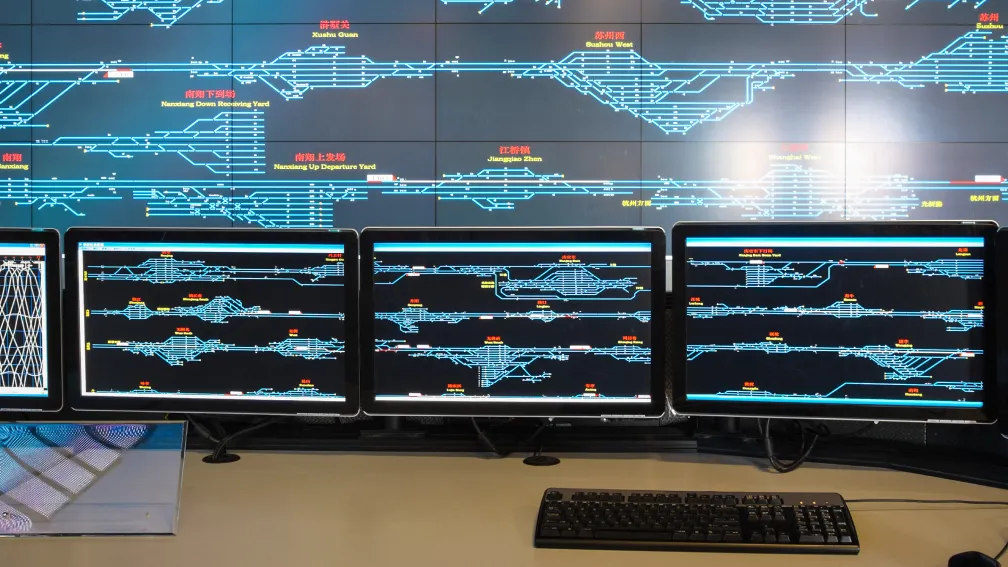
A deterministic Warehouse Control System (WCS) is deployed to orchestrate all mechanical traffic based on expiration parameters. The system operates on strict First-Expired-First-Out (FEFO) algorithms. Upon induction, the WCS captures the specific expiration timestamp and production lot code via barcode scanners or RFID portals. When an outbound shipment is scheduled, the WCS algorithm actively interrogates the entire database. It will physically bypass a pallet that arrived yesterday if another pallet deeper in the grid has a shorter remaining shelf life. This execution is completely invisible to human operators and guarantees that the facility ships the most time-sensitive inventory first, driving product spoilage rates effectively to zero.
Digital Traceability and Recall Execution
Global food safety regulations, such as the Food Safety Modernization Act (FSMA) in the United States and HACCP guidelines worldwide, mandate immediate and precise batch traceability. In the event of a quality control failure or a supplier recall concerning a specific ingredient, manually locating affected products across thousands of pallet positions is a chaotic and time-consuming process. The WCS maintains an immutable digital ledger of every mechanical movement. If a recall is initiated, the facility manager inputs the compromised lot number. The WCS instantly isolates the physical coordinates of every affected pallet, issues an automatic logical quarantine to prevent outbound retrieval, and routes the specific pallets to a dedicated inspection spur. This transition from manual searching to instantaneous digital isolation protects both consumer safety and corporate liability.
Scalable Omnichannel Fulfillment: Split-Case Picking Networks
While production centers primarily manage full pallets, distribution centers servicing supermarkets, convenience stores, and direct-to-consumer channels must fulfill mixed-SKU, split-case orders. Building complex outbound pallets manually involves intensive labor, extreme ergonomic strain, and high error rates.
High-Velocity Case Buffering
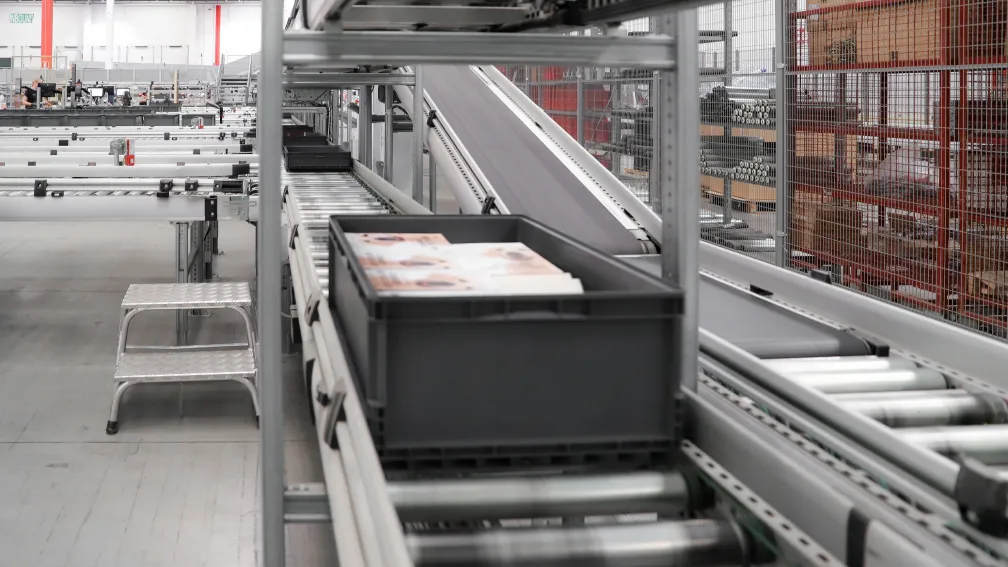
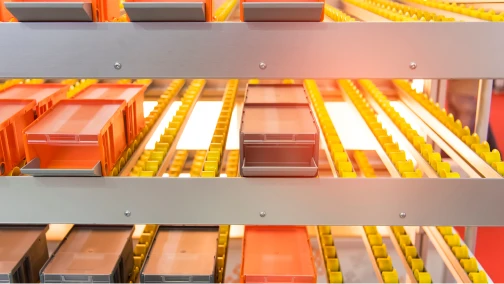
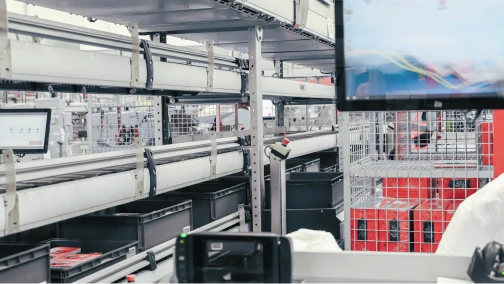
To automate split-case fulfillment, F&B operations deploy a Mini-Load ASRS as an active buffer. Operators or automated depalletizing robots break down single-SKU pallets and transfer individual cartons or standard plastic totes into the Mini-Load grid. Utilizing lightweight, high-speed masts, the Mini-Load system acts as the high-velocity engine of the fulfillment center. When a supermarket orders a mixed pallet containing 50 different SKUs, the Mini-Load retrieves the exact sequence of cases required and discharges them onto a conveyor sorting loop. This logic ensures heavier items (like canned goods) are sequenced first to build the base of the outbound pallet, while fragile items (like bagged snacks) are routed last to be placed on top.
Robotic Elasticity for E-Grocery
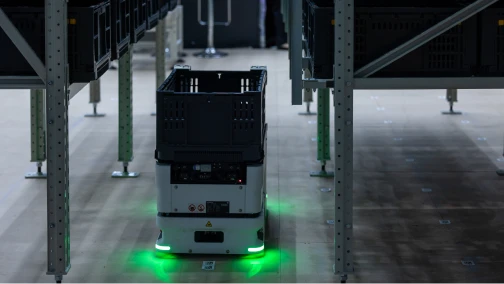
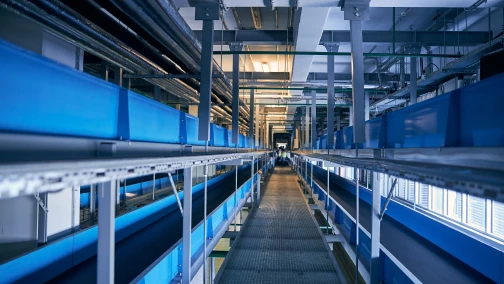
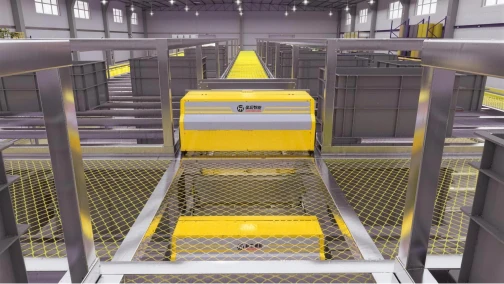
The rapid expansion of the e-grocery sector requires dynamic architectures capable of handling extreme daily volume fluctuations. For these environments, decentralized robotic fleets provide unparalleled scalability. A High-Speed Bin Robot network operates on a horizontal grid, plunging into dense storage columns to retrieve specific totes containing individual grocery items. These robots deliver the totes to Goods-to-Person (G2P) workstations, allowing operators to pack multiple consumer orders simultaneously at rates exceeding 600 lines per hour. If a facility experiences a sudden volume spike—such as before a major holiday—throughput capacity can be instantly increased simply by injecting additional robots onto the grid, without altering the underlying physical racking structure. Similarly, a Four-Way Shuttle System provides robust case-handling capabilities, navigating both X and Y axes within the storage rack to maximize spatial efficiency and parallel processing throughput.
Sanitary Engineering and Environmental Resilience
Equipment deployed in F&B environments must withstand rigorous cleaning protocols and environmental stressors. Standard warehousing hardware degrades rapidly when exposed to the high-pressure washdowns and caustic cleaning chemicals required for food safety compliance.
Automation systems designed for F&B applications undergo strict surface engineering. Carbon steel components are replaced with 304 or 316-grade stainless steel to prevent oxidation. Racking beams and crane structural supports are designed with sloped surfaces to ensure continuous fluid drainage, preventing the pooling of water where microbial growth could occur. Electrical cabinets, drive motors, and optical sensors are enclosed in IP65 or IP67-rated housings, hermetically sealing the critical electromechanical components against moisture ingress during daily sanitation washdowns.
Conclusion: The Strategic Imperative of Deterministic Logistics
Scaling a food and beverage operation relies entirely on the capability of the distribution infrastructure to process massive volumes continuously and accurately. Relying on manual labor and static racking imposes an artificial ceiling on production capacity and exposes the enterprise to critical risks regarding inventory spoilage and recall management.
Deploying an engineered AS/RS fundamentally shifts the logistics model from reactive material handling to deterministic, software-driven execution. By maximizing volumetric density, eliminating fluid dynamics risks through calculated kinematics, and enforcing strict FEFO logic via an advanced WCS, automated F&B warehouses ensure absolute inventory integrity. This infrastructure transforms the distribution center into a high-throughput, highly resilient asset capable of sustaining uninterrupted manufacturing operations.
→ Contact HOWEPROFIT’s systems engineering division to analyze your facility's throughput data and model a high-density, high-velocity AS/RS architecture optimized for food and beverage intralogistics.
-

HOWEPROFIT Team
Warehouse Automation Specialists, HOWEPROFIT
The HOWEPROFIT Team consists of senior intralogistics engineers and supply chain experts specializing in advanced AS/RS and robotic fulfillment solutions. Backed by years of field experience across e-commerce, 3PL, and manufacturing sectors, we provide data-driven automation strategies, rigorous throughput simulations, and objective ROI modeling. Our mission is to help facilities seamlessly transition to high-efficiency, reliable, and scalable automated operations.