Why Flat Sheet Resists Conventional Warehousing
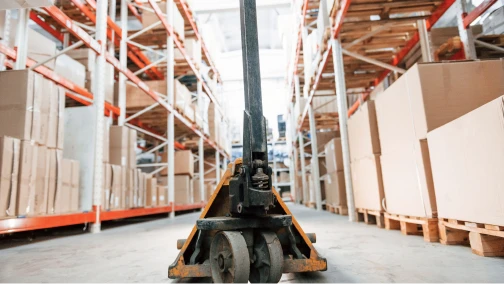
Sheet metal is one of the most difficult inventory forms in manufacturing logistics. A standard 3015-format bundle of 25-millimeter mild steel plate weighs close to nine metric tons, and even thin-gauge sheets in mixed stacks reach several tons per position. That mass rules out conventional shelving and pushes most fabrication shops toward floor stacking, where bundles sit on timber sleepers and every retrieval means an overhead crane or forklift, chains or magnets, and an operator working around suspended loads.
The operational damage goes further than weight handling. Floor-stacked inventory hides stock: the sheet you need sits under three other bundles, and reaching it means restacking. Material identification fails under pressure, and the classic fabrication error, cutting parts from the wrong grade, produces components that pass visual inspection and fail in service. Surface quality suffers too, since pre-blasted or coated plate stored against mill-finish stock picks up scale and scratches. Meanwhile the laser or plasma table that drives the whole shop's revenue sits idle during every retrieval delay.
Automated sheet metal storage systems exist to close exactly these gaps. This article covers the three main architectures, how they connect to cutting machines, what they change in safety and material protection, and the planning inputs that size a project correctly.
The Three Main Architectures
Vertical Sheet Towers with Lift Extractor
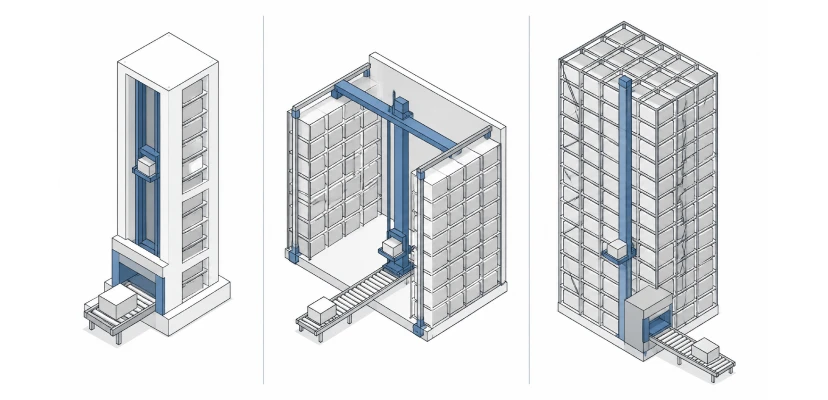
The most common entry point is the vertical storage tower: two columns of tray positions with a central lift extractor that presents the requested tray at an ergonomic load station. Commercial towers hold 15 to 65 trays depending on height, with payloads of three to five tons per tray and formats covering 3015, 4020, and 6020 sheet sizes. A double-tower configuration with a shared extractor roughly doubles capacity for less than double the investment. The footprint case is the tower's defining argument: a full sheet inventory that occupies hundreds of square meters in floor stacks consolidates into roughly 25 square meters of tower, a reduction of 60 to 80 percent, with every sheet individually addressable instead of buried in a pile.
Gantry and Long-Format Storage Systems
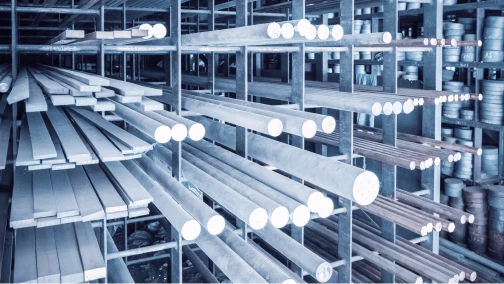
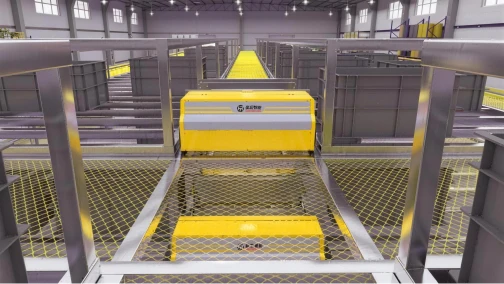
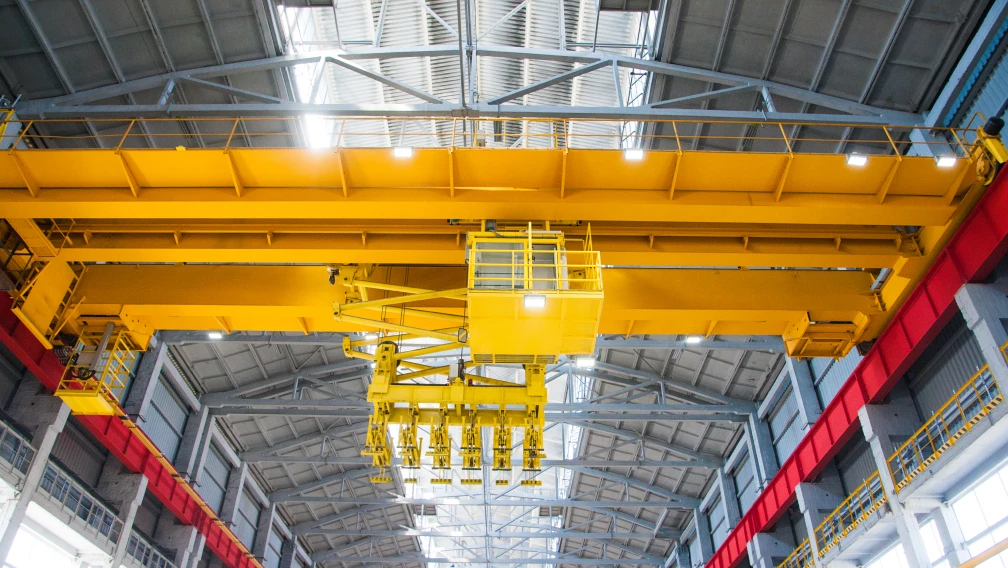
Where inventory runs to oversized plate, structural profiles, or tube, an overhead gantry sheet metal storage system handles the load class that tray towers cannot. The gantry travels above the storage block and picks material directly with vacuum or magnetic effectors, which removes the intermediate pallet entirely and allows formats beyond six meters. This architecture suits steel service centers and heavy fabrication where plate arrives in mill formats and leaves to flame or plasma cutting. We compared gantry and stacker crane approaches for heavy loads in detail in our analysis of automated storage for overweight loads.
High-Bay Cassette AS/RS
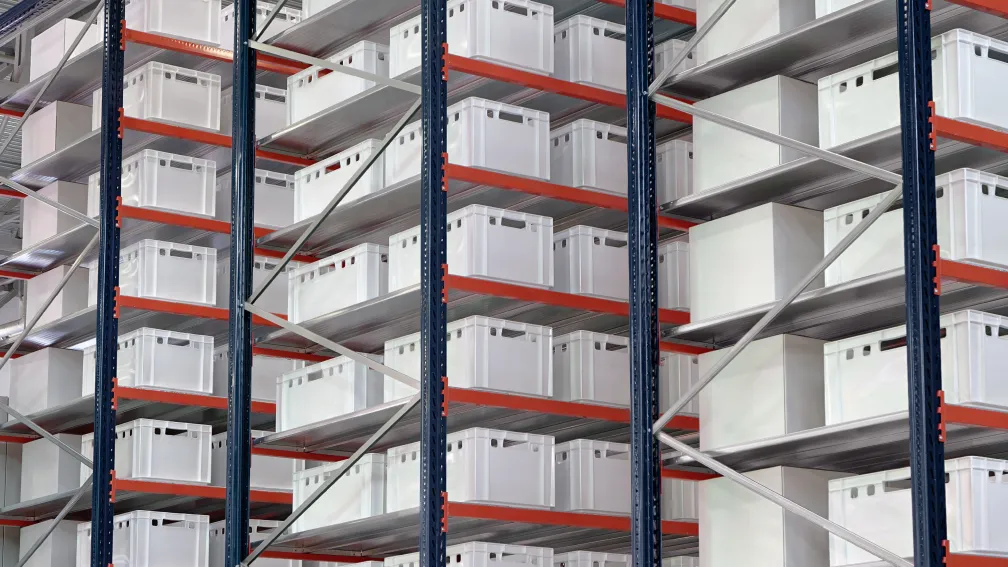
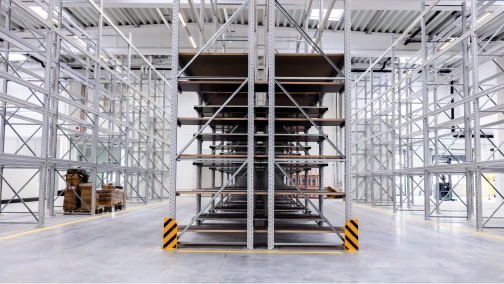
At the top of the capacity range, sheets ride in steel cassettes handled by a stacker crane in a high-bay structure, reaching heights of 15 meters and beyond with eight or more storage columns served by one crane. This is the architecture for service centers and large plants holding hundreds of distinct sheet items, where cassette payloads of four to five tons and crane-level throughput support continuous multi-machine feeding. The cassette also standardizes the load unit, so mixed formats and residual sheets return to storage with the same handling discipline as full bundles. For the underlying crane technology, see our unit-load AS/RS page.
| Parameter | Vertical Sheet Tower | Gantry System | High-Bay Cassette AS/RS |
|---|---|---|---|
| Sheet format | 3015–6020 | Oversized plate, profiles, 6 m+ | Standardized cassettes, mixed formats |
| Payload per position | 3–5 t per tray | Multi-ton, direct from stack | 4–5 t per cassette |
| Capacity | 15–65 trays | Layout-dependent, high density | Hundreds of cassette positions |
| Height | 4–15 m | Building-dependent | 15 m and above |
| Footprint saving | 60–80% vs floor stacking | High, vertical block storage | Highest, full high-bay utilization |
| Best fit | Fabrication shops, machine-side buffer | Service centers, long goods | Large plants, multi-machine feeding |
Feeding the Cutting Machines
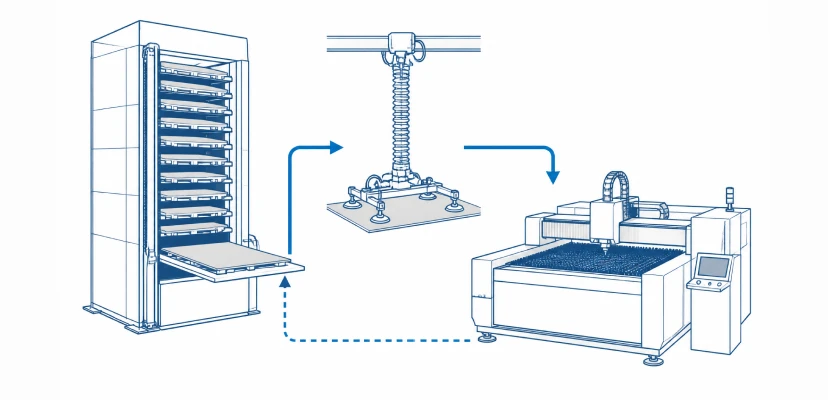
The strongest financial argument for automated sheet storage sits downstream of the rack. A standalone laser cutting machine loaded manually typically achieves 40 to 60 percent spindle utilization across a working week, limited by operator breaks, setup gaps, and material waits. Connecting storage directly to the machine, with vacuum lifters or magnetic grippers transferring sheets from tray to machine bed and cut skeletons returning automatically, pushes utilization into the 80 to 90 percent range and opens lightly manned or lights-out night shifts. The retrieval queue follows the nesting schedule: the control system receives the cutting plan, presents each required grade and thickness in sequence, and keeps the machine buffer stocked without manual coordination. Partial sheets and remnants return to indexed tray positions with their dimensions recorded, so usable offcuts re-enter production instead of accumulating as scrap. That retrieval discipline also removes the wrong-grade error at its root, because the system delivers what the cutting program calls for rather than what an operator reads off a bundle tag.
Safety and Material Protection
Manual plate handling concentrates several of the highest-risk tasks in a fabrication shop: working under crane-suspended loads, guiding multi-ton bundles with hands near pinch points, and climbing stacks to rig chains. Automated storage reduces the operator's role to one interface point, the control screen at the load station, and the machine presents material at a consistent working height with fork guides or vacuum attachment clearance built in. Nobody enters the storage structure, and nobody works under a suspended load inside it. Material protection improves in parallel: individual tray positions stop sheet-to-sheet abrasion, enclosed storage keeps mill scale debris contained per tray instead of spreading across the floor, and prepared surfaces such as blasted or primed plate stay segregated from mill-finish stock that would contaminate them in open stacking.
Materials Beyond Mild Steel
Most shops do not store carbon steel alone. Tray and cassette systems handle stainless steel, aluminum, copper and brass, galvanized sheet, and non-metallic flat goods such as composite panels, timber board, and plastics within the same indexed structure. Two handling rules follow from the material mix. Surface-critical stock, mirror-finish stainless or pre-coated architectural panel, travels with protective interleaving and gets dedicated tray positions away from abrasive mill-finish material. Loading devices match the material as well: vacuum lifters cover non-ferrous and coated sheet, while magnetic grippers serve ferrous plate at higher cycle speeds. Specifying the full material list at the design stage costs nothing; discovering an incompatible surface requirement after installation does.
What Fabricators Gain From Automation
Across installed sheet metal storage projects, the results cluster in measurable areas:
• Floor space. Consolidating floor stacks into vertical storage cuts the storage footprint by 60 to 80 percent, releasing production area that most shops immediately convert into added processing capacity.
• Machine utilization. Direct machine feeding lifts laser and plasma cutting utilization from the 40 to 60 percent manual range toward 80 to 90 percent, often doubling effective output from the same cutting asset.
• Labor. One operator at the load station replaces the two to three people a manual retrieval sequence ties up, and the heaviest manual handling tasks leave the job entirely.
• Accuracy. Every tray position is indexed by grade, thickness, and dimensions, so wrong-material cutting errors and lost remnant stock disappear from the error budget.
• Safety. Removing suspended-load work and in-stack climbing from daily routines eliminates the injury scenarios that drive fabrication shops' highest insurance and downtime costs.
Planning a Sheet Metal Storage Project
Five inputs drive the design and the payback model:
1. Sheet format and weight profile. Standard 3015 production plate, oversized mill formats, or long goods determine whether the answer is a tower, a gantry, or a high-bay cassette system.
2. Inventory structure. The count of active grade-thickness combinations sets tray or cassette quantity; remnant volume and its reuse rate set how many positions to reserve for partial sheets.
3. Machine interface. The number and brand of cutting machines, their bed formats, and the target shift model, including any lights-out ambition, determine the loading automation scope.
4. Throughput. Sheets in and out per hour at peak defines extractor speed, station count, and whether a single or double tower configuration is justified.
5. Building constraints and growth path. Clear height, floor loading, and available footprint fix the system envelope; modular architectures let the first tower validate the economics before additional units extend capacity.
We run these inputs through a layout and cycle-time study and return a configuration with projected retrieval performance and payback, so the decision rests on your production data rather than catalog figures. To review your sheet formats, machine park, and building constraints with our engineering team, contact us.
-

HOWEPROFIT Team
Warehouse Automation Specialists, HOWEPROFIT
The HOWEPROFIT Team consists of senior intralogistics engineers and supply chain experts specializing in advanced AS/RS and robotic fulfillment solutions. Backed by years of field experience across e-commerce, 3PL, and manufacturing sectors, we provide data-driven automation strategies, rigorous throughput simulations, and objective ROI modeling. Our mission is to help facilities seamlessly transition to high-efficiency, reliable, and scalable automated operations.