Automated Sheet Metal Storage: How a Gantry System Works for Fabricators
Sheet, plate, bar, and tube are awkward to store. They are long, heavy, and easy to scratch or bend, so most shops keep them on cantilever racks or stacked on the floor, then tie up a forklift and an operator for every retrieval. An automated gantry storage system changes that: a crane travels the racking, lifts each load cleanly, and feeds it to the cutting line on demand. Here is how the system works, how it compares to other options, and how to tell if it fits your shop.
What Is an Automated Sheet Metal Storage System?
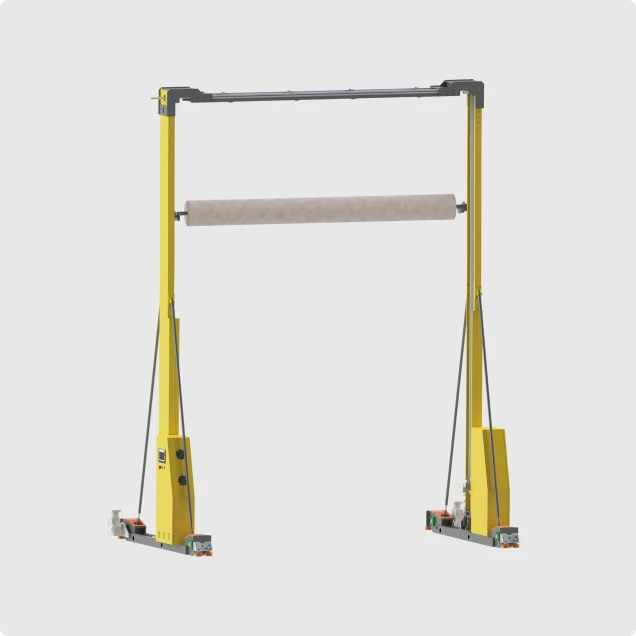
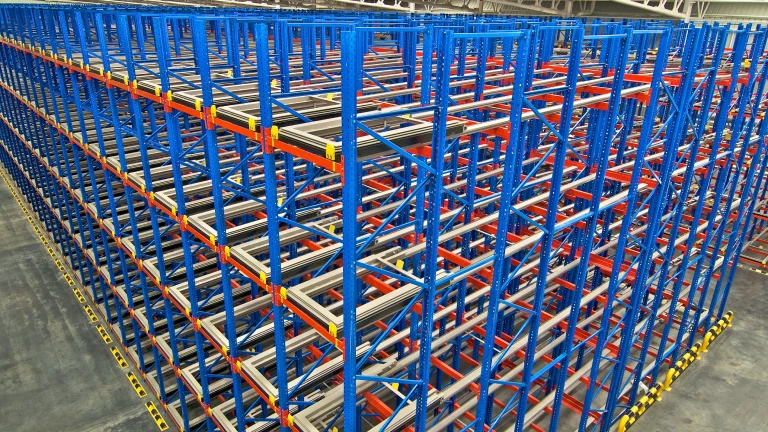
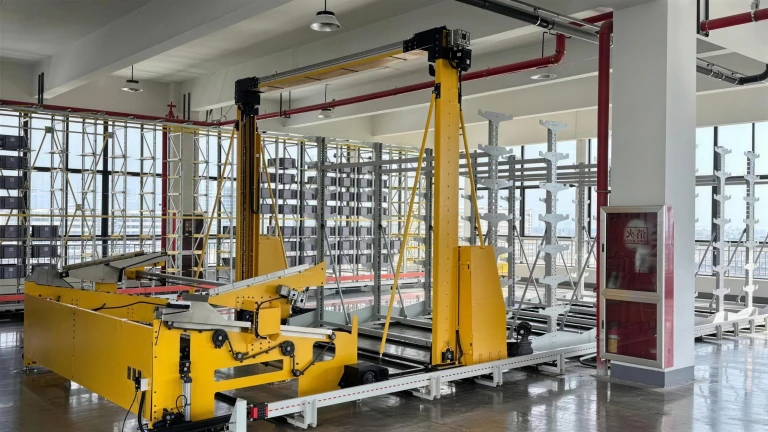
It is a computer-controlled storage and retrieval system built for heavy, long metal stock rather than pallets or totes. The core is a gantry crane that runs on rails above the racking, carrying a Z-axis hoist and a telescopic fork. The fork stores and retrieves sheet, plate, bar, tube, profile, and moulds, and a WMS tracks every position. Because the rack is dense and the crane is automated, the system stores far more material per square meter than static racks while cutting manual handling.
Why Fabricators Move Off Cantilever Racks and Floor Stacking
Cantilever racks and floor stacks have the same three problems. They eat floor space, because every bay needs a wide forklift aisle. They are slow, because finding and pulling the right sheet or bar is manual. And they damage material, since stacking and dragging scratch surfaces and bend long stock. For shops feeding lasers or saws, every minute lost to retrieval is a minute the machine sits idle. An automated system removes the aisles, the searching, and most of the handling damage.
How a Gantry Storage System Works
The gantry is a bridge that spans the racking and travels on top rails along its length. A Z-axis hoist moves up and down, and a telescopic fork extends to lift a load from its slot. When the WMS calls for material, the gantry travels to the position, the fork extracts the load, and the crane delivers it to the access or staging point. Inbound runs in reverse. Positioning is held to ±3mm, and long material is supported so deflection stays within L/1000.
The Multi-Aisle Advantage
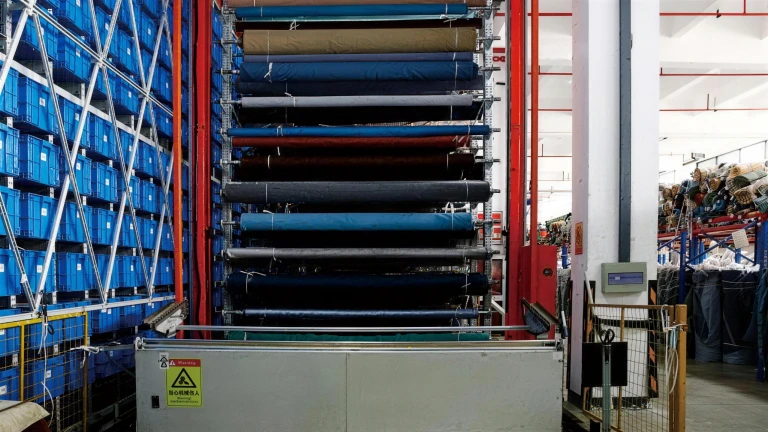
This is where a gantry differs from a single-aisle crane. A standard stacker crane is fixed to one aisle. A gantry runs above the racking and can cross 1-6 aisles, so one machine serves a much larger storage block. For the same storage you buy and maintain fewer cranes, and throughput rises by around 40%. It also means you can start with one gantry over a few aisles and add coverage as the operation grows. For smaller parts and totes a mini load crane fits better; for fabric and textile rolls, a one-bin-per-slot system is purpose-built.
Gantry System vs Cantilever Rack vs Storage Tower
Three approaches store sheet and long goods, with different trade-offs in automation, density, and cost.
| System | Automation | Coverage | Material Length | Best Fit |
|---|
| Gantry storage system | Fully automated, unmanned | One gantry, 1-6 aisles | Up to 12m, heavy | Long/heavy metal, multi-aisle, lights-out |
| Cantilever rack | Static, forklift or crane | Manual, per bay | Long, but manual access | Low cost, low volume, occasional picks |
| Storage tower | Automated, single tower | Single tower footprint | Limited by tower size | Smaller volumes, near one cutting cell |
Materials, Lengths, and Loads
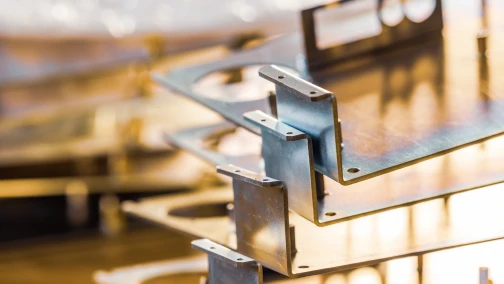
The system is built around the stock it holds. Forks and cassettes are sized to the format, so sheet, plate, bar, tube, profile, and moulds are each supported correctly. Material runs 3-6 meters as standard and up to 12 meters on custom builds, with deflection held within L/1000 so long bars and bundles stay straight. The standard gantry lifts 50-100kg for lighter sheet and trim; the heavy-duty version handles 200-1,000kg for full plate packs and heavy bundles.
Feeding Laser, Saw, and Press-Brake Lines
For a fabricator, the storage system is only as good as how it feeds the machines. The gantry connects to laser cutting, punching, sawing, and press-brake cells through the control layer, staging raw blanks before a job and taking back remnants and semi-finished parts after. That keeps the saw or laser supplied without an operator fetching material, so machine uptime rises and the flow from storage to cutting stays continuous. Remnant stock is logged and returned to a slot, which cuts waste.
How to Tell If You Need One
An automated gantry system earns its place when several of these are true:
- Sheet, bar, and tube take up floor the production area needs
- Saws or lasers wait while operators fetch material
- Material gets scratched or bent in stacking and handling
- Forklift traffic and operator hours are a cost and a safety concern
- Remnants and off-cuts pile up untracked and get wasted
- Volume is growing and aisles cannot expand sideways
For the densest storage of small parts in a low building, a high-density storage layout may suit better; this system is built for sheet and long metal stock.
Integration with WMS and Production
The gantry runs under a WMS/WCS layer that connects to your ERP or production system over standard Ethernet. It tracks every sheet, bar, and remnant by grade, size, and location, and releases material to the right cell on the schedule. Because stock data stays live, planning works from real inventory rather than a manual count, and the system holds an accurate picture from receiving through cutting to dispatch.