Warehouse automation projects fail far more often in planning than in machinery. Industry post-mortems of underperforming installations rarely identify a defective crane or shuttle as the root cause; they identify undersized throughput models, order profiles that were never properly analyzed, software integration scoped too late, and commissioning windows squeezed until go-live quality suffered. The equipment performs to specification. The specification was wrong.
A disciplined implementation process converts an operational problem into a running system through defined phases, each with concrete deliverables and acceptance criteria. This article describes that process as it is executed in professional practice: data analysis, concept design, detailed engineering, manufacturing and installation, software integration, commissioning, and ramp-up. It is written for operators evaluating their first automated system and for experienced teams benchmarking their project governance against industry practice.
Phase One: Operational Data Analysis
Every sound automation design begins with twelve to twenty-four months of transactional data from the existing operation: order lines, SKU master data with dimensions and weights, inbound and outbound volumes by day, inventory levels by SKU, and returns flow. The analysis establishes the design basis that every later decision references.
Three analytical outputs matter most. The first is the throughput profile, expressed as lines per hour and pallets or totes per hour at average and at peak, with the peak-to-average ratio quantified. The second is the SKU velocity distribution, the ABC curve showing what share of SKUs generates what share of picks, which determines how inventory is stratified across fast, medium, and slow storage zones. The third is the inventory envelope: how many pallet or tote positions are needed at peak stock, and how each SKU's physical dimensions map to load types. A design based on averages rather than the peak profile will choke exactly when the business needs it most, and a design that ignores dimensional outliers will generate manual exception handling that erodes the labor savings the project was justified on.
Data quality deserves explicit attention in this phase. Transactional exports frequently contain unmapped SKUs, missing dimensions, and seasonal gaps from promotions or system migrations. Cleaning the dataset, validating a sample of SKU dimensions by physical measurement, and reconciling inventory records against actual stock are unglamorous tasks, but every hour spent here removes a design assumption that would otherwise surface during commissioning as a tote that does not fit or a location count that runs short.
Phase Two: Concept Design and Simulation
Concept design translates the data basis into candidate system architectures. For pallet operations this typically means comparing a unit-load AS/RS against a four-way shuttle system or dense racking alternatives; for case and piece picking it means comparing shuttle, bin-robot, and mini-load architectures. Each candidate is evaluated against the same criteria: sustained and peak throughput, storage density within the available building envelope, redundancy behavior when a single machine fails, expandability, and total cost over a ten-to-fifteen-year horizon.
Serious concept work includes discrete-event simulation. A simulation model loads the actual order data into a software replica of the proposed system and runs it under average days, peak days, and failure scenarios. Simulation answers the questions that static calculations cannot: whether conveyor merge points saturate during the outbound wave, whether shuttle fleet size holds up when 20 percent of vehicles are charging, and how the system degrades during an aisle outage. The deliverable of this phase is a concept package with a selected architecture, a quantified performance envelope, and a budget-level capital estimate, which together form the basis for the investment decision.
Phase Three: Detailed Engineering
Once the concept is approved, detailed engineering fixes every physical and logical interface. On the mechanical side this covers rack structural calculations against the applicable seismic and load codes, slab flatness and load-bearing verification, conveyor and lift layouts, fire protection coordination, and building services interfaces. On the controls side it covers PLC architecture, network topology, safety systems, and the functional specification of the warehouse control system that will orchestrate the machines.
The most consequential document in this phase is the interface control specification between the automation and the host WMS or ERP. It defines every message the systems exchange: goods receipt notifications, storage tasks, retrieval orders, inventory confirmations, hold and release transactions, and exception handling. Projects that finalize this specification before equipment manufacturing begins integrate smoothly; projects that defer it until commissioning discover mismatched assumptions with hardware already bolted to the floor.
Phase Four: Manufacturing, Installation, and Safety Compliance
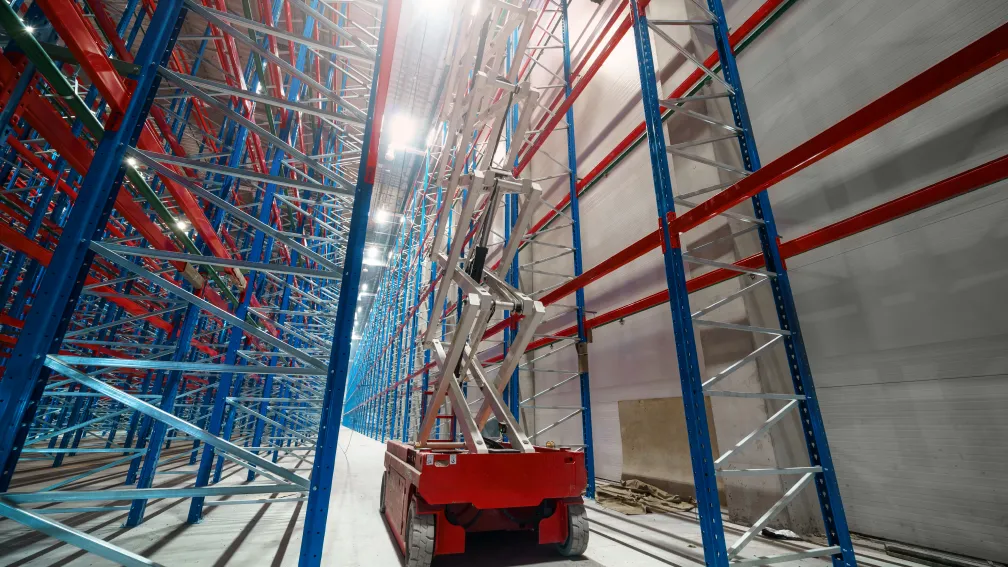
Equipment manufacturing proceeds in parallel with site preparation. The critical path in most projects runs through rack and machine installation, which demands a verified slab, available power, and a coordinated site logistics plan so that installation crews, electricians, and the building trades do not obstruct each other. Professional practice sequences installation aisle by aisle, allowing mechanical completion and static testing to begin on early aisles while later ones are still being erected.
Safety compliance runs through this phase, not after it. Machinery risk assessments, guarding, light curtains, access interlocks, and lockout-tagout provisions are verified against the applicable machinery directives and occupational safety regulations before any energized testing begins. Documentation of this compliance is a contractual deliverable, and it protects both the operator and the integrator at regulatory inspection.
Phase Five: Software Integration and Emulation Testing
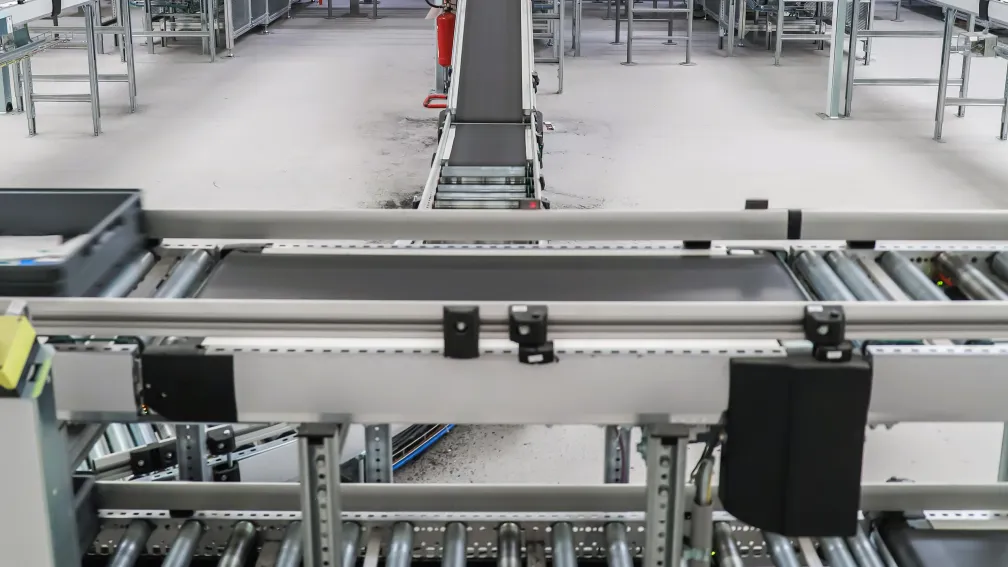
Software integration proceeds through three gates. The first is emulation testing before hardware arrives: the WCS connects to a software model of the physical system, and the full message flow with the host WMS is exercised end to end. Emulation catches interface defects months before commissioning, when fixing them costs hours instead of crane downtime. The second gate is single-machine commissioning, where each crane, shuttle, lift, and conveyor segment is tuned to its rated speeds and positioning accuracy in isolation. The third is integrated system testing, where machines run together under WCS control and the end-to-end scenarios from the functional specification are executed and signed off one by one.
Phase Six: Commissioning, Ramp-Up, and Acceptance
Formal acceptance testing runs the system at contracted performance with real inventory and real orders, typically over a defined multi-day reliability demonstration in which availability and throughput are measured continuously. Experienced operators insist on a ramp-up plan that increases load progressively: partial SKU migration first, then full inventory, then peak-season exposure only after the system has accumulated weeks of stable operation. Training is part of acceptance, covering operators, maintenance technicians, and the supervisors who will manage by the system's exception reports.
Post-acceptance, the project transitions to a service and optimization phase. Spare parts provisioning, preventive maintenance schedules, and remote monitoring agreements determine long-term availability far more than the initial commissioning quality. Operators planning the financial side of this lifecycle can reference our guide to calculating payback for AS/RS and robotics, which covers how availability assumptions feed the return model.
Realistic Timeline Expectations
A mid-size pallet AS/RS project typically runs twelve to eighteen months from contract signature to acceptance: two to three months of detailed engineering, four to six months of manufacturing overlapping with site preparation, three to four months of installation, and two to three months of integration testing and commissioning. Compressed timelines are possible when the data analysis and interface specifications are complete at signing; they are dangerous when compression is achieved by skipping emulation testing or shortening the reliability demonstration. Our how we work page describes the phase-gate governance we apply to keep each of these stages on schedule.
Conclusion
Successful warehouse automation is a process discipline. Data analysis fixes the design basis, simulation validates the architecture before capital is committed, interface specifications freeze the software contract early, and staged commissioning with a progressive ramp-up protects go-live quality. Operators who govern projects through these phases, with quantified acceptance criteria at each gate, consistently achieve the performance the business case promised. Those who compress the early phases to save months routinely lose years to a system that never reaches its modeled throughput.
If you are preparing an automation investment, contact our team with your order volume, SKU count, and building parameters. We will begin with a data analysis and concept study that sizes the right architecture for your operation before any capital is committed.
Frequently Asked Questions
-

HOWEPROFIT Team
Warehouse Automation Specialists, HOWEPROFIT
The HOWEPROFIT Team consists of senior intralogistics engineers and supply chain experts specializing in advanced AS/RS and robotic fulfillment solutions. Backed by years of field experience across e-commerce, 3PL, and manufacturing sectors, we provide data-driven automation strategies, rigorous throughput simulations, and objective ROI modeling. Our mission is to help facilities seamlessly transition to high-efficiency, reliable, and scalable automated operations.