Why Shuttle Systems Exist
For decades, automating pallet or tote storage meant one decision: install a stacker crane in every aisle. That architecture works, but it locks a facility into fixed aisles, fixed capacity per aisle, and a single point of failure in every lane. As order profiles became more volatile and building costs climbed, the industry needed an automated storage architecture that could densify storage beyond single-deep racking and scale throughput without rebuilding the warehouse. The four-way shuttle system answered that need.
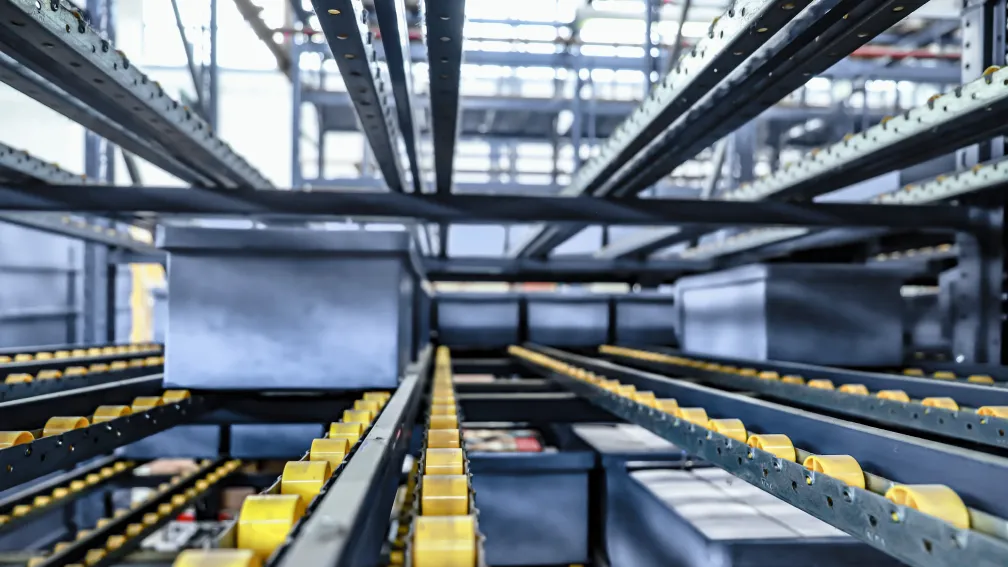
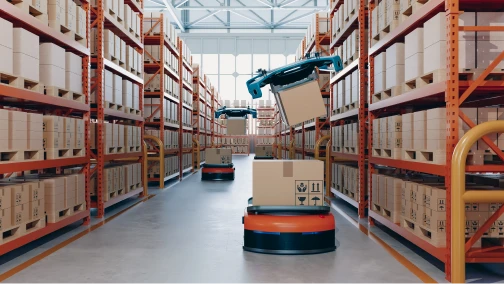
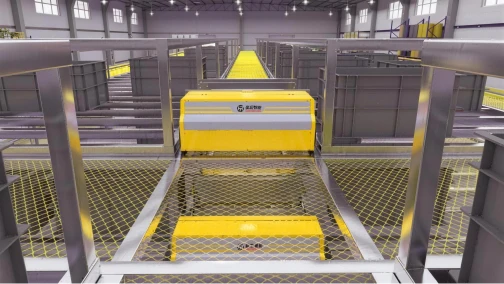
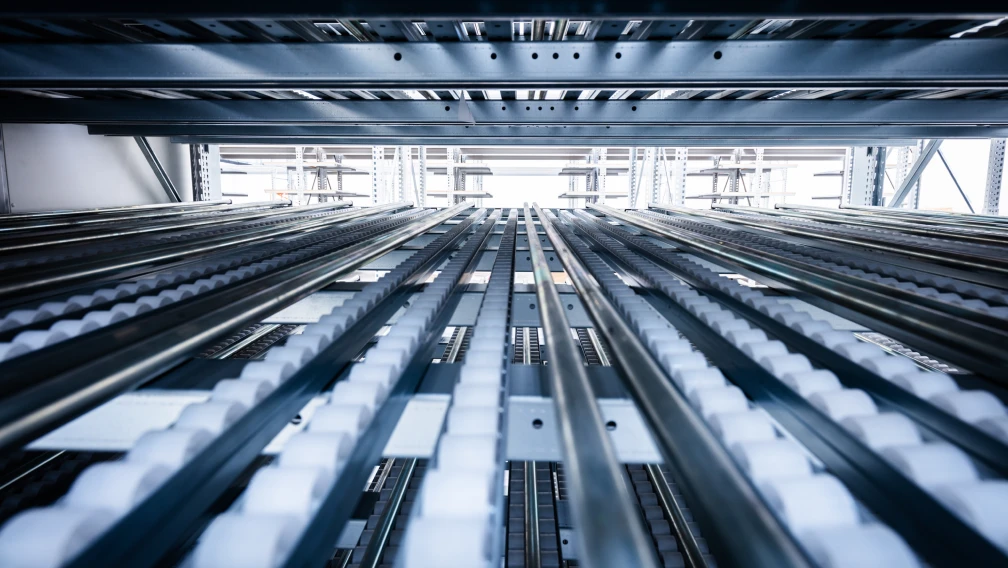
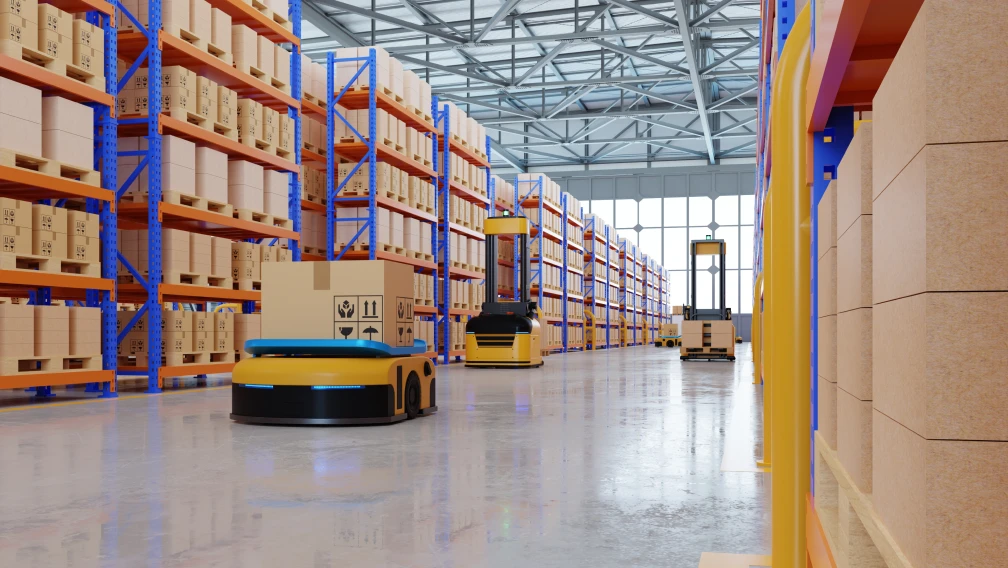
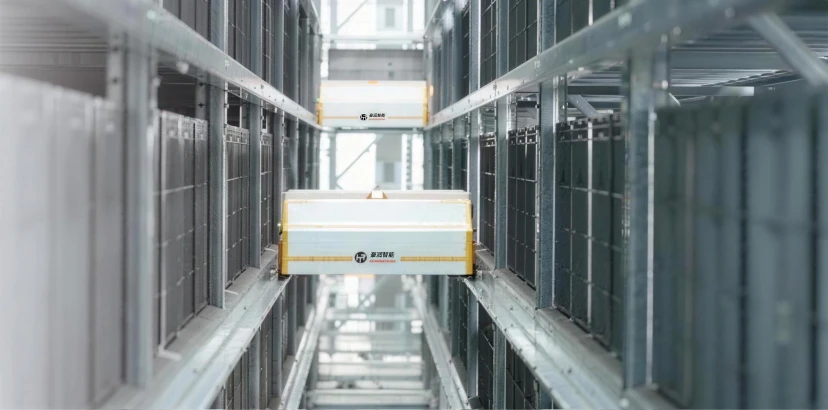
A four-way shuttle system is an automated storage and retrieval architecture in which battery-powered shuttle vehicles travel along a rail grid inside the racking, moving forward, backward, and sideways on every level, with vertical lifts transferring loads between levels. Because shuttles are not captive to any aisle, the fleet can be directed wherever work accumulates, capacity scales by adding vehicles, and a single unit out of service degrades performance gracefully instead of blocking an aisle. This article explains the working principles, compares the main shuttle variants, positions the technology against stacker cranes, and identifies where it fits best.
How a Four-Way Shuttle System Works
The Shuttle Vehicle
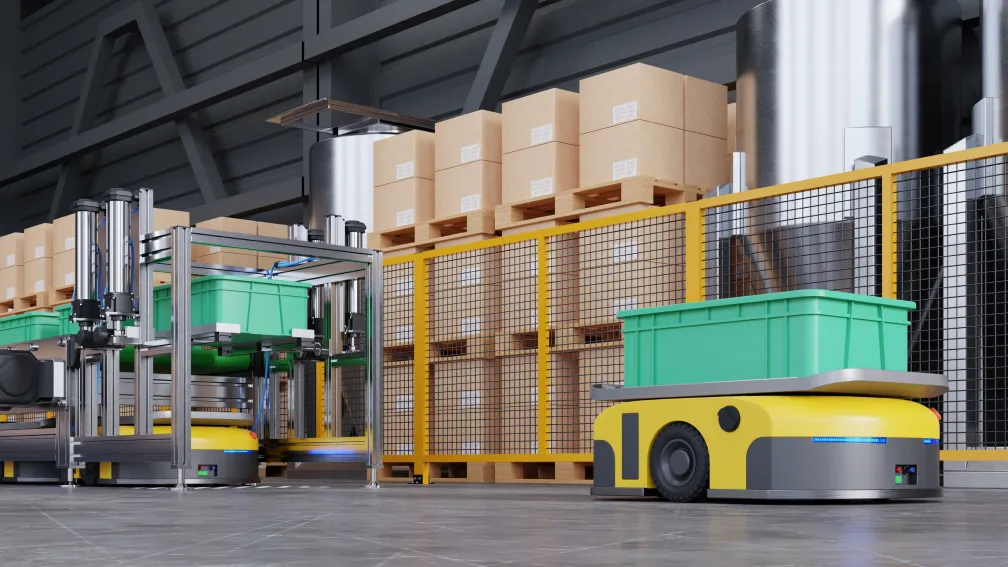
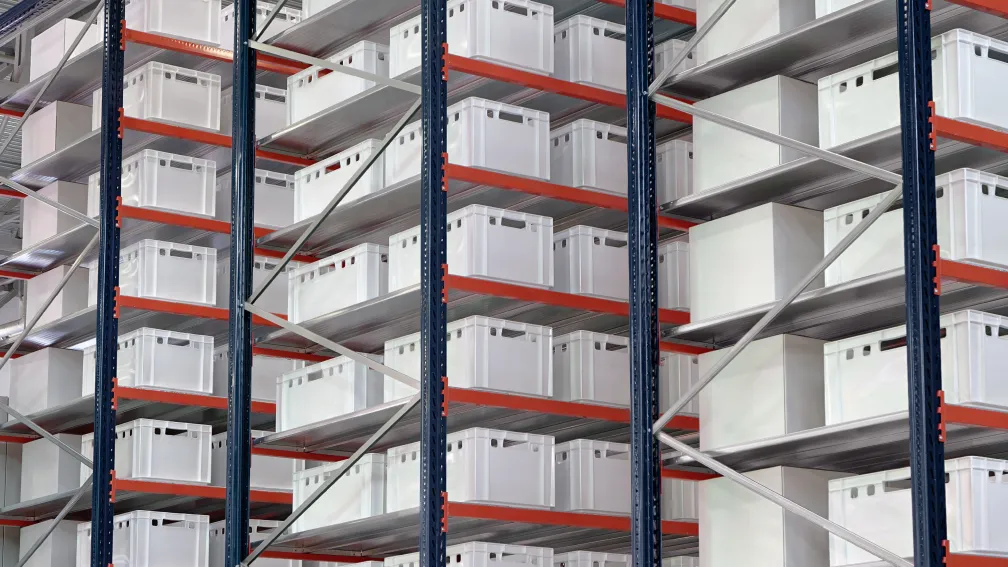
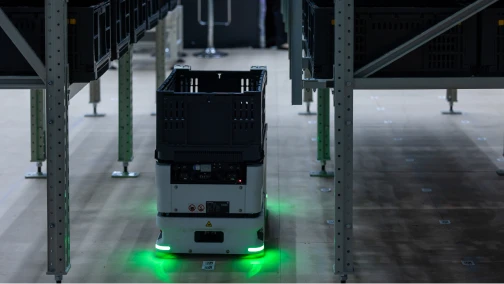
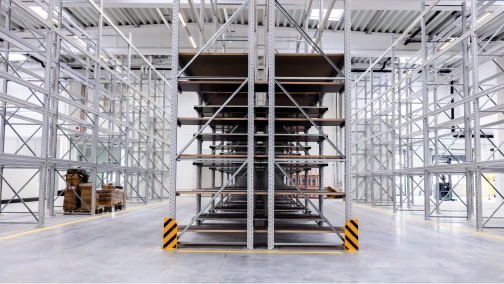
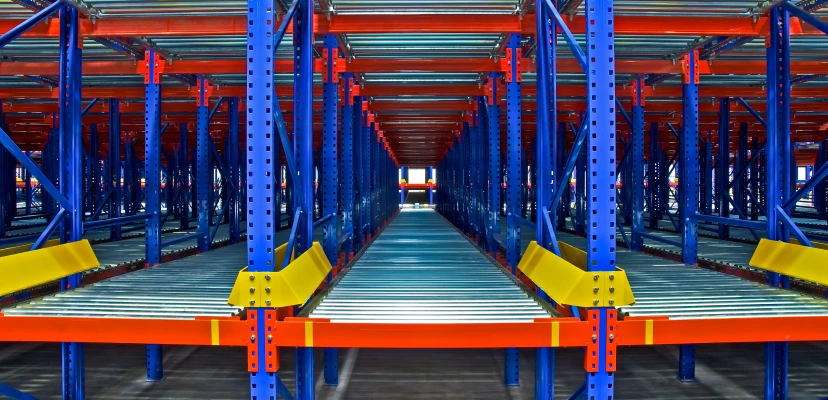
The shuttle is a compact, self-propelled carrier, typically weighing only 300 to 400 kilograms, that runs on rails laid in both directions at every rack level. Two independent drive systems handle X and Y axis movement, and an onboard lifting deck raises the pallet or tote clear of the support rails so the vehicle can travel with the load. Typical travel speeds run around 1.6 meters per second empty and 1.2 meters per second loaded. Because the shuttle can turn at rail intersections, it reaches any storage lane on its level directly, and when running empty it can shortcut through storage channels to its next assignment. In a four-way shuttle system, storage lanes routinely run five to ten pallets deep, which is where the density advantage over single-deep crane racking comes from.
Vertical Lifts and Level Changes
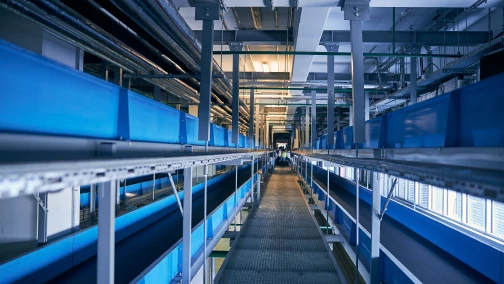
Shuttles work horizontally; vertical movement belongs to the lifts. Elevators positioned at the rack ends or sides carry loads between the conveyor interface and the storage levels, and on larger systems also transfer the shuttles themselves between levels so the fleet can be rebalanced across the building. The complete installation comes down to six elements: the rack structure, the shuttle fleet, the vertical lifts, the inbound and outbound conveyors, and the management and control software. Lift capacity is the main sizing constraint in high-throughput designs, since every pallet entering or leaving the block passes through the lifts, which is why throughput engineering for shuttle systems starts at the vertical interface.
Fleet Software and Traffic Control
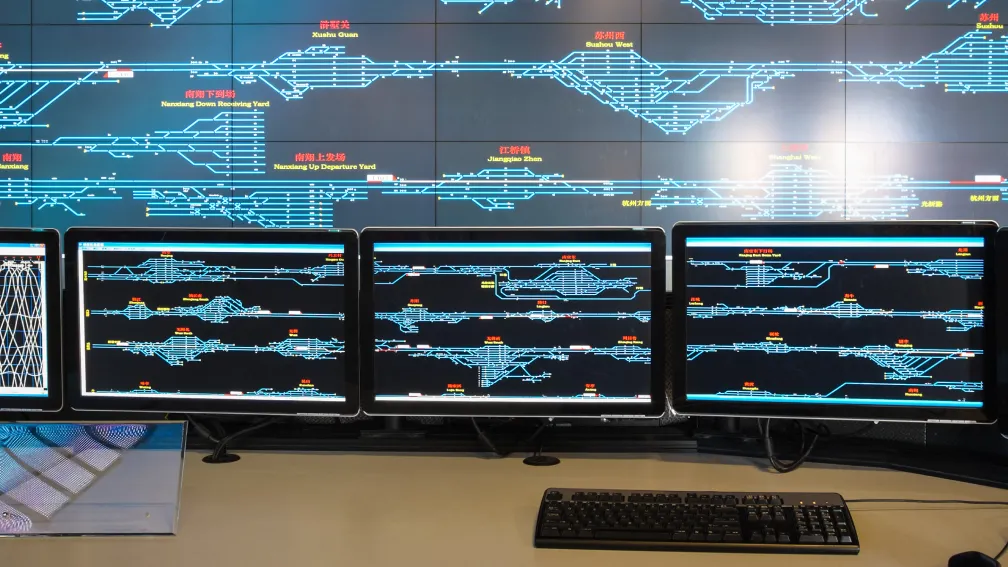
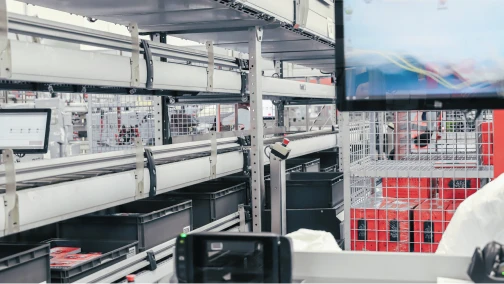
Hardware this distributed only works because the software layer is centralized. The warehouse management system owns inventory, batch and expiry logic, and order release. Below it, the control layer assigns missions to individual vehicles, plans collision-free routes across the rail grid, sequences lift calls, and schedules opportunity charging so the fleet stays ready through peak windows. Our robot control system performs this fleet coordination, and the warehouse management layer above it maintains real-time location records for every pallet or tote, so inventory accuracy is a system property rather than a counting exercise.
Four-Way vs. Two-Way vs. Mother-Child Shuttles
Shuttle systems come in several architectures, and confusing them leads to poor specification. The two-way shuttle, often called a radio shuttle, moves only forward and backward inside a storage lane and depends on a forklift to carry it between lanes and levels; it is a semi-automated density upgrade for drive-in racking. The mother-child design pairs an aisle-running carrier with lane shuttles for very deep storage. The four-way shuttle removes both dependencies: the vehicle itself changes lanes and aisles, and lifts change levels, so no forklift touches the storage block.
| Parameter | Two-Way (Radio) Shuttle | Mother-Child Shuttle | Four-Way Shuttle |
|---|---|---|---|
| Movement | Forward/back within one lane | Carrier on aisle + lane shuttle | X and Y across full grid, lifts between levels |
| Automation level | Semi-automated; forklift-dependent | Fully automated | Fully automated |
| Lane depth | Deep lanes | Very deep lanes | 5–10 deep, flexible |
| Throughput scaling | Limited by forklifts | Limited by carrier count | Scales by adding shuttles |
| Fault tolerance | Lane blocked if shuttle fails | Aisle affected if carrier fails | Tasks reroute to remaining fleet |
| Typical fit | Low-cost density upgrade | Bulk, low-SKU cold storage | High-mix, variable-throughput operations |
Four-Way Shuttle vs. Stacker Crane AS/RS
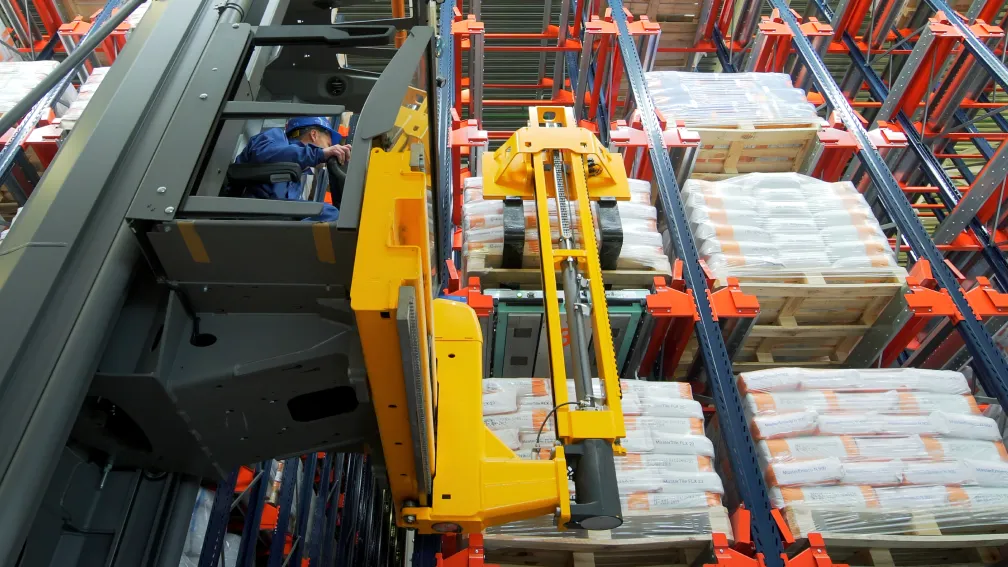
The comparison that decides most projects is shuttle against crane. A unit-load AS/RS with aisle-captive stacker cranes remains the stronger choice in very tall buildings: cranes reach 40 meters where shuttle grids are economically practical to roughly 12 to 25 meters, and a crane's raw travel speed is higher than any shuttle's. Below that height threshold, the balance shifts. Multi-deep shuttle lanes raise pallet positions by around 30 percent over single-deep crane racking on the same floor area. Throughput scales differently as well: crane capacity is fixed per aisle, so more throughput means more aisles, while shuttle throughput scales near-linearly with fleet size, which lets an operation buy the capacity it needs now and add vehicles as volume grows. Redundancy follows the same distributed logic. A crane failure closes its aisle until repaired; a shuttle failure removes one vehicle while the control system reroutes its tasks, and the lightweight shuttle can be serviced at ground level instead of requiring high-altitude crane maintenance. For a broader view of where both sit among AS/RS architectures, see our AS/RS types comparison.
Where Four-Way Shuttles Perform Best
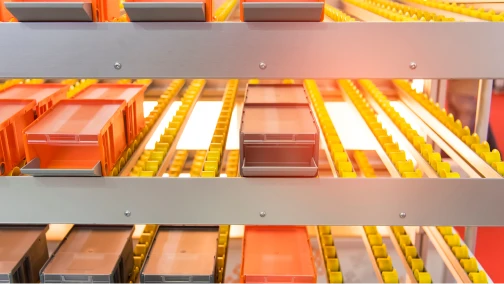
Four application profiles consistently favor this architecture. First, cold and freezer storage: shuttles operate reliably at -20°C and below, the dense multi-deep block shrinks refrigerated volume and energy cost, and lights-out operation removes staff from deep-cold environments entirely. Second, distribution buffer storage with seasonal peaks, where adding shuttle vehicles for a season and standing them down afterward matches capacity to demand without rebuilding anything. Third, manufacturing buffer and sequencing stores feeding production lines, where the grid layout adapts to irregular building footprints and support columns that crane aisles cannot tolerate. Fourth, goods-to-person order fulfillment for totes and cartons, where shuttles present bins to stationary pickers and the system absorbs order-line volatility through fleet scheduling rather than added labor.
Energy and Operating Cost Profile
Shuttle architecture is also the more energy-lean option per pallet moved. A stacker crane accelerates a multi-ton mast and carriage on every cycle, while a shuttle moves only its own few hundred kilograms plus the load, and regenerative braking returns part of that energy to the system. Vehicles power down during idle periods and recharge opportunistically at rack-integrated chargers, so the fleet holds readiness without continuous draw. In unmanned lights-out operation the savings compound: no aisle lighting, reduced heating or cooling of working space, and no personnel facilities inside the storage block. Across a 24-hour distribution operation, these factors show up directly in the utility line of the operating budget, and in cold stores they stack on top of the refrigeration savings from the denser footprint.
Design and Investment Considerations
Four engineering inputs determine whether a shuttle grid outperforms its alternatives. Lane depth sets the density-throughput trade-off: deeper lanes store more but increase reshuffling work on mixed-SKU profiles, so SKU count and turn rate drive the depth decision. Lift count and position set the throughput ceiling and deserve more attention than shuttle count in the design phase. Building geometry matters because the rail grid tolerates irregular shapes, low ceilings, and even multi-floor layouts connected by pallet lifts, all difficult for crane systems. Finally, the investment profile differs fundamentally from crane projects: racking and lifts are sized for the target capacity, but the shuttle fleet itself can be purchased in phases, which spreads capital over the growth curve instead of committing to year-ten throughput on day one. In cold storage, where construction runs several thousand dollars per square meter, the footprint saving from multi-deep density frequently offsets the equipment premium within the first project phase.
If you are evaluating a four-way shuttle system for a new build or a density upgrade, our engineering team can model lane depth, lift capacity, and fleet size against your pallet profile and order data, and return a configuration with projected throughput and payback. Contact us to start the assessment.
-

HOWEPROFIT Team
Warehouse Automation Specialists, HOWEPROFIT
The HOWEPROFIT Team consists of senior intralogistics engineers and supply chain experts specializing in advanced AS/RS and robotic fulfillment solutions. Backed by years of field experience across e-commerce, 3PL, and manufacturing sectors, we provide data-driven automation strategies, rigorous throughput simulations, and objective ROI modeling. Our mission is to help facilities seamlessly transition to high-efficiency, reliable, and scalable automated operations.