The Warehouse Has Changed. AS/RS Is Why.
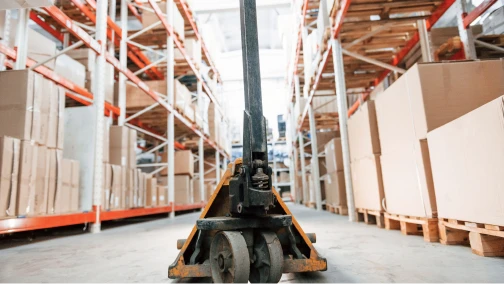
The warehouse you remember from a decade ago — long aisles, forklifts criss-crossing, people walking 12 miles a shift to pick orders — is being replaced. The replacement, in most modern fulfillment centers, is an AS/RS.
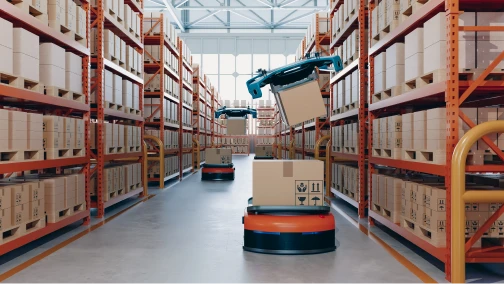
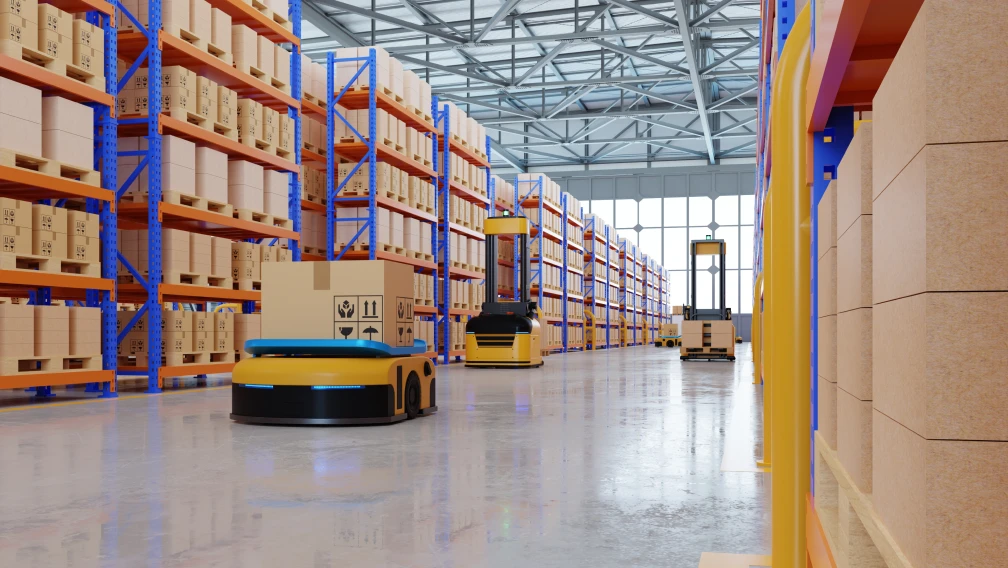
AS/RS stands for Automated Storage and Retrieval System. It's the broad category of computer-controlled equipment that handles inventory put-away, storage, and retrieval without anyone having to walk to a shelf. The category covers everything from giant pallet-handling cranes in beverage warehouses to compact cube-grid robots in e-commerce fulfillment centers. What unifies them is a simple idea: bring the goods to the worker, instead of the worker to the goods.
This guide explains how AS/RS works, what the major types are, what they cost, who uses them, and what to look at when you're sizing one for your own facility. It's written for operations leaders, supply chain directors, and warehouse engineers evaluating automation for the first time.

How an AS/RS Works
Every AS/RS has four building blocks. Take any of them away and the system stops being an AS/RS:
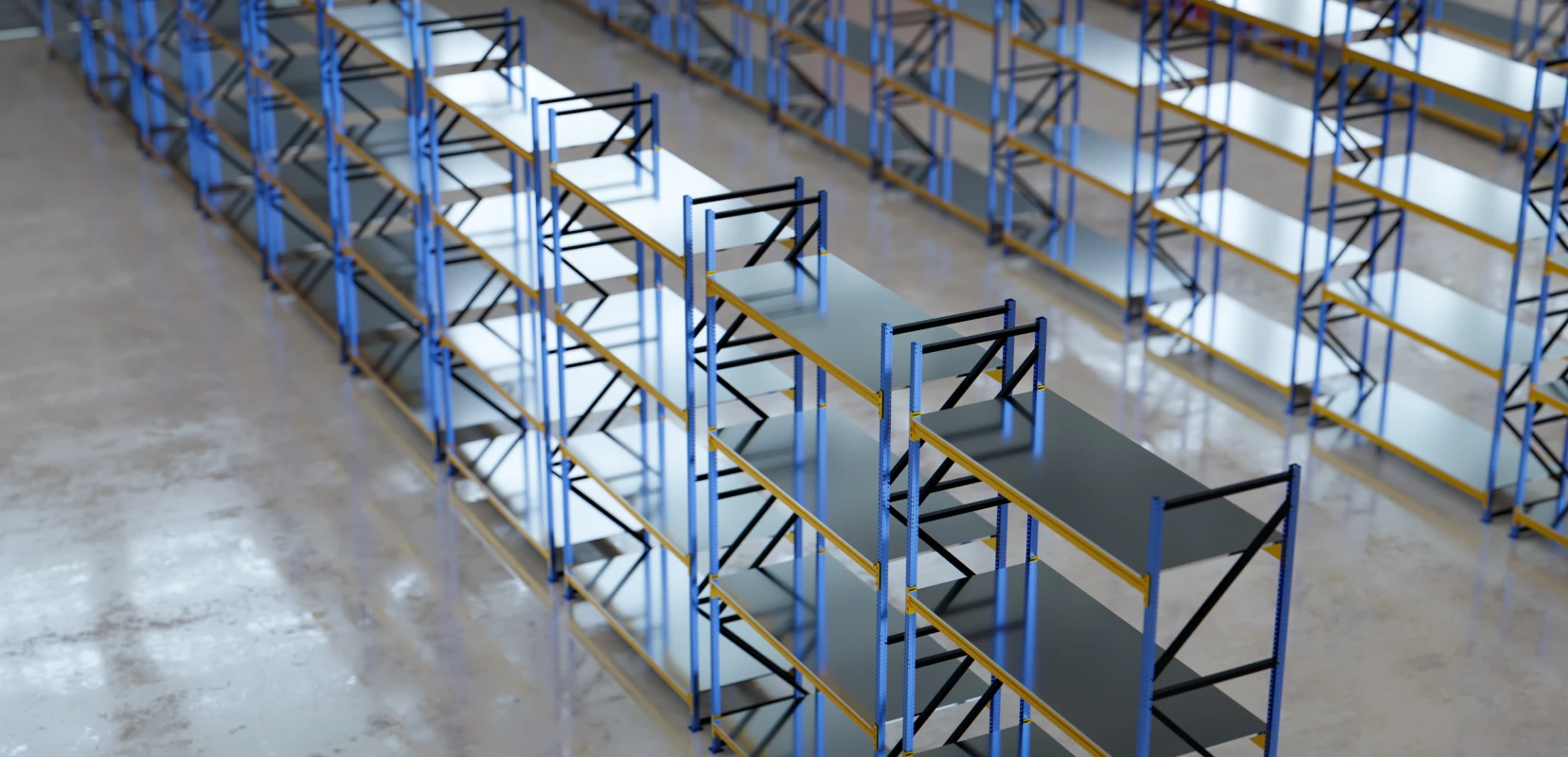
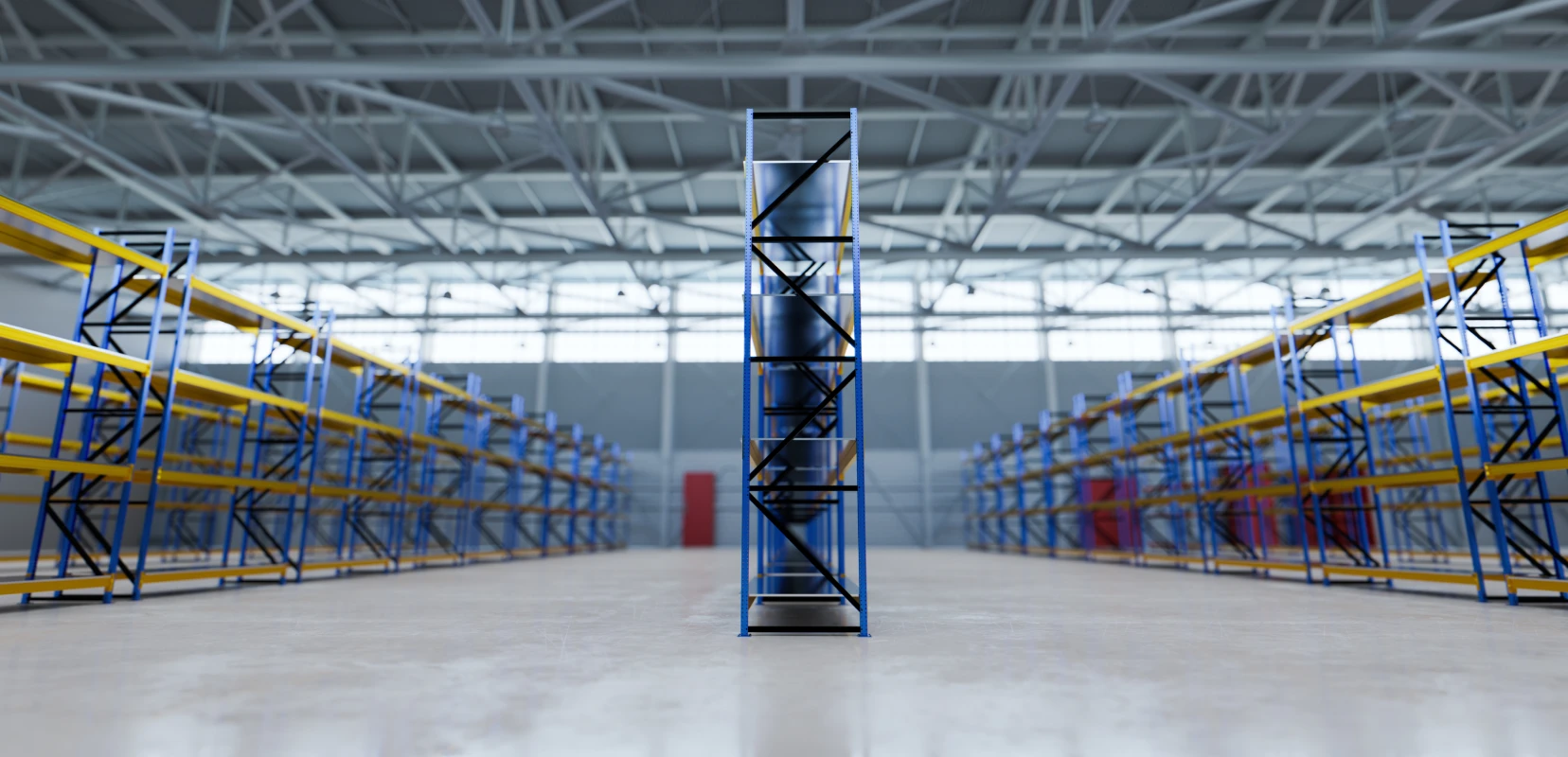
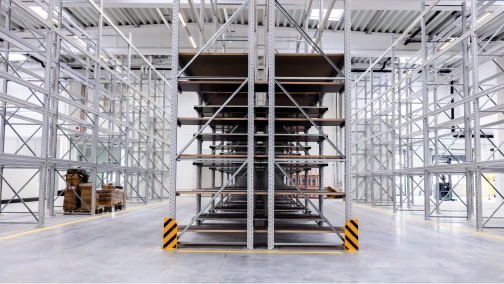
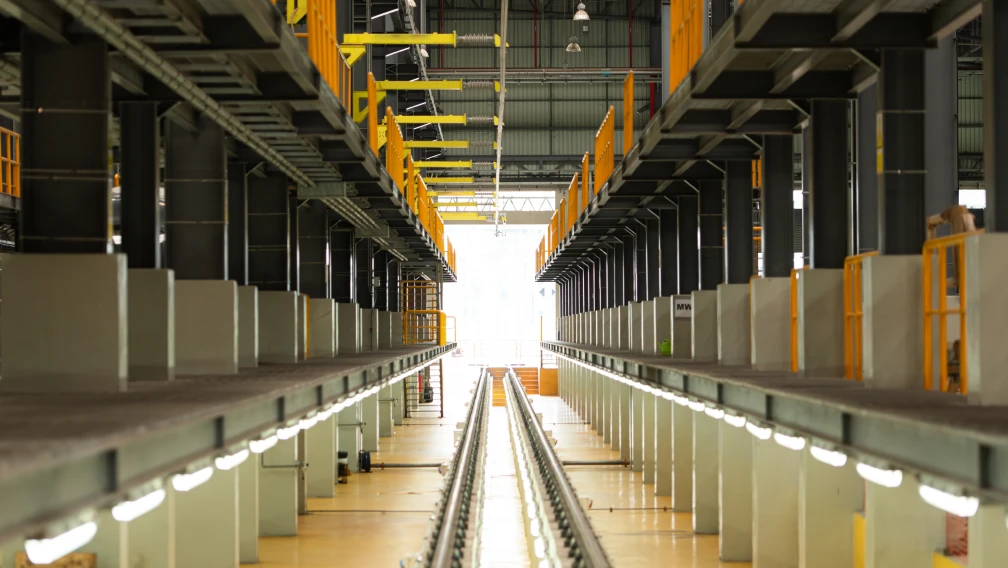
1. A storage structure. This is the rack or shelving where inventory lives. Heights range from 6 m for a basic shuttle system to 40 m for a high-bay unit-load AS/RS.
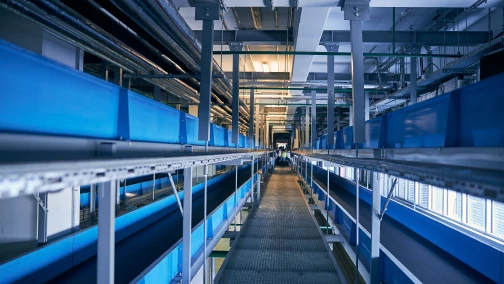
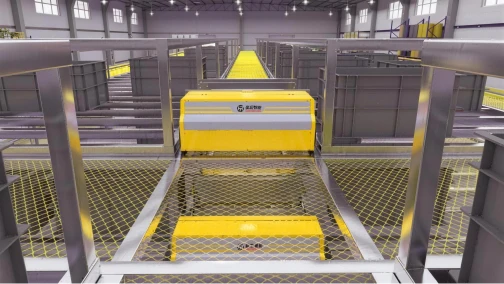
2. A motion system. This is the part that moves. It might be a stacker crane traveling on rails, a fleet of shuttles moving horizontally inside the rack, a robotic arm climbing a vertical tower, or wheeled bots scurrying on top of a grid.
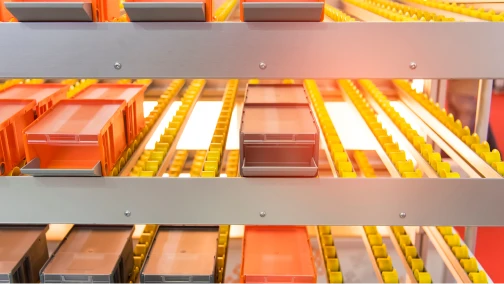
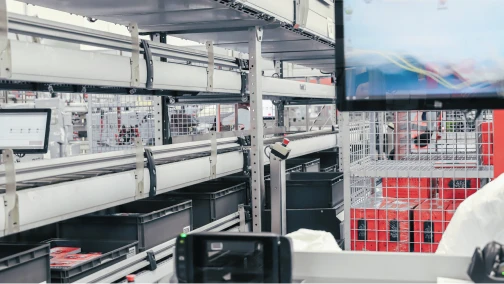
3. Pick stations or transfer points. This is where retrieved goods get handed off to a human operator or another piece of equipment. In a goods-to-person setup, the picker stands at an ergonomic workstation while totes appear in front of them.
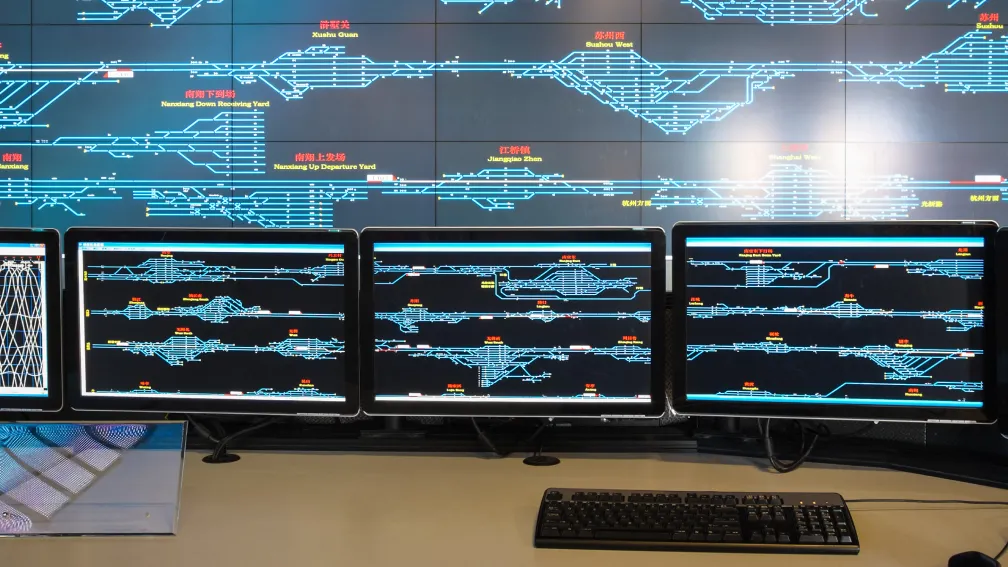
4. A control system. This is the brain. It receives orders from the WMS, decides which inventory to retrieve, dispatches the motion equipment, and tracks everything in real time.
The physical process inside a typical AS/RS looks like this: an order drops into the WMS, the control system figures out which storage location holds the SKU, dispatches a shuttle or crane to retrieve the bin, routes the bin to a pick station, the operator grabs the unit, and the bin goes back to its location (or to a different one if the slotting algorithm decided to rebalance). The full cycle takes 30 seconds to two minutes depending on system type and rack depth.
The reason this beats a human walking is straightforward: a worker in a manual warehouse spends roughly 60% of their time walking and 40% picking. An AS/RS flips that ratio. The picker stays at one station and processes 300 to 600 lines per hour, versus 60 to 100 lines per hour walking.

Core Components in Detail
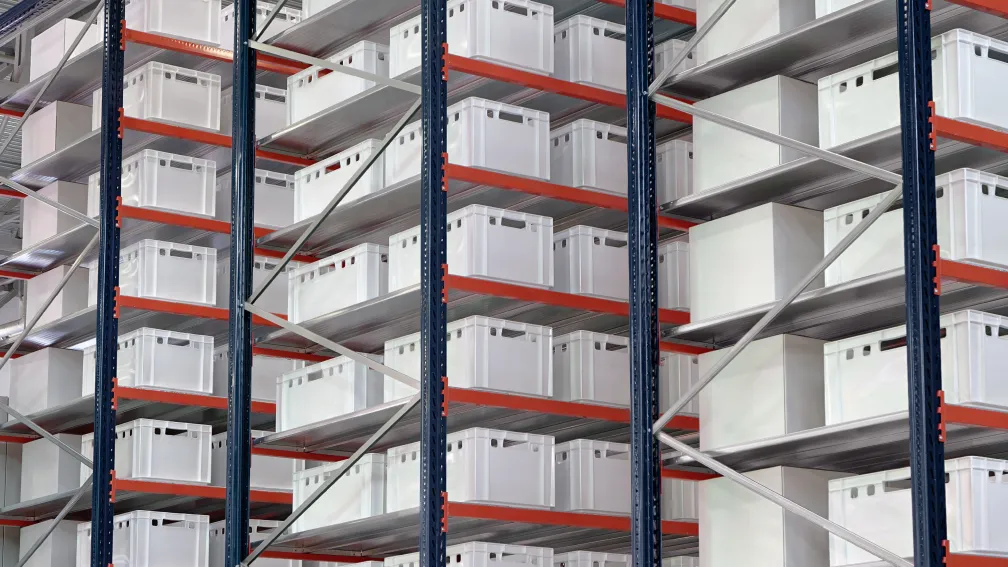
Storage racks
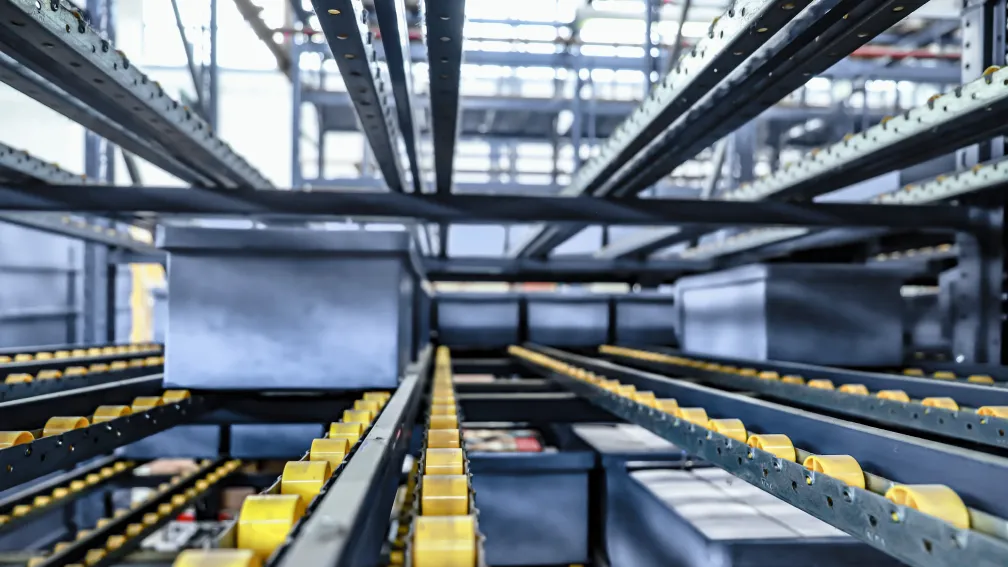
Rack geometry decides almost everything else. Tall narrow aisles serve high-density mini-load systems. Wide aisles support pallet-handling cranes. Cube-grid systems eliminate aisles entirely by stacking bins in a solid block. Density and access speed always trade off — denser storage usually means slower retrieval for the bins buried deep in a column.
Motion equipment
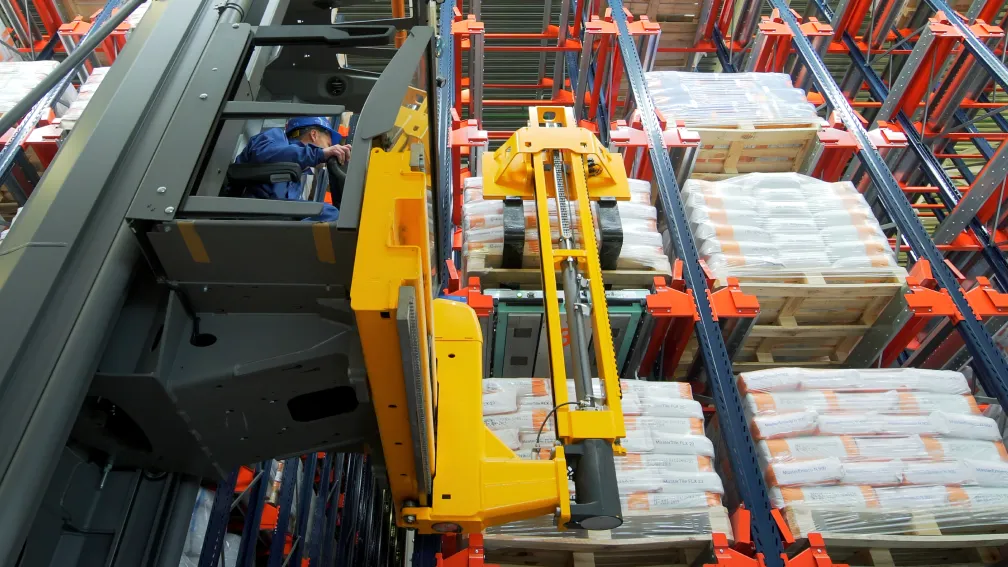
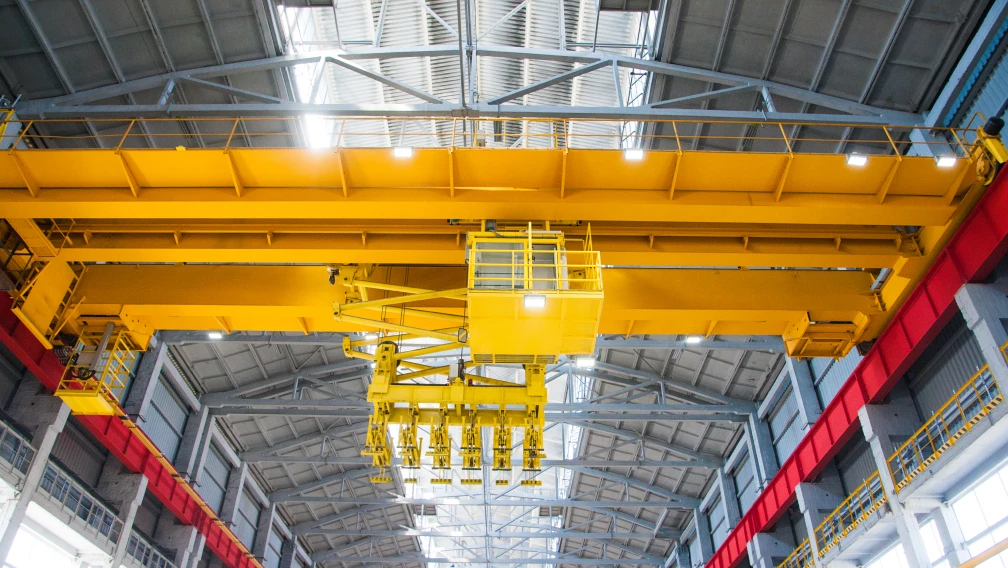
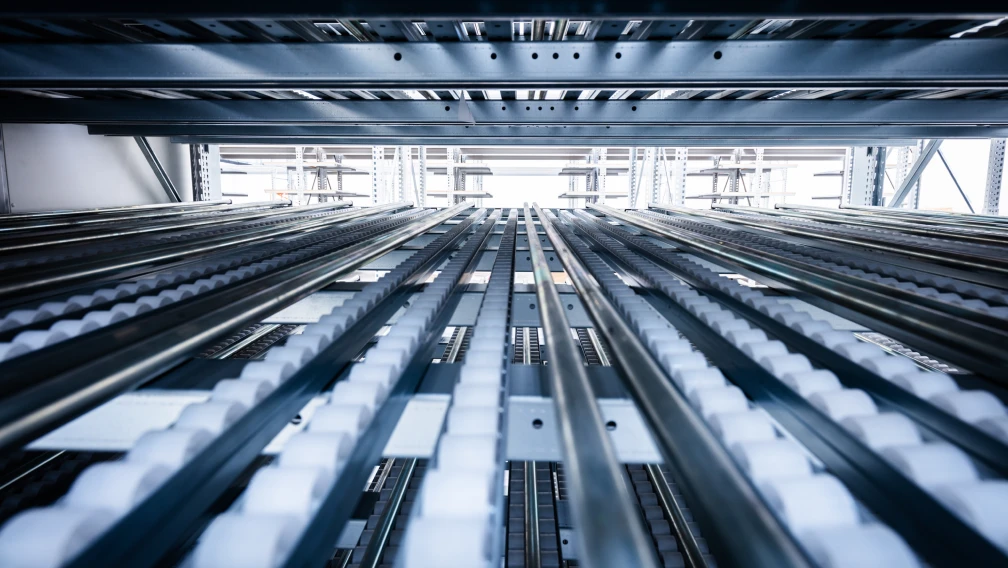
This is where AS/RS designs diverge. Stacker cranes are the original AS/RS motion system, dating to the 1960s. Modern systems use shuttles (one per level, all running in parallel), wheeled grid robots that can access any column from above, or vertical lift modules with a single internal lift mechanism.
Conveyors and integration
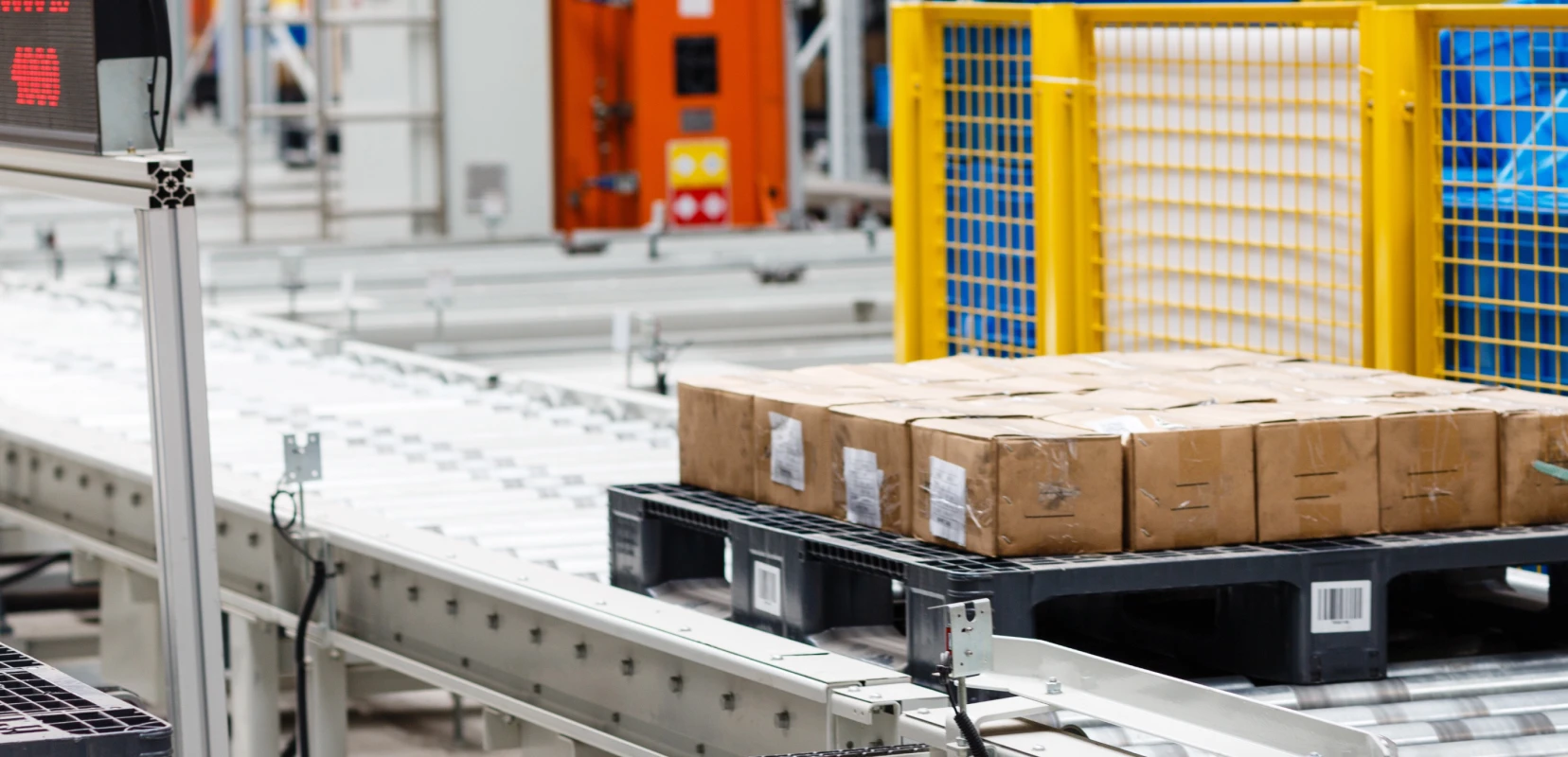
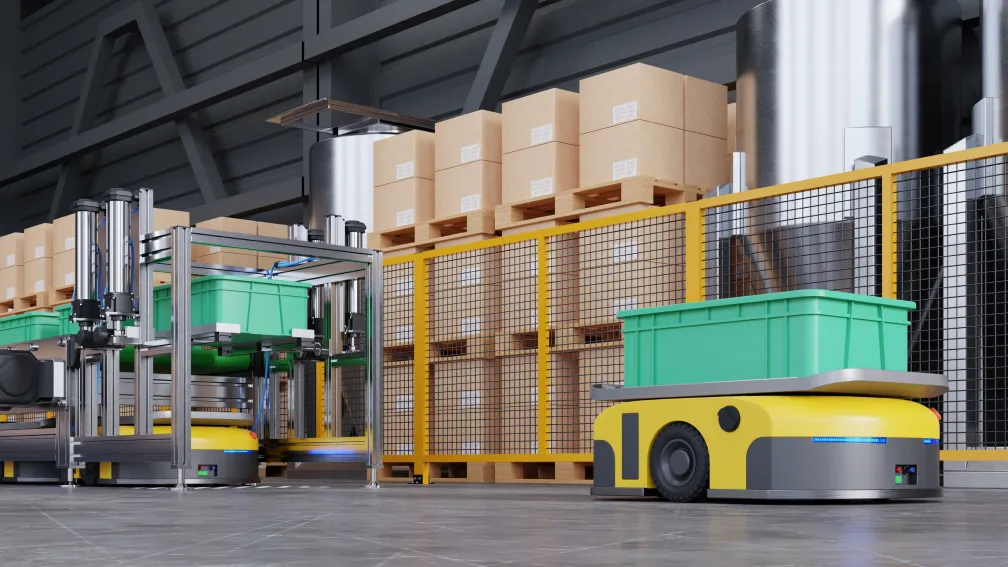
Inbound goods need to get into the storage structure. Outbound retrieval needs to reach the pick station. Conveyors, transfer carts, and AMRs handle this connecting tissue. The integration between AS/RS and the surrounding equipment is often the part that decides whether a project hits its throughput targets or limps along.
Software stack
There are typically three software layers in a full AS/RS deployment:
• WMS (Warehouse Management System) — handles inventory, orders, slotting, labor management
• WES (Warehouse Execution System) — orchestrates workflows across multiple equipment types
• WCS (Warehouse Control System) — directly drives the AS/RS motion equipment in real time
Smaller deployments often combine WES and WCS into one layer. Larger sites with multiple AS/RS subsystems usually keep them separate.

The Major AS/RS Types
Eight broad system types dominate today's market. Each fits a different load profile and operational shape.
Unit-Load AS/RS
Handles full pallets and very heavy loads — up to 5,000 kg per pallet. Used for beverages, paper, automotive components, frozen food. Heights commonly reach 35–40 m, served by stacker cranes operating in narrow aisles 1.8–2.2 m wide. Cycle times are slow (60–90 seconds per move) but throughput is high per crane because the loads are large.
Mini-Load AS/RS
Handles cartons, totes, and trays — typical load weight 30–50 kg. Mini-load is the workhorse for parts distribution, e-commerce, pharma, and most operations with high SKU count and small-to-medium velocity. Cranes work in aisles 1.4–1.8 m wide at heights up to 22 m. A typical mini-load installation holds 20,000 to 100,000+ bins.
Shuttle AS/RS
Uses dedicated shuttles on each level of a rack, all running at the same time. The big difference from a mini-load is throughput: a 10-level shuttle aisle can run 10 cycles in parallel where a crane runs one at a time. Throughput per aisle is 500–800+ cycles per hour. Best for high-velocity small-load operations.
Cube-Based / Grid AS/RS
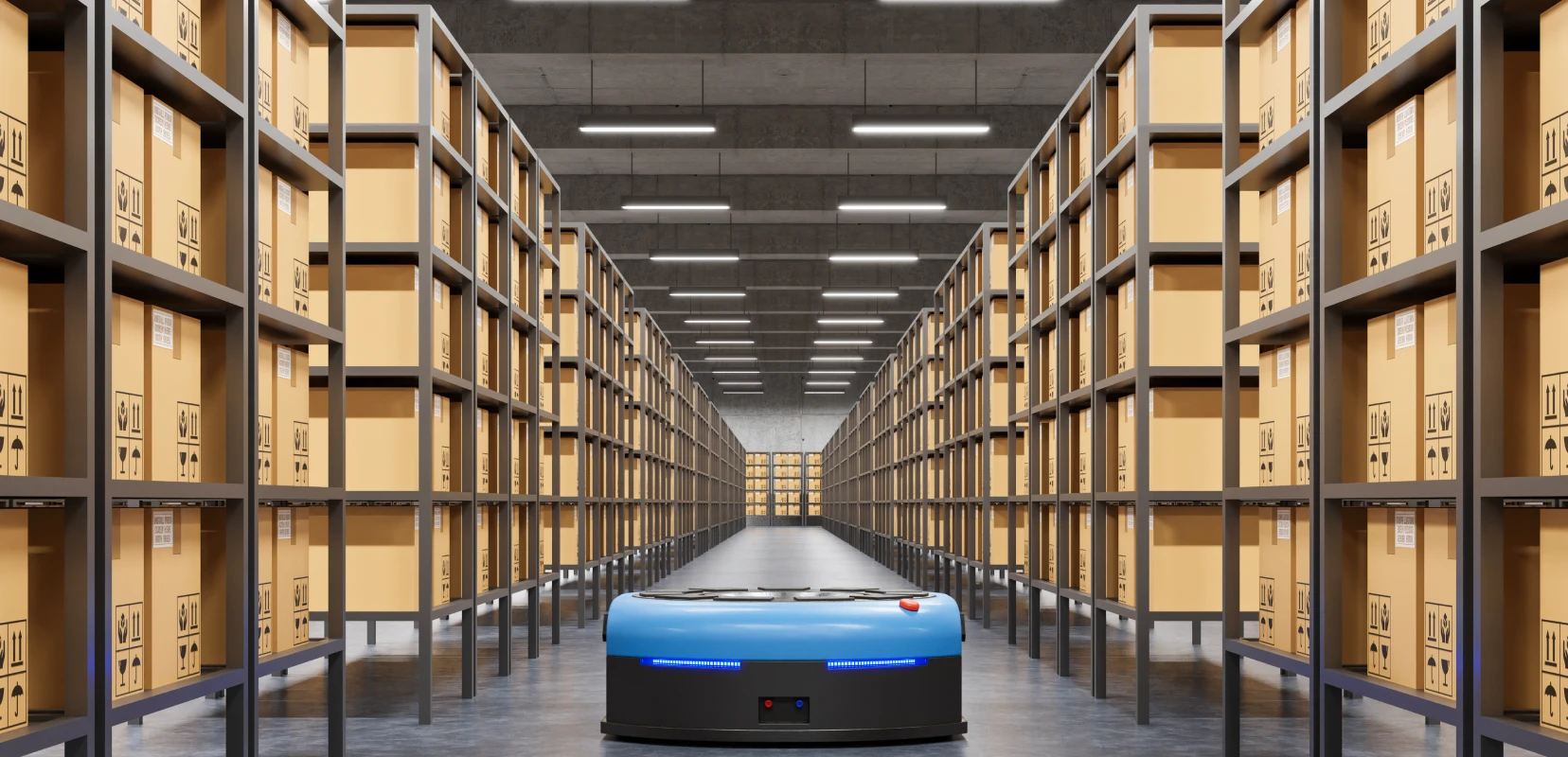
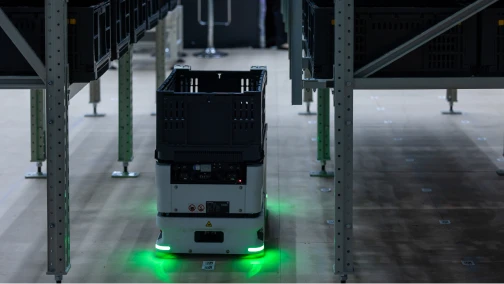
Bins are stacked in vertical columns inside a solid grid. Wheeled robots travel on top of the grid, dig down through columns to retrieve target bins (digging through the bins above if needed), and deliver them to perimeter pick stations. AutoStore is the brand that defined this category. Storage density is the highest of any AS/RS type — typically 4x conventional shelving. Slow movers at the bottom of columns take longer to retrieve, so cube systems shine when SKU velocity is reasonably uniform.
Vertical Lift Module (VLM)
A vertical tower with trays of inventory on both sides of a central lift. The lift retrieves the requested tray and delivers it to an operator window at the base. VLMs are compact — most installations are single-unit boxes around 2 m × 4 m footprint and 6–15 m tall — and ideal for spare parts, maintenance items, and small high-value inventory in space-constrained facilities.
Vertical Carousel
A vertical loop of carriers that rotates to bring the right shelf to the operator. Throughput is 100–400 lines per hour. Slower than a VLM but cheaper. Used for slow-to-medium velocity inventory and small footprint operations.
Horizontal Carousel
Bins rotate horizontally on an oval track. Common in pharmacy, light manufacturing, and order-fulfillment of small items. Typical throughput 200–400 lines per hour. Pods of multiple carousels are often deployed together to support a single picker working multiple simultaneous orders.
Mobile / AMR-Based AS/RS
Autonomous Mobile Robots carry portable shelf units to and from pick stations. This is the newer category — Hai Robotics, Geek+, and others have built large product lines around it. Lower capex than fixed AS/RS, faster to deploy, easier to reconfigure. Best for operations where flexibility outweighs raw throughput.

Industries That Use AS/RS
Almost every high-volume warehouse industry has AS/RS deployed somewhere. Concentration is highest in:
• E-commerce and 3PL — high SKU counts, high throughput, peak volatility
• Automotive aftermarket — extreme SKU counts, tight service windows
• Pharmaceutical and healthcare — traceability, accuracy, cold-chain compliance
• Apparel and fashion — omnichannel, peak compression, returns volume
• Food and beverage — high volumes, ambient through deep-freeze, weight handling
• Manufacturing — buffer storage, just-in-time component delivery, kitting
• Cold storage — labor scarcity in freezers, dense storage to reduce refrigerated volume
• Industrial MRO — long-tail spare parts kept available for facility maintenance
The common thread is high-volume, high-accuracy operations where labor is the dominant cost.

Benefits, With the Actual Numbers
The benefits get talked about loosely. Here's what we see in real deployments:
• Storage density: 4x. AS/RS systems typically increase storage density by roughly 4x compared to conventional shelving. For operators paying real money for warehouse space, this is often the dominant financial benefit.
• Picking productivity: 3–5x. A worker at a goods-to-person AS/RS station picks 300–600 lines per hour. A worker on foot in a manual layout picks 60–100. Operators implementing AS/RS see picking errors drop by 75% and order fulfillment speed up by 66%.
• Order accuracy: 99.9%+. Scanning, weight verification, and the elimination of grab-the-wrong-SKU errors push accuracy from typical manual 95–97% to 99.9% or higher.
• Labor reduction: 60–75%. Real case studies show 3PL Netrush cut picking and replenishment labor by over 75% after deployment. Saddle Creek doubled productivity using AMRs without hiring more staff.
• 24/7 operation. Robots work three shifts without paying overtime, breaks, or losing accuracy at hour 8.
• Payback period: 18–36 months for most deployments. Picking-focused automation usually sees the fastest payback. Full AS/RS systems with extensive integration can run 4–6 years, dropping as labor costs rise.
When AS/RS Makes Sense, and When It Doesn't
AS/RS is the right answer when several things are simultaneously true: high SKU count, high pick volume, expensive labor or land, predictable inventory shapes (totes, cartons, pallets), and a planning horizon long enough to depreciate the capex.
AS/RS is the wrong answer when order volume is very low (below 2,000 orders/day for most goods-to-person systems), inventory shapes are wildly inconsistent (oddly-sized items that don't fit standard totes), the operation is short-term (a 12-month pop-up), or the business model is too volatile to commit capital to a fixed layout.
For the in-between zone, hybrid designs work well: AS/RS for the A-class and B-class SKUs, manual or pick-to-light for the slow tail.

Costs and What Drives Them
AS/RS pricing varies more than almost any other capital category. Small VLMs start around USD 50K per unit. Mid-range mini-load deployments run USD 1M–5M. Large multi-aisle shuttle systems with extensive software integration hit USD 20M+. Cube-grid systems are usually quoted per bin slot — typical fully-built-out cost is USD 200–400 per slot once you include the robots, grid, ports, and software.
What drives the price spread:
• Number of aisles and storage capacity. More aisles, more cranes, more rack steel, more cost.
• Throughput target. Higher throughput means more motion equipment per aisle.
• Software integration scope. Connecting to existing SAP, Oracle, or custom systems adds engineering hours.
• Building constraints. Retrofitting into an existing building is more expensive than greenfield. Floor flatness, ceiling height, and structural columns all matter.
• Geography. Local labor rates for installation and commissioning vary 3x or more.
A common rule of thumb: budget roughly USD 100–200 capex per line of daily picking capacity if you're sizing a goods-to-person system. So a 50,000 lines/day operation typically lands in USD 5M–10M total system cost.
Implementation Timeline
A typical AS/RS project from contract signing to go-live runs 9–14 months. The phases:
• Data audit and concept design (8–12 weeks). Order history analysis, SKU profiling, throughput modeling, simulation.
• Engineering and procurement (12–16 weeks). Detailed design, civil works specification, equipment manufacturing kickoff.
• Civil work (4–8 weeks). Floor preparation, electrical, fire protection.
• Equipment installation (8–16 weeks). Rack steel, cranes/shuttles/robots, conveyors, controls.
• Software integration and FAT (6–10 weeks). WMS/WCS configuration, ERP integration, factory acceptance test.
• Site acceptance test and ramp-up (4–8 weeks). Inventory migration, parallel run, full production.
The single biggest schedule risk is software integration. Custom interfaces to legacy ERPs frequently slip 4–8 weeks. Budget contingency accordingly.
What's Coming Next in AS/RS
Three trends are reshaping the category.
AI-driven slotting and orchestration
Static slotting is dead. Modern WMS uses machine learning to continuously rebalance inventory placement based on velocity, order pairs, and forecast signals. Throughput gains of 10–20% are typical from slotting optimization alone.
Robotics-as-a-Service (RaaS)
Vendors like Locus Robotics offer subscription-based deployment instead of capex purchase. ABI Research projects 1.3 million RaaS installations by 2026, generating over USD 34 billion in revenue. For mid-size operators, this collapses the capital barrier to entry.
Sustainability and energy efficiency
Cold storage AS/RS is particularly energy-hungry. Newer designs use variable-frequency drives, regenerative braking on lifts, and AI-driven energy scheduling to cut consumption 20–30%.

Common Mistakes First-Time Buyers Make
After looking at hundreds of AS/RS projects across industries, the same handful of mistakes show up at the planning stage.
• Sizing on average throughput, not peak. Operations that look fine at 100 orders per hour average get crushed at 400 orders per hour peak. Always size to peak, not average.
• Choosing equipment before profiling SKUs. Walking into a vendor and asking what to buy gets you whatever that vendor sells. Profile SKUs first — velocity distribution, weight, dimension, cubage — and let the data drive the technology choice.
• Underestimating integration scope. ERP integration, label printing, carrier integration, returns processing — these add 20–30% to project cost and timeline. Many projects ignore them in the initial budget.
• Ignoring single points of failure. A crane failure in a single-aisle deployment can shut down the entire operation. Shuttle and cube-grid systems distribute risk; crane-based systems concentrate it.
Talk to Us About AS/RS for Your Operation
If you're sizing AS/RS for a new build or an existing facility, the most useful thing you can do is get an independent feasibility study with your actual order data. HOWEPROFIT runs sizing studies that benchmark multiple AS/RS topologies side by side against your specific SKU profile, throughput requirements, and ROI targets.
→ Request an AS/RS feasibility study from our engineering team.
Frequently Asked Questions
What does AS/RS stand for?
Automated Storage and Retrieval System. Some sources also use ASRS without the slash. Both mean the same thing.
Is AS/RS the same as warehouse automation?
AS/RS is one category of warehouse automation. Other categories include conveyor and sortation systems, automated guided vehicles (AGVs), autonomous mobile robots (AMRs), robotic picking arms, and packaging automation. Most fully-automated warehouses use AS/RS together with several of these.
How much does an AS/RS cost?
Ranges from about USD 50K for a small VLM to USD 20M+ for large multi-aisle deployments. Mid-range mini-load and shuttle systems typically run USD 1M–10M. Specific pricing requires detailed sizing against your operational profile.
What's the payback period for an AS/RS?
Typically 18–36 months for picking automation, 36–72 months for full AS/RS systems with extensive infrastructure. Payback shortens as labor costs rise.
What's the difference between AS/RS and an automated warehouse?
AS/RS refers specifically to storage and retrieval equipment. An automated warehouse includes AS/RS plus the surrounding automation — conveyors, sorters, AMRs, packing automation. AS/RS is often the core of an automated warehouse but not the entire system.
How long does an AS/RS last?
Mechanical structure: 15–20 years. Motion equipment (cranes, shuttles, robots): 10–15 years with planned maintenance. Control electronics and software: 7–10 years before major upgrade. The economic case usually models a 10-year hold.
Can AS/RS handle returns and reverse logistics?
Yes. Most modern WMS designs handle returns as a core workflow. Returned items are inspected, regraded, and re-slotted into the AS/RS based on disposition rules.
Does AS/RS work in cold storage?
Yes. Most AS/RS technologies work down to -25°C with standard components, and specialized cold-rated equipment goes to -40°C or lower. Cold-storage AS/RS reduces refrigerated volume needs by 30–50% versus conventional shelving — a major operating cost benefit.
-

HOWEPROFIT Team
Job Function, BrandName
Concise and impactful introduction copy for teams or authors, authentic and reliable, meeting the algorithm quality requirements of E-E-A-T and serving to enhance credible entities to a certain extent.