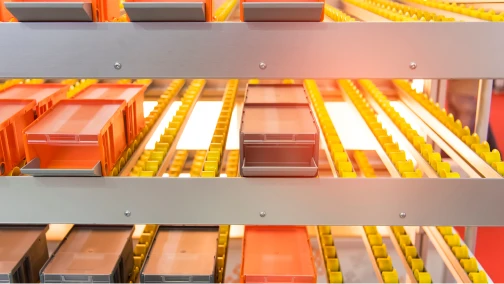
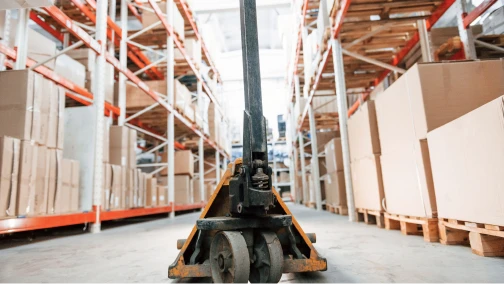
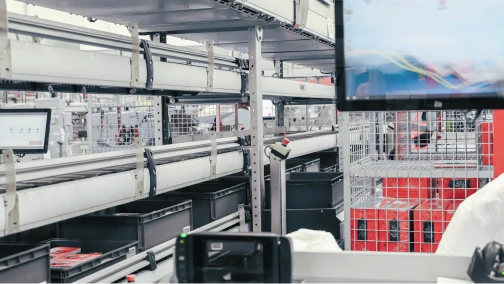
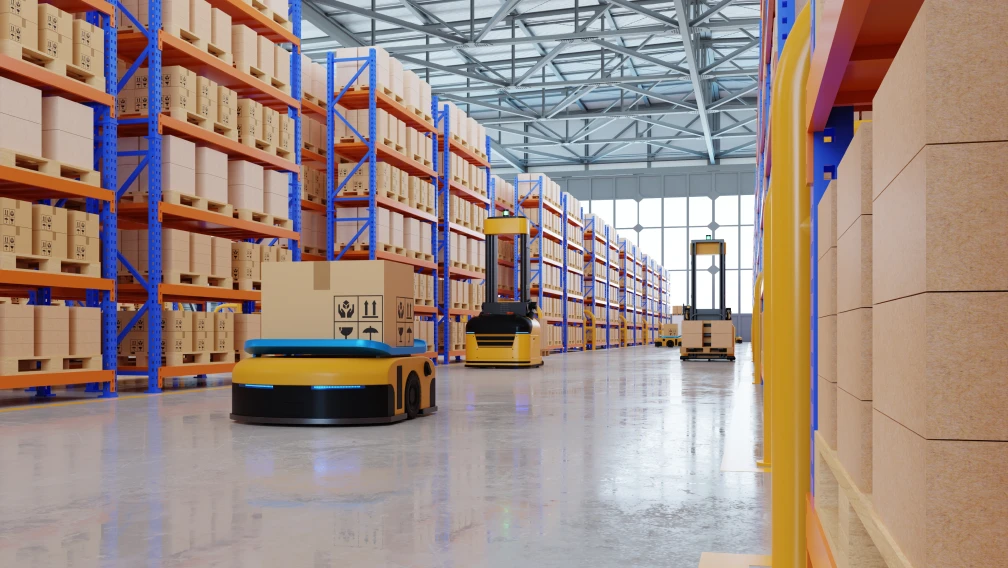
Order picking consumes between 50 and 60 percent of total warehouse labor in a conventional manual operation, and most of that labor is walking. In a person-to-goods facility, an order picker spends the majority of each shift traveling between pick faces, not picking. Goods-to-person (GTP) automation inverts this model: the inventory moves to a stationary operator, and travel time disappears from the labor equation entirely.
Several distinct machine architectures deliver goods to person, and they differ sharply in throughput per station, storage density, inventory profile fit, and capital cost. Selecting among them is an engineering decision driven by order profile data, not a matter of vendor preference. This article compares the three dominant GTP architectures used in modern distribution centers: shuttle-based systems, bin-handling robots, and mini-load cranes, and explains how to match each one to a given order structure.
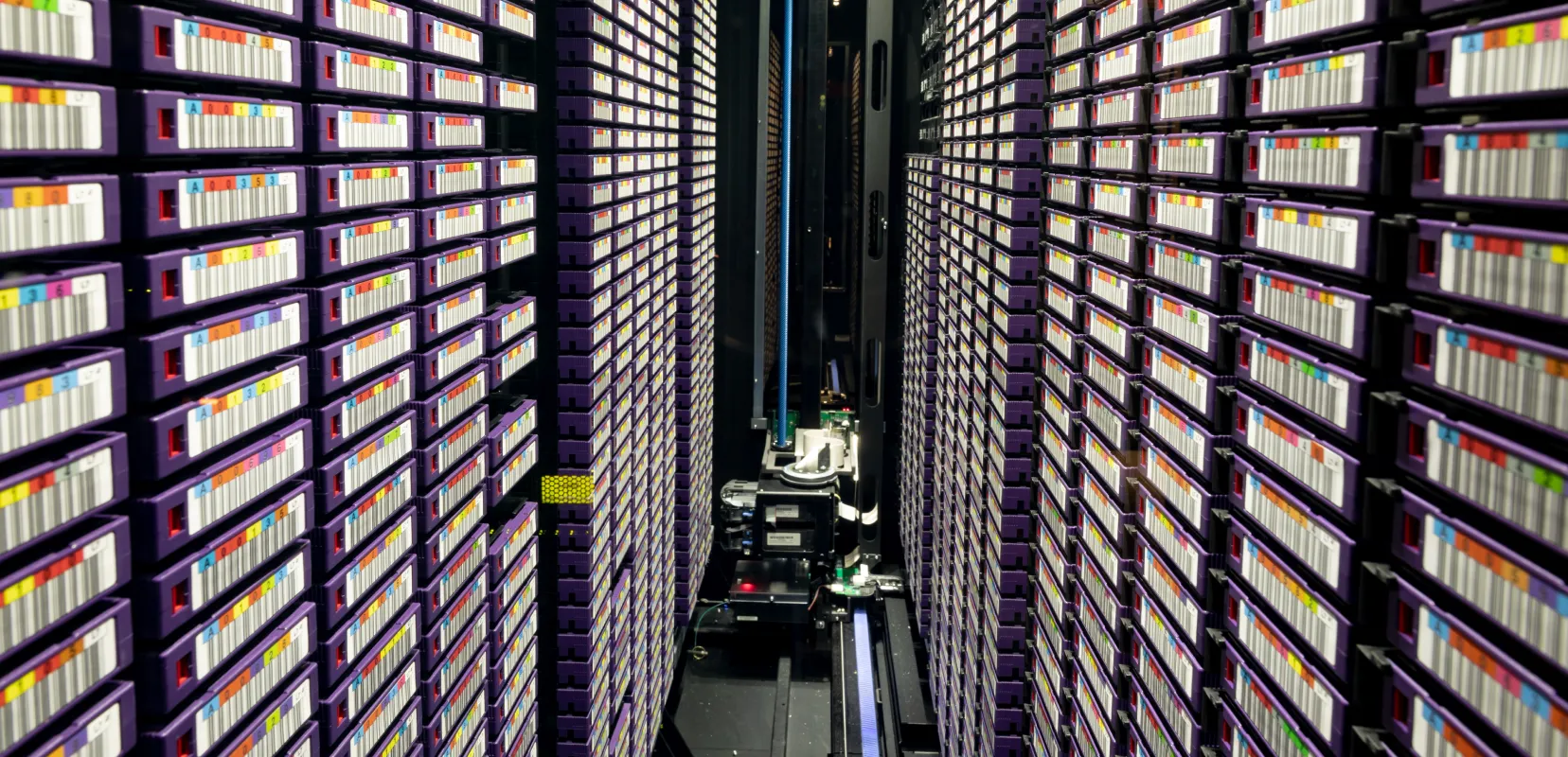
The Quantitative Case for Goods-to-Person
A manual picker walking a conventional rack aisle typically achieves 60 to 120 picks per hour, depending on pick density and travel distance. A well-designed GTP workstation fed by automated storage sustains 300 to 600 picks per hour per operator, and high-performance configurations exceed 1,000 lines per hour when batch picking is combined with put walls or pick-to-light guidance.
The productivity gain comes from three sources. First, travel is eliminated; the operator works in a fixed ergonomic position. Second, the system presents the next pick while the operator completes the current one, so there is no dead time between order lines. Third, software-directed picking with light or display guidance cuts error rates from the 1 to 3 percent typical of paper or RF picking to below 0.1 percent. For operations where picking errors trigger returns, reshipping, and retailer chargebacks, the accuracy gain alone can justify a significant share of the investment.
Architecture One: Shuttle-Based Goods-to-Person
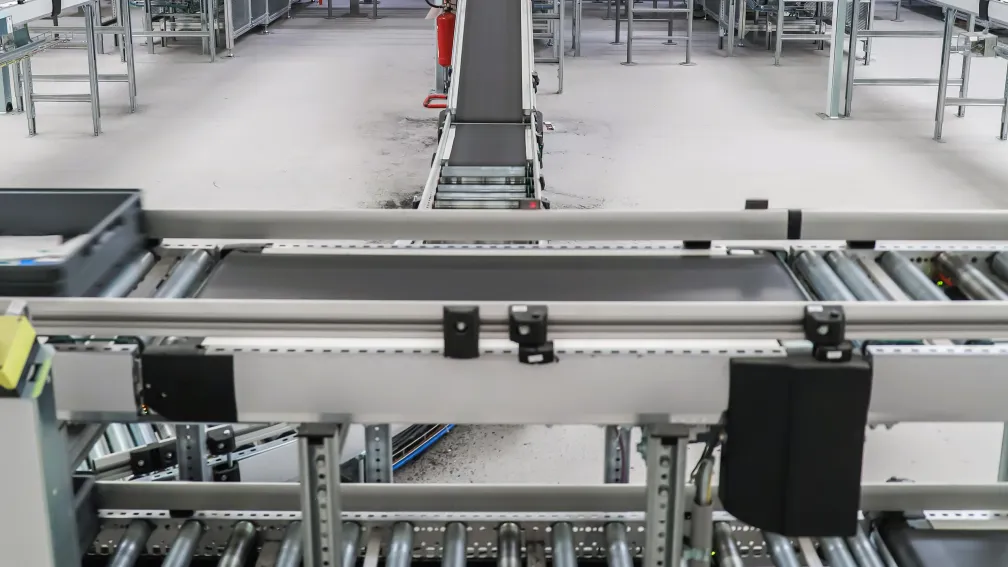
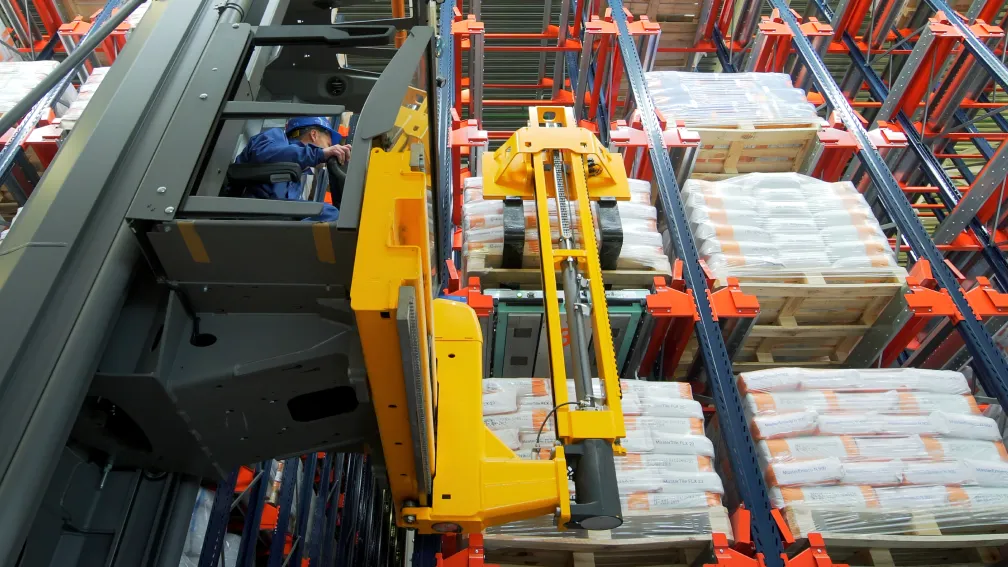
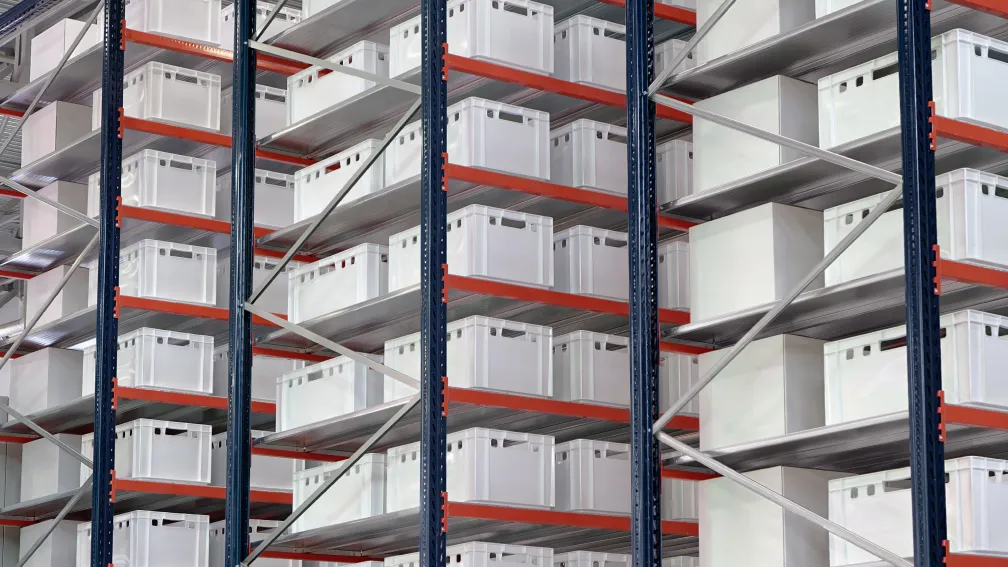
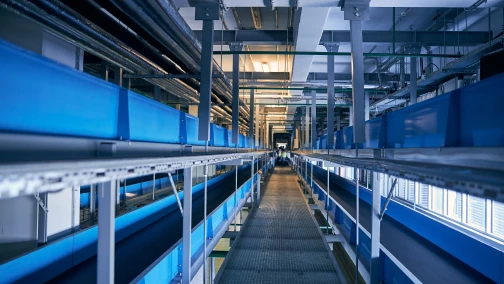
Shuttle systems store totes or cartons in high-density racking, typically double-deep, with one shuttle per level per aisle retrieving loads and feeding them to lifts that deliver them to workstation conveyors. The architecture is the established benchmark for high-throughput e-commerce and store-replenishment picking.
Its defining characteristic is throughput scalability. Each aisle operates independently, so total system throughput is the sum of aisle capacities, and performance is predictable under load. A shuttle aisle routinely delivers 500 to 1,000 totes per hour to the workstations, which makes shuttle systems the default choice for operations processing tens of thousands of order lines per day. The trade-offs are structural: shuttles require purpose-built racking, level-by-level machine deployment, and a building envelope that accommodates the rack height, which raises both capital cost and project duration.
Architecture Two: Bin-Handling Robots
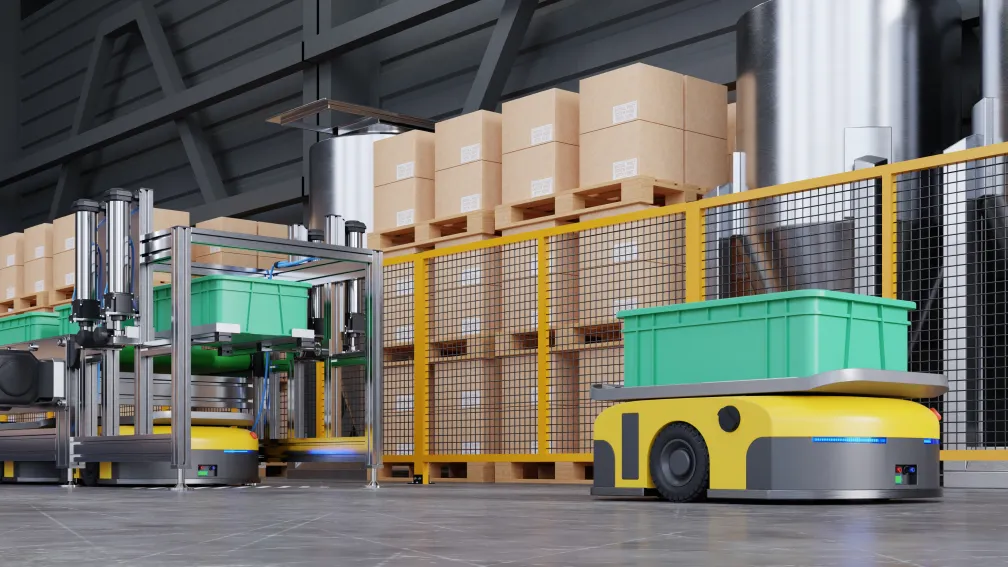
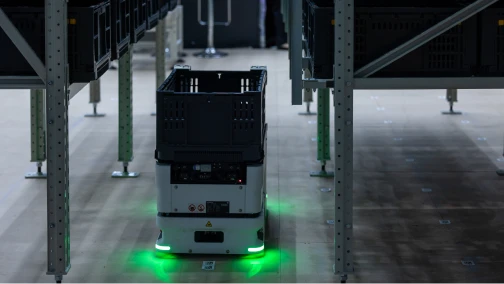
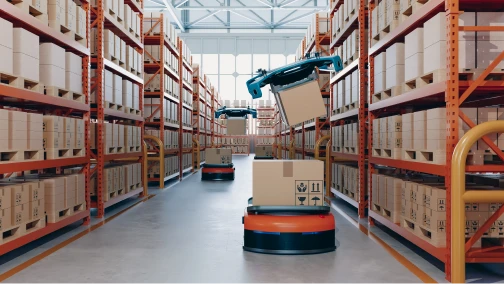
Bin-handling robots remove the fixed aisle infrastructure. Robots travel on top of a storage grid or within the rack block, retrieving bins and delivering them to ports at the perimeter. Two distinct implementations serve different inventory profiles.
Multi-Deep Bin Robots for Maximum Density
A high-speed bin robot operates within a compact rack block, gripping bins from multi-deep stacks and repositioning them as needed. Because bins are stored several deep, volumetric density is the highest of any GTP architecture, and the system fits into standard building heights without specialized racking aisles. Density comes with a sequencing cost: when a required bin sits beneath others, the robot reshuffles the upper bins first. The control software manages this by learning demand patterns and migrating fast movers to upper positions, which keeps dig-out moves rare in steady operation.
Single-Depth Bin Robots for Direct Access
Where reshuffling is unacceptable, a one-bin-per-slot robot stores each bin at a dedicated, directly accessible position. Every retrieval is a single move with no dig-out, which produces consistent, deterministic cycle times regardless of SKU distribution. This suits operations with highly variable demand, frequent promotions, or a long tail of slow movers mixed with unpredictable spikes, because system performance does not depend on how well the software predicted which bins to keep on top.
Both bin robot variants share a structural advantage over shuttle systems: the storage block and robot fleet are modular. Capacity grows by extending the grid, and throughput grows by adding robots, with no construction downtime inside the existing block. Robot coordination across the fleet is handled by robot fleet management software, which assigns tasks, manages traffic, and balances retrieval sequencing against port demand in real time.
Architecture Three: Mini-Load AS/RS Cranes
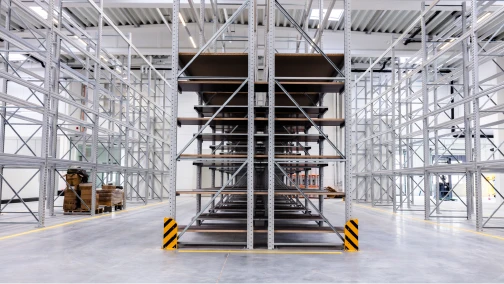
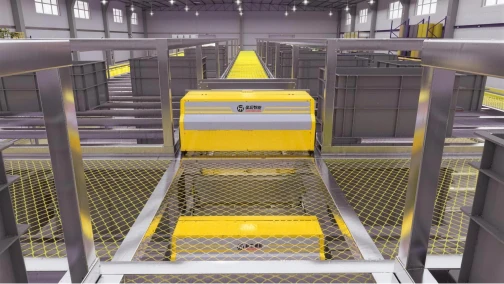
The mini-load AS/RS is the oldest of the three architectures and remains relevant for specific profiles. An aisle-bound crane stores and retrieves totes or cartons in single-deep or double-deep rack, delivering them to conveyor loops at the aisle end. Mini-load cranes excel where loads are heavier or larger than shuttle and bin robot tolerances, where the inventory requires very high rack structures, or where the operation values the mechanical simplicity and long service life of a single crane per aisle over a fleet of smaller machines. Throughput per aisle is lower than a shuttle aisle, so mini-load systems serve medium-throughput operations, kitting buffers, and reserve storage feeding forward pick faces.
Matching the Architecture to the Order Profile
The selection process starts from data: lines per day, lines per order, SKU count, SKU velocity distribution, and peak-to-average ratio. The table below summarizes the fit.
| Architecture | Picks per Station / Hour | Storage Density | Throughput Scalability | Best-Fit Order Profile |
|---|---|---|---|---|
| Shuttle system | 500–1,000+ | High | Scales per aisle; highest absolute throughput | Very high line volume, stable demand, e-commerce and store replenishment |
| Multi-deep bin robot | 300–500 | Very high (multi-deep stacking) | Add robots or grid modules | Space-constrained sites, moderate throughput, broad SKU range |
| One-bin-per-slot robot | 300–500 | High (single-deep) | Add robots or grid modules | Volatile demand, long-tail SKUs, promotions and spikes |
| Mini-load crane | 200–400 | Medium-high (tall structures) | Limited per aisle; add aisles | Medium throughput, heavier totes, reserve storage and kitting |
Two variables frequently dominate the decision. The first is peak-to-average ratio. Shuttle systems are sized to peak, so an operation with a ten-to-one peak ratio pays for capacity that sits idle most of the year; robot fleets can be rented or redeployed seasonally in some commercial models, which changes the economics. The second is building constraint. A brownfield site with a nine-meter clear height cannot exploit a twelve-meter shuttle rack, while bin robot blocks and mini-load structures adapt more readily to restricted envelopes.
The Workstation Determines the Payoff
Storage machinery delivers totes; the workstation converts delivery into picks, and it is the most common under-invested element in GTP projects. An ergonomic station presents source and order cartons at waist height, guides the operator with light or display direction, confirms picks automatically, and keeps one to one relationships between source tote and operator task. Batch picking, where one operator fills eight to sixteen orders simultaneously from each presented tote, multiplies effective station output because each tote visit yields multiple order lines. A GTP system with fast machines and slow workstations simply moves the bottleneck; workstation count and design should be engineered from the same order data that sizes the storage block.
Software as the Integration Layer
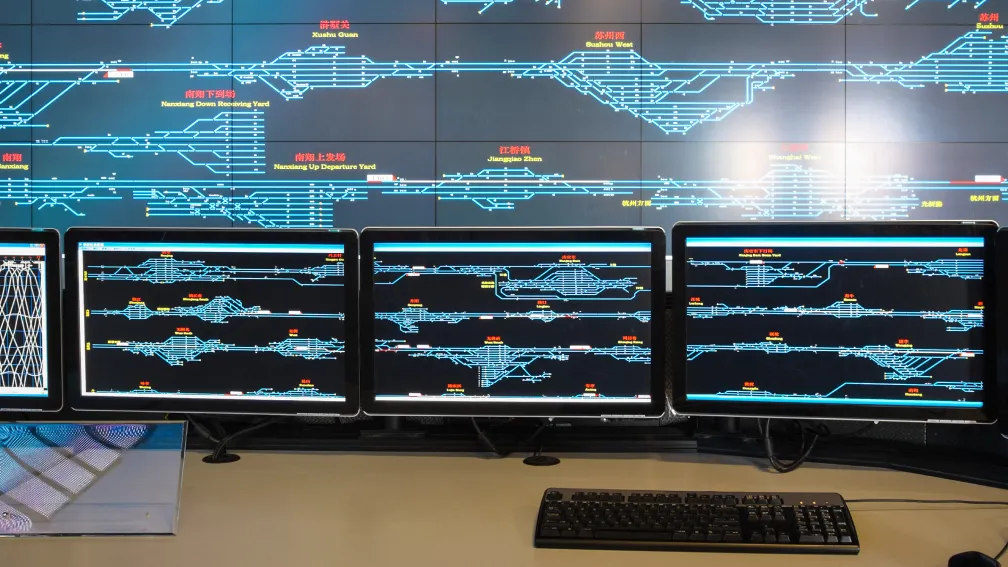
Every GTP architecture depends on a software stack that releases orders in waves matched to station capacity, sequences tote deliveries so source totes arrive in pick order, and manages inventory allocation across the storage block. The warehouse execution layer sits between the WMS and the machine controls, and its release logic largely determines whether the workstations are starved or flooded. When evaluating vendors, the sequencing and wave management capability of this software layer deserves the same scrutiny as the hardware specifications, because two systems with identical machines routinely show 20 to 30 percent throughput differences driven by software quality alone.
Conclusion
Goods-to-person automation removes walking from order fulfillment and converts picking into a software-directed, high-accuracy station process. Shuttle systems lead in absolute throughput, bin-handling robots lead in density and modularity, and mini-load cranes serve medium-throughput and heavier-load profiles. The correct choice follows from order profile data, peak ratios, and building constraints, and the workstation and software layers deserve engineering attention equal to the storage machinery.
If you can share your daily order lines, SKU count, and building dimensions, our engineering team will model each architecture against your data and return a throughput and density comparison specific to your operation.
Frequently Asked Questions
-

HOWEPROFIT Team
Warehouse Automation Specialists, HOWEPROFIT
The HOWEPROFIT Team consists of senior intralogistics engineers and supply chain experts specializing in advanced AS/RS and robotic fulfillment solutions. Backed by years of field experience across e-commerce, 3PL, and manufacturing sectors, we provide data-driven automation strategies, rigorous throughput simulations, and objective ROI modeling. Our mission is to help facilities seamlessly transition to high-efficiency, reliable, and scalable automated operations.