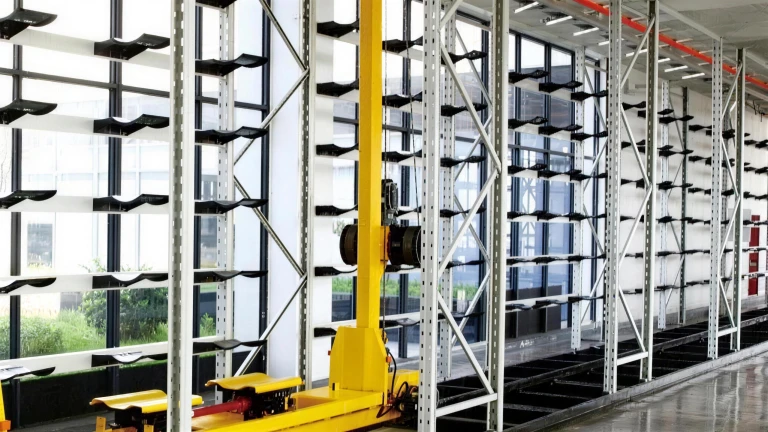
One-Bin-Per-Slot ASRS: Automated Storage for Rolls and Long Goods
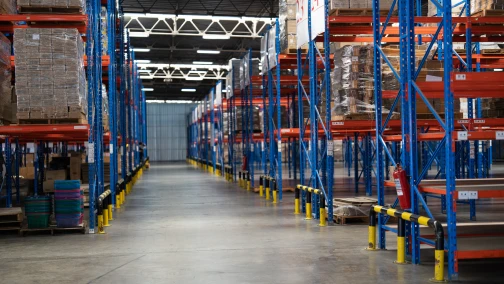
Most automated storage and retrieval systems are built for pallets or small-parts totes. Long and rolled materials — curtain and textile fabric rolls, paper rolls, bars, pipes, and profiles — don't fit either format, so they usually end up stacked on the floor or on static racks where finding a specific roll means digging. A one-bin-per-slot ASRS solves this by giving every item its own indexed location and using a stacker crane to store and retrieve it. Here is how it works, what it stores, and how to tell if your operation needs one.
What "One Bin Per Slot" Means
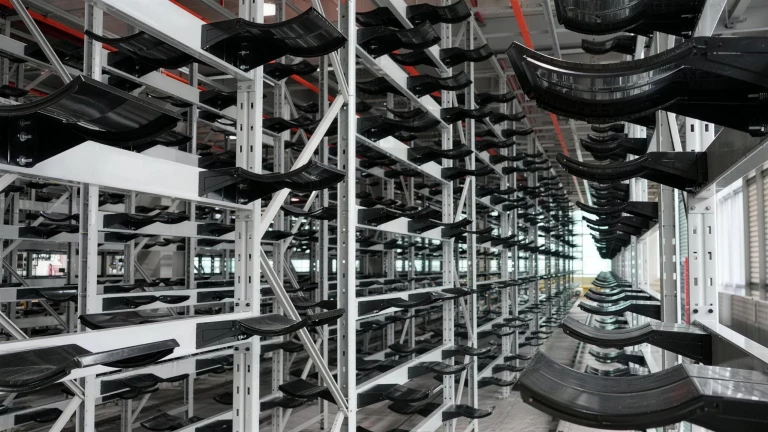
One bin per slot means each physical item — one roll, one bundle, one profile length — has a single dedicated storage position tied to a barcode or RFID ID. Nothing is stacked on top of or behind anything else. That sounds simple, but it is the difference between knowing exactly where every roll and batch is and searching a floor of look-alike stock. It gives 100% retrieval accuracy and full traceability, which matters most for materials sold or consumed by length and batch.
Why Rolls and Long Goods Need a Different ASRS
Pallet ASRS assumes a standard pallet footprint; mini load and shuttle systems assume a tote. Rolls and long bars break both assumptions: they are long, they vary in length and diameter, and many are delicate. A one-bin-per-slot system is engineered around the material instead — cassettes and forks are sized to the roll or bar, the crane lifts without crushing, and the rack depth follows the material length. For small parts in totes a mini load system fits better; for very long or heavy stock beyond crane scale, a gantry storage system handles 6m-plus loads.
How the System Is Built
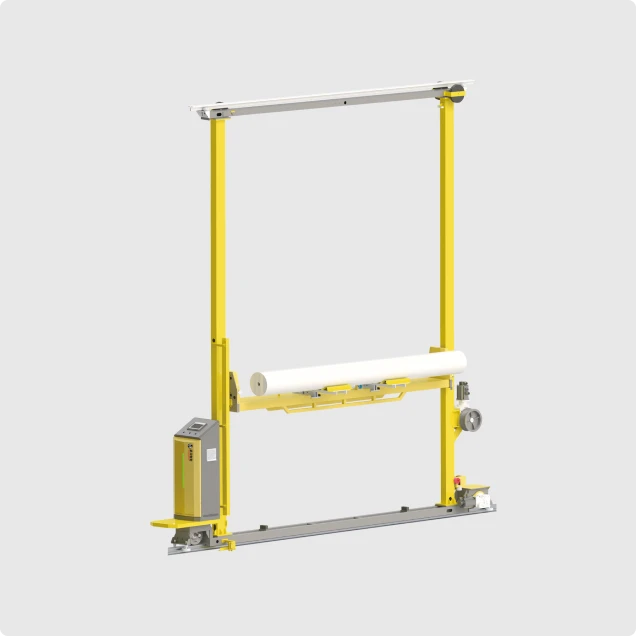
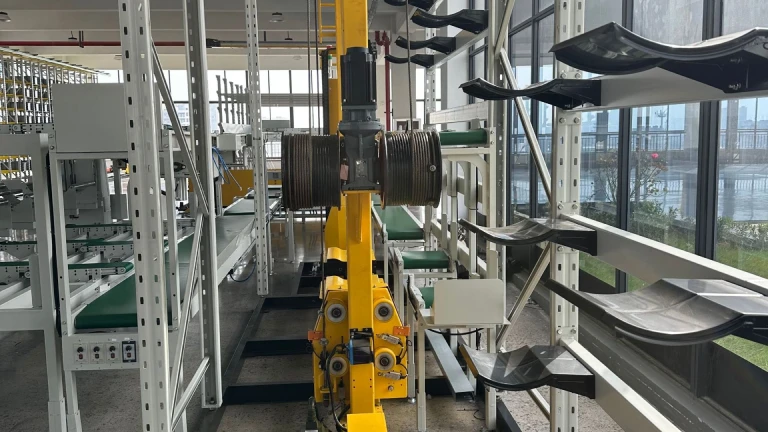
The system has four working parts: a high-bay rack holding the dedicated slots; a double-mast stacker crane that travels the aisle and lifts to any level; cassettes or telescopic forks matched to your material; and a control layer with barcode/RFID and a WMS/MES link. The crane reaches ±3mm positioning, carries 50-100kg per item, and runs up to 12 meters high. Single-fork models prioritize simple handling; double-fork models add density and throughput.
How a Retrieval Cycle Works
When the host system calls for an item, the crane travels to the slot, the fork or cassette extends to lift the roll or bar, and the crane returns it to the access point — about 30 seconds for a single item. Inbound runs in reverse: the item is scanned, the system assigns a slot, and the crane stores it. Every move is logged, so inventory updates in real time and the next pick is planned without manual lookup.
Single-Fork vs Double-Fork
Single-fork cranes handle one item per trip and suit operations where access speed and simplicity lead. Double-fork cranes handle two positions, which raises storage density and throughput when volume is higher. Both share the same crane platform, rack, and controls, so you can size to today's demand and expand later without changing systems.
Materials and How They Are Held
Cassettes and forks are tailored to each material so the item is supported, not stressed. Typical formats:
| Material | How It Is Held | Main Benefit |
|---|
| Curtain, textile & fabric rolls | Cradled in a dedicated cassette | No compression or creasing |
| Paper rolls | One roll per slot, core supported | Edge and surface protection |
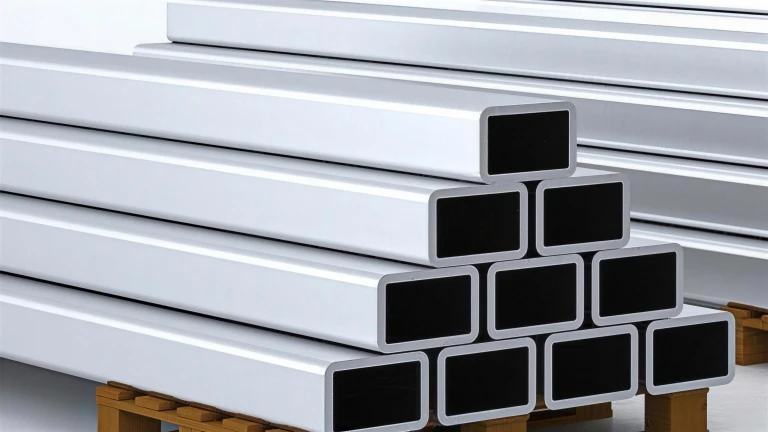
| Aluminum / steel bars | Long-goods cassette by length | Floor cleared, fast access |
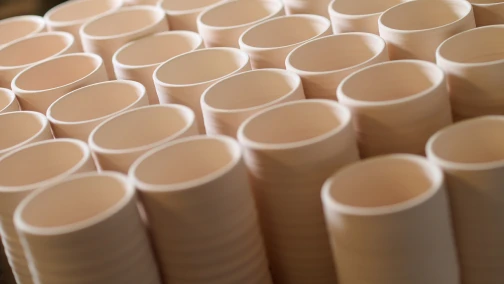
| Pipes & tubes | Profiled cassette, nested safely | No scratching, easy retrieval |
| Profiles & extrusions | Single-SKU cassette | Sorted by length and batch |
| Light sheet / plate | Tray-style support | Flat, damage-free storage |
How to Tell If You Need One
A one-bin-per-slot system pays back fastest when several of these are true:
- Staff spend real time hunting for a specific roll, bar, or batch
- Floor space is lost to loose bundles or wide-aisle racks
- Rolls or bars get damaged during stacking and handling
- Stock counts and roll-length records drift away from reality
- Wrong or missed shipments happen with manual picking
- Production or cutting lines wait on material that is hard to find
For the densest small-parts storage in a low building, a high-density storage layout may suit better; this system is aimed squarely at rolls and long goods.
Integration with WMS and MES
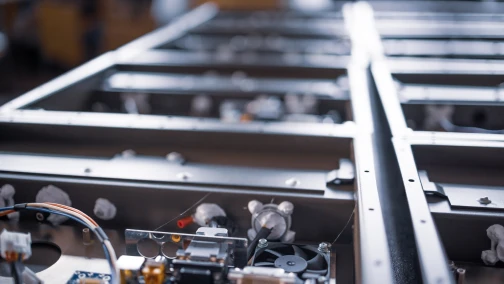
The crane runs under a control layer that connects to your WMS, ERP, or MES over standard Ethernet. For textile and print operations the MES link matters most: live roll-length and batch data let cutting and order planning work from real stock rather than estimates. Receiving, putaway, retrieval, and dispatch are all logged, so the system holds an accurate picture without anyone keying in counts.