Why Three Acronyms Cause So Much Confusion
Every warehouse automation project eventually hits the same conversation. The WMS is live, the hardware is installed, and throughput comes in well below what the equipment vendor promised. The robots work. The WMS works. Nothing is coordinating them as one system. That missing coordination is usually a software layer problem, and it starts with three acronyms that sales decks treat as interchangeable: WMS, WES, and WCS.
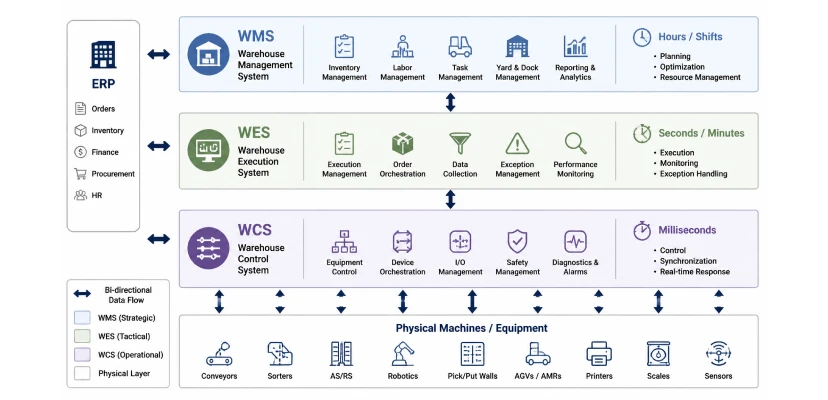
The short version: a WMS plans and records, a WES orchestrates work in real time, and a WCS controls the physical machines. They are layers of one stack, with orders flowing down and status flowing back up. This article defines each layer, shows how an order actually moves through the stack, explains where the WES came from, and gives a practical rule for which layers your operation needs.
What Each Layer Actually Does
WMS: The System of Record
A warehouse management system manages inventory, receiving, put-away, order allocation, picking waves, and shipping. It answers two questions: what stock do we have, and where is it. Every receipt, move, pick, and shipment lands in one record, so finance and operations see the same numbers. The WMS plans work on a horizon of hours, shifts, and days, and it integrates upward with ERP and TMS systems. What it does not do is direct machines in the moment or continuously rebalance the floor while conditions change.
WES: The Real-Time Orchestrator
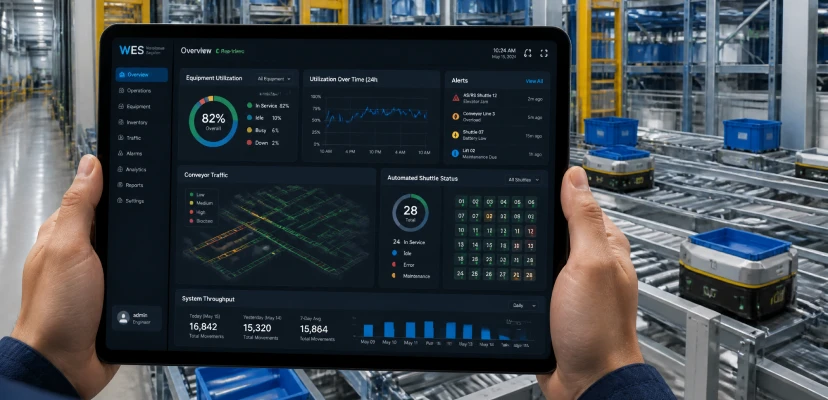
A warehouse execution system sits between planning and control. It takes the work the WMS releases and decides, second by second, who does what next: which order to prioritize, which resource should take each task, and how to rebalance when a rush order lands or a machine goes down. The WES watches the utilization of every subsystem at once. If the shuttle system is running at capacity, it can divert work to a manual forward-pick area instead of letting orders queue. Decisions happen in seconds, across people and machines together.
WCS: The Equipment Layer
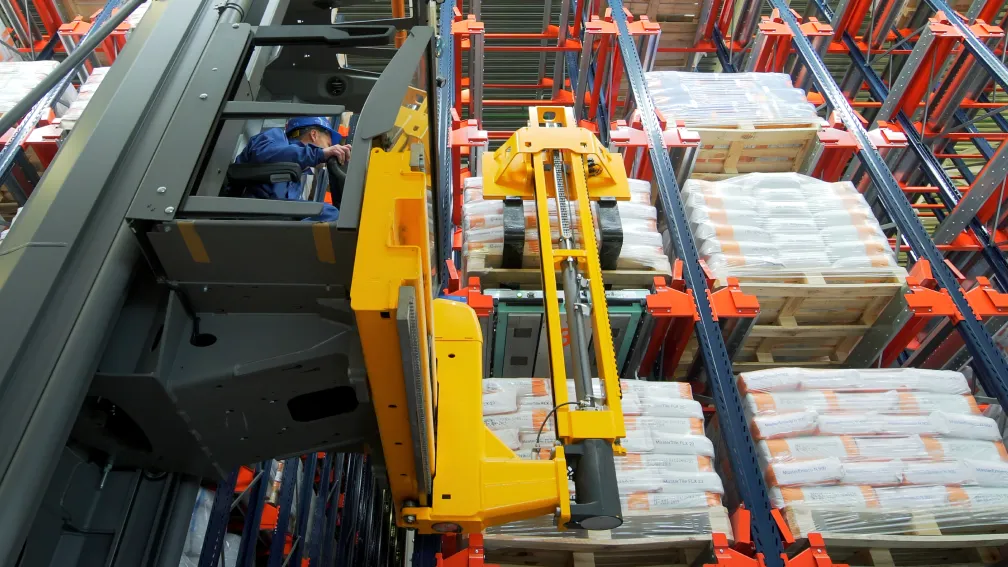
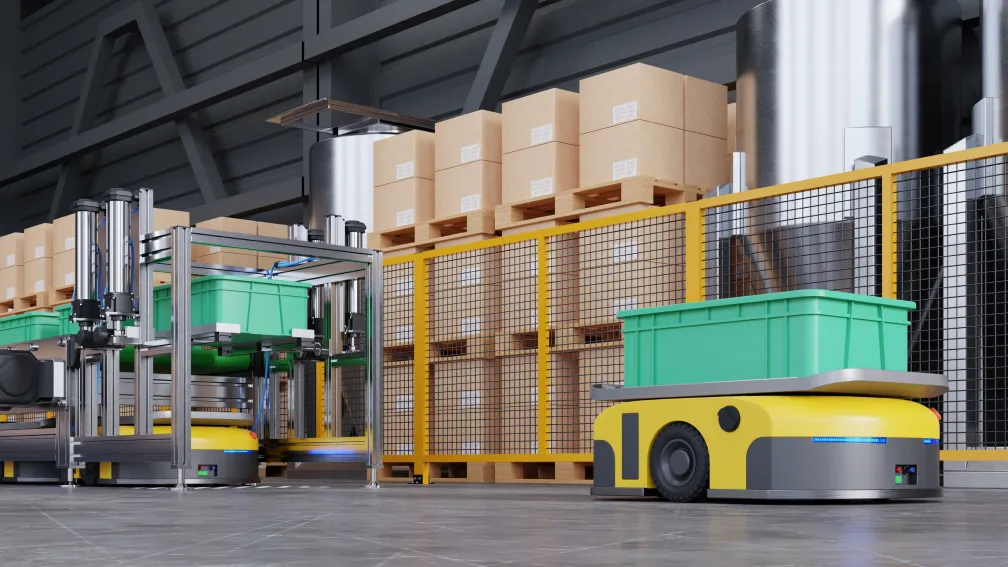
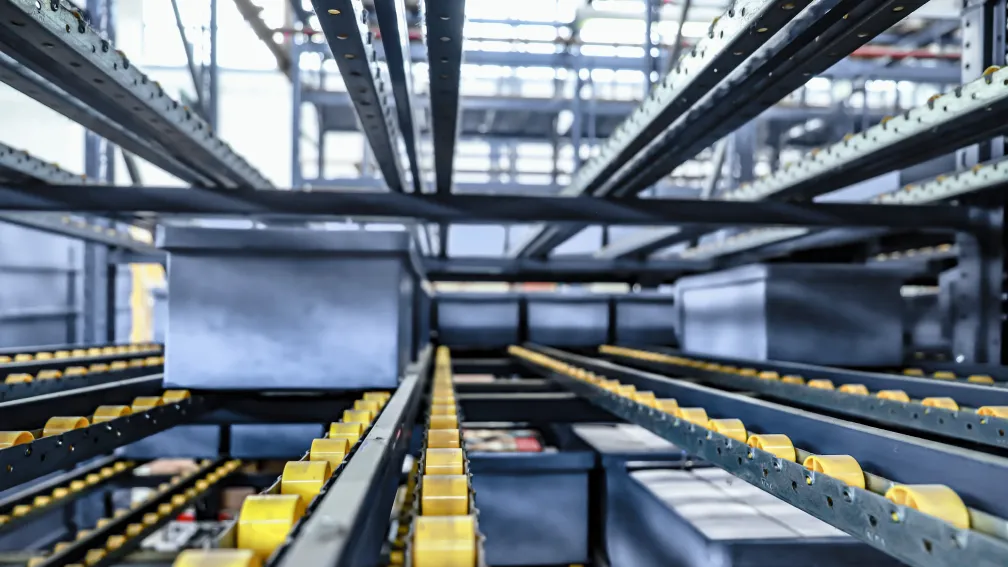
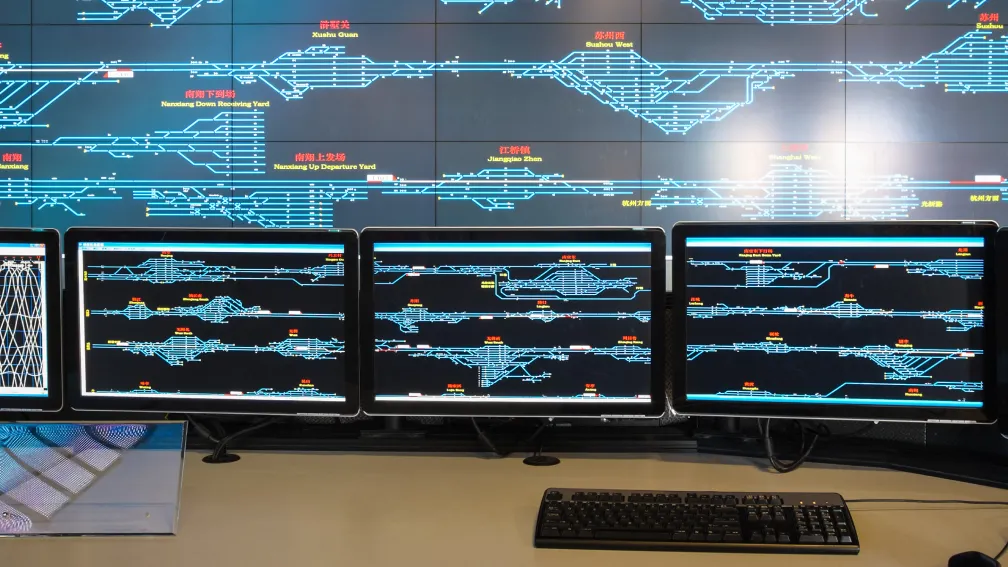
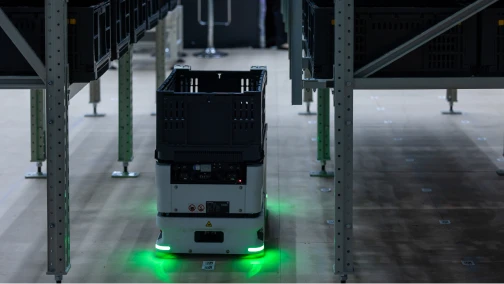
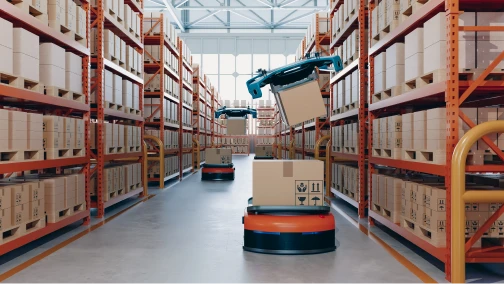
A warehouse control system directs individual material handling machines. It talks to conveyors, sorters, lifts, and automated storage systems through PLC-level interfaces, making routing decisions in milliseconds: which path a tote takes, when a carton releases at a merge, how equipment sequences around a jam. A typical task cycle runs receive, evaluate, direct, observe, confirm. The WCS is invisible to most operators, but nothing physical moves without it. Mobile robot fleets have their own equivalent layer, fleet management software, which assigns tasks to the best-placed vehicle, manages traffic and charging, and increasingly coordinates robots from multiple vendors through one interface.
The Three Layers Side by Side
| Dimension | WMS | WES | WCS |
|---|---|---|---|
| Primary role | Management and record | Real-time orchestration | Equipment control |
| Answers | What and where | Who does what, right now | How it physically moves |
| Decision horizon | Hours to shifts | Seconds to minutes | Milliseconds to seconds |
| Scope | Whole facility, logical | Whole facility, people plus machines | Single equipment zone |
| Integrates | Upward to ERP | Laterally across all systems | Downward to PLCs and devices |
How an Order Flows Through the Stack
In a fully automated facility the flow runs top to bottom. The ERP passes orders and the inventory master to the WMS. The WMS allocates stock and releases work. The WES turns that release into sequenced, real-time tasks across people and machines. The WCS and the robot fleet layer execute: conveyors route totes, shuttle systems retrieve pallets, and mobile robots carry loads between zones. Confirmations then travel back up, from equipment to control, from control to execution, from execution to the WMS and ERP, so the inventory record stays exact. Each layer trusts the layer below it to handle a faster clock.
Where the WES Came From
The execution layer grew out of waveless picking. A WMS traditionally releases work in waves: static batches planned hours ahead. Waveless logic instead releases orders continuously, paced by how fast downstream consolidation is actually running. When the put-wall floods, release slows; when downstream flows freely, release accelerates. Industry analysts trace modern WES platforms to WCS vendors who already held accurate real-time throughput data from the equipment they controlled, and used it to drive that release timing.
That origin explains the accepted test for whether software qualifies as a WES. It must release orders dynamically based on live automation utilization, it must orchestrate multiple subsystems, and it must orchestrate both people and machines. Software that coordinates one equipment type is acting as a WCS. Software that balances the whole building against changing priorities is acting as a WES.
Do You Need All Three Layers?
Rarely as three separate products, and the answer scales with automation depth. A manual warehouse needs a WMS and little else. Add fixed automation and you need the WCS that ships with it, whether that is conveyor control or the control layer inside an automated storage system. Add mobile robots and fleet management software becomes its own layer. A dedicated WES earns its cost when the operation mixes multiple automation technologies, combines automated and manual workflows, or runs order profiles too volatile for wave-based release.
One caution from the field: if expansion is planned within two to three years, architect for the execution layer at the start. Bolting orchestration onto a finished multi-system site costs far more than designing it in. The layers are converging anyway. WMS products are absorbing execution features, WES products are adding inventory functions, and control platforms increasingly span fixed and mobile equipment together, as our warehouse control system architecture reflects. What matters in a purchase is that every function is covered and the layers talk to each other cleanly, whatever the product labels say.
Budget and Implementation Notes
For a multi-system automation deployment, integrators typically put the execution software layer at roughly 8 to 15 percent of total project cost, a small share with an outsized effect on whether the hardware delivers its promised throughput. Timeline depends on starting point: a greenfield project with the WES designed in adds about 4 to 8 weeks, while retrofitting into a live multi-system site runs 8 to 16 weeks, with most of that in integration and shadow-mode testing before cutover. In any model, insist on standard API interfaces upward to the WMS and documented protocols downward to equipment, so no layer becomes a captive dependency.
If you are scoping an automation project and want the software architecture settled before the hardware order, our engineering team can map your order profile and equipment mix to the right layer model. Contact us to start the discussion.
-

HOWEPROFIT Team
Warehouse Automation Specialists, HOWEPROFIT
The HOWEPROFIT Team consists of senior intralogistics engineers and supply chain experts specializing in advanced AS/RS and robotic fulfillment solutions. Backed by years of field experience across e-commerce, 3PL, and manufacturing sectors, we provide data-driven automation strategies, rigorous throughput simulations, and objective ROI modeling. Our mission is to help facilities seamlessly transition to high-efficiency, reliable, and scalable automated operations.