Why Fabric Rolls Resist Conventional Warehousing
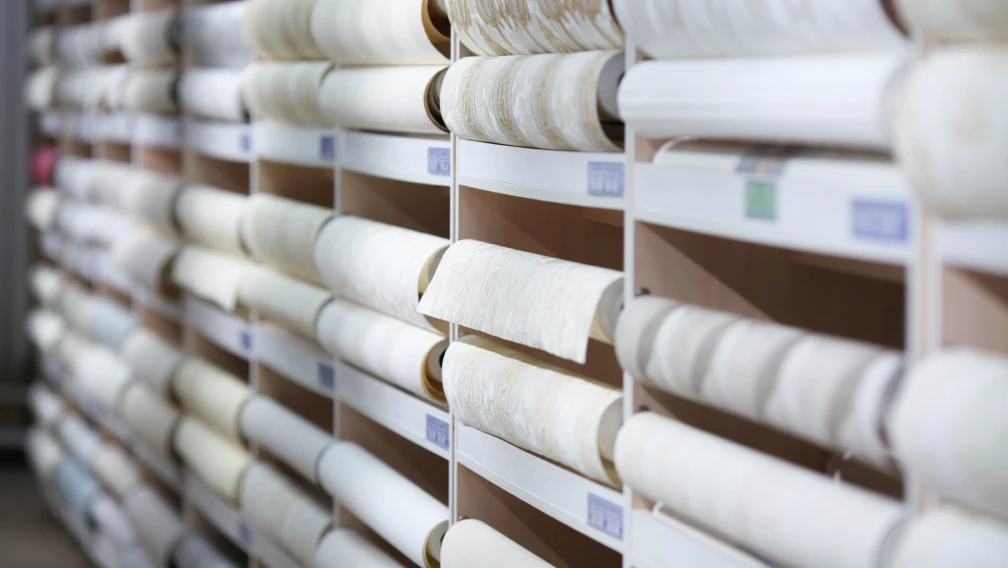
Textile manufacturers, curtain and upholstery converters, and garment producers hold a large share of their working capital in rolled goods. A fabric roll is an awkward unit load: cylindrical, often 1.4 to 3.4 meters wide, weighing anywhere from 30 kg for light apparel fabric to over 500 kg for industrial or blackout material. Rolls are soft-sided, deform under stacked weight, and telescope or crush when handled roughly. These physical properties make standard pallet racking and floor stacking structurally unsuitable beyond very small inventories.
The operational problems compound the physical ones. A mid-size converter manages hundreds or thousands of active SKUs differentiated by width, color, print, and dye lot. In a manual warehouse, locating one roll means walking the aisles and reading labels, which our project audits routinely measure at thousands of staff steps per shift. Retrieval errors follow. Rolls pulled from the middle of a floor stack damage adjacent stock, and partial rolls returned from cutting disappear into corners. Leftover fabric, which still carries real material value, degrades into scrap because nobody can find it when a matching order arrives. For operations feeding cutting rooms on a takt schedule, every minute spent searching for a roll is a minute the cutting table sits idle.
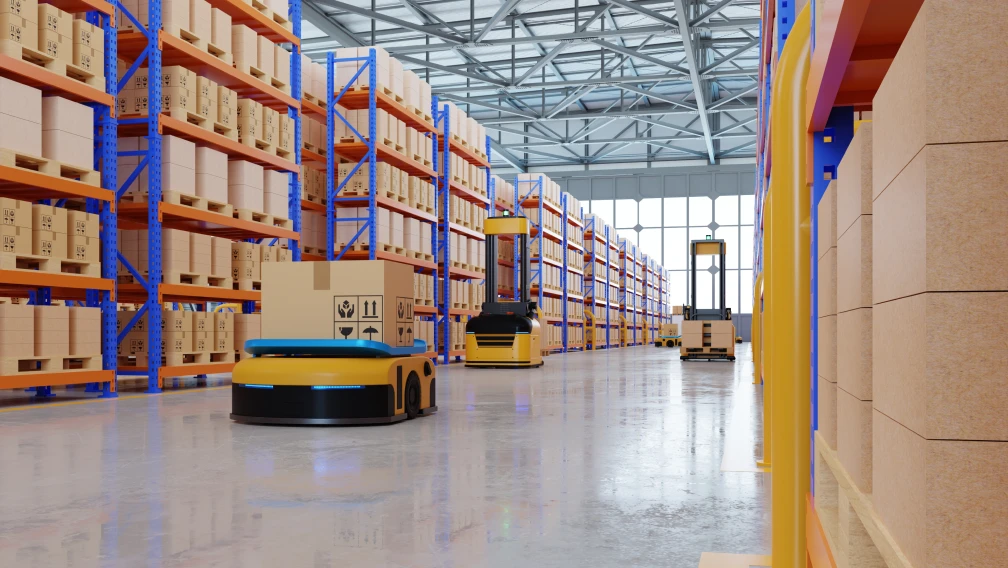
Automated storage and retrieval systems engineered for roll goods address all three constraints at once: each roll receives a dedicated, addressable location; retrieval is executed by machine under software command; and the system records every movement at roll level. The sections below examine the architectures in current use, how they connect to cutting operations, and what results installed systems are delivering.
Core Architectures for Automated Roll Storage
One-Bin-Per-Slot Robotic Storage
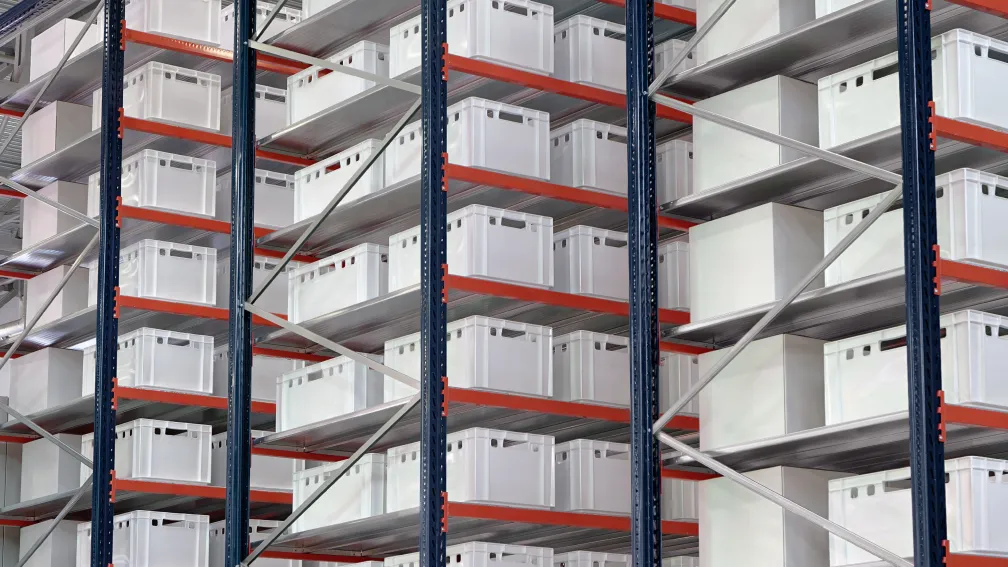
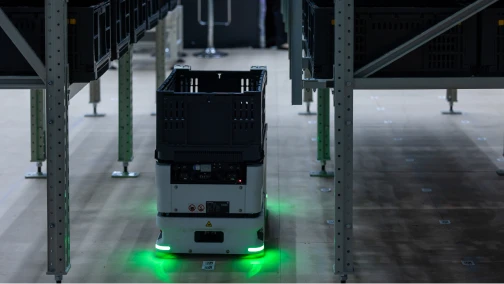
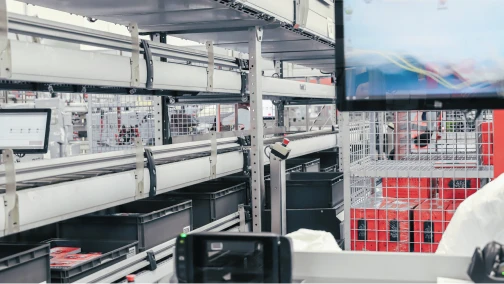
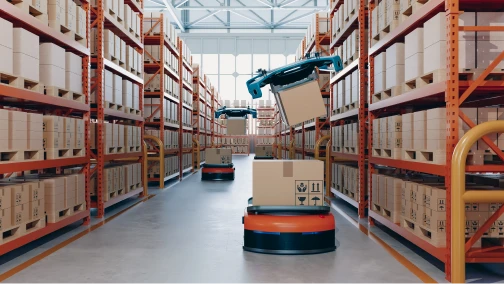
The highest-granularity approach assigns every fabric roll its own bin position on multi-tier racking, serviced by climbing bin robots that travel vertically and horizontally along the rack face. Because each roll occupies a discrete slot, the system offers direct access to every SKU without reshuffling, which suits converters running high SKU counts with frequent single-roll picks. One-bin-per-slot robot systems operate in aisles far narrower than any forklift requires and use the full clear height of the building, typically multiplying storage capacity on the same footprint by a factor of three to five. Related high-density configurations using high-speed bin robots apply the same principle where rolls are pre-packed in standardized containers, such as trim, lining, or small-diameter material.
Stacker Crane AS/RS for Rolls and Palletized Loads
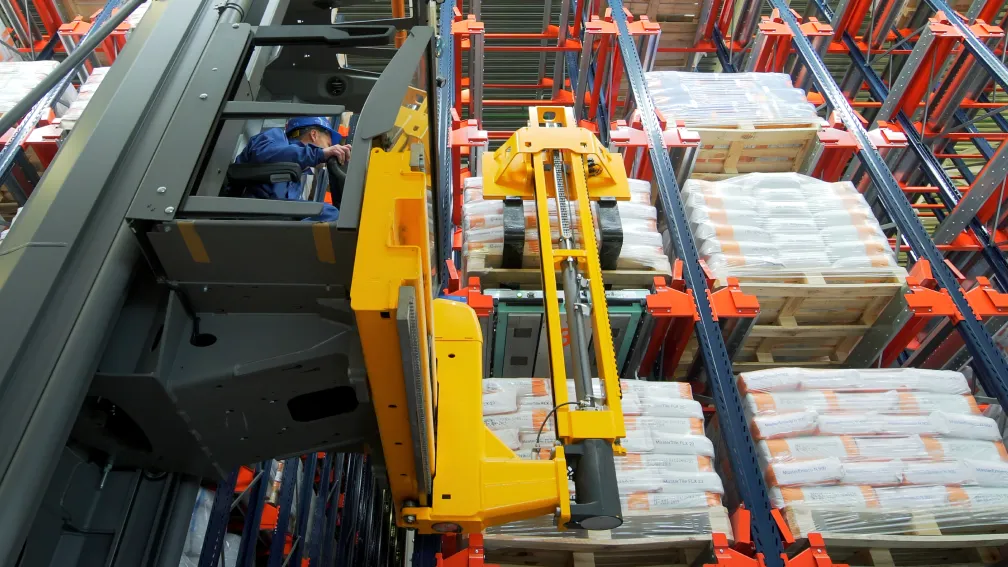
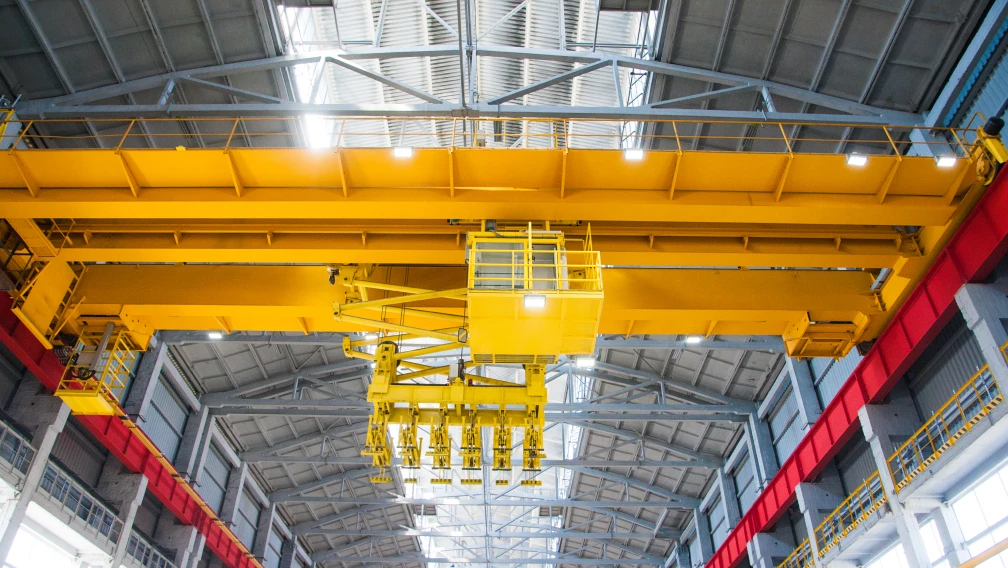
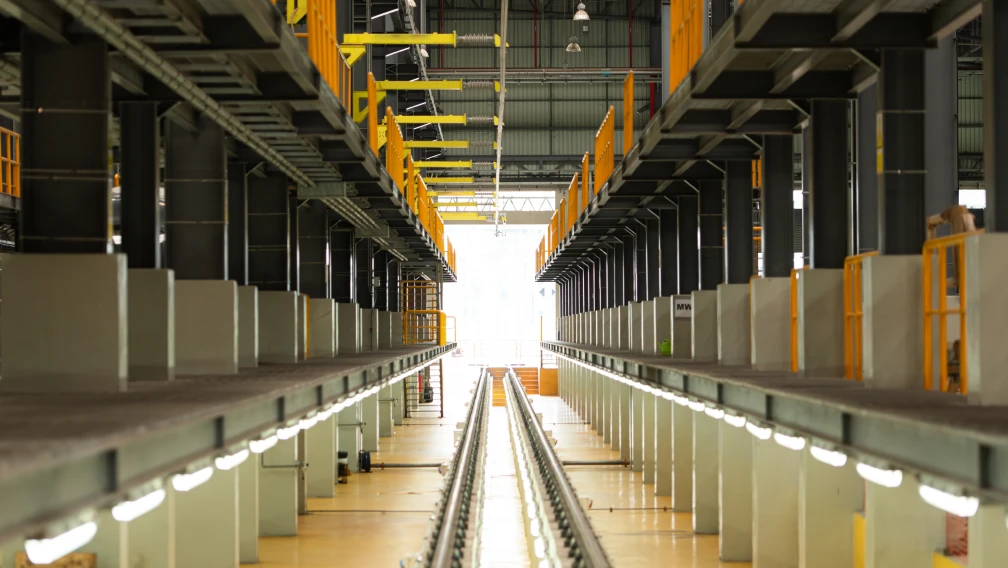
For raw material warehouses and finished goods distribution, the aisle-captive stacker crane remains the workhorse. A unit-load AS/RS configured for textiles uses telescopic forks, cradle fixtures, or captive steel bins to handle rolls directly or palletized. Industry systems of this class manage unit loads up to roughly 3,000 kg, travel at speeds around 2.5 m/s, and build to heights of 30 to 40 meters in high-bay structures. Double-deep and multi-deep layouts raise density further where single-roll selectivity is less critical. This architecture fits weaving mills and large converters moving full rolls in and out at volume, where throughput per aisle matters more than piece-level access.
Shuttle-Based High-Density Systems
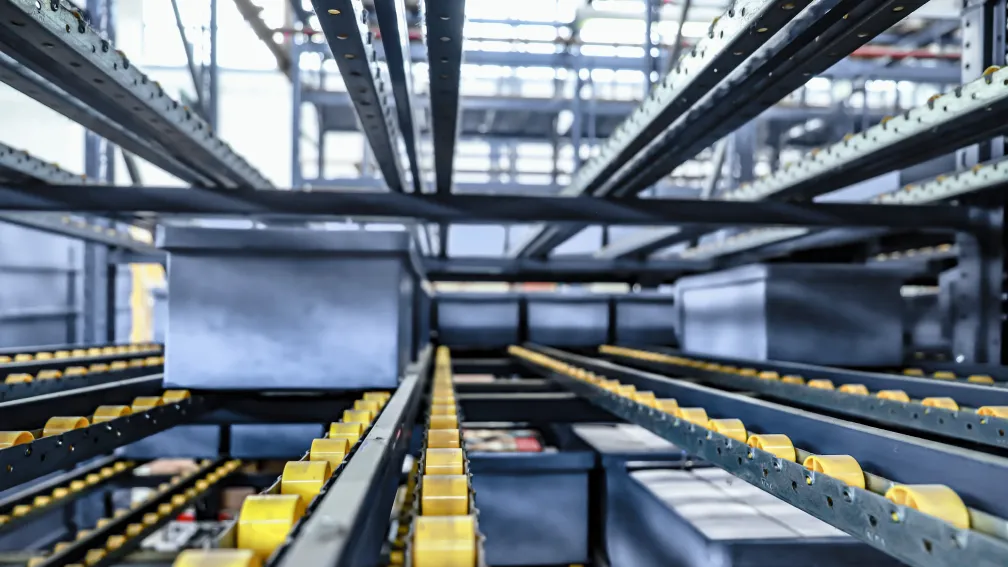
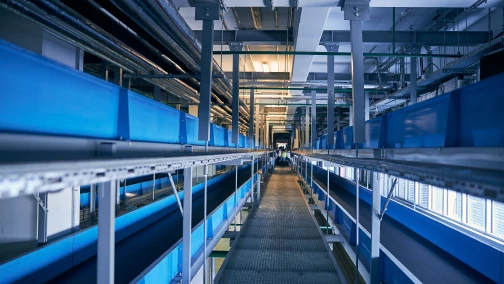
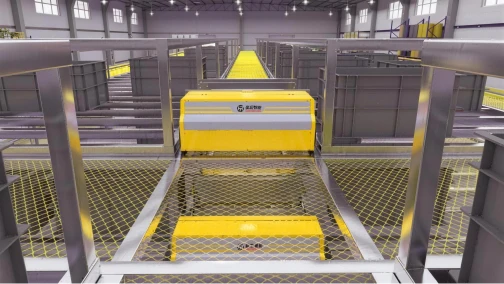
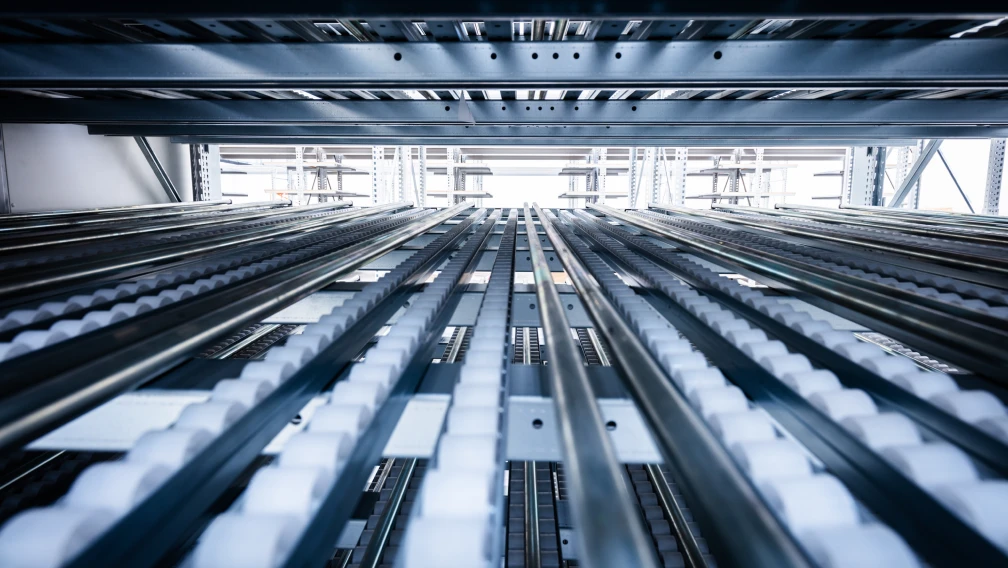
Four-way shuttle systems store roll containers in multi-deep lanes and move along both axes of the rack, so shuttles can be reallocated between aisles as demand shifts. The redundancy is practical: one shuttle out of service does not stop an aisle, and capacity scales by adding vehicles rather than cranes. For textile operations with seasonal peaks, such as apparel fabric ahead of production seasons, shuttle systems absorb volume swings more gracefully than fixed-aisle equipment.
| Architecture | Typical Unit Load | Storage Density | Access Granularity | Best Fit |
|---|---|---|---|---|
| One-bin-per-slot robot | 30–500 kg rolls | Very high | Single roll, direct | High SKU counts, frequent picking, cutting-room feeding |
| Stacker crane AS/RS | Up to ~3,000 kg | High | Single/double/multi-deep | Raw material and finished goods volume storage |
| Four-way shuttle | Standardized containers | Very high | Multi-deep lanes | Buffered storage with seasonal throughput swings |
Connecting Storage Directly to the Cutting Room
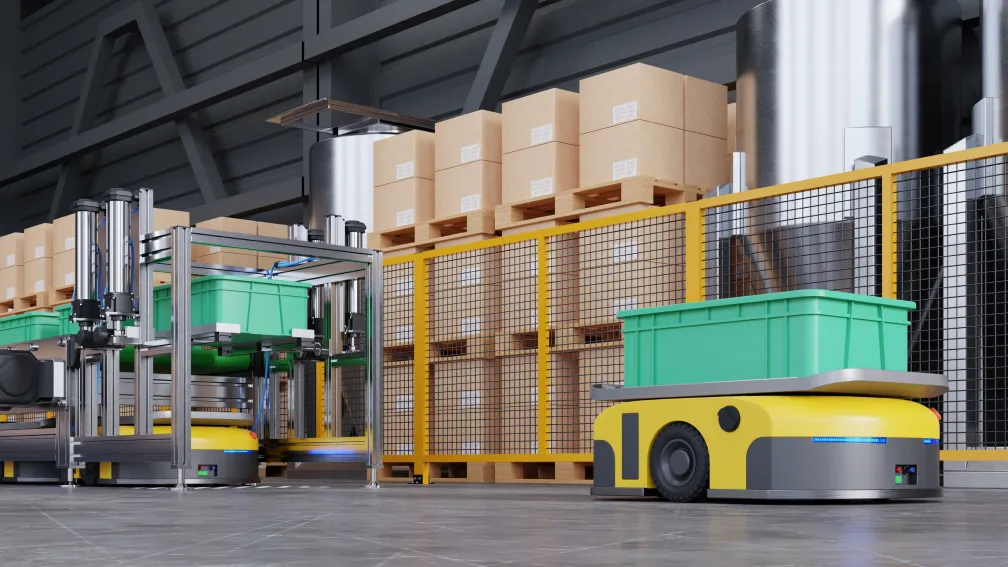
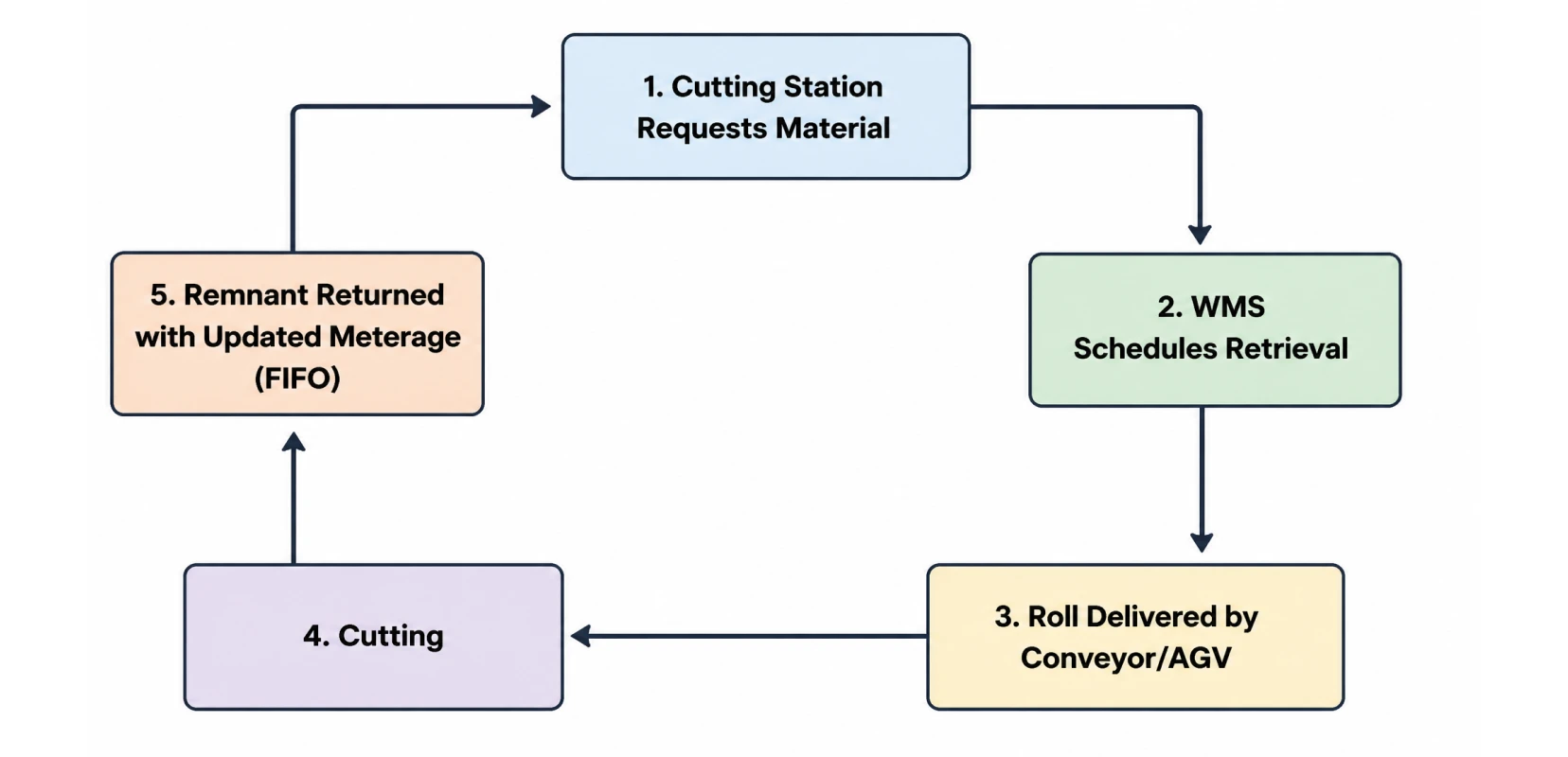
The largest productivity gain in a textile warehouse rarely comes from storage density alone. It comes from eliminating the gap between the warehouse and the cutting table. In a manual operation, a cutting order triggers a search, a forklift move, a manual log entry, and often a wait while the roll is found and transported. In an integrated system, the cutting station raises a material request in the WMS, the system schedules retrieval, and the roll arrives at the station by conveyor, AGV, or robot handoff without anyone walking to find it.
Partial rolls follow the reverse path. When cutting finishes, the remaining fabric returns to storage with its updated meterage recorded, and the WMS enforces FIFO logic so remnants are consumed before new rolls of the same lot are opened. This closed loop changes the economics of leftover material. In one curtain fabric project we delivered, a precision cutting module combined with enforced remnant circulation saved 35 cm of fabric per cut, recovered 350 to 700 meters of usable material per day, and lifted leftover value recovery to more than double the previous scrap price. The rolls that used to be sold by the kilogram became addressable inventory sold by the meter.
The sections below examine the architectures in current use, how they connect to cutting operations, and what results installed systems are delivering.
Fabric Protection Inside an Automated System
Fabric quality degrades through creasing, dust, light exposure, and moisture, and most of that damage happens during handling rather than storage. Manual operations drag rolls across floors, lean them against racks, and restack them repeatedly; each contact risks snags and compression marks. Automated systems reduce roll contacts to two controlled events, inbound placement and outbound retrieval, executed with cradle fixtures or bins that support the roll along its length instead of pressing on edge points. Dedicated bin positions also eliminate the vertical stacking pressure that deforms soft rolls in floor storage. For sensitive materials such as silk blends, coated technical fabrics, or digital prints, storage zones can be specified with covers, controlled humidity, and UV shielding, and the WMS can flag rolls approaching maximum dwell time so aged stock moves first.
Software Control: Roll-Level Inventory and ERP Integration
Hardware moves rolls; software decides which roll, when, and where. The warehouse management layer maintains a record for every roll covering width, meterage, dye lot, location, and movement history, so inventory accuracy no longer depends on periodic manual counts. The robot control layer translates WMS tasks into scheduled, collision-free equipment missions, balancing loads across robots or cranes to keep retrieval times stable during peak order windows.
Integration with the factory ERP closes the loop commercially: purchase receipts, production consumption, and dispatch all write back to a single inventory record. Our warehouse control system connects to mainstream ERP platforms through standard APIs, and the data flow is mapped during the design phase so order entry through outbound dispatch runs on synchronized stock data. The practical effect is that sales can confirm available fabric against real roll-level stock, and production planning sees remnant inventory as usable material rather than write-offs.
Measured Results from Textile Deployments
Across installed textile projects, the performance pattern is consistent. Storage capacity on the same floor area increases by 50 to 100 percent, and dedicated-slot systems reach the upper end of that range because aisles shrink to robot width. Roll retrieval drops from tens of minutes of manual search to a few minutes of machine travel, and cutting stations stop waiting for material. Inventory records converge toward 100 percent accuracy once every movement is system-logged, and remnant fabric returns to circulation under FIFO control instead of leaking out as scrap. Labor shifts from search-and-carry work to station operation and exception handling, which matters in a labor market where experienced warehouse staff are increasingly hard to retain. For a structured method to model these gains against investment, see our guide on calculating AS/RS payback.
Selecting the Right Configuration for Your Operation
System selection starts from the load unit, not the equipment catalog. The engineering review should establish roll width and diameter ranges, weight distribution, SKU count and growth trajectory, picks per day at peak, available clear height, and the takt requirement of the cutting or production lines being fed. High-mix operations feeding cutting rooms generally land on one-bin-per-slot or bin robot architectures. Volume-driven mills storing full rolls typically justify stacker crane AS/RS. Operations with pronounced seasonal peaks and standardized containers should evaluate shuttle systems. Most real projects combine elements of more than one, because raw material, work in process, and finished goods rarely share the same handling profile.
If you are evaluating automated storage for a textile or fabric converting operation, our engineering team can review your roll specifications, building constraints, and throughput targets and propose a configuration with projected capacity and retrieval performance. Contact us to start the assessment.
-

HOWEPROFIT Team
Warehouse Automation Specialists, HOWEPROFIT
The HOWEPROFIT Team consists of senior intralogistics engineers and supply chain experts specializing in advanced AS/RS and robotic fulfillment solutions. Backed by years of field experience across e-commerce, 3PL, and manufacturing sectors, we provide data-driven automation strategies, rigorous throughput simulations, and objective ROI modeling. Our mission is to help facilities seamlessly transition to high-efficiency, reliable, and scalable automated operations.