The Kinematic Constraints of Beverage Production
Industrial food and beverage (F&B) manufacturing operates at velocities that consistently outpace manual logistics. A modern beverage bottling or canning line routinely outputs 60,000 to 100,000 units per hour. At the End-of-Line (EOL), high-speed palletizers consolidate this output into massive, heavy unit loads—frequently weighing between 1,000 kg and 1,200 kg per pallet. If the internal logistics network cannot clear these pallets from the outfeed conveyors as fast as the robotic palletizers generate them, the entire multimillion-dollar production line stalls.
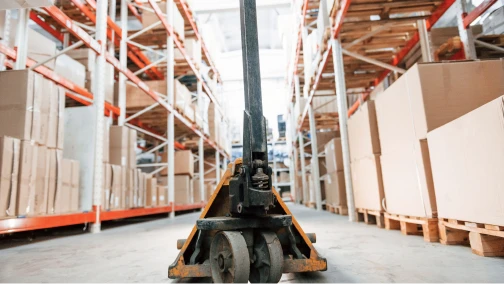
Relying on manual forklift operators to absorb this extreme throughput introduces severe operational liabilities. Floor-stacked staging areas rapidly consume premium facility footprint. Forklift traffic density increases exponentially, triggering collision risks and catastrophic pallet tip-overs. Furthermore, manual environments struggle to enforce the absolute First-Expired-First-Out (FEFO) inventory rotation and batch traceability mandated by global food safety regulations, such as the FDA’s Food Safety Modernization Act (FSMA).
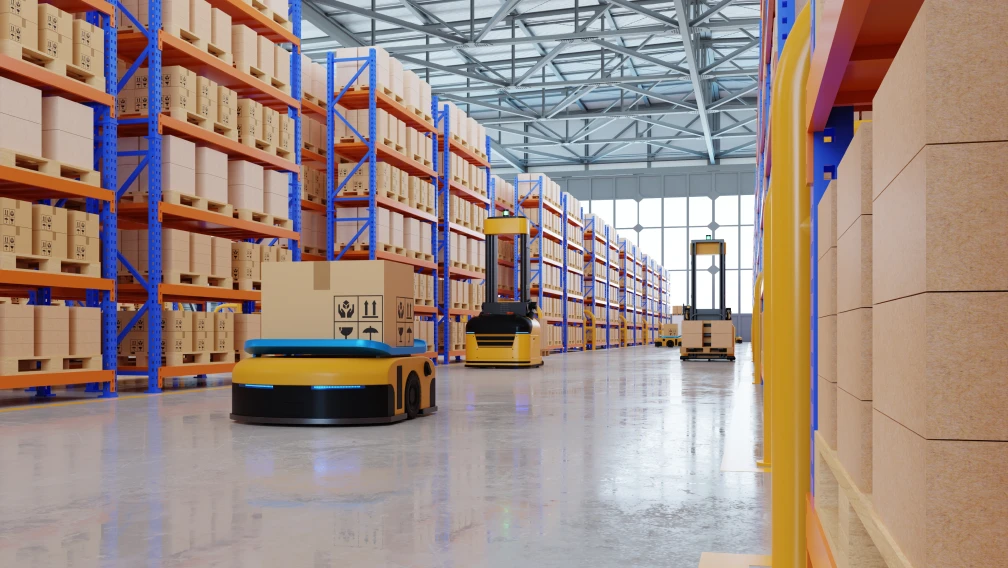
To decouple production speed from logistical bottlenecks, F&B facilities deploy Automated Storage and Retrieval Systems (AS/RS). These engineered frameworks absorb massive EOL output, execute deterministic fluid-load handling, manage complex mixed-SKU layer picking for retail distribution, and algorithmically enforce strict expiration tracking.
Absorbing EOL Throughput: High-Density Buffer Architectures
The primary function of an F&B automated warehouse is acting as an elastic buffer between continuous, high-speed manufacturing and asynchronous, sporadic outbound shipping.
Deep-Lane Pallet Shuttles for Low-SKU Production
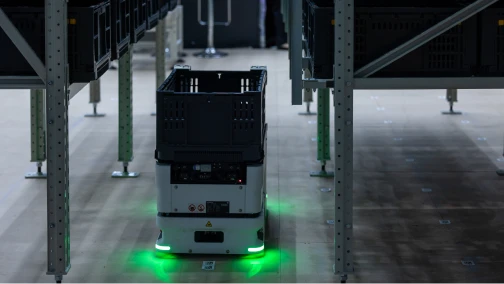
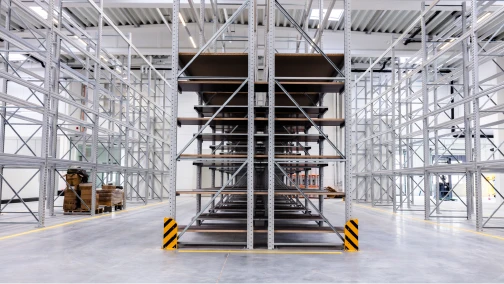
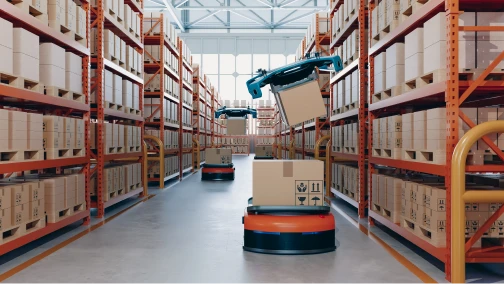
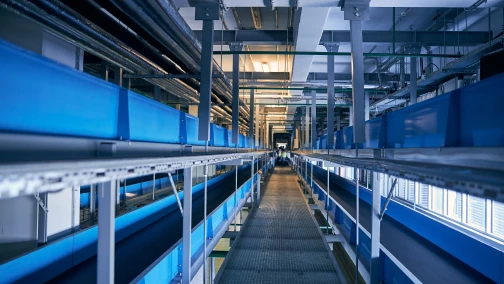
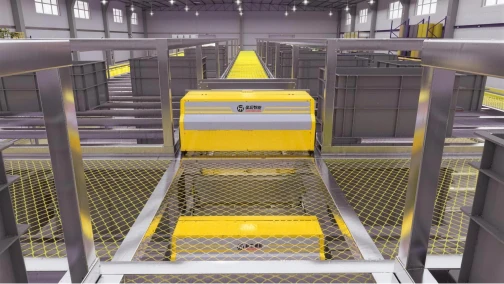
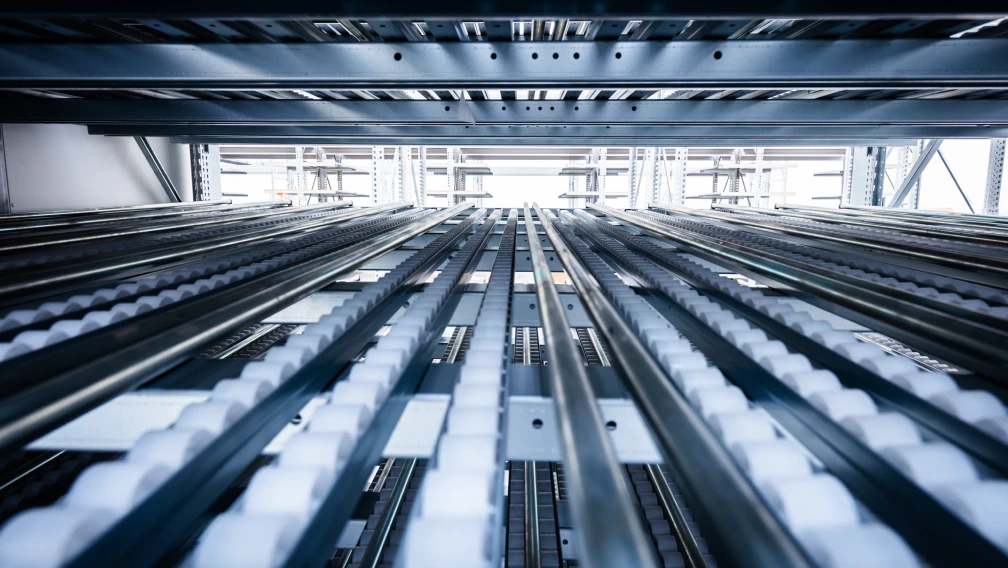
In facilities producing massive runs of identical products—such as a mineral water bottling plant or a commercial brewery—aisle-captive stacker cranes are structurally inefficient. The optimal architecture is the deep-lane pallet shuttle system. By utilizing autonomous shuttles that drive directly beneath the pallets on integrated channel rails, the system eliminates traditional crane aisles. Pallets can be stored 15 to 30 deep in a continuous block.
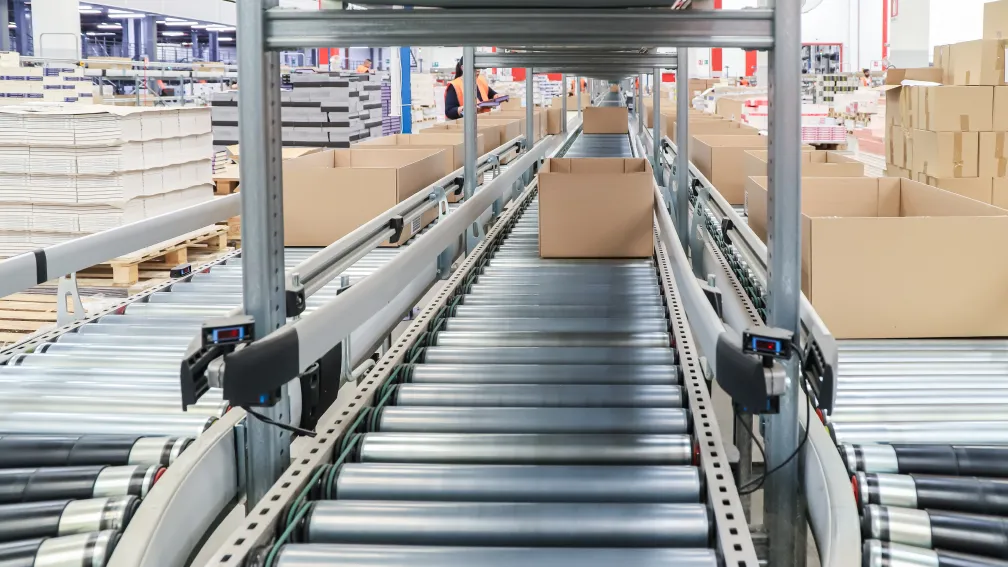
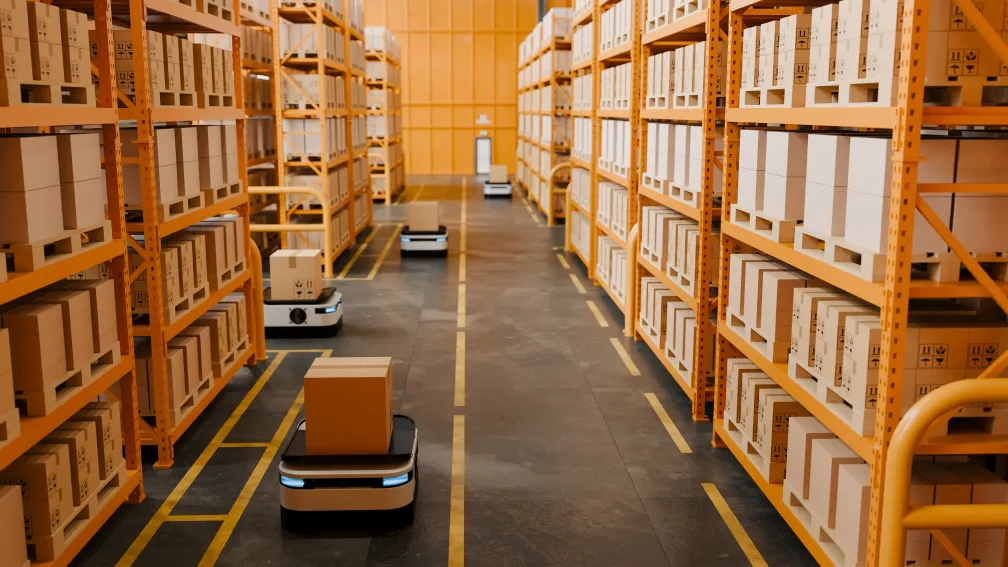
When a bottling line completes a 5,000-pallet run of a specific beverage, the system’s infeed conveyors route the pallets directly to the input face of the racking matrix. Advanced four-way shuttle vehicles navigate the horizontal grid, entering the designated deep lanes to index the pallets seamlessly. This architecture compresses the inventory footprint to its maximum physical density while effortlessly absorbing throughput spikes that would overwhelm a manual forklift fleet.
Unit-Load AS/RS for Raw Materials and High-SKU Distribution
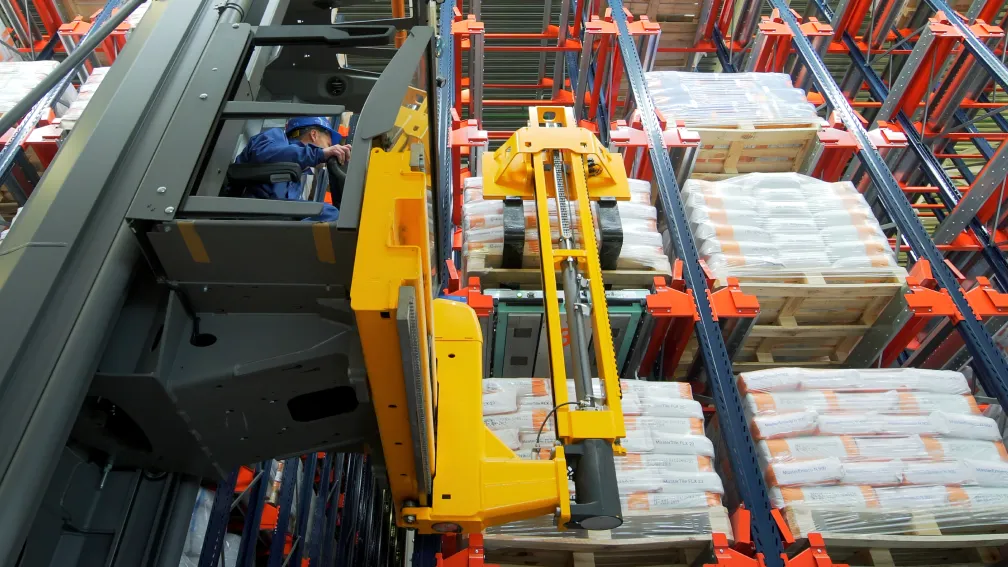
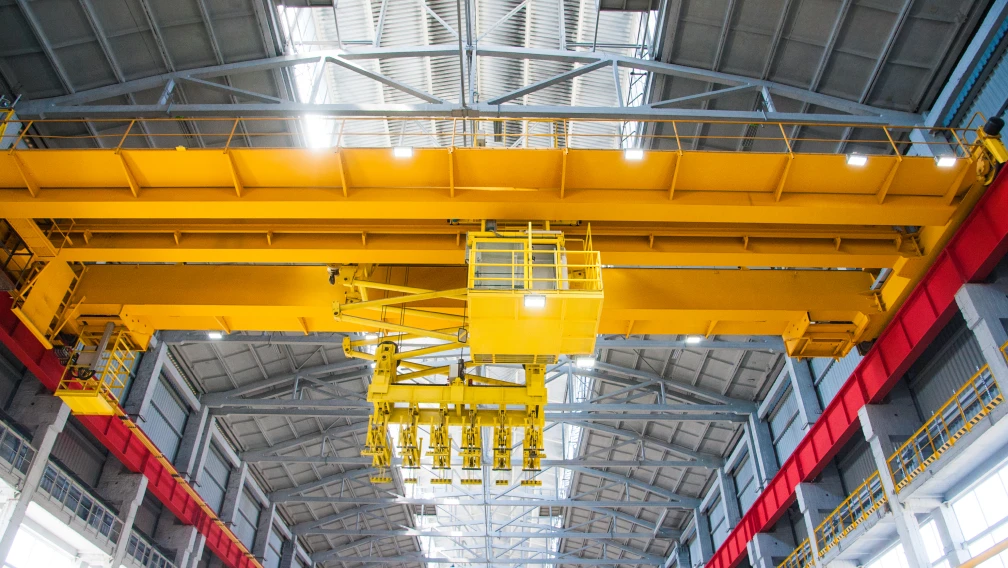
Conversely, the facility's raw material intake—managing bulk ingredients, packaging films, and glass blanks—requires high individual selectivity. For these zones, a Unit-Load AS/RS utilizing heavy-duty stacker cranes is deployed. Operating in single-deep or double-deep configurations, these cranes provide immediate, unobstructed access to any specific pallet, ensuring that processing lines are continuously fed with the exact required raw materials.
The Physics of Liquid Handling: Fluid Kinematics
Automating the transport of liquid goods requires highly specific drive control engineering. Unlike a pallet of solid consumer electronics, a 1,000 kg pallet of bottled beverages is a dynamic fluid mass.
When an AS/RS stacker crane or shuttle accelerates rapidly, the liquid inside thousands of bottles shifts backward, causing the entire pallet's center of gravity to migrate. If the acceleration is too aggressive, this fluid sloshing exerts immense lateral shear force against the stretch wrap. This can destabilize the unit load, causing cartons to shift outside the crane's permitted volumetric envelope or, catastrophically, collapsing the pallet within the high-bay racking.
To mitigate fluid sloshing, the drive inverters on F&B storage equipment are programmed with highly specialized kinematic profiles. The software calculates elongated S-curve acceleration and deceleration ramps. This ensures the crane or shuttle applies force gradually, allowing the liquid mass to stabilize during the velocity transition. This deterministic motor control prevents payload deformation while still achieving maximum permissible horizontal transit speeds.
Automated Layer Picking and Mixed-Pallet Generation
While manufacturing outputs homogenous, single-SKU pallets, modern grocery retailers rarely order full pallets of a single beverage flavor. Supermarkets demand "rainbow pallets"—mixed unit loads containing multiple layers of different SKUs (e.g., two layers of cola, one layer of diet cola, and one layer of sparkling water). In manual facilities, building these mixed pallets requires intensive, back-breaking labor as workers manually restack heavy cases.
Advanced F&B automation resolves this via Automated Layer Picking systems. The WMS directs the AS/RS to retrieve full pallets of the required source SKUs and stage them in a dedicated robotic cell. A heavy-duty gantry robot equipped with a massive vacuum plenum or mechanical clamping head descends onto the source pallet. The effector grips an entire layer of cartons simultaneously—lifting 150 kg to 200 kg in a single motion—and transfers it onto the target customer pallet.
The system mathematically calculates the structural integrity of the outbound mixed pallet, ensuring heavier layers form the base and lighter layers form the crown. Once the rainbow pallet is complete, an automated wrapper secures the load, and a conveyor routes it directly to the shipping dock. This entirely removes human manual labor from the heavy-lifting equation while accelerating retail order fulfillment.
Software Orchestration: FSMA Compliance and FEFO Enforcement
The mechanical hardware executes the physical moves, but the Warehouse Management System (WMS) acts as the facility's regulatory compliance engine. In F&B logistics, standard First-In-First-Out (FIFO) logic is insufficient, as upstream processing variables can result in non-sequential expiration dates.
Absolute FEFO Logic
The WMS must execute rigid First-Expired-First-Out (FEFO) routing. As every pallet clears the EOL stretch wrapper, it receives a barcode or RFID tag encoding its specific production batch, timestamp, and expiration date. The WMS indexes this data against the physical X-Y-Z storage coordinate in the AS/RS. When a shipping order drops into the queue, the WMS algorithmically selects the pallets with the closest expiration dates, overriding any chronologically older but longer-lasting inventory. This minimizes spoilage write-offs and ensures retailers receive products with maximum viable shelf life.
Automated Quarantine and Mock Recalls
Under strict global food safety mandates, facilities must prove their ability to trace and contain contaminated batches instantly. If quality control identifies a deviation in a specific production run, the QA manager executes a hold status in the enterprise ERP.
The WMS instantly cascades this command down to the physical execution layer. It logically locks the specific coordinates of every pallet containing the compromised batch. The AS/RS stacker cranes and shuttles are physically barred from retrieving those specific pallets for outbound shipping. This automated logical quarantine guarantees that non-compliant food products cannot inadvertently reach the consumer supply chain. During regulatory audits, the WMS can generate instantaneous traceability reports, proving exact chain-of-custody for every ingredient and finished good.
Cold Chain Integration and Thermal Zoning
Many F&B facilities manage temperature-sensitive goods, requiring specific AS/RS mechanical adaptations for refrigerated (2°C to 8°C) or frozen (-18°C to -25°C) zones. Storing food vertically in a high-bay AS/RS creates a massive thermodynamic advantage. By minimizing the building's footprint and total surface area, the facility reduces thermal leakage through the roof and walls, frequently cutting mechanical refrigeration energy costs by up to 40% compared to a sprawling manual cold store.
Automated conveyor airlocks equipped with high-speed insulated doors and dehumidification vestibules manage the transition of pallets between ambient staging areas and the deep-freeze AS/RS grid. This prevents the ingress of humid ambient air, eliminating the dangerous ice accumulation on racking structures that plagues manual cold storage operations.
Validating the Engineering Investment in F&B Automation
The capital expenditure required to transition an F&B plant to an automated intralogistics framework is substantial. However, the operational baseline of a manual facility is fundamentally incompatible with the speeds of modern bottling lines and the strict tracking demands of food safety legislation.
By deploying high-density deep-lane shuttles, executing algorithm-driven layer picking, and enforcing absolute FEFO tracking through the WMS, food and beverage producers eliminate end-of-line bottlenecks. They maximize volumetric space utilization, eradicate manual handling damage, and guarantee perfect regulatory compliance.
→ Contact HOWEPROFIT’s industrial engineering team to execute a material flow analysis and throughput simulation for your food and beverage facility.
-

HOWEPROFIT Team
Warehouse Automation Specialists, HOWEPROFIT
The HOWEPROFIT Team consists of senior intralogistics engineers and supply chain experts specializing in advanced AS/RS and robotic fulfillment solutions. Backed by years of field experience across e-commerce, 3PL, and manufacturing sectors, we provide data-driven automation strategies, rigorous throughput simulations, and objective ROI modeling. Our mission is to help facilities seamlessly transition to high-efficiency, reliable, and scalable automated operations.