Electronics supply chains store extreme value in extreme miniaturization. A single tote of semiconductor reels or mobile device components can carry six figures of inventory in a container weighing a few kilograms, and a distribution center for consumer electronics may manage tens of thousands of SKUs that are individually small, electrostatically sensitive, and serialized. Manual handling of this inventory profile produces compounding losses: electrostatic discharge damage that escapes detection until customer failure, shrinkage of high-value small parts, and picking errors across SKUs that differ only by a digit in the part number.
Automated storage and retrieval systems engineered for electronics address all three failure modes. This article examines the ESD-safe engineering, storage architecture selection, and traceability controls involved in automating warehouses for semiconductor distribution, electronics manufacturing kitting, and consumer electronics fulfillment.
The Storage Problem: Value Density, Miniaturization, and ESD
Three characteristics define electronics inventory. The first is value density. Where a pallet of consumer goods might hold a few thousand dollars of product, electronics inventory routinely exceeds $100,000 per cubic meter of storage, which makes security and location certainty primary design objectives alongside throughput. The second is miniaturization. Surface-mount component reels, bare dies in trays, connectors, and small assemblies are measured in millimeters, and a master carton may contain thousands of individual parts across dozens of date codes. Storage systems must handle small load units with high positional accuracy, because a dropped or mis-seated tray can destroy its contents. The third is electrostatic sensitivity. Many semiconductor devices and assemblies are damaged by discharges well below the threshold a human can feel, and the damage is frequently latent: the component passes final test and fails in the field weeks later.
ESD-Safe Automation Engineering
Dissipative Load Carriers and Grounded Structures
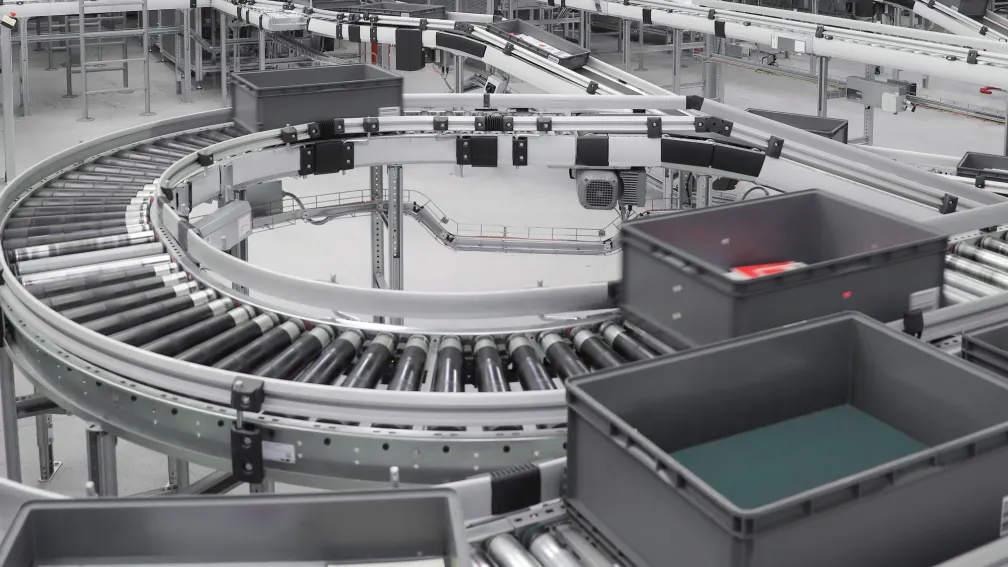
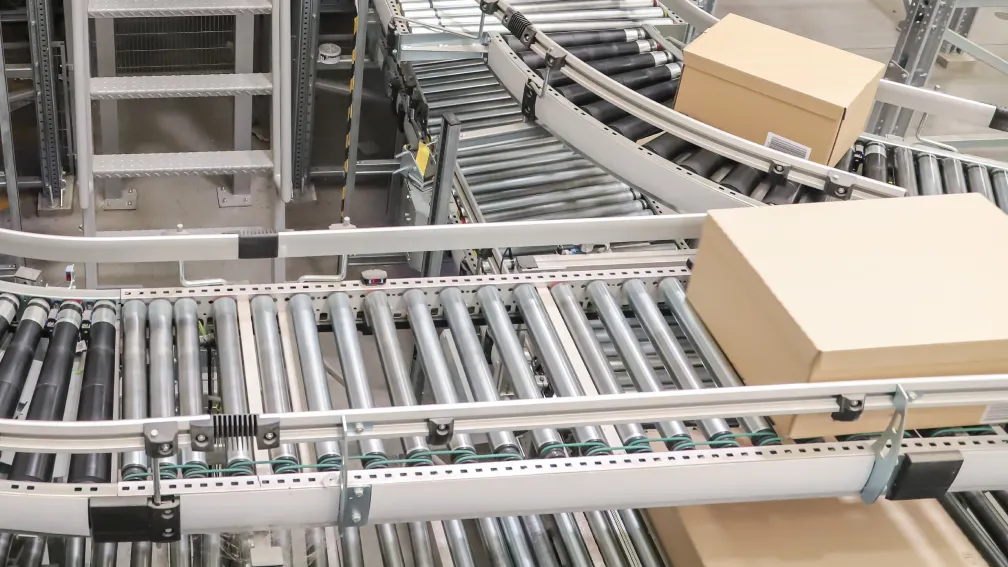
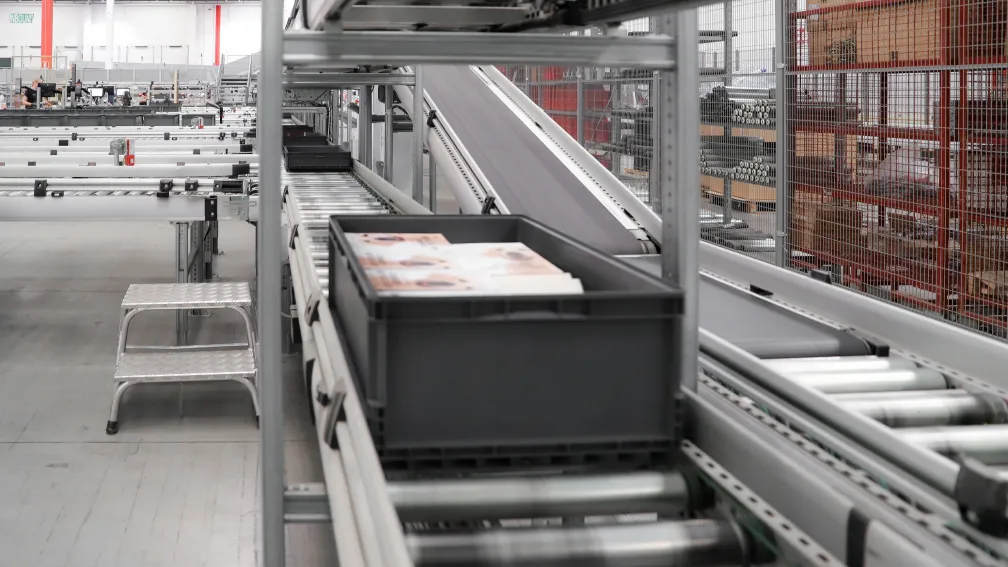
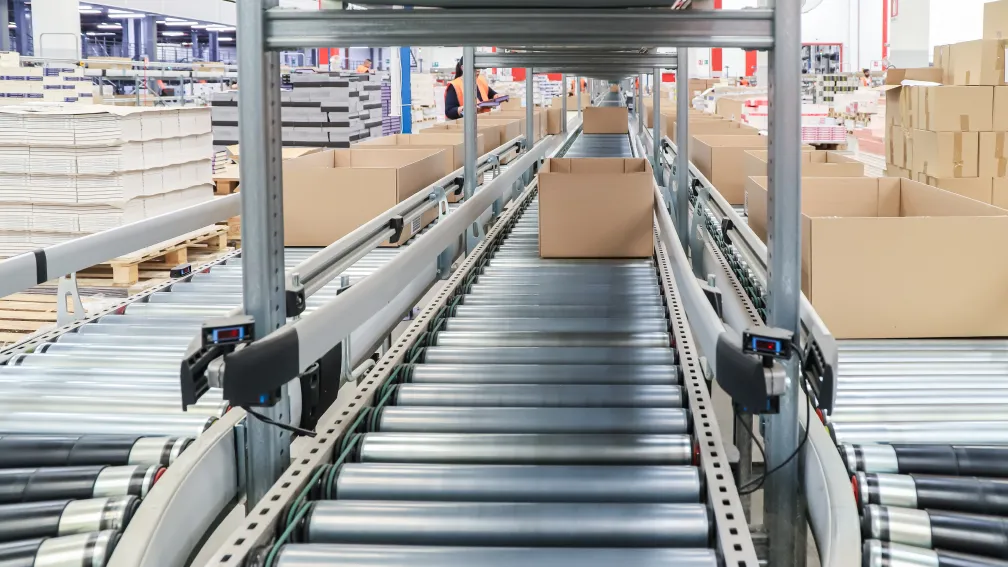
Electrostatic discharge control in an automated warehouse follows the same protective logic as an electronics production floor, formalized in standards such as ANSI/ESD S20.20 and IEC 61340. Load carriers are the first control point: totes, trays, and cartons moving through the automated system are specified in static-dissipative materials with surface resistance in the controlled range, so charge drains gradually rather than discharging abruptly into the contents. Conveyor surfaces, transfer plates, and rack contact points in ESD-protected zones use dissipative or conductive materials with verified grounding paths, and shuttle or crane load-handling devices that contact carriers directly are specified with the same discipline.
Environmental Control
Relative humidity is the silent variable in ESD control. Charge generation rises sharply as air dries, and warehouse humidity below roughly 30 percent RH materially increases discharge risk even with compliant carriers. Electronics storage zones therefore integrate humidity control into the building services, typically maintaining 40 to 60 percent RH, which also serves the moisture sensitivity requirements of many semiconductor packages governed by JEDEC moisture sensitivity levels. Where moisture-sensitive devices are stored long-term, dry cabinet or nitrogen-purged storage cells are integrated into the automated block as dedicated locations under software control, with floor-life timers tracked per reel.
Storage Architectures for Electronics Inventory
Mini-Load AS/RS for Reels, Trays, and Kitting Buffers
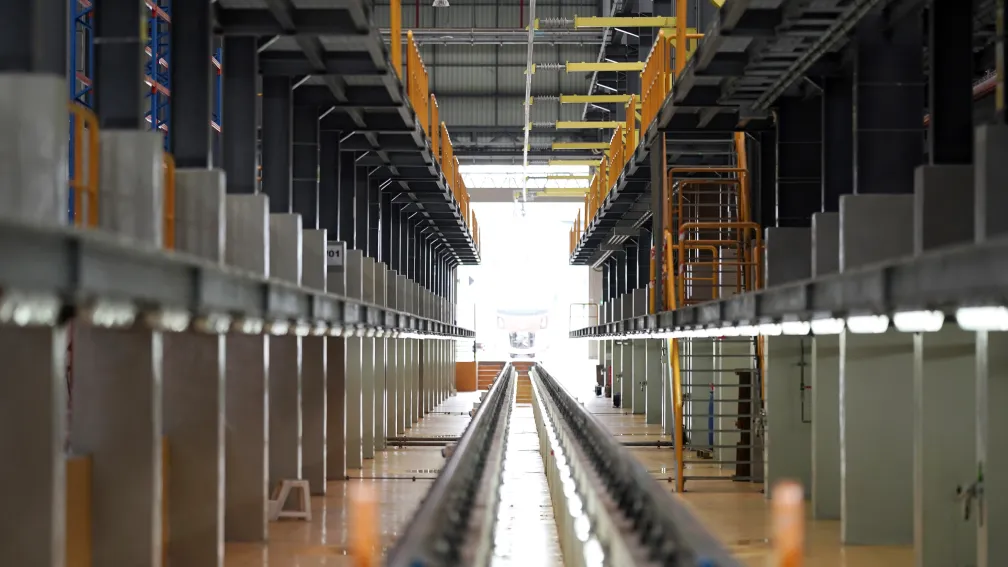
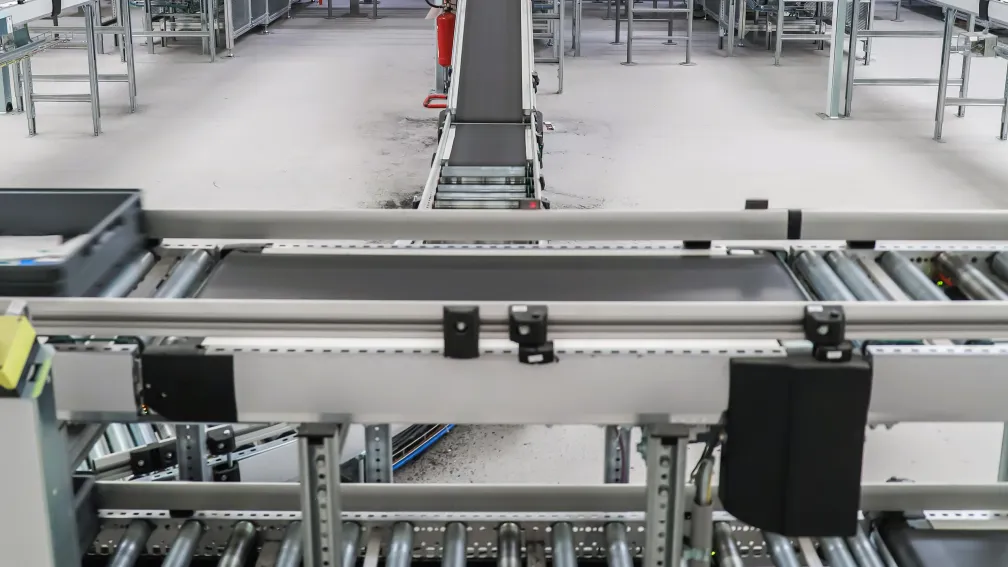
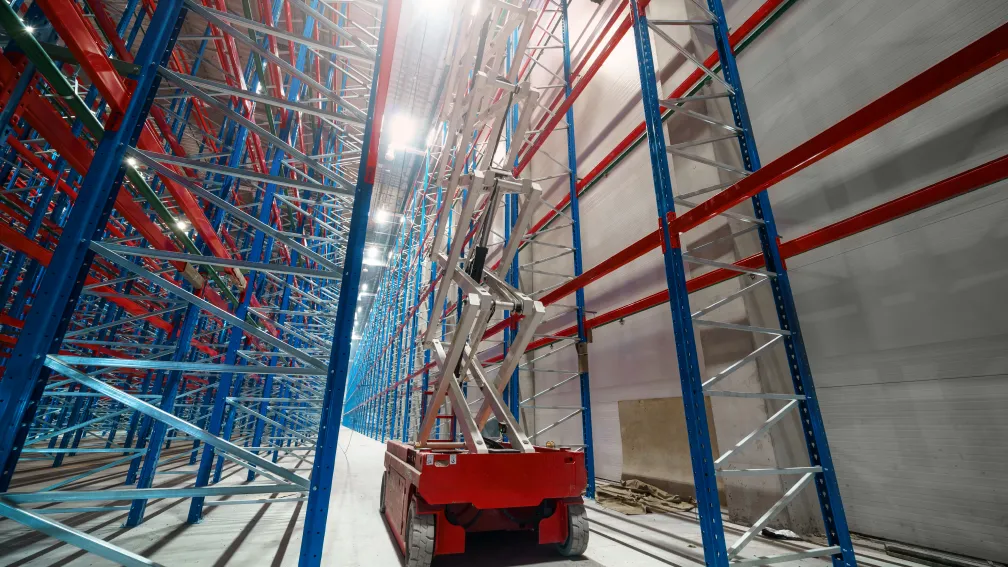
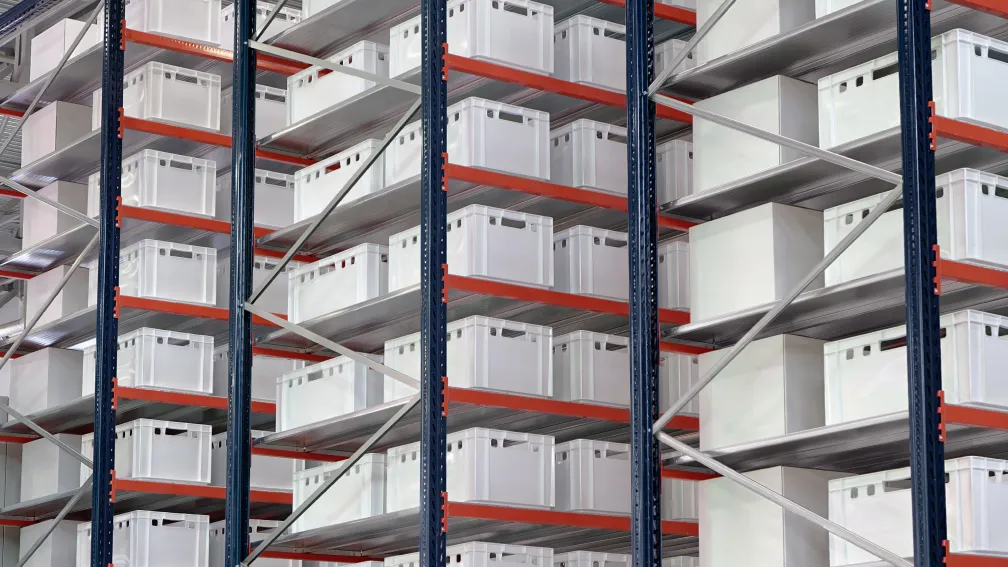
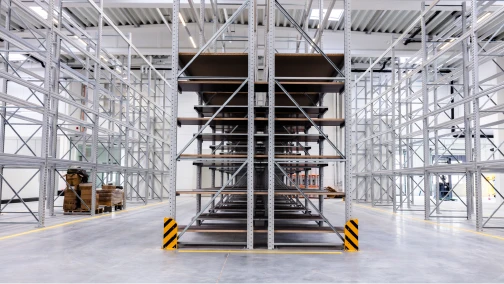
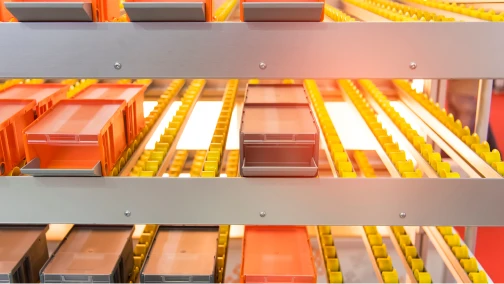
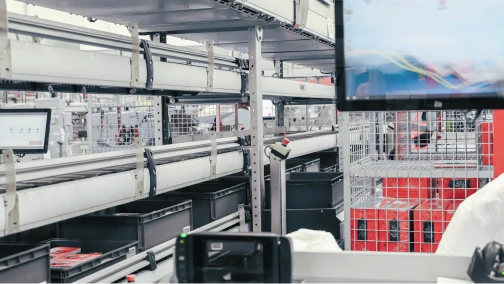
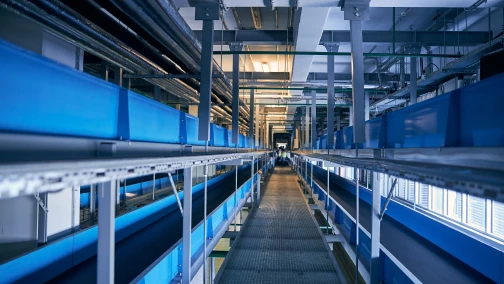
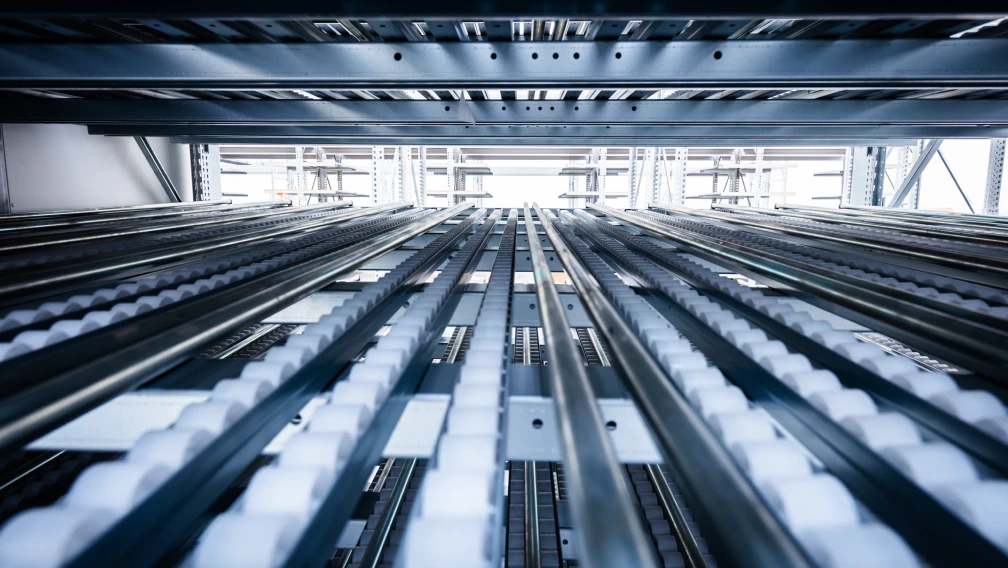
The workhorse of electronics storage is the mini-load AS/RS, which handles totes and cartons in high-bay racking with positioning accuracy measured in millimeters. Mini-load systems suit the electronics profile precisely: load units are light, SKU counts are enormous, and many items are needed in small quantities at unpredictable times, which demands 100 percent selectivity rather than deep-lane density. In electronics manufacturing, the mini-load doubles as the kitting buffer between the component warehouse and SMT production lines, staging work-order kits so that reels arrive at the line in build sequence with zero operator searching.
Bin Robots for Consumer Electronics Fulfillment
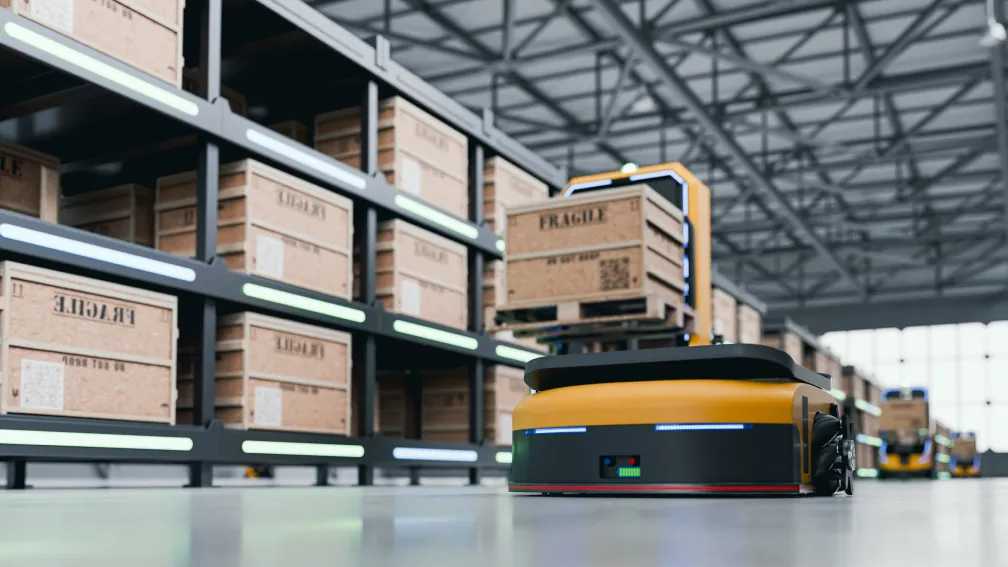
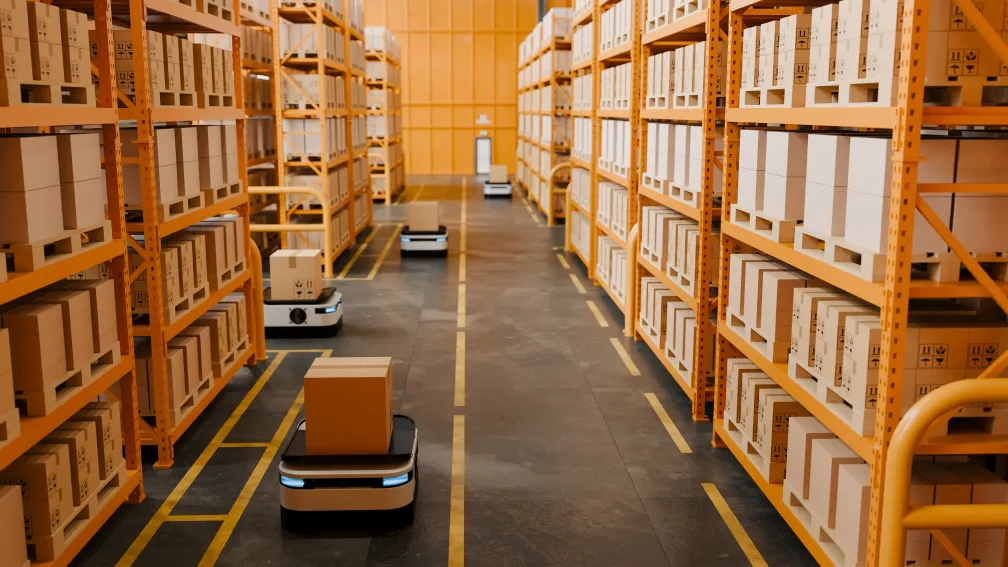
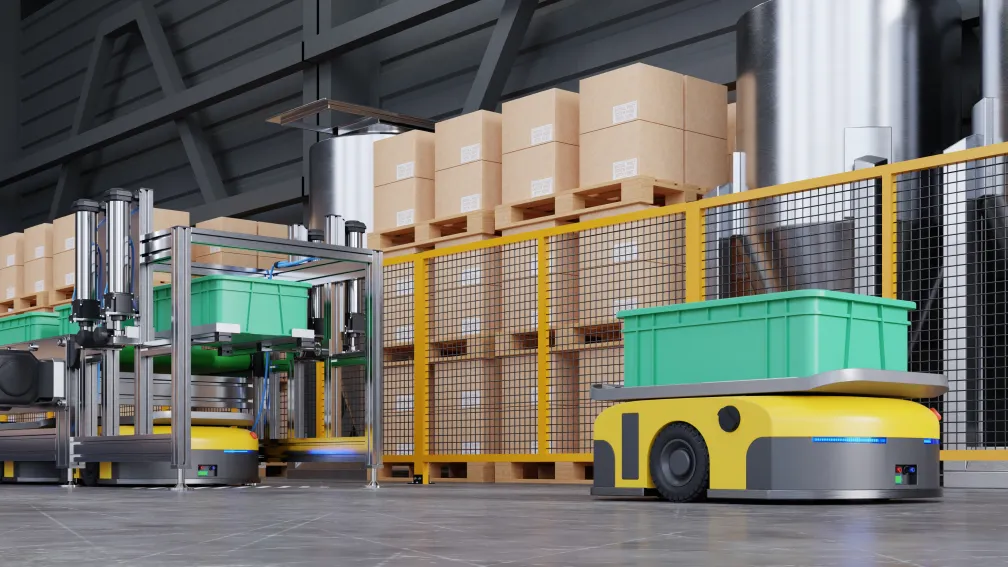
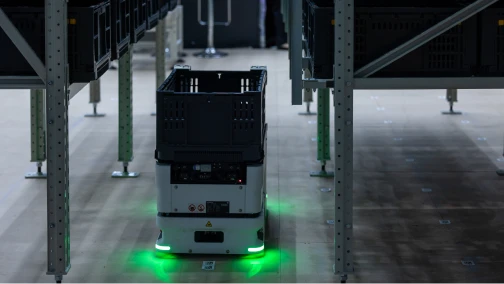
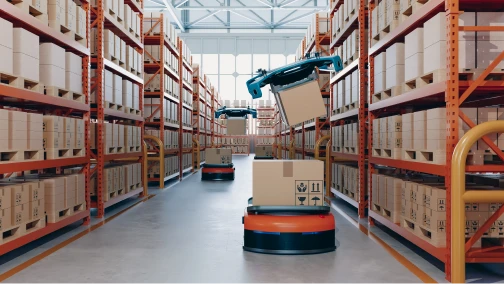
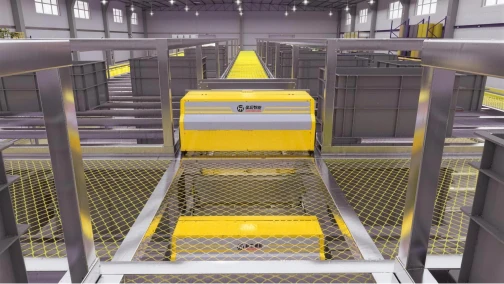
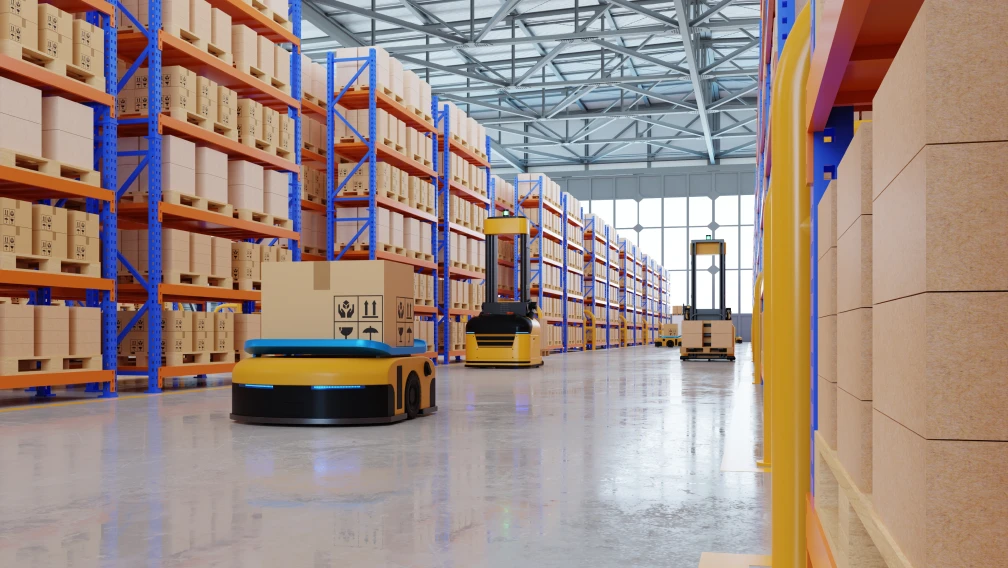
Where the operation is fulfillment rather than manufacturing, such as a consumer electronics e-commerce distribution center, bin-handling robots provide higher density in a smaller building envelope. A high-speed bin robot block stores totes multi-deep and delivers them to goods-to-person ports, which suits the long-tail SKU profile of electronics retail: thousands of slow-moving accessories and spare parts surrounding a small set of fast-moving devices. Fleet coordination by robot fleet management software keeps retrieval sequencing aligned with wave release, and the modular grid expands without construction downtime as the SKU base grows.
Automation in Semiconductor Fab Logistics
Upstream of distribution, semiconductor fabrication plants operate the most demanding automated material handling environment in industry. Wafer lots move between process tools in sealed carriers, and fabs run overhead hoist transport systems that deliver carriers directly to tool load ports under cleanroom conditions. The component warehouse feeding the fab applies the same discipline at box and reel level: automated storage keeps consumables, spare parts, and process materials in controlled conditions with full retrieval logging, because an unlogged substitution of a process-critical spare can take down a production line whose output is measured in millions of dollars per day. The design lesson transfers directly to downstream electronics warehousing: automation is adopted not for labor savings alone, but because unlogged, uncontrolled human access to sensitive inventory is the dominant source of loss and quality escapes.
| Architecture | Load Unit | Selectivity | Density | Best-Fit Electronics Scenario |
|---|---|---|---|---|
| Mini-load AS/RS | Totes, cartons, reels on trays | 100% | High (high-bay racking) | Component distribution, SMT kitting buffers, huge SKU counts |
| High-speed bin robot | Totes, multi-deep | Stack-based with software reshuffling | Very high (compact block) | Consumer electronics e-commerce, long-tail SKU fulfillment |
| Dry / nitrogen storage cells | Moisture-sensitive reels and trays | Dedicated locations in AS/RS block | Dedicated zones | JEDEC moisture-sensitive device storage with floor-life tracking |
Serialization, Security, and Loss Control
Electronics distribution operates under serialization regimes that most product categories never encounter. Mobile devices carry IMEI identities, network equipment carries MAC-level serialization, and semiconductor lots carry date-code and lot genealogy that OEM customers require on demand. The warehouse control system and WMS layer capture serial identities at induction and bind them to storage coordinates, so every tote's contents are known to serial-number granularity without opening it. At outbound, serial capture at the packing station reconciles against the order, producing the custody record that warranty validation, gray-market investigations, and recall execution depend on.
Physical security integrates into the same architecture. Automated storage removes open shelving access entirely: inventory is retrievable only through logged system transactions, and workstations record which operator handled which tote at which timestamp. High-value zones add weight verification at induction, flagging any tote whose measured mass deviates from its calculated content weight. Shrinkage in automated electronics facilities runs far below manual warehouse benchmarks primarily because unlogged physical access to inventory no longer exists.
Throughput Design for Volatile Launch Cycles
Consumer electronics demand is launch-driven: a new device release can multiply order volume for specific SKUs by an order of magnitude within days, then decay just as fast. Automation sizing for this profile emphasizes reconfigurable throughput rather than static capacity. Robot fleets scale by adding vehicles for launch windows, workstation counts expand into pre-wired spare positions, and the WCS re-stratifies inventory as velocity shifts, migrating launch SKUs to the fastest storage zones during the release window and back to deep storage during decay. Facilities designed around a fixed peak assumption either strand capital eleven months of the year or fail during the one month that defines the year's revenue.
Conclusion
Electronics warehousing compresses ESD exposure, extreme value density, serialization obligations, and launch-cycle volatility into one inventory profile. Dissipative carriers and humidity control protect the product, mini-load cranes and bin robots deliver selectivity and density matched to manufacturing and fulfillment profiles respectively, and software-bound serialization converts traceability from a paperwork burden into an automatic byproduct of normal operation. Operators who engineer these controls into the storage system itself achieve damage rates, shrinkage figures, and recall response times that manual facilities cannot approach.
If you are evaluating automation for a semiconductor distribution center, SMT kitting operation, or electronics fulfillment facility, contact our engineering team with your SKU count, load dimensions, and throughput profile. We will return an architecture recommendation with ESD controls and traceability design matched to your compliance environment.
Frequently Asked Questions
-

HOWEPROFIT Team
Warehouse Automation Specialists, HOWEPROFIT
The HOWEPROFIT Team consists of senior intralogistics engineers and supply chain experts specializing in advanced AS/RS and robotic fulfillment solutions. Backed by years of field experience across e-commerce, 3PL, and manufacturing sectors, we provide data-driven automation strategies, rigorous throughput simulations, and objective ROI modeling. Our mission is to help facilities seamlessly transition to high-efficiency, reliable, and scalable automated operations.