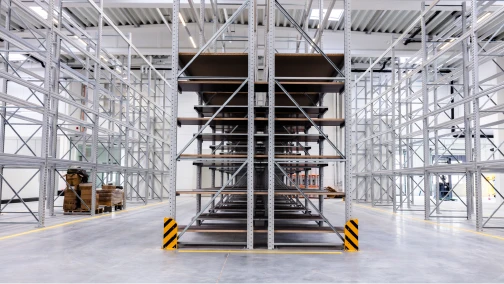
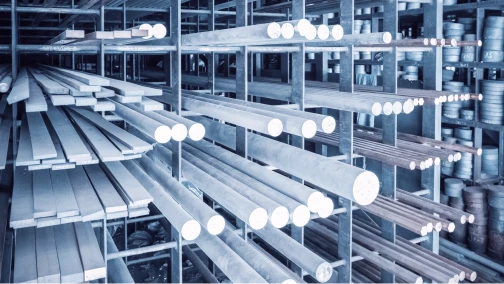
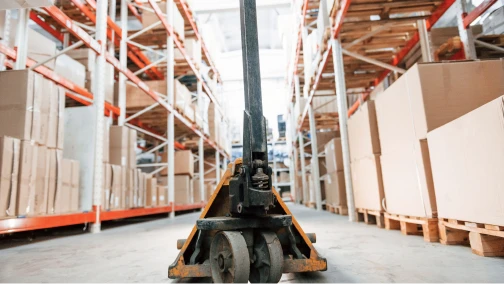
Storing and retrieving long industrial materials—solid steel bar stock, seamless tubing, structural profiles, and extruded aluminum sections ranging from 3 to 12 meters in length—exposes the structural limits of conventional warehousing. Standard pallet racking cannot accommodate extreme length-to-width ratios, so most metal service centers and fabrication plants rely on static cantilever racks serviced by multi-directional sideloaders or overhead bridge cranes. That conventional layout consumes enormous floor space in wide maneuvering aisles, generates frequent surface damage during bundle extraction, and leaves high-value processing machines such as tube lasers and automatic band saws waiting for raw material.
Automated long-goods storage systems resolve these bottlenecks by compressing linear stock into high-density vertical structures and mechanizing presentation directly to the cutting or machining cell. This engineering guide details the physical constraints of long-load inventory, compares the primary automated storage architectures, and outlines the cassette design, machine-integration, and software controls required for reliable deployment.
Physical Constraints of Long-Load Inventory
Automating bar, tube, and extrusion storage requires engineering around four material characteristics that standard unit-load warehouses rarely encounter.
First is structural deflection. Long, slender profiles—particularly thin-walled aluminum extrusions and small-diameter copper or stainless tubes—sag permanently if supported at insufficient intervals. Storage carriers and extraction forks must provide continuous or closely spaced multi-point support along the entire longitudinal axis to hold dimensional straightness within manufacturing tolerances.
Second is extreme payload variance within a single facility. An architectural aluminum distributor may store 6-meter bundles weighing 350 kg alongside heavy architectural dies or solid steel rounds exceeding 4,000 kg per bundle. Racking frames, hoist motors, and safety brakes must be sized for maximum eccentric loads without sacrificing cycle speed on lighter cassettes.
Third is surface sensitivity. Anodized, powder-coated, or mirror-polished profiles reject steel-on-metal contact. Pulling a single extrusion from a stacked manual bundle creates scratches that scrap the entire length. Automated systems eliminate friction-based manual pulling by presenting an open, segregated carrier directly to the operator or vacuum lifter.
Fourth is remnant proliferation. Cutting operations continuously generate usable partial lengths (offcuts) alongside full mill lengths. In manual cantilever yards, remnants are piled in unlabeled floor bins and forgotten, driving up scrap rates and redundant purchasing. Automated long-goods storage must index partial bars with the same coordinate precision as full-length bundles.
Automated Storage Architectures for Bars, Tubes, and Profiles
Selecting an automated long-goods architecture depends on material length, unit payload, surface finish requirements, and the number of downstream processing machines served simultaneously.
Honeycomb and Cassette Tower Systems
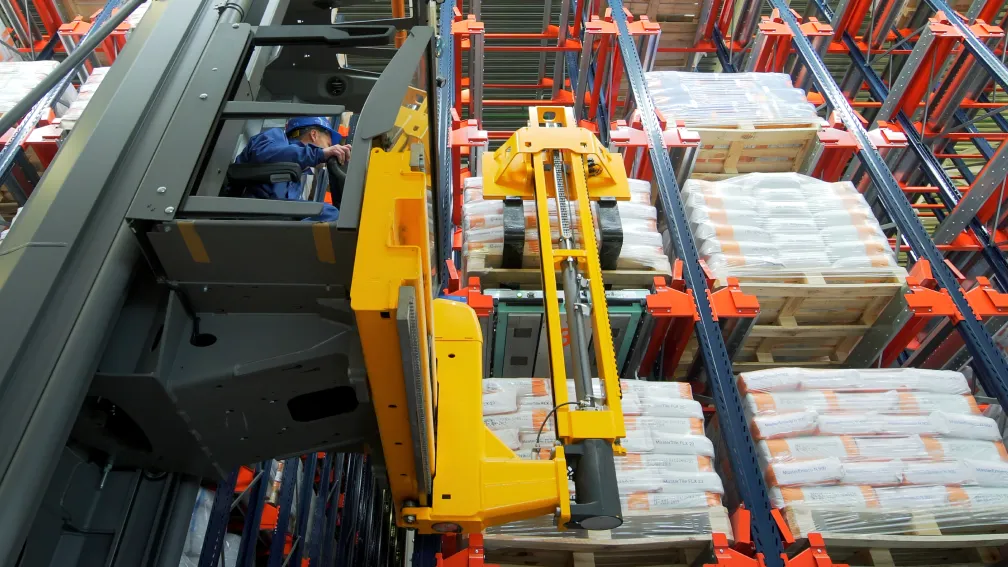
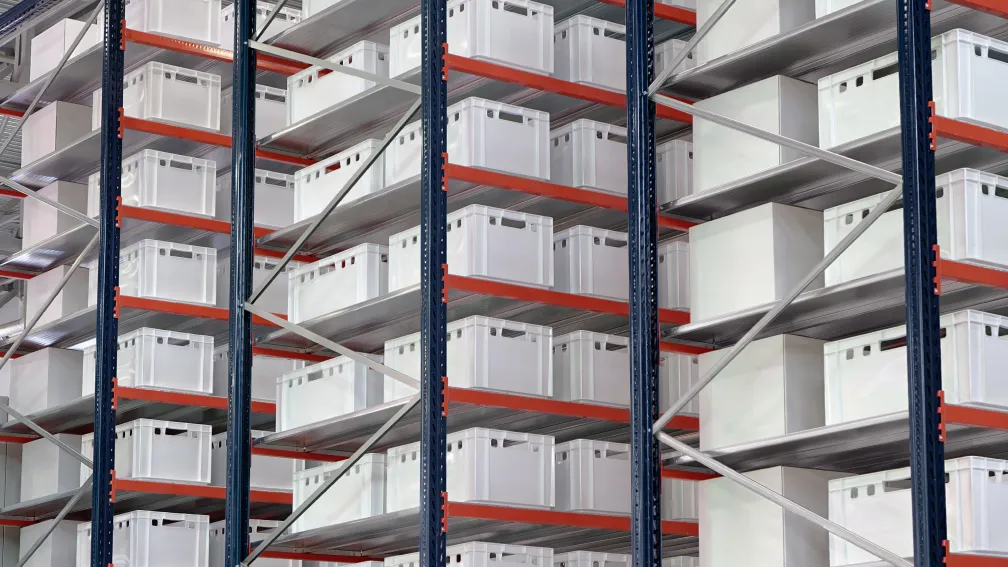
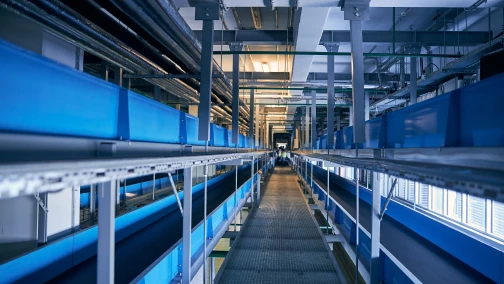
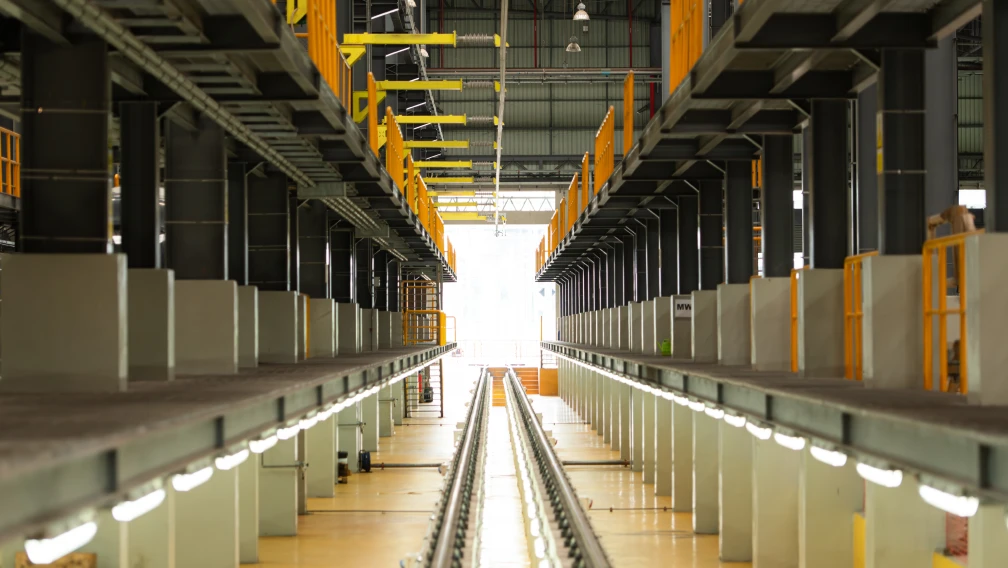
A cassette tower (often referred to as a honeycomb storage system) organizes 3-meter to 6-meter stock into vertically stacked steel trays inside a compact structural tower. A central extractor crane or vertical lift platform travels between opposing rack faces, pulls the target cassette out along guide rollers, and delivers it to an ergonomic floor-level I/O station. Twin-tower configurations serve single saw or laser cells with minimal footprint, while multi-aisle crane systems scale to hundreds or thousands of cassette positions for large steel distributors. Because the extractor travels in a narrow enclosed aisle, honeycomb systems typically reclaim 60 to 80 percent of the floor area previously occupied by cantilever racks and sideloader lanes.
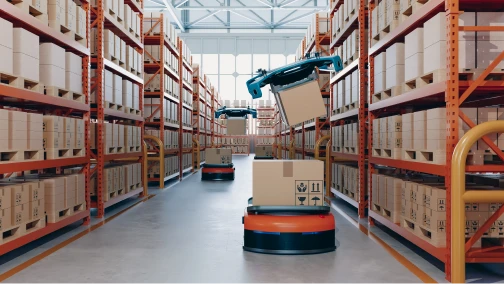
One-Bin-Per-Slot Robotic Storage for Sensitive Extrusions
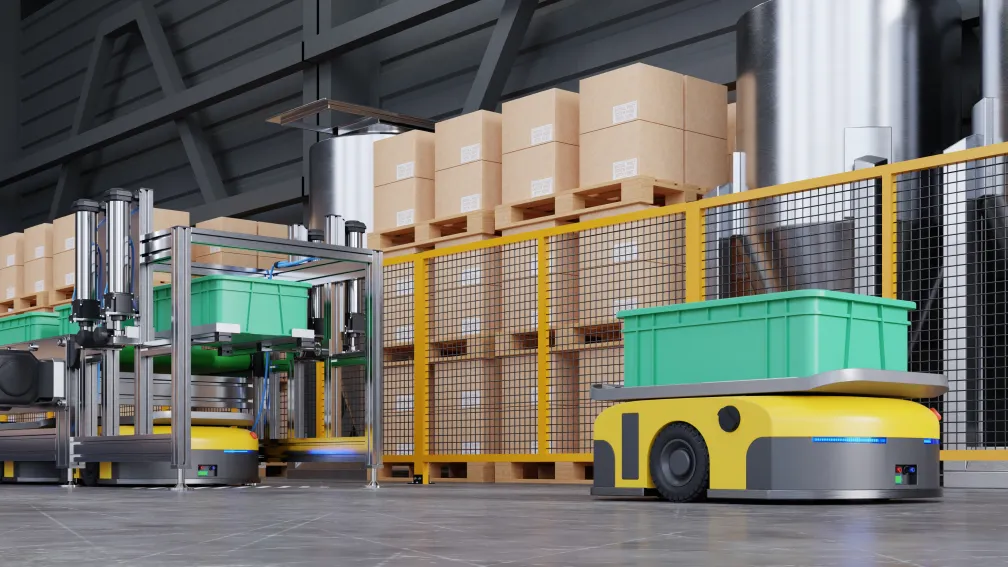
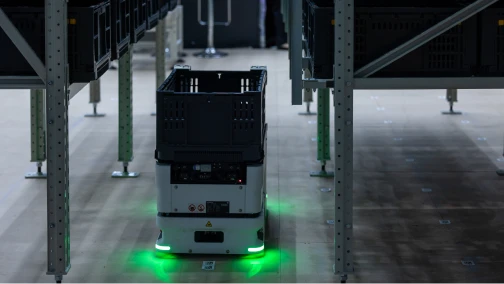
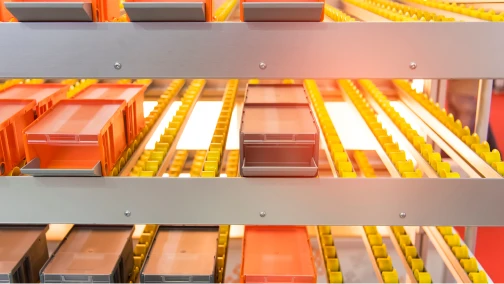
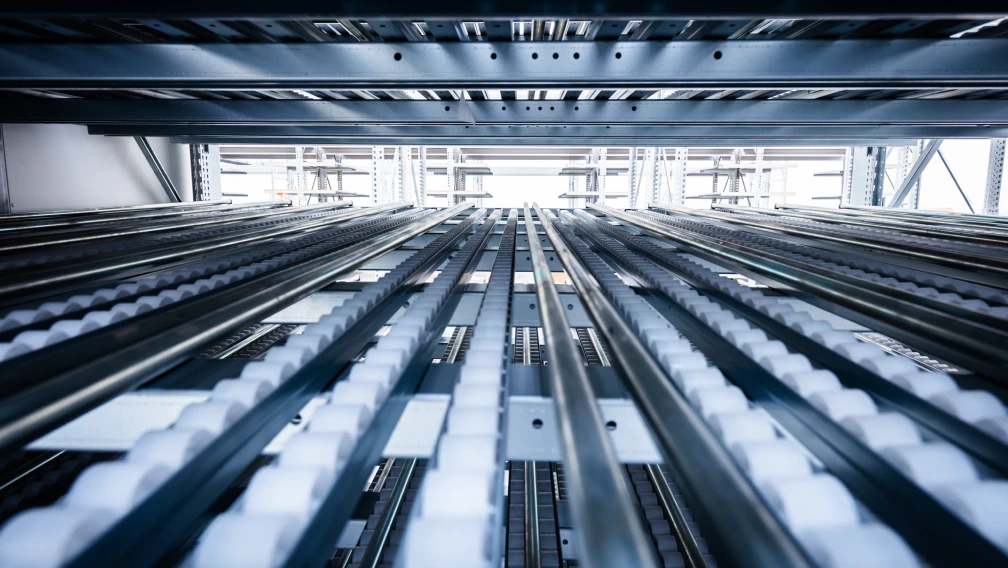
Facilities handling high-SKU architectural aluminum profiles, painted trim, or delicate thin-walled tubing require granular item-level selectivity without stacking bundles on top of one another. A one-bin-per-slot robot system assigns each individual bundle, sub-bundle, or long container to a dedicated, indexed cell. The robotic load-handling device engages the carrier cleanly without lateral sliding against adjacent stock, eliminating surface abrasion and denting. This architecture integrates directly with barcode or RFID verification at induction, giving extrusion plants and window-door manufacturers exact visibility into finish color, alloy temper, and remaining piece count per slot.
Overhead Gantry and Heavy-Duty High-Bay AS/RS
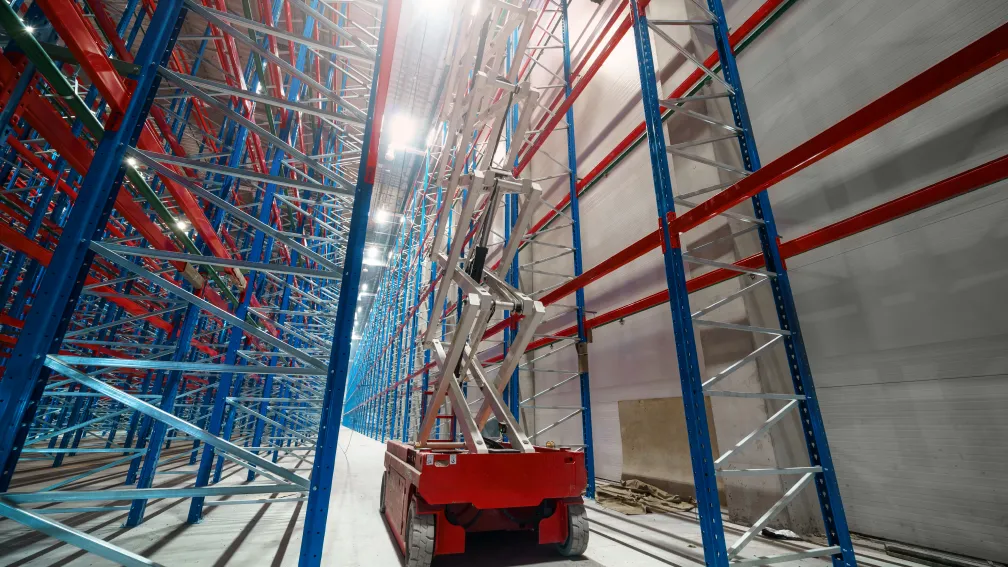
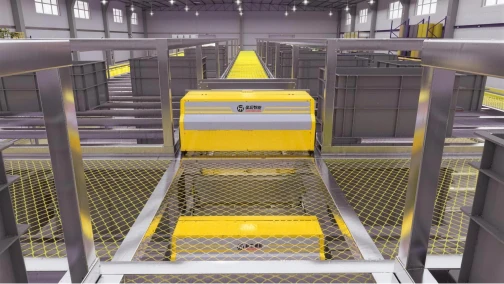
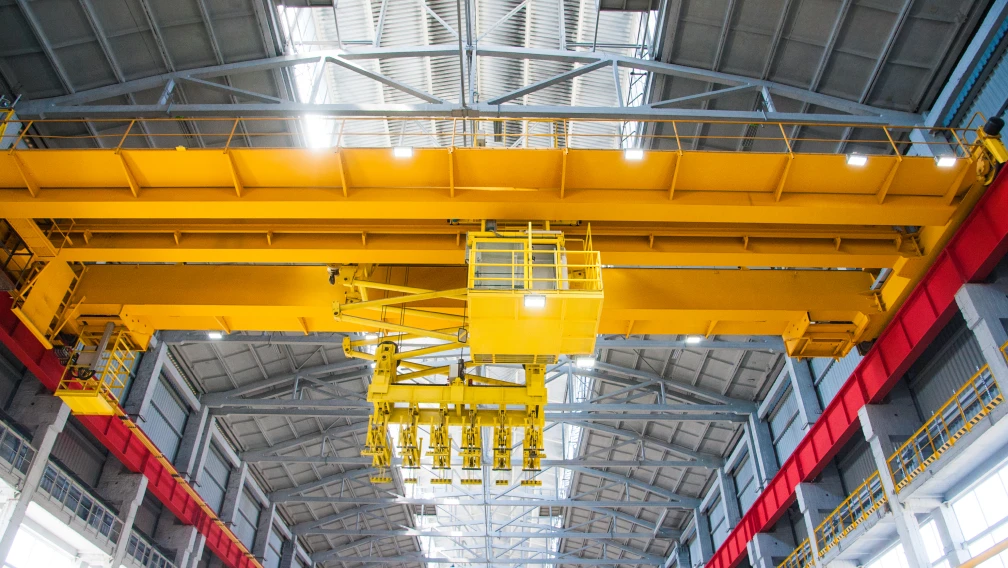
When material lengths reach 8 to 12 meters or individual bundle weights exceed 3,000 kg, conventional light-duty extractors encounter torsional stress. Heavy structural steel, thick-walled oilfield pipe, and high-tonnage bar stock are managed through either overhead sheet metal and gantry storage systems or reinforced unit-load AS/RS configurations using twin-mast stacker cranes. Overhead gantry bridges span densely packed floor-level or multi-tier cassette grids, applying lifting force purely vertically to eliminate mast-sway issues on asymmetrical long loads. Twin-mast high-bay cranes, by contrast, leverage building heights of 15 to 25 meters to maximize cubic density where floor footprint is severely restricted.
| System Architecture | Typical Stock Length | Payload per Carrier | Surface Protection | Primary Industrial Fit |
|---|---|---|---|---|
| Cassette Tower / Honeycomb AS/RS | 3 m – 6.5 m | 1,000 – 5,000 kg | High (compartmentalized steel trays) | Metal service centers, band saw and tube laser feeding |
| One-Bin-Per-Slot Robotic System | 2 m – 7 m | 200 – 1,500 kg | Very high (zero bundle-on-bundle contact) | Anodized aluminum extrusions, thin-wall tubes, high-SKU profiles |
| Overhead Gantry / Heavy-Duty High-Bay | 6 m – 12 m+ | 3,000 – 5,000+ kg | Moderate to high (cradle or cassette support) | Heavy structural steel, solid bar stock, high-tonnage reserves |
Mechanical Engineering: Cassette Design, Deflection, and Extraction
In long-goods automation, the storage cassette is an active mechanical interface between the raw material and the AS/RS crane. Poorly engineered cassettes warp under cyclic loading, causing optical sensor faults and jammed extraction cycles.
Cassettes are fabricated from welded structural steel channels sized so vertical deflection remains within strict millimeter limits under full rated load. To accommodate mixed orders within a single footprint, internal movable dividers partition a 6-meter cassette into multiple longitudinal compartments, allowing two or three distinct alloy grades or diameters to share one storage address without mixing. For aluminum, brass, and coated profiles, all internal contact surfaces are lined with replaceable UHMW-PE or high-density nylon wear strips to prevent galvanic corrosion and galling.
Extraction mechanics require synchronized multi-point engagement. Pulling a 6-meter, 3,000 kg cassette from a single center point induces racking and skewing against the bay guides. Industrial long-goods cranes use synchronized dual-drive or triple-drive pull mechanisms—typically chain drives, rack-and-pinion actuators, or heavy-duty telescopic arms—monitored by dual encoders to keep both ends of the cassette strictly parallel during transfer.
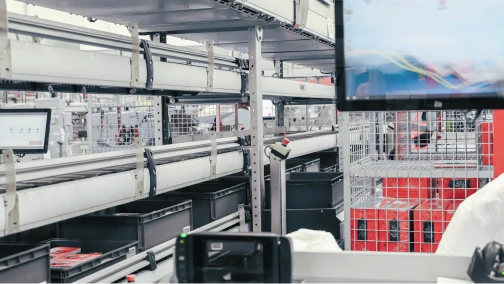
Integrated load cells mounted beneath the I/O station frames provide automated inventory verification. When an operator removes four steel bars from a cassette and commands the crane to return the tray, the station weighs the remaining load, calculates the exact weight delta against the theoretical linear density of that alloy and diameter, and updates the piece count automatically. This closed-loop weighing eliminates manual counting errors at the workstation.
Direct Integration with Saws, Tube Lasers, and CNC Cells
The financial payback of long-goods automation accelerates sharply when the storage system feeds production machinery directly. In a conventional fabrication shop, a fiber tube laser or automatic band saw often runs at 40 to 50 percent spindle utilization because operators spend the remaining time locating stock, operating overhead cranes, and de-bundling material.
Automated systems eliminate machine waiting time through dual-station I/O buffers. While the tube laser's automatic bundle loader processes material from Cassette A, the AS/RS crane retrieves Cassette B for the next scheduled work order and stages it at the adjacent buffer position. As soon as the current cutting batch finishes, the transfer cart swaps cassettes in under 60 seconds, allowing the machine to run lights-out across second and third shifts.
For operations cutting single pieces from varied bar stock, side-unloading stations present the cassette at waist height directly beside the saw infeed roller table. Vacuum lifters, magnetic jib cranes, or robotic pick-and-place arms transfer individual bars from the cassette onto the infeed conveyor without any forklift traffic entering the production bay.
Software Control, Remnant Tracking, and Heat-Number Traceability
Hardware density delivers floor savings, while the warehouse control system (WCS) and WMS integration convert raw storage into traceable manufacturing control. Metal fabrication and aerospace-adjacent supply chains operate under strict material certification rules that require full genealogy from mill to finished part.
Heat-Number and Mill Test Certificate Binding
At goods receipt, the operator scans the mill bundle tag and binds the alloy specification, heat number, batch code, and EN 10204 3.1 mill test certificate (MTC) directly to the assigned cassette ID in the database. Whenever a work order pulls stock from that cassette, the WCS logs the consumption against the manufacturing order and transmits the heat-number record back to the ERP or MES. If a downstream quality audit requires material traceability for a specific machined shaft or structural bracket, the complete lot history is retrieved in seconds.
Automated Remnant Management
When a cutting job leaves a usable 2.4-meter offcut from a 6-meter bar, the operator enters or scans the remaining length at the workstation HMI before returning the cassette. The WCS indexes the remnant inside the active inventory pool and flags it as priority stock. When the MES dispatches a subsequent cutting order requiring pieces of 2.0 meters or shorter, the software automatically retrieves the remnant cassette before opening a new full-length bundle. Facilities implementing software-enforced remnant priority routinely reduce raw material scrap by 8 to 15 percent within the first year.
Weight-Balanced Slotting and ABC Velocity Zoning
The WCS also protects structural integrity through weight-balanced slotting algorithms. Heavy 4,000 kg bar cassettes are automatically distributed across lower bay tiers and balanced across structural columns to prevent localized floor-slab overloading and reduce crane hoist energy consumption. Simultaneously, ABC velocity analysis positions fast-moving standard diameters nearest to the primary I/O stations, minimizing crane travel distance during peak shift changes.
Facility Planning: Floor Slabs, Clear Height, and Safety
Deploying a high-density long-goods AS/RS requires early coordination with structural engineers. Concentrating hundreds of tons of steel bar stock into a compact footprint imposes heavy point loads on the concrete slab. Standard warehouse floors rated for light pallet storage frequently require localized foundation reinforcement, steel baseplate load spreaders, or dedicated concrete piers beneath rack uprights. Floor flatness and levelness tolerances must also be verified prior to rail installation so the crane mast remains plumb over vertical heights exceeding 10 meters.
Safety engineering is non-negotiable around multi-ton moving cassettes. All extraction aisles are enclosed by perimeter safety fencing interlocked with the crane PLC. Operator I/O stations incorporate dual-channel optical light curtains, load-height profile scanners that reject overfilled cassettes before induction, and positive mechanical locking pins that secure the cassette in place before human access is permitted.
Conclusion
Manual cantilever racking and forklift handling force metal service centers and extrusion plants to trade away floor space, surface quality, and machine uptime. Automated long-goods storage systems—spanning compact cassette towers, one-bin-per-slot robotic cells, and heavy-duty overhead gantries—bring deterministic control to materials that standard pallet automation cannot accommodate. Combined with integrated load-cell weighing, heat-number traceability, and direct machine buffering, the storage block functions as an active production feeder that raises cutting-cell utilization and recovers measurable raw-material value from remnants.
If you are planning an automated storage system for steel bars, tubing, or aluminum extrusions, send your maximum stock lengths, bundle weights, SKU count, and downstream machine layout to our engineering team. We will prepare a preliminary system layout, cassette specification, and throughput simulation matched to your building constraints.
Frequently Asked Questions
-

HOWEPROFIT Team
Warehouse Automation Specialists, HOWEPROFIT
The HOWEPROFIT Team consists of senior intralogistics engineers and supply chain experts specializing in advanced AS/RS and robotic fulfillment solutions. Backed by years of field experience across e-commerce, 3PL, and manufacturing sectors, we provide data-driven automation strategies, rigorous throughput simulations, and objective ROI modeling. Our mission is to help facilities seamlessly transition to high-efficiency, reliable, and scalable automated operations.