The Structural Shift in Retail Intralogistics
The transition from traditional brick-and-mortar retail replenishment to Direct-to-Consumer (DTC) and omnichannel fulfillment fundamentally alters the physics of warehouse operations. Traditional distribution centers are engineered for bulk pallet-in, pallet-out, or full-case movements. E-commerce fulfillment, conversely, relies almost entirely on each-picking (or split-case picking)—the extraction of individual consumer units from a vast, continuously shifting pool of inventory.
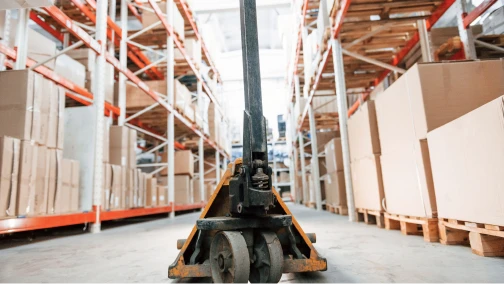
This shift introduces severe kinematic constraints. A facility managing 100,000 distinct Stock Keeping Units (SKUs) cannot efficiently deploy manual operators to walk across massive square footage pushing pick carts. Time-motion analyses consistently demonstrate that in manual Person-to-Goods (P2G) setups, operator travel time consumes up to 70% of the total labor hour. When order volumes spike during promotional events—such as Black Friday or Single's Day—adding more temporary labor simply causes aisle congestion, traffic deadlocks, and an unacceptable spike in mispick errors. Furthermore, the volatility of e-commerce introduces the massive operational liability of reverse logistics (returns processing), which manual facilities are chronically unequipped to handle.
HOWEPROFIT engineers automated storage and retrieval systems (AS/RS) tailored for the extreme throughput demands of omnichannel fulfillment. By decoupling storage density from retrieval speed and orchestrating operations through advanced Warehouse Management System (WMS) algorithms, our solutions eliminate walking time, guarantee order accuracy, and systematically process returns at machine speed.
Core Automated Architectures for Omnichannel Fulfillment
E-commerce operations require automation frameworks that manage lightweight payloads (typically under 35 kilograms) at maximum velocity. The hardware selection dictates the facility's hard ceiling for throughput.
High-Speed Bin Robots for Goods-to-Person (G2P) Picking
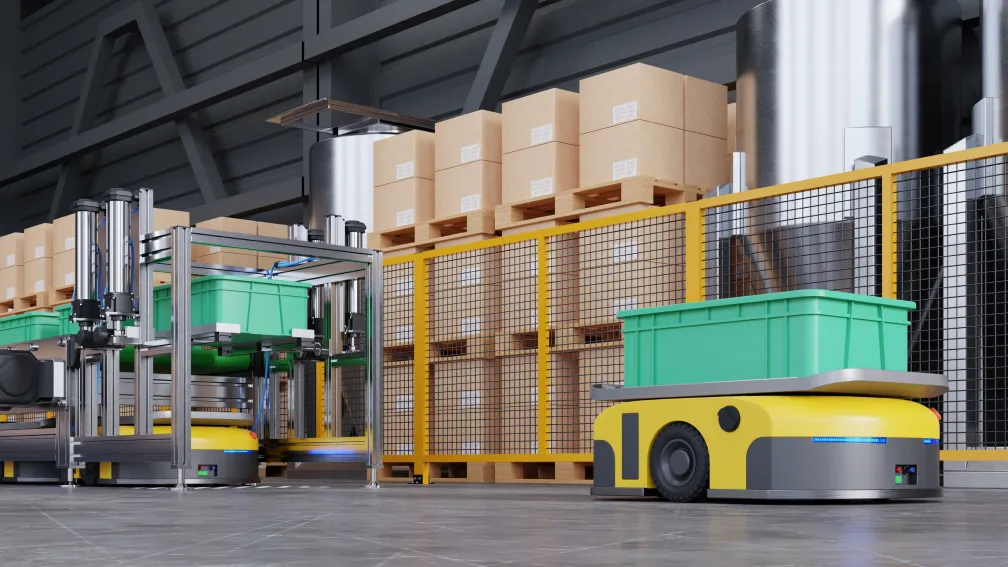
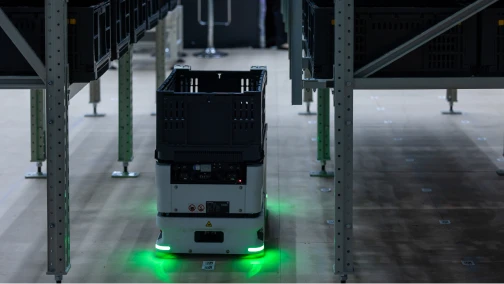
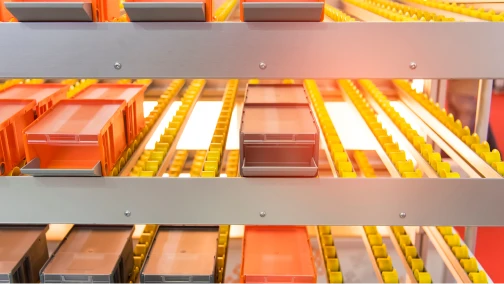
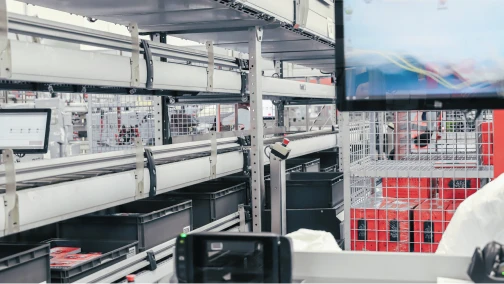
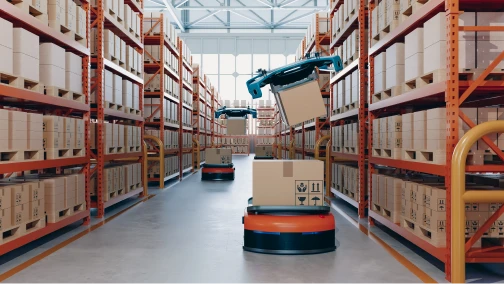
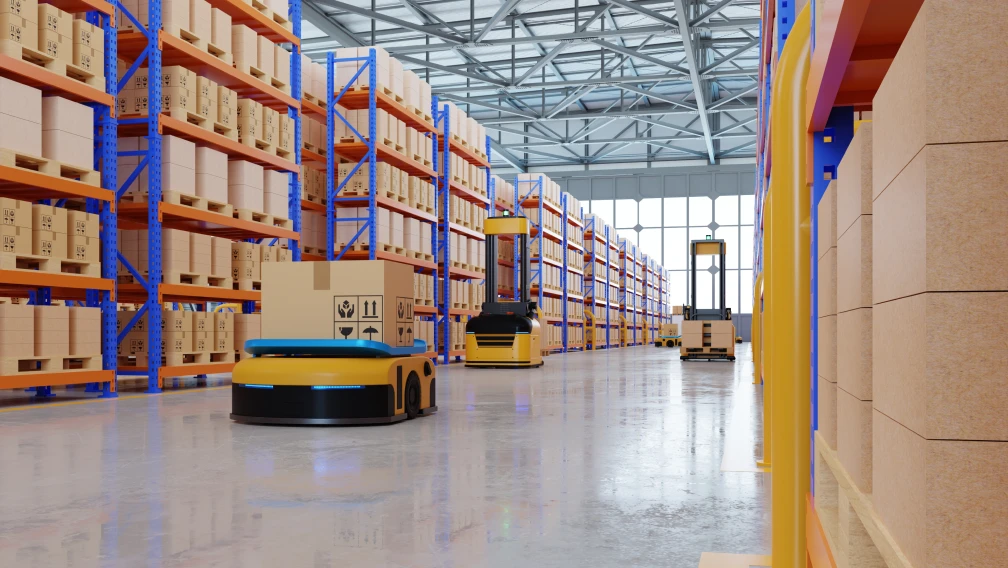
The core engine of a modern fulfillment center is the Goods-to-Person picking architecture. Instead of personnel walking to the inventory, a fleet of High-Speed Bin Robots retrieves specific inventory totes and delivers them to stationary, ergonomic workstations. These autonomous robots operate on a dense, decentralized horizontal grid. Because they are not aisle-captive, the fleet control software can dynamically route multiple robots to high-demand zones, ensuring continuous parallel processing. At the workstation, Pick-to-Light technologies or screen prompts instruct the operator precisely which item to extract from the divided tote. This architecture routinely elevates operator pick rates from a manual average of 80 lines per hour to sustained rates of 500 to 600 lines per hour, effectively multiplying the output of a single human operator by a factor of six.
Four-Way Shuttle Systems for Dense Buffering
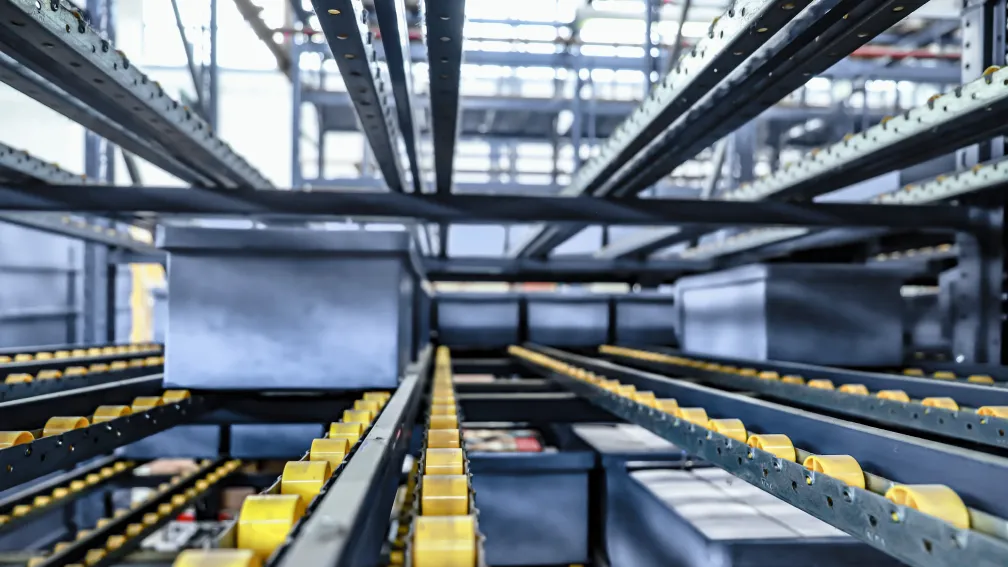
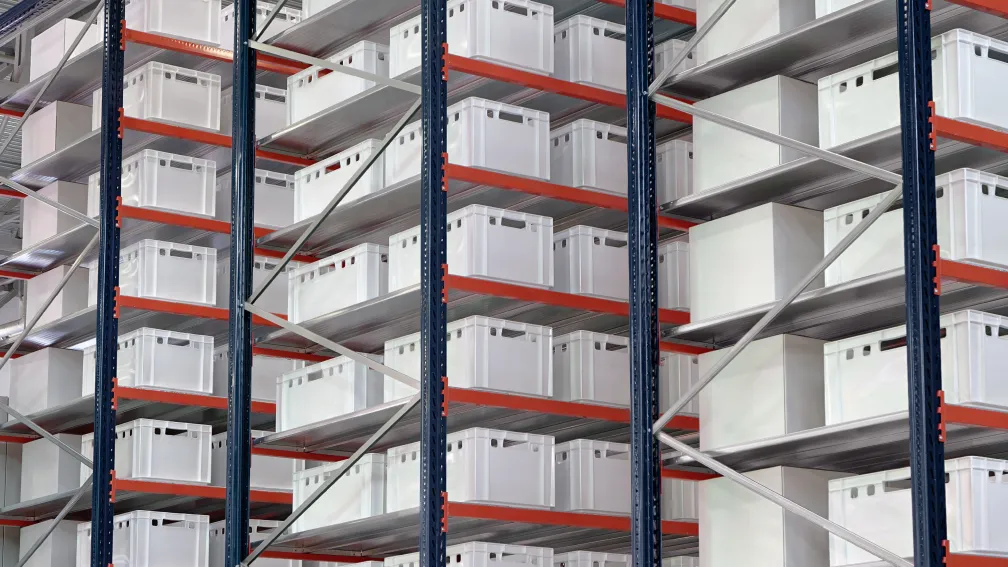
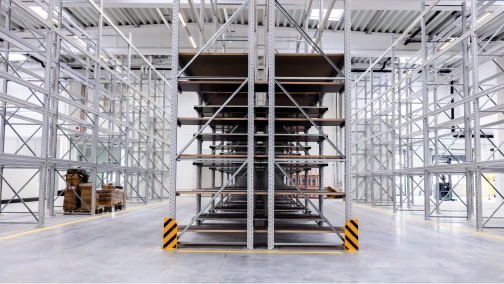
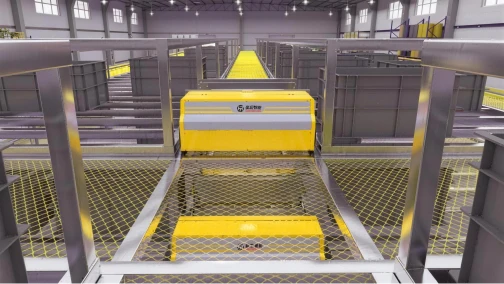
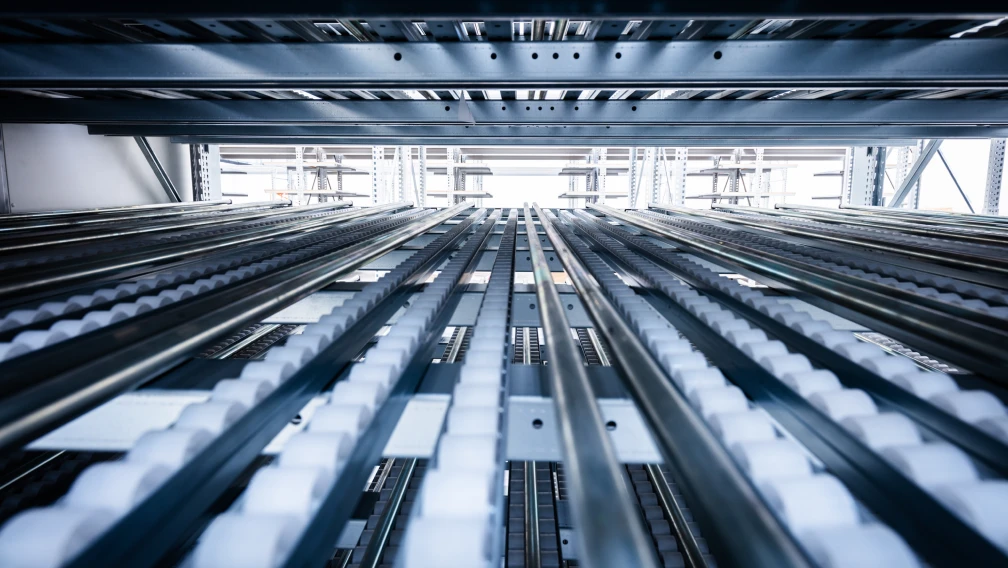
For operations requiring massive inventory depth combined with high throughput, the four-way shuttle system provides unparalleled performance. This architecture separates horizontal grid movement (executed by the shuttles) from vertical movement (executed by high-speed stationary elevators). This decoupling means that throughput can be scaled independently of storage volume. If an apparel retailer expands its SKU base, the facility simply extends the physical racking grid. If order velocity increases during peak season, the facility injects additional shuttles into the existing grid to increase the number of simultaneous retrieval cycles. This modular scalability prevents the facility from becoming mechanically bottlenecked during rapid growth phases.
Dynamic Order Batching and Wave Consolidation
Mechanical speed is ineffective without algorithmic orchestration. In e-commerce, consumer orders rarely consist of a single item. A single order might require a cosmetic item stored in Zone A, an apparel item stored in Zone C, and a promotional insert stored in Zone E. Retrieving these items sequentially is highly inefficient.
Algorithmic Wave Picking
Our Warehouse Management System (WMS) analyzes the incoming stream of e-commerce orders and executes dynamic wave picking (or batch picking). If fifty different customer orders require the exact same SKU (e.g., a trending electronics accessory), the WMS batches those orders together. The control system commands a robot to retrieve the source tote holding that accessory only once. The operator at the workstation then picks fifty individual units from that single source tote, sorting them into a synchronized array of fifty distinct outbound order bins (put-to-light). This "one-to-many" logic drastically reduces the total number of robotic retrieval cycles required per shift, maximizing the mechanical lifespan of the AS/RS while slashing fulfillment times.
Order Consolidation Buffering
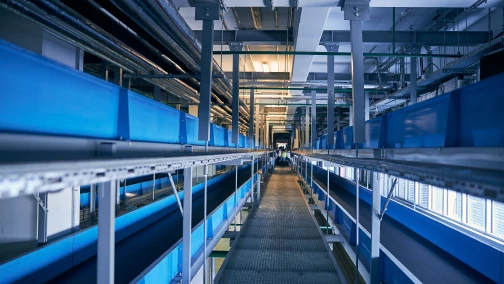
Once individual items are picked across different zones of the warehouse, they must be merged before packing. In high-volume facilities, sending incomplete orders directly to the packing stations creates massive bottlenecks. To resolve this, facilities utilize a Miniload AS/RS or a localized shuttle grid purely as an Order Consolidation Buffer. As items are picked, they are routed via conveyor into this dense vertical buffer. The WMS tracks the status of every item in the order. Only when the final item of a specific multi-line order arrives at the buffer does the WMS release the entire completed order simultaneously to the packing and shipping station. This ensures the packing personnel operate continuously on complete orders, eliminating dwell time and preventing shipping dock congestion.
Solving the Reverse Logistics Crisis
In sectors like fast fashion and footwear, return rates can exceed 30%. In a manual warehouse, reverse logistics is a financially devastating process. Operators must inspect returned goods, manually walk them back to their specific categorical storage aisles, and update the inventory database. Because this process is so labor-intensive, returned inventory often sits in staging areas for weeks, losing value and missing peak resale windows.
Chaotic Storage Logic
Automated Goods-to-Person grids solve the returns problem through a database principle known as chaotic storage (or random stowing). When a returned item passes quality inspection, the operator does not need to return it to a specific categorical zone. They simply place the item into the nearest available compartment of any empty AS/RS tote entering the grid. The WMS scans the barcode, links the SKU to that specific tote's exact X-Y-Z grid coordinate, and dispatches the robot to store it in the closest available slot. To the human eye, the storage grid appears completely disorganized; to the WMS database, the exact coordinate of that returned item is instantly available. The moment a new customer orders that specific SKU, the WMS commands the retrieval of that specific tote, instantly turning a returned liability into a fulfilled order without a single step of manual restocking labor.
Software Synchronization: E-Commerce and ERP Integration
An automated fulfillment center must operate as a seamless extension of the digital storefront. Latency between the web platform (such as Shopify, Magento, or custom enterprise portals) and the warehouse floor results in stockouts being sold to customers or delayed shipping notifications.
The HOWEPROFIT software suite utilizes standard RESTful APIs to maintain a continuous, real-time handshake with the enterprise ERP and the e-commerce front-end. When an online order clears payment processing, the API drops the order payload directly into the WMS execution queue within milliseconds. The software instantly allocates the physical inventory, updating the digital storefront's available stock level to prevent overselling. Simultaneously, the WMS generates the carrier shipping label and tracking data, passing it back up to the e-commerce platform to trigger the automated customer shipping confirmation email as soon as the package exits the sorter.
Validating the Fulfillment Automation Investment
The capital expenditure required to transition from manual cart picking to a robotic Goods-to-Person architecture is justified by the immediate stabilization of operational costs. Automation eliminates the need to continuously hire, train, and manage massive temporary labor pools during peak seasons. It reduces the physical footprint required for storage, eradicates mispick errors that damage brand reputation, and transforms the costly burden of reverse logistics into a high-speed resale mechanism.
Designing an e-commerce automation system requires deep empirical analysis of a brand's specific order profiles. We analyze historical lines-per-order ratios, peak-to-average volume multipliers, and dimensional SKU data to engineer a robotic matrix that guarantees deterministic, scalable fulfillment.
→ Contact HOWEPROFIT’s systems engineering team to model a Goods-to-Person automated fulfillment solution tailored to your order data.
-

HOWEPROFIT Team
Warehouse Automation Specialists, HOWEPROFIT
The HOWEPROFIT Team consists of senior intralogistics engineers and supply chain experts specializing in advanced AS/RS and robotic fulfillment solutions. Backed by years of field experience across e-commerce, 3PL, and manufacturing sectors, we provide data-driven automation strategies, rigorous throughput simulations, and objective ROI modeling. Our mission is to help facilities seamlessly transition to high-efficiency, reliable, and scalable automated operations.