Pharmaceutical Warehouse Automation Solutions
A pharmaceutical warehouse is judged on two scorecards at once: the operational one, measured in lines picked and orders shipped, and the regulatory one, measured in audit findings. Manual storage struggles with both. Pickers decide which batch to pull, stock rotation depends on individual discipline, and a recall means walking the building with a printout. Temperature excursions get noticed after product has already sat in the wrong zone for hours.
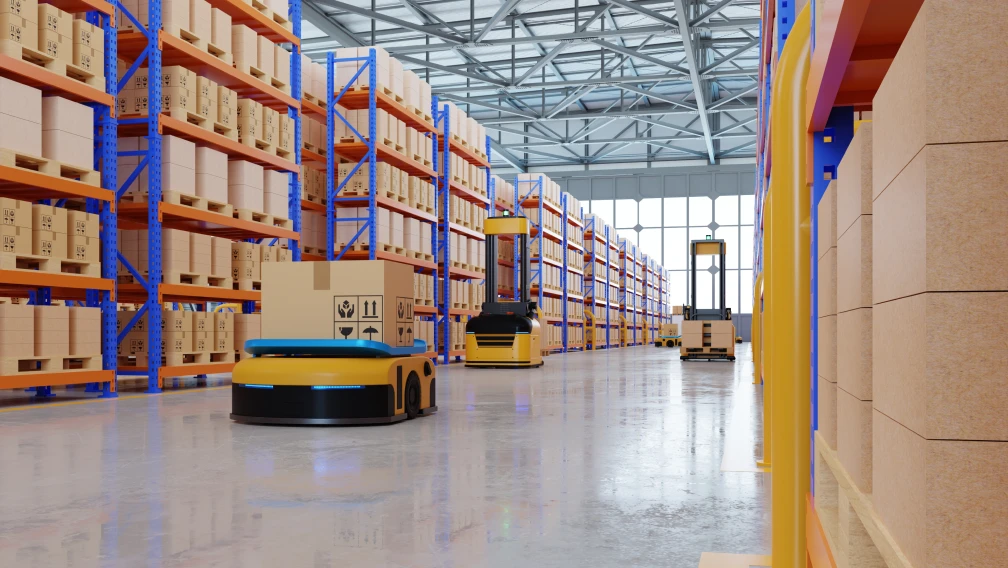
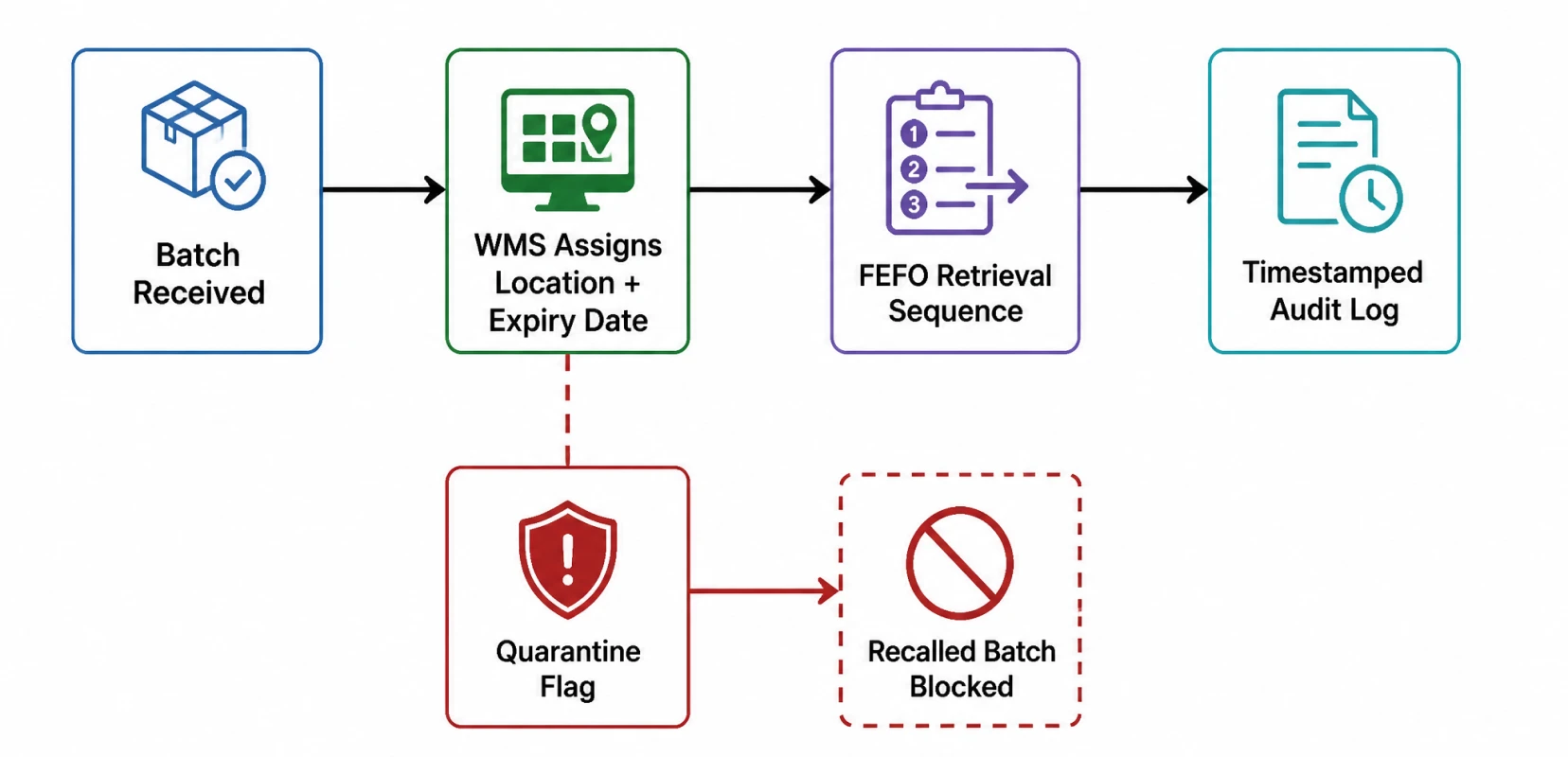
Automated storage and retrieval changes where compliance comes from. FEFO rotation, batch-level traceability, quarantine control, and temperature-zone discipline stop being procedures that people must remember and become logic that the system executes on every transaction. Every movement is logged with a timestamp, a batch identifier, and a location, so the audit trail builds itself as a byproduct of normal work.
This page explains how automated storage systems are configured for pharmaceutical manufacturers, wholesalers, and distributors: the equipment stack, the software control layer, and the design inputs that determine whether a system passes both scorecards.
Why Pharmaceutical Storage Is a Compliance Problem First
Most warehouses optimize for throughput and cost. A pharmaceutical warehouse optimizes for control, because the consequences of a storage error are regulatory, not just operational. Four requirements drive every design decision:
• Batch-level inventory. Stock is managed by batch, not just by SKU. Two cartons of the same product from different lots are different inventory units, with different expiry dates, different recall exposure, and different release status.
• Expiry-driven rotation. FEFO (First Expired, First Out) requires issuing the batch nearest expiry first, which is not always the batch that arrived first. Under FDA 21 CFR Part 211 and EU GMP Annex 15, stock rotation is a documented compliance obligation. In a manual warehouse, FEFO depends on picker discipline. In an automated one, the WMS assigns retrieval sequence algorithmically and the picker never chooses.
• Temperature segregation. Ambient stock typically holds at 15–25°C, cold chain at 2–8°C, and frozen product at -25°C or below. Zones need independent environmental control, and product moving between zones cannot break the cold chain on the way.
• Recall readiness. When a batch is recalled, every unit of it must be located and blocked quickly. In a manual building that means physical verification across every rack. In an automated system it is a database query, completed in minutes, with quarantine flags applied automatically.
Put plainly: an automated pharmaceutical warehouse stores each batch in indexed, access-controlled locations under WMS logic that enforces FEFO, records every movement for the GDP audit trail, and quarantines affected stock without manual intervention.
The HOWEPROFIT Pharmaceutical Automation Stack
We match equipment to load type, throughput, and zone layout. A typical pharmaceutical deployment combines:
| Need | HOWEPROFIT System |
| Dense tote and case storage, batch-indexed locations | Miniload ASRS |
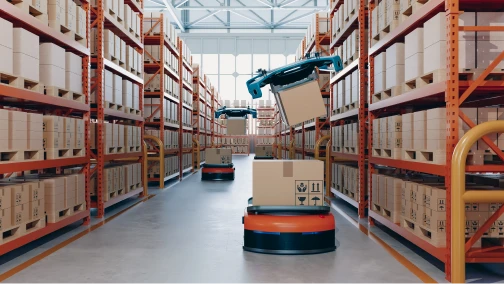
| Piece picking for pharmacy and hospital orders (goods-to-person) | High-Speed Bin Robot |
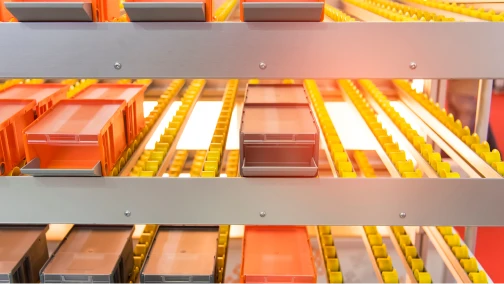
| High-throughput distribution buffer with seasonal peaks | Four-Way Shuttle System |
| Full pallets of raw material, APIs, and finished goods | Unit-Load ASRS |
| FEFO logic, quarantine control, ERP and serialization sync | WMS + RCS |
Miniload ASRS for Totes and Cases
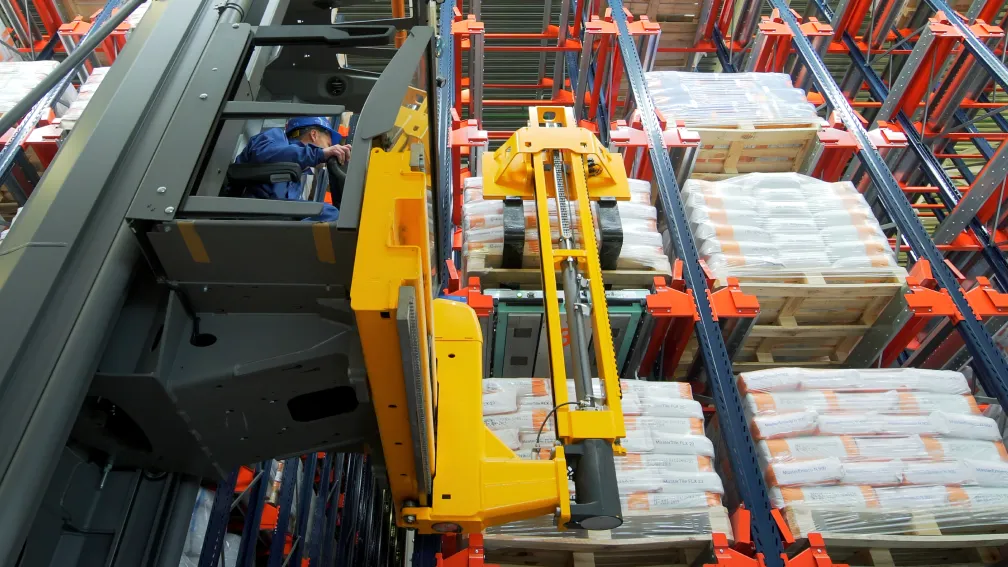
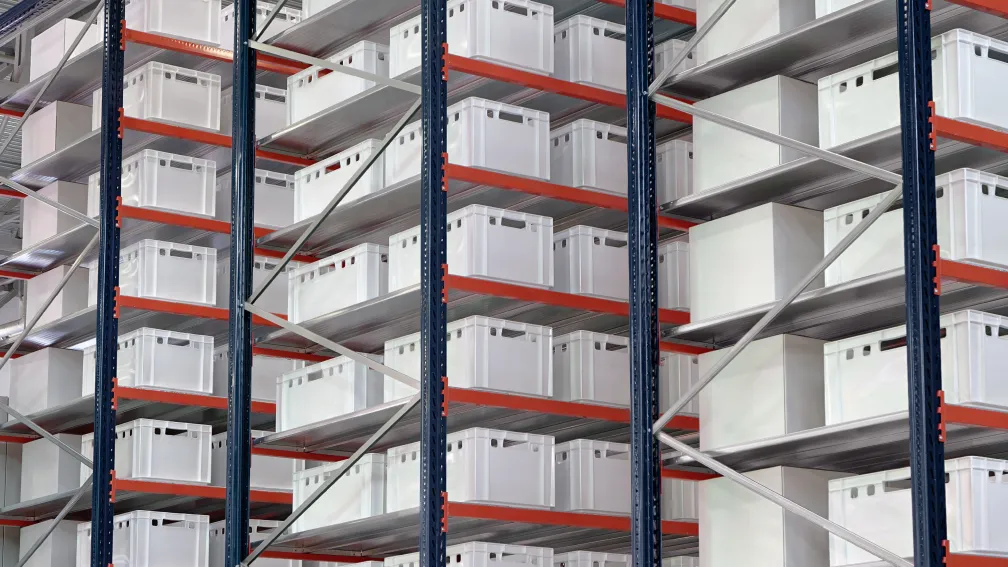
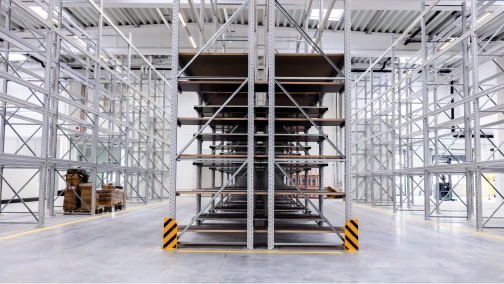
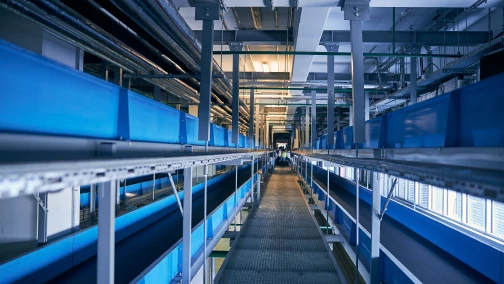
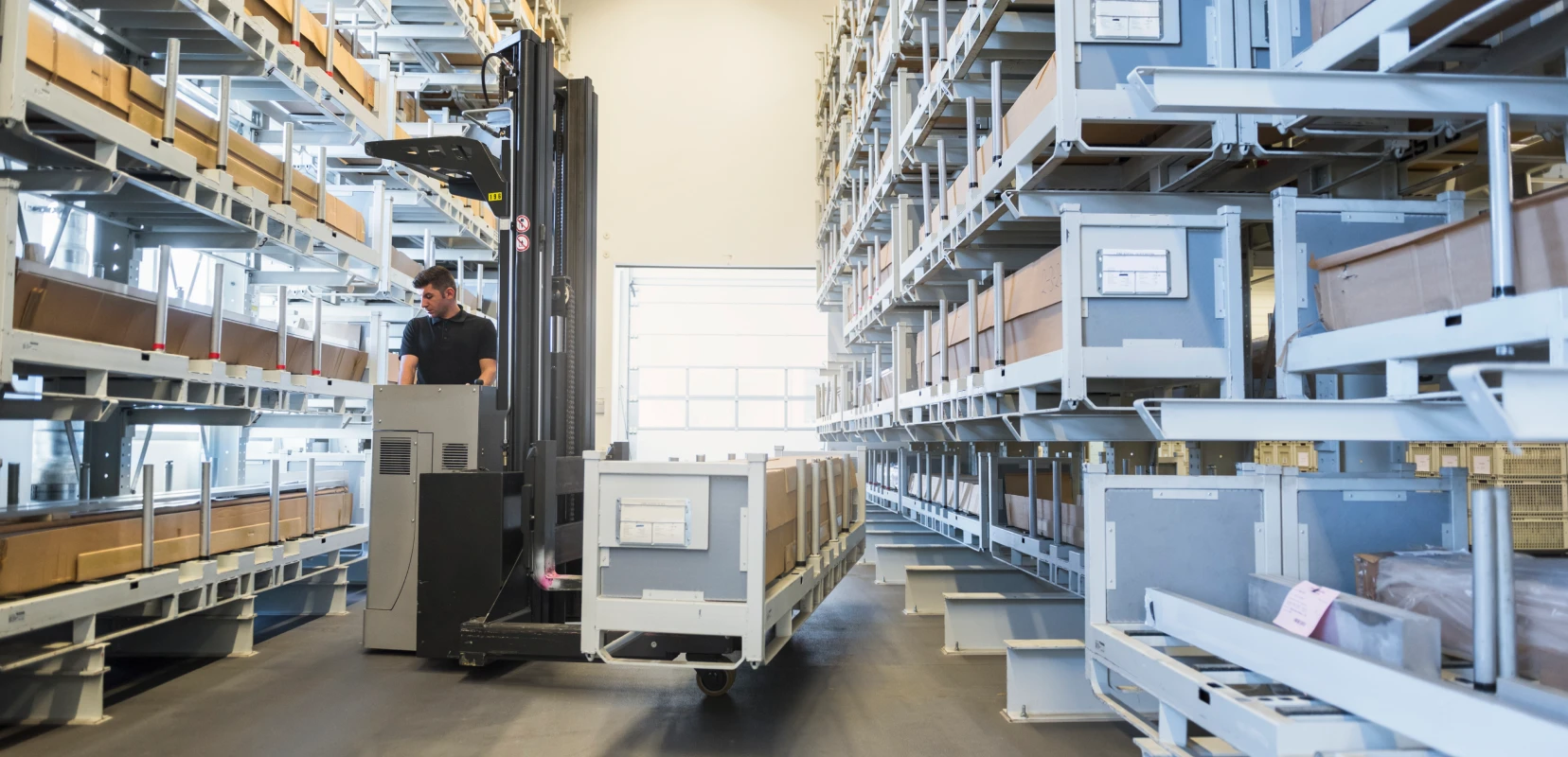
The core of most pharmaceutical facilities is a miniload ASRS storing totes and cartons in high-bay racking. Enclosed, aisle-captive storage removes open-shelf access entirely, which answers the contamination and unauthorized-access risks that GDP auditors flag in conventional shelving. Each tote position is indexed by batch and expiry in the WMS, so slow-moving lots stay visible instead of expiring forgotten at the back of a shelf. Storage density on the same footprint typically rises several-fold over manual racking, which matters when cold-chain space carries high refrigeration cost per cubic meter.
High-Speed Bin Robot for Goods-to-Person Picking
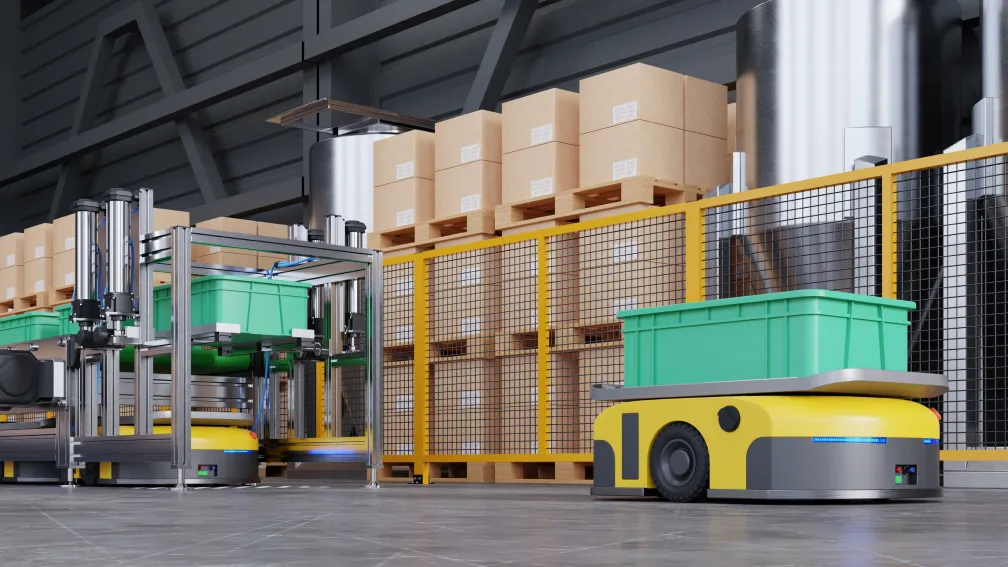
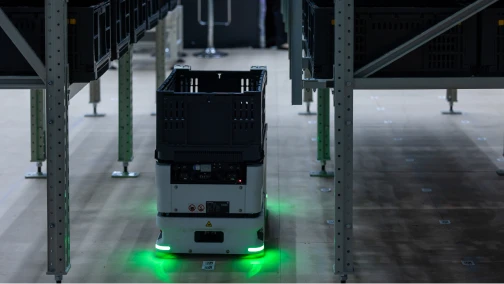
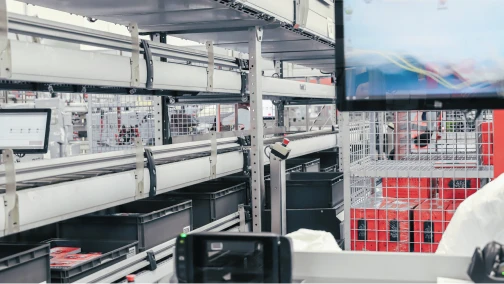
Wholesalers and distributors serving pharmacies and hospitals pick in eaches, and order profiles are heavy on lines per order. High-speed bin robots bring the correct bin to a stationary operator, who picks under WMS direction with batch confirmation at scan. Walk time disappears, pick accuracy climbs toward 99.9 percent, and every pick writes a batch-level record to the audit trail. Because the operator never enters the storage zone, access control stays intact during picking, not just in storage.
Four-Way Shuttle for Distribution Throughput
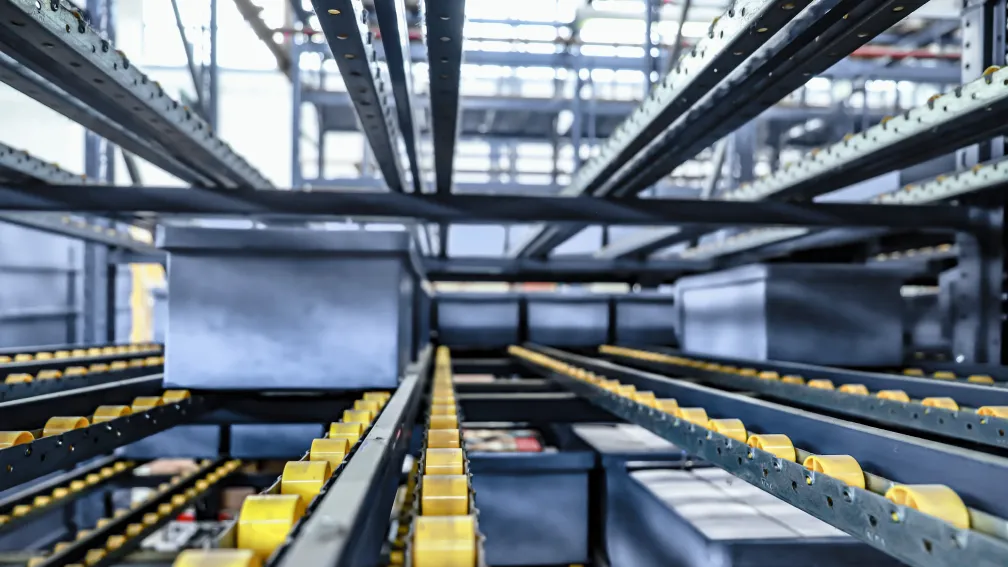
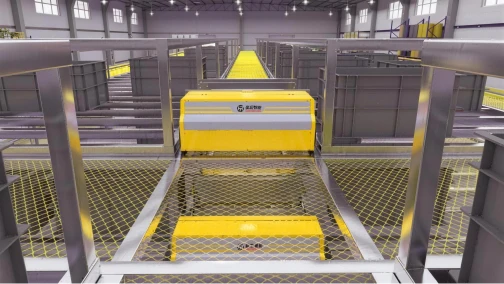
For high-volume distribution centers with pronounced seasonal peaks, flu season being the obvious case, a four-way shuttle system buffers cartons in multi-deep lanes and scales throughput by adding vehicles rather than cranes. Shuttles reallocate between aisles as order profiles shift through the day, and a single vehicle out of service degrades capacity gracefully instead of stopping an aisle.
WMS and RCS — the Control Layer
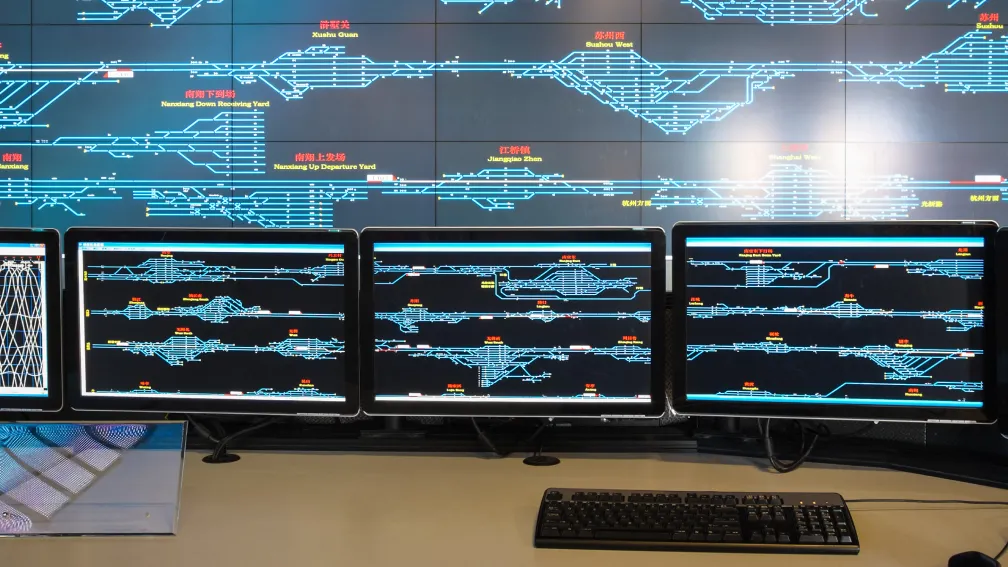
Hardware stores and moves product; software carries the compliance load. Our warehouse management system maintains inventory at batch level with expiry dates, release status, and location history for every unit. The pharma-specific functions that matter in daily operation: FEFO sequence enforced at every retrieval, approaching-expiry reports that push near-dated stock to priority movement before write-off, and quarantine workflows that block recalled or suspect batches from allocation immediately. The robot control layer translates WMS tasks into scheduled equipment missions and logs execution, closing the record from order to physical movement. Integration with ERP and serialization platforms runs through standard APIs, supporting DSCSA and EU FMD traceability data flows without manual re-keying.
Temperature Zones, FEFO, and Traceability in Daily Operation
The design parameter most often underestimated in pharmaceutical automation is zone boundary integrity. Ambient and cold-chain zones cannot share retrieval equipment or open conveyor segments without thermal-break design. Each zone runs its own storage equipment, and inter-zone transfers move through insulated buffer paths so product does not wait in uncontrolled space. Automated storage also shortens door-open time in cold zones sharply, because machines do not need the lighting, aisle width, or working time that people do. That reduces refrigeration load and holds temperature more stable, which is both an energy saving and a product-protection measure.
Environmental monitoring ties into inventory control directly. When sensors report an excursion toward specification limits, the WMS can flag the affected zone's inventory for quality review automatically, and the system can redistribute stock away from a compromised zone before product temperature is affected. The excursion response becomes a system action with a complete record, instead of a manual investigation reconstructed afterward.
For validation, automated systems are documented under GAMP 5 with DQ, IQ, and OQ protocols delivered as part of commissioning, so the control logic that enforces FEFO and quarantine is itself a validated function rather than an untested configuration.
What Pharmaceutical Operators Get From Automation
Across regulated storage and distribution deployments, the gains cluster in a few areas:
• Compliance by default. FEFO, batch traceability, and quarantine execute as system logic on every transaction, and the GDP audit trail accumulates automatically with timestamp, batch, and location on each movement.
• Recall speed. A full location map for any affected batch comes from a query in minutes, replacing physical verification across the building.
• Expiry waste reduction. Enforced rotation plus approaching-expiry reporting moves near-dated stock before it becomes a write-off.
• Space and energy. High-density storage multiplies capacity per square meter, and compact cold zones with minimal door-open time cut refrigeration cost.
• Accuracy and labor. Goods-to-person picking removes walk-and-search time and pushes pick accuracy toward 99.9 percent, while staff shift from searching and carrying to station work and exception handling.
Exact figures depend on SKU profile, zone count, and order structure, which is why we size every project against real batch and order data before recommending equipment. You can see the range of build types on our case studies page.
Designing a Pharmaceutical Automation System
A handful of inputs drive both the design and the payback:
1. Regulatory scope. GMP, GDP, or both; domestic distribution or export markets with serialization obligations under DSCSA or EU FMD. The compliance target sets WMS functionality and validation scope before any equipment is discussed.
2. Temperature zone map. How many zones, at what setpoints, and how much volume sits in each. Zone architecture determines equipment count, transfer paths, and refrigeration design downstream.
3. Batch profile. Batches per SKU, shelf-life distribution, and how tight expiry tolerances run. This drives location count and the strictness of FEFO and quarantine logic.
4. Order structure. Full-case versus each-pick volume, lines per order, and daily peak windows. This decides the split between miniload storage, goods-to-person picking, and shuttle buffering.
5. Building constraints. Clear height, floor loading, and whether the project is a new build or a retrofit into an operating facility. Retrofits into running pharmaceutical warehouses are common, and phasing is designed so validated operations continue during installation.
We run these inputs through a layout and simulation study and return topology options with a payback model, so the equipment decision rests on data rather than a catalog.
Talk to Us About Your Pharmaceutical Warehouse
If you are evaluating automation for a pharmaceutical manufacturing store, wholesale DC, or distribution center, our engineering team can review your batch profile, temperature zones, and compliance scope and propose a validated system configuration with projected capacity and retrieval performance. Contact us to start the assessment.
Frequently Asked Questions
How does automation enforce FEFO in a pharmaceutical warehouse?
The WMS records expiry dates at batch level for every stored unit and assigns retrieval sequence algorithmically, so the batch nearest expiry is always released first. Pickers and operators do not choose which stock to pull, which removes the human-discipline failure mode that manual FEFO procedures depend on.
Can automated storage operate inside cold-chain zones?
Yes. Storage equipment is specified per zone temperature, including 2–8°C cold chain and frozen environments down to -25°C and below. Each zone runs its own equipment with insulated transfer paths between zones, so product does not break the cold chain during internal moves.
How does the system handle a batch recall?
The WMS produces a complete location map for every unit of the affected batch within minutes and applies quarantine flags that block the batch from allocation immediately. Physical verification across the storage area, which a manual recall requires, is no longer part of the process.
Does the WMS integrate with our ERP and serialization systems?
Yes. Integration runs through standard APIs with mainstream ERP platforms, and traceability data flows support DSCSA and EU FMD serialization requirements. During the design phase, our team works with your IT and quality staff so data moves from goods receipt through dispatch without manual re-keying.
What happens when a temperature excursion occurs?
Environmental monitoring alerts feed directly into inventory control. The WMS can flag the affected zone's stock for quality review automatically and redistribute product away from a compromised zone before product temperature is affected, with every action logged for the audit record.
Can automation be retrofitted into an operating pharmaceutical warehouse?
Yes, and it is a common project type. Installation is phased so validated operations continue during the build, and the new system is commissioned and qualified under GAMP 5 with DQ, IQ, and OQ documentation before it takes over live inventory.
What accuracy and capacity gains should we expect?
Goods-to-person configurations reach pick accuracy toward 99.9 percent, and high-density storage typically multiplies capacity on the same footprint several-fold. Exact figures come from the sizing study, which models your batch profile, zone map, and order data rather than quoting generic benchmarks.
-

HOWEPROFIT Team
Warehouse Automation Specialists, HOWEPROFIT
The HOWEPROFIT Team consists of senior intralogistics engineers and supply chain experts specializing in advanced AS/RS and robotic fulfillment solutions. Backed by years of field experience across e-commerce, 3PL, and manufacturing sectors, we provide data-driven automation strategies, rigorous throughput simulations, and objective ROI modeling. Our mission is to help facilities seamlessly transition to high-efficiency, reliable, and scalable automated operations.