Building a Fulfillment Center That Scales with Revenue, Not Headcount
Online retailers rarely lose customers because the product is bad. They lose them because the order shipped late, the wrong size showed up, or the warehouse couldn't absorb a Black Friday spike. Behind almost every one of those failures is a fulfillment center still relying on people walking miles a day to pick small SKUs from cartons. Automation fixes the math.
HOWEPROFIT builds end-to-end warehouse automation for e-commerce operators — from single-site DTC brands to multi-warehouse marketplace fulfillment hubs. Our systems combine in-house WMS and RCS software with bin robotics, miniload AS/RS, and shuttle-based high-density storage. The result is a fulfillment center that runs 24/7, handles peak volume without temp staffing chaos, and keeps pick accuracy above 99.9%.
Why E-Commerce Fulfillment Is Hard to Scale Manually
E-commerce orders look nothing like traditional B2B replenishment orders. A typical DTC order ships 1.4 lines per order, often picked from 20–80% of a SKU base that may number in the tens of thousands. Forecast volatility is the rule, not the exception. Three operational realities follow from this:
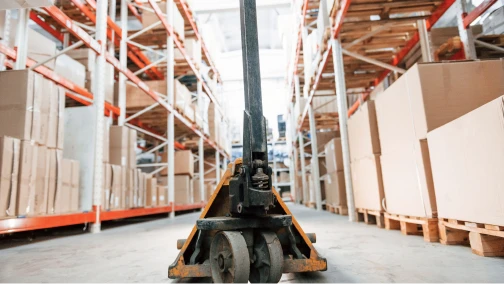
• Pickers walk 60–70% of their shift. In a manual layout, labor cost per pick is dominated by travel, not actual handling.
• Peak periods break the model. A 3–5x volume surge during promotions doesn't scale linearly when you depend on people you have to train.
• Real estate is shrinking and getting more expensive. Urban fulfillment hubs need to do more in less square meter.
A warehouse automation system is what turns a fulfillment center into something that scales with revenue instead of headcount.
What Goes into a Complete E-Commerce Automation Solution
A solution worth buying is layered. It needs storage, motion, picking, and software — and all four have to talk to each other through one orchestration layer. Here's how the HOWEPROFIT stack maps to the four pillars:
| Function | HOWEPROFIT Product | What It Does in an E-Commerce DC |
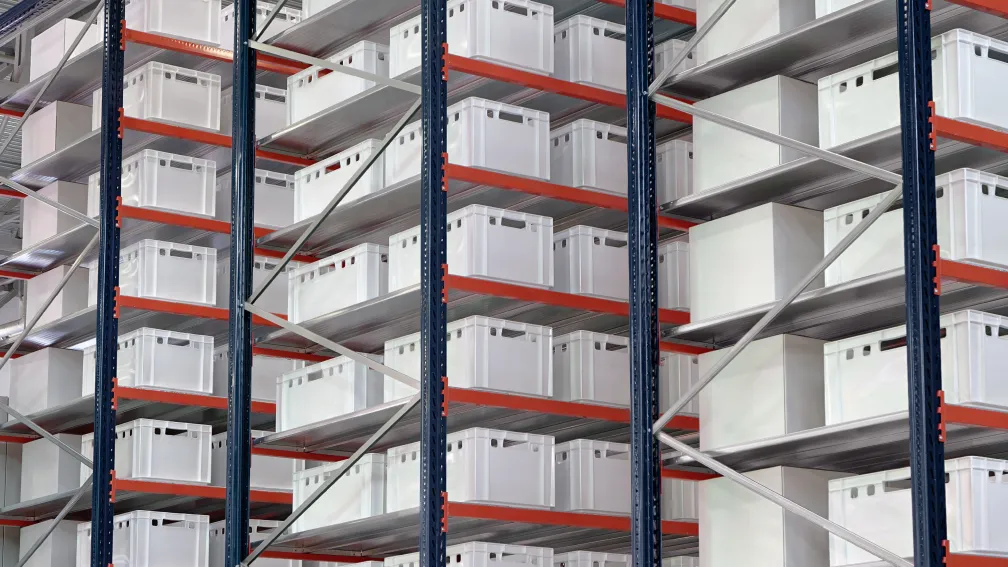
| Storage density | High-Density AS/RS, One-Bin-Per-Slot Robot | Stores 4–5x more SKUs in the same footprint compared to shelving |
| Goods-to-person picking | High-Speed Bin Robot, Light Shuttle Vehicle | Delivers totes to pick stations at up to 600 lines/hour per operator |
| Carton and tote handling | Miniload System | Stores and retrieves replenishment cartons fast, decouples inbound from outbound |
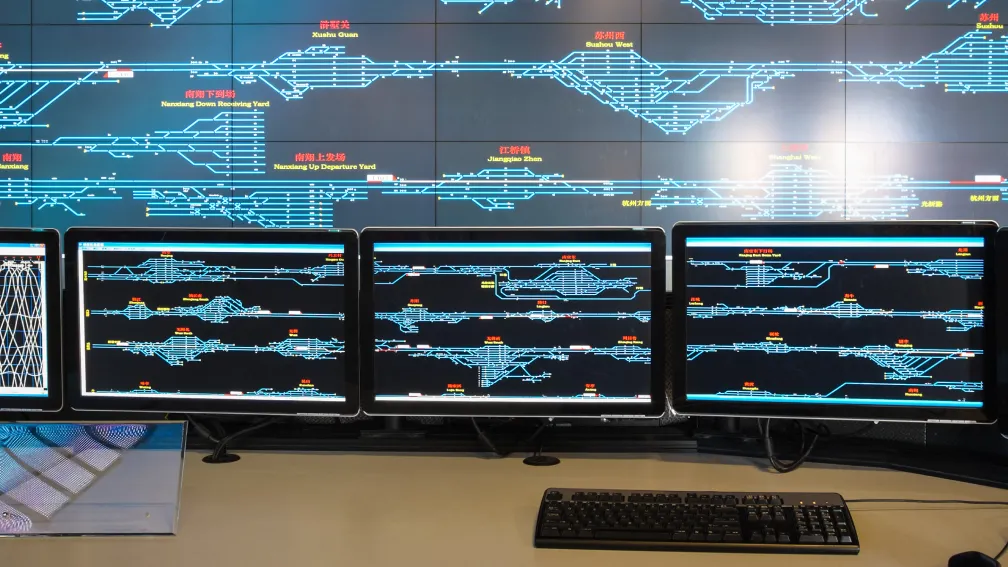
| Orchestration | Intelligent WMS + RCS | One brain managing inventory, robot tasks, and order waves |
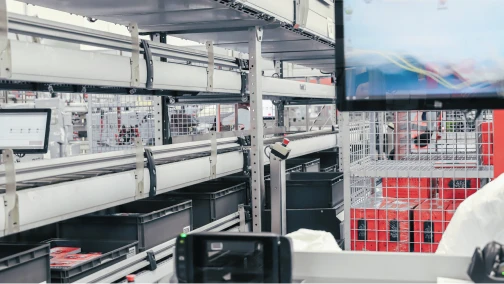
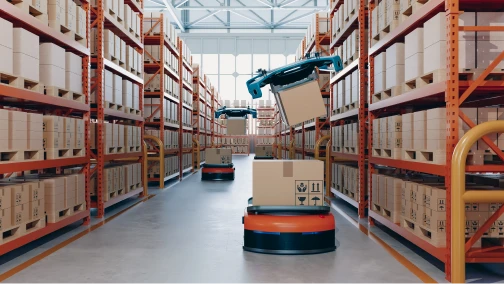
High-Speed Bin Robot
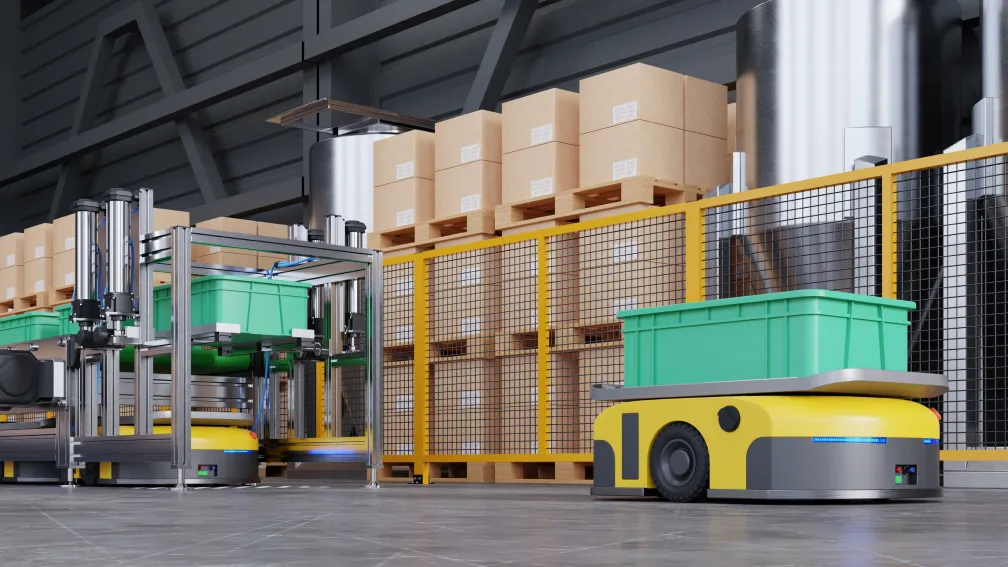
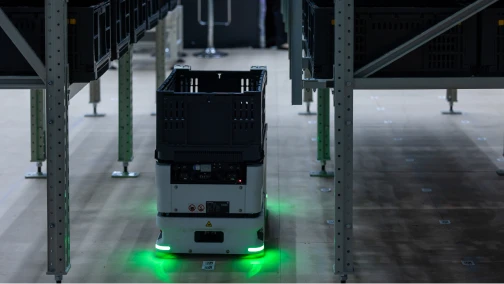
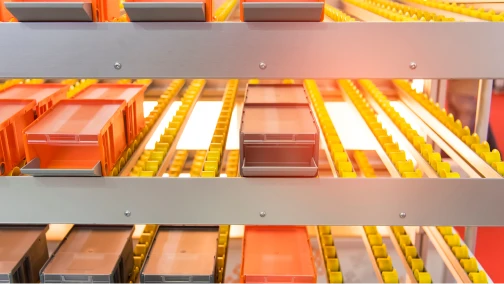
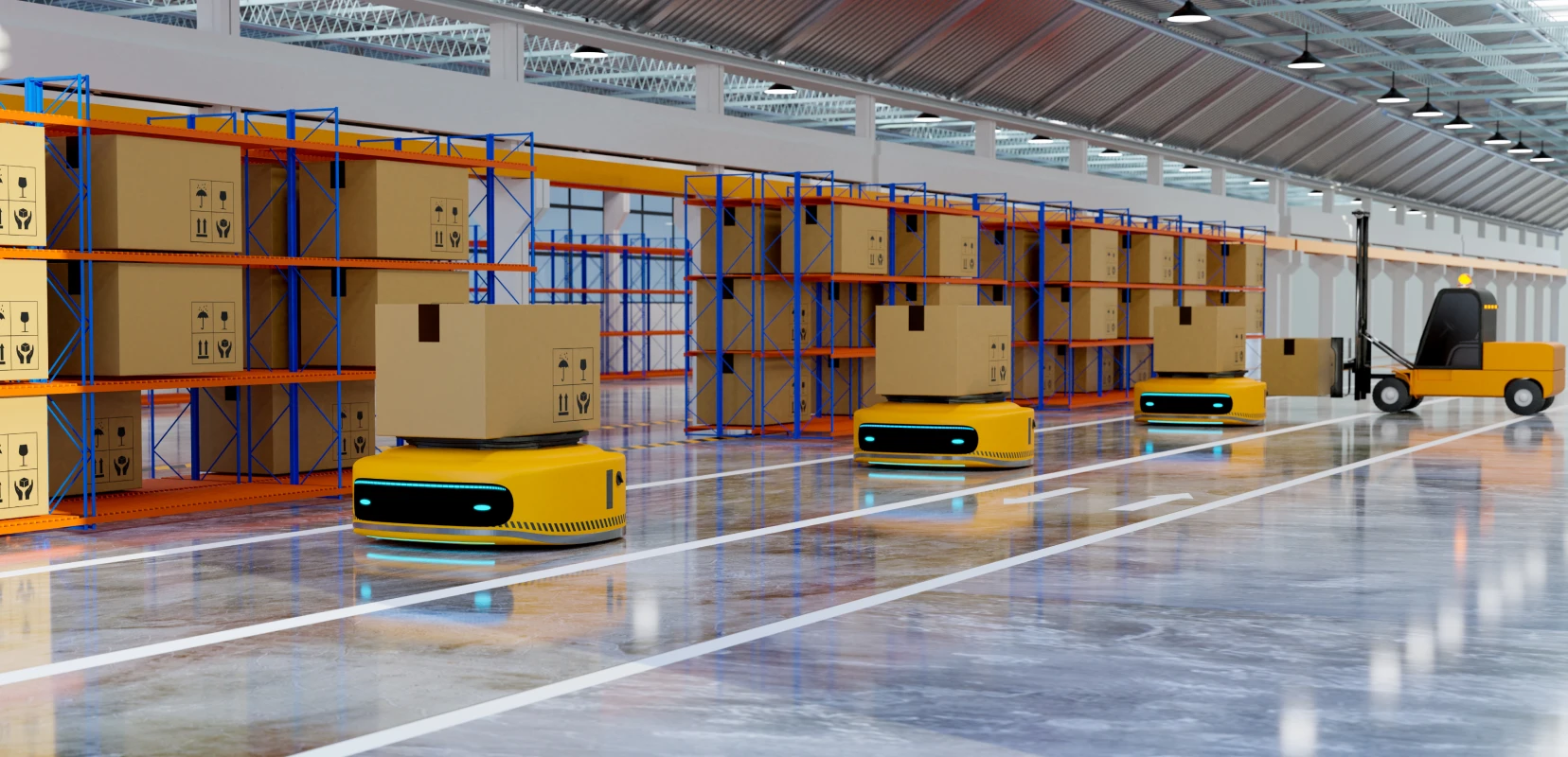
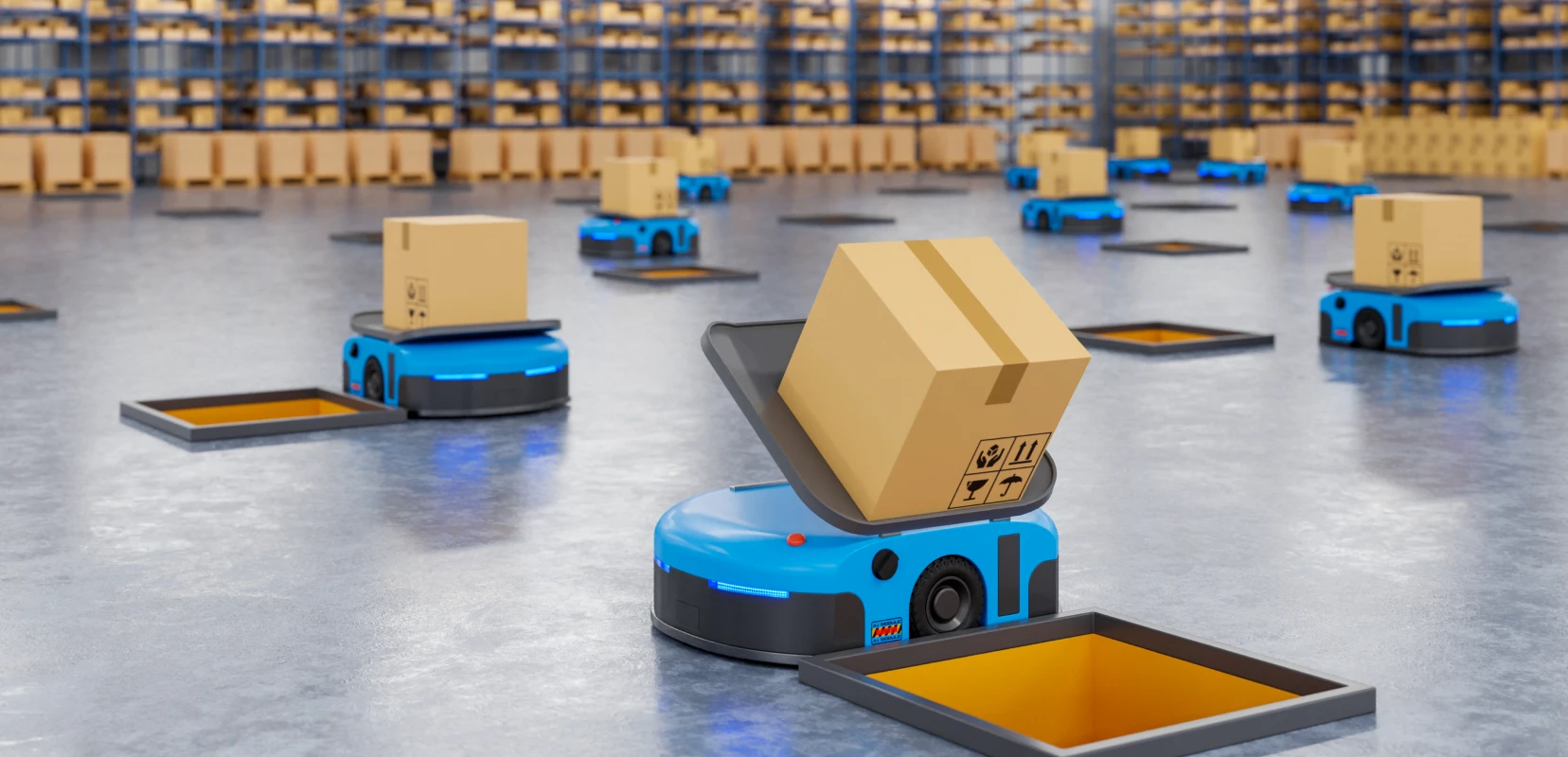
The bin robot picks totes from rack locations and moves them to ergonomic pick stations. It's our highest-throughput option for hot SKUs — the A-class items, the 20% of SKUs that drive 80% of order lines. Robots run on dedicated lanes, recharge automatically, and scale by adding units rather than rebuilding the rack.
Miniload System
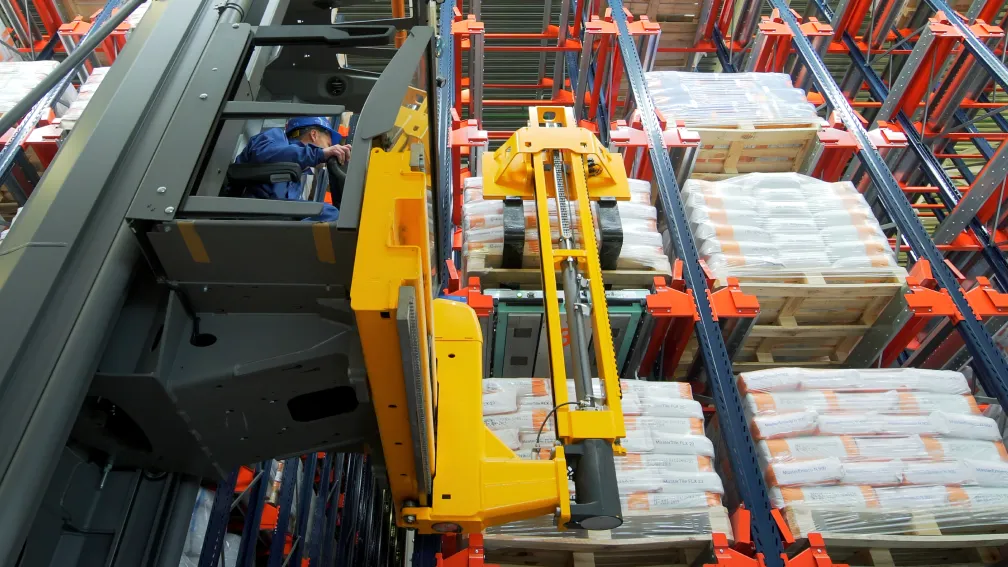
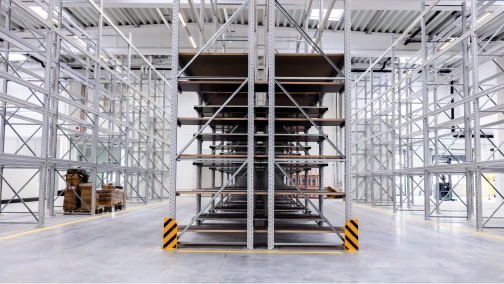
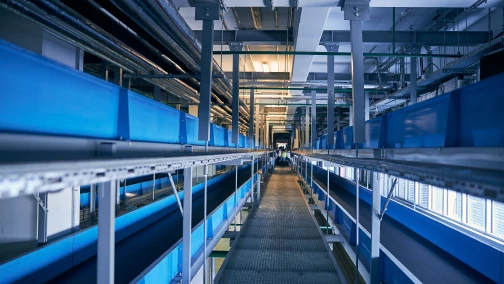
Miniload is the backbone for medium-velocity SKUs and replenishment cartons. A stacker crane services racks up to 22 m high, working in narrow aisles around 1.5 m wide. For e-commerce, this is where you keep cartons of inbound stock that feed the pick face.
Light Shuttle Vehicle
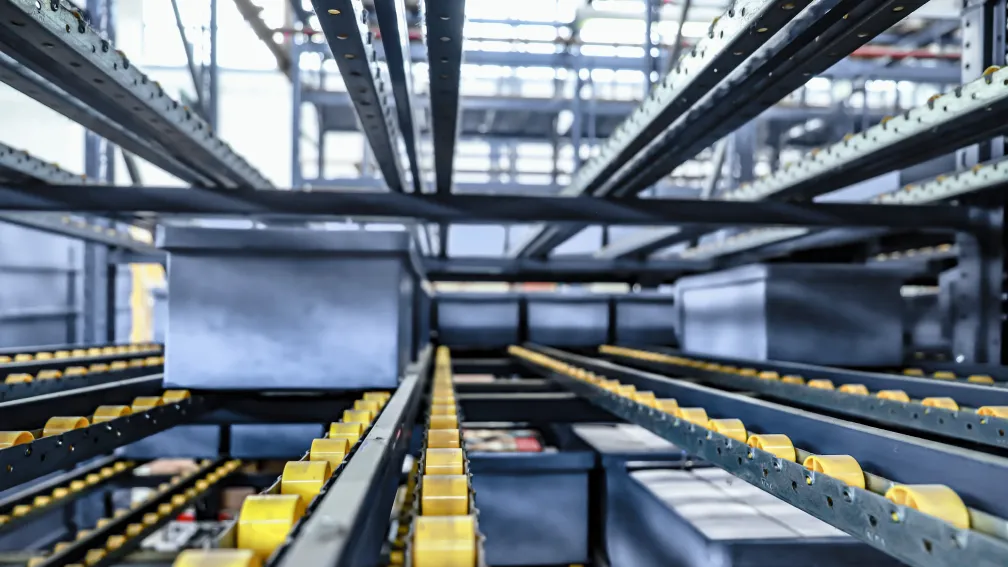
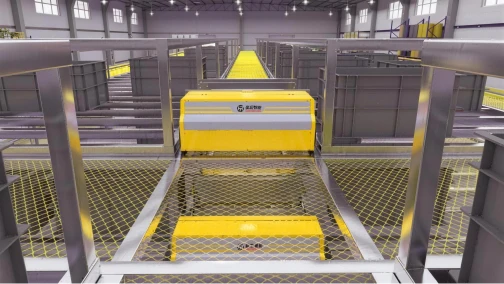
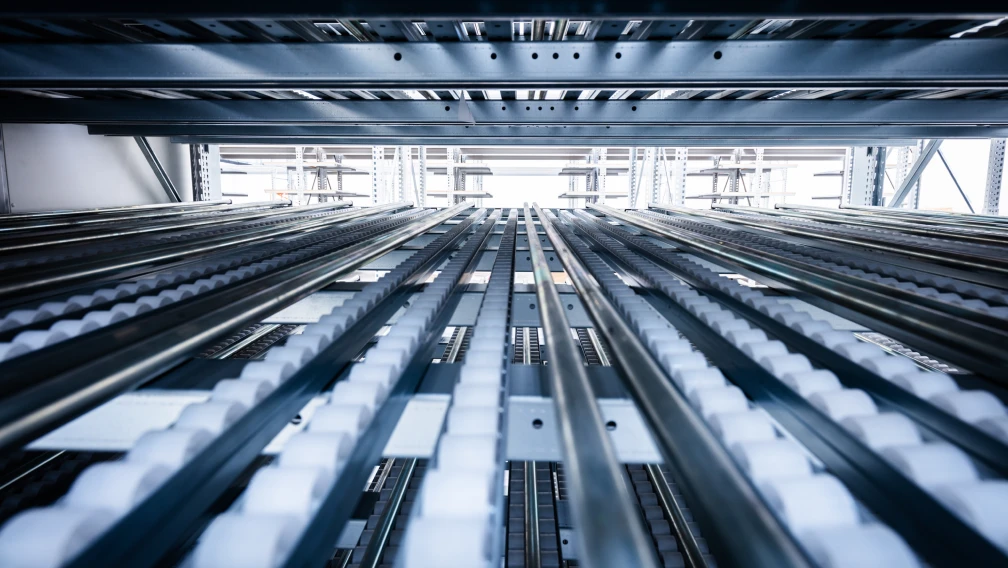
Shuttles move horizontally within levels of a rack structure. Each level can run its own shuttle, which is what gives this system its throughput edge — hundreds of cycles per hour per aisle. Best fit for high-velocity small-load operations where the bin robot would become the bottleneck.
One-Bin-Per-Slot Robot
Sometimes you have 50,000 slow-moving SKUs you still need to keep available — fashion long-tail, replacement parts, configurable products. The one-bin-per-slot robot stores each SKU in its own location, indexes everything in the WMS, and pulls bins on demand. Density is what wins here.
Intelligent WMS + RCS
Hardware without software is a parking lot full of expensive robots. The WMS handles inventory, order management, slotting, and integrations with your store platform or ERP — Shopify, SAP, Oracle, NetSuite, or custom systems. The RCS coordinates the robotic fleet: task allocation, traffic management, charge cycles. Both are built in-house at HOWEPROFIT, so they're tuned to each other.
Results E-Commerce Operators Typically See
We've benchmarked installations against pre-automation baselines. Across e-commerce deployments, the numbers cluster like this:
• Picking throughput: 3–5x per operator
• Storage density: 4x in the same building footprint
• Pick accuracy: 99.9%+
• Labor reduction: 60–75% in the picking and replenishment functions
• Order-to-shipment time: under 30 minutes for in-stock SKUs in optimized layouts
• Payback period: typically 24–36 months, faster in high-labor-cost regions
These ranges aren't promises — they're what we see in similar warehouse profiles. Your numbers depend on order density, SKU velocity, building shape, and shift pattern.
How We Run a Project
We don't ship systems out of a catalog. The fit between order profile and equipment topology decides 80% of the eventual ROI, so we start with data:
1. Data audit. We model 12 months of order history — line counts, SKU velocity, peak patterns, return flow.
2. Concept design. We map equipment topology to your building, lay out workflow, and simulate throughput.
3. Commercial proposal. Fixed-price quote with phased options if you want to deploy in waves.
4. Implementation. Manufacturing, on-site installation, software integration with your platform, FAT/SAT.
5. Go-live and tuning. Most sites hit target throughput within 60–90 days post-go-live, with our tuning team on call.
6. Long-term support. Remote monitoring, spare parts, software upgrades.
A typical mid-size e-commerce site processing 5,000–15,000 orders per day deploys in 6–9 months from contract signature.

Talk to Our Team About Your Fulfillment Site
If you're sizing a new build or rebuilding to handle the next 5 years of growth, send us your order data. We'll come back with a sized concept and a payback model within two weeks.
→ Contact the HOWEPROFIT engineering team for an e-commerce fulfillment assessment.
Frequently Asked Questions
How much does it cost to automate an e-commerce warehouse?
Total cost depends on order volume, building size, and the equipment mix. Mid-range deployments handling 5,000–10,000 orders per day in 5,000–10,000 m² typically run between USD 3M and USD 10M. Smaller staged deployments can start at USD 500K–1.5M. We size by ROI target, not by catalog.
Can your system handle peak season without bringing on temporary labor?
The point of goods-to-person automation is exactly this. Throughput scales by extending shifts or adding pick stations rather than hiring. Most clients run two shifts year-round and a third only during peak weeks. Peak labor headcount drops 60–80% compared to manual operations.
How does your WMS integrate with Shopify, Amazon, or SAP?
We provide standard connectors for the major commerce platforms and ERPs. Custom integrations use REST APIs and webhooks. Order release, inventory sync, and shipment confirmation typically go bidirectional in real time.
What happens to existing inventory during installation?
We phase installations to avoid blackout periods. Sites with existing operations usually carve out an automated zone first, migrate inventory in waves, then decommission manual areas. Continuous operation is the norm, not the exception.
Is automation worth it for a smaller fulfillment center?
Below about 2,000 orders per day, full goods-to-person robotics is hard to justify on labor alone. At that scale we usually start with miniload for the medium-velocity SKUs plus pick-to-light at workstations, then add bin robotics as volume grows. Modular is the design intent.
How long does an AS/RS system last?
Mechanical structure: 15–20 years. Robotics and control electronics: 10–12 years with planned upgrades. The economic case generally assumes a 10-year hold for cash flow modeling. Maintenance runs around 3–5% of CAPEX annually.
-

HOWEPROFIT Team
Warehouse Automation Specialists, HOWEPROFIT
The HOWEPROFIT Team consists of senior intralogistics engineers and supply chain experts specializing in advanced AS/RS and robotic fulfillment solutions. Backed by years of field experience across e-commerce, 3PL, and manufacturing sectors, we provide data-driven automation strategies, rigorous throughput simulations, and objective ROI modeling. Our mission is to help facilities seamlessly transition to high-efficiency, reliable, and scalable automated operations.