Ultra-Dense Storage and Same-Day Picking for High-SKU Parts Distribution
Auto parts distribution is one of the toughest SKU profiles in logistics. A typical aftermarket DC carries 100,000 to 500,000 active SKUs, ranging from a USD 0.50 washer to a USD 4,000 transmission control unit. Long-tail items might move three times a year but still need to ship same-day when a service center orders them. The mechanic at the other end isn't waiting two days — they have a vehicle on the lift.
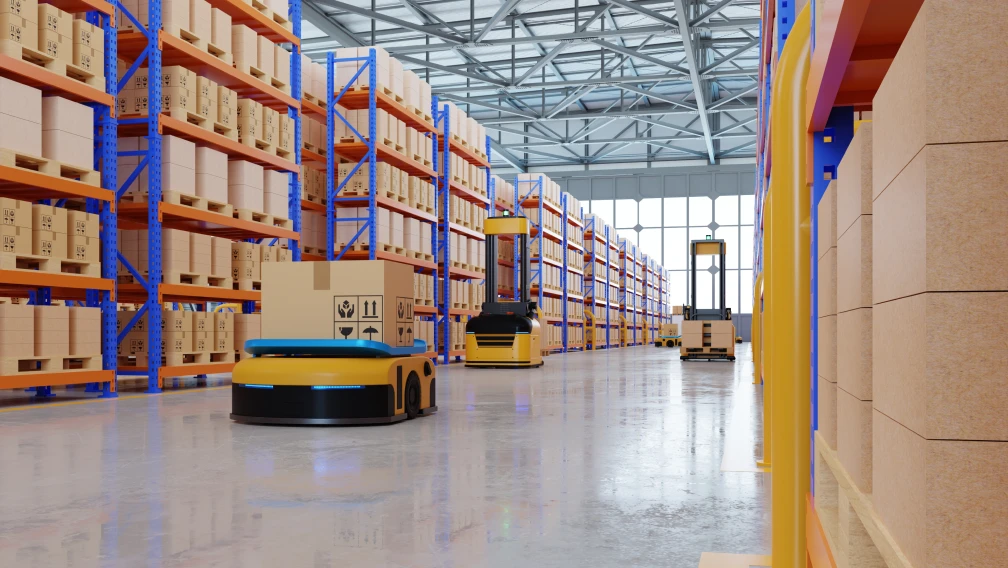
HOWEPROFIT builds warehouse automation specifically for this profile: ultra-high SKU counts, mixed-velocity inventory, tight service windows, and SKU-level traceability for warranty and recall management. Our miniload systems, one-bin-per-slot robots, and high-density AS/RS pair with a WMS that talks to SAP, Oracle, and the common automotive ERPs.
What Makes Auto Parts Logistics Different
Three structural realities shape every auto parts DC:
• SKU explosion. Vehicle proliferation, model years, and aftermarket variants multiply parts catalogs every year. A 10-year-old DC may have grown from 80,000 to 250,000 SKUs in the same building.
• 80/20 doesn't hold cleanly. Long-tail parts (the slow 60% of SKUs) still need to be available and shippable. You can't deprioritize them — service quality is measured on fill rate, not average velocity.
• Service-level pressure is real. Same-day or next-morning delivery is the standard for service center customers. Order cutoffs run as late as 7 PM, with shipments leaving 2–3 hours later.
A manual warehouse can hit two of these constraints well. Hitting all three at scale, without burning labor cost, requires automation.
The Automation Stack for Auto Parts Distribution
| Storage Layer | Best For | HOWEPROFIT Product |
| Ultra-dense small-parts storage | 50,000+ slow-moving SKUs | One-Bin-Per-Slot Robot |
| Medium-volume carton storage | Common service parts, replenishment stock | Miniload System |
| High-velocity picking | A-class fast movers, returns processing | High-Speed Bin Robot, Light Shuttle Vehicle |
| Oversized parts | Body panels, exhausts, bumpers | Heavy-Duty Container Warehouse, Gantry Storage System |
| Coordination layer | All of the above | Intelligent WMS + RCS |
One-Bin-Per-Slot Robot for the Long Tail
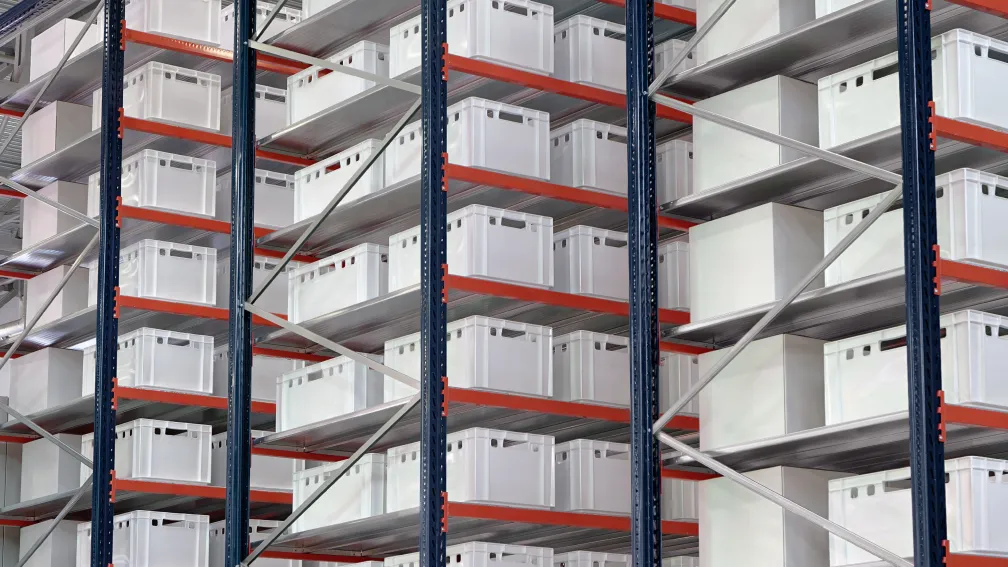
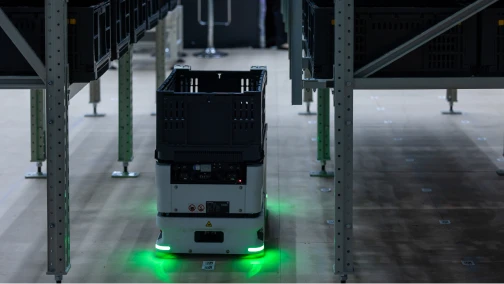
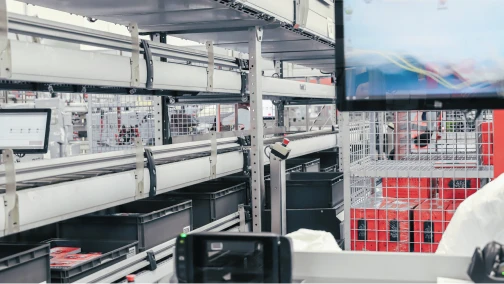
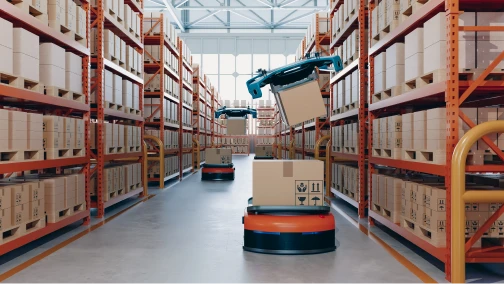
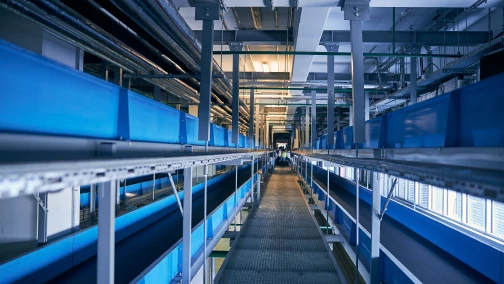
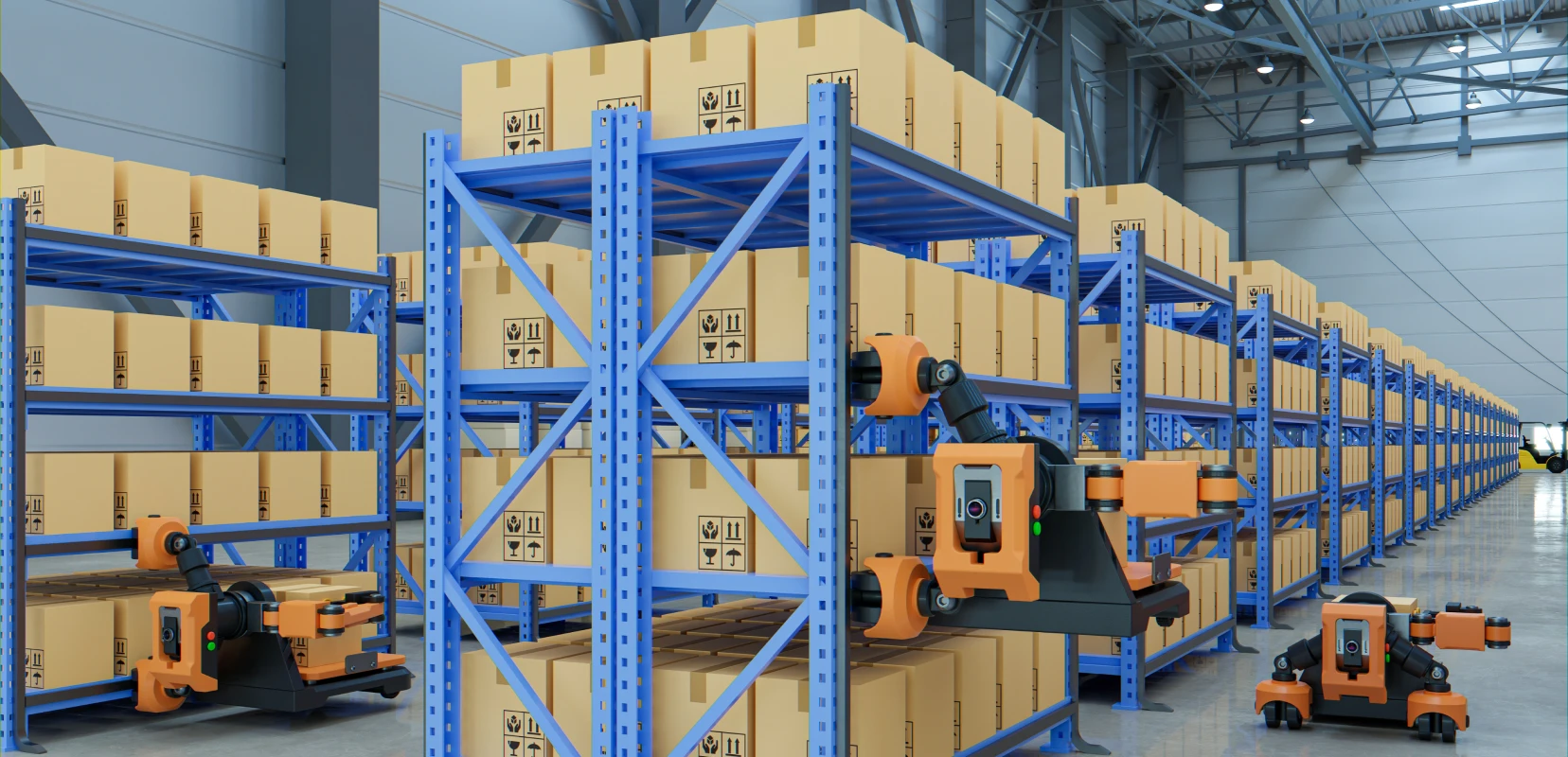
The hardest problem in auto parts is the long tail. You're paying real estate to store hundreds of thousands of low-velocity parts you still need to ship same-day. The one-bin-per-slot robot solves this by indexing each SKU to its own bin location and using a robotic arm to pick the right bin on demand. Storage density is 4–5x shelving, and the system can hold 100,000+ SKUs in a single installation. Search and retrieval is faster than any manual shelf walk — usually under 60 seconds from order to bin at the pick station.
Miniload for Replenishment Carton Stock
Auto parts come in from OEM suppliers in case quantities. Miniload handles the carton-level storage between inbound and pick-face replenishment. The system also supports value-added service workflows like kitting brake pads with rotors or assembling service kits for dealerships.
High-Speed Bin Robot for Top Movers
The 5,000 SKUs that drive 60% of order lines — filters, brake pads, common spark plugs, wipers — sit in bin robotics for direct goods-to-person picking. Throughput per station runs 400–600 lines per hour.
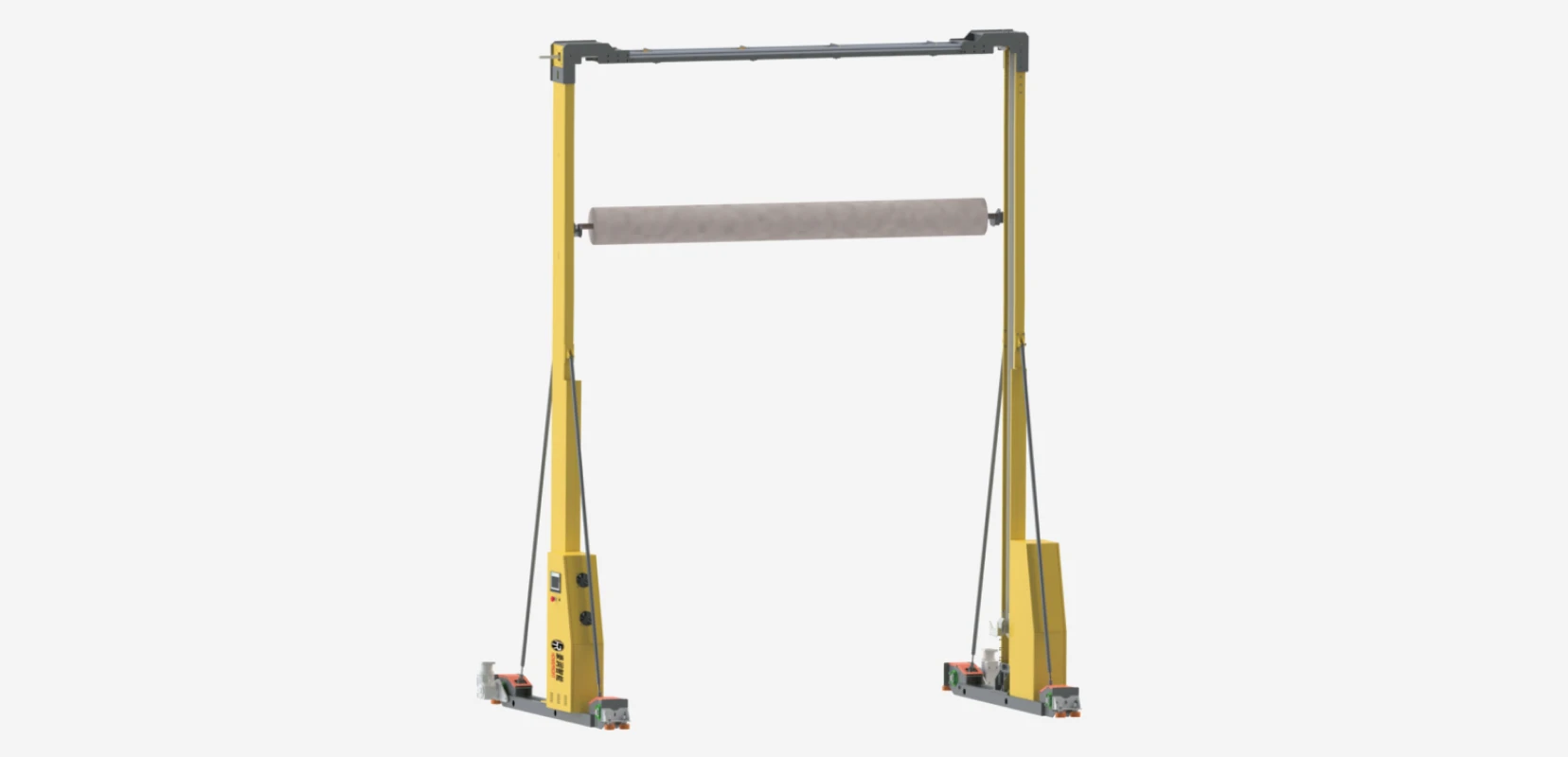
Gantry Storage System and Heavy-Duty Container Warehouse for Oversized Parts
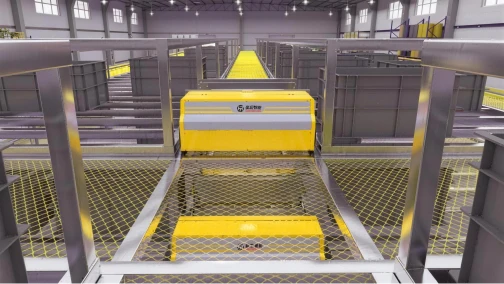
Some auto parts don't fit a tote — body panels, exhausts, bumpers, large electrical assemblies. The gantry system stores these on dedicated racks with crane retrieval. Heavy-duty containers handle full pallet quantities for high-volume distribution.
Intelligent WMS with ERP Integration
Auto parts WMS is integration-heavy. We connect to SAP (used by most large OEMs), Oracle, and aftermarket-specific platforms like Epicor Eagle, MAM Autopart, and Karmak. Standard data flows include parts master sync, order release, inventory positions, shipment confirmation, and serial or lot tracking for warranty and recall scope.
What Auto Parts Distributors See After Automation
Benchmarked against pre-automation operations:
• Order-to-shipment time: from 3–6 hours down to 30–90 minutes
• Pick accuracy: 99.95%+, critical when one wrong part triggers a USD 200–500 return
• Storage density: 4x per square meter, often eliminating the need to expand into a second DC
• Labor productivity: 4–5x lines per operator-hour
• Inventory accuracy: 99.9% cycle count accuracy versus 92–96% typical in manual
• Same-day order capability: cutoff times pushed 2–3 hours later, capturing orders competitors miss
The last point is often the biggest revenue impact — moving order cutoff from 4 PM to 7 PM can capture 15–25% more same-day order volume.
Typical Project Shape
Auto parts deployments are usually larger projects because of SKU count and integration complexity. The shape:
1. SKU and order profile analysis. 12 months of historical data, segmented by velocity, weight, and dimensions.
2. Slotting design. Assigning SKUs to the right storage subsystem based on profile.
3. ERP integration mapping. Field-by-field mapping with the SAP, Oracle, or aftermarket platform team.
4. Phased build. Usually start with the long-tail one-bin-per-slot zone, since that delivers the biggest density gain.
5. Migration in SKU velocity bands. Move the slow tail first, fast movers last, to keep operations stable.
6. Tuning and optimization. Slotting algorithms learn over 60–90 days post-go-live.
Total project timeline is typically 9–14 months for full automation of a regional DC.
Talk to Our Auto Parts Logistics Team
If you're sizing a new DC, consolidating regional sites, or hitting growth limits in your current facility, we'll run a sizing study against your SKU master and 12-month order history. Most studies come back with two or three topology options and a side-by-side payback model.
→ Request an auto parts sizing study from HOWEPROFIT.
Frequently Asked Questions
Can the system handle 200,000+ SKUs in one building?
Yes. The one-bin-per-slot robot is designed exactly for this. Our largest auto parts deployments hold 350,000+ SKUs in single installations. WMS scales further — the limit is physical bin slots, not software.
How does the system handle oversized parts that don't fit standard totes?
Mixed-mode design is standard. Oversized parts (panels, exhausts, bumpers) sit in gantry-served storage or pallet rack zones, while standard parts are in bin or tote storage. The WMS unifies picking — operators or systems pull from whichever zone holds each line of an order.
What ERPs do you integrate with?
SAP (S/4HANA, ECC), Oracle Fusion, Epicor Eagle, MAM Autopart, Karmak, and most aftermarket-specific platforms. For custom systems, we use REST APIs and standardized data schemas. Integration timelines are usually 8–14 weeks.
Can you support warranty traceability and recall management?
Yes. The WMS tracks SKUs at lot or serial level where required. Recall scope queries can be run on demand — for example, all units of part X shipped to dealers in the last 18 months. This is standard functionality, not custom.
What about VAS like kitting service kits or pre-packs for dealers?
We design kitting workstations into the layout. Miniload or bin robotics feed components to the station, an operator assembles the kit per spec, and the system tracks completed kits as new SKUs in inventory. Common applications include maintenance kits, brake kits, and dealer pre-pack programs.
How do you handle returns from service centers?
Returns processing is its own workflow. Items come in, get inspected and graded, then either restocked (back into the correct storage zone), sent to refurb, or scrapped. The WMS manages disposition rules per part category. For high-return items, dedicated processing stations are integrated into the layout.
-

HOWEPROFIT Team
Warehouse Automation Specialists, HOWEPROFIT
The HOWEPROFIT Team consists of senior intralogistics engineers and supply chain experts specializing in advanced AS/RS and robotic fulfillment solutions. Backed by years of field experience across e-commerce, 3PL, and manufacturing sectors, we provide data-driven automation strategies, rigorous throughput simulations, and objective ROI modeling. Our mission is to help facilities seamlessly transition to high-efficiency, reliable, and scalable automated operations.